On the ballooning of spiders and deep evolutionary branches

Standard

To keep track of projects, I use a sophisticated app called Moleskine. But early on in grad school, when I had a new project, I created a disk for everything related to that project. Like this:
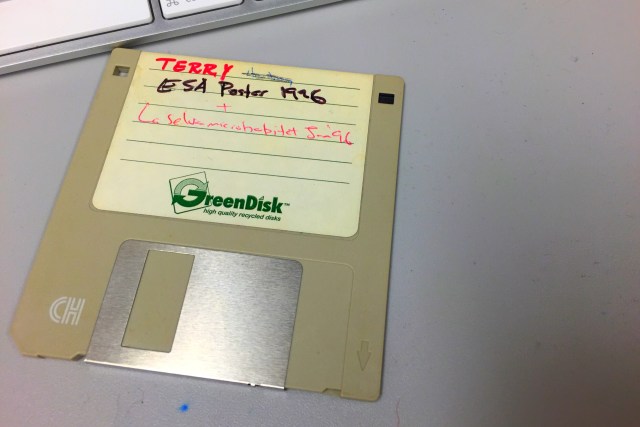
IMG_9946

One of these disks was labelled “Ballooning Spiders.” I had an idea for a side project that I humored for a few days.

I thought the ballooning behavior of spiders was pretty awesome. I still think the ballooning behavior of spiders is pretty awesome. I imagined it was quite likely that spiders could balloon across entire oceans. (Twenty years later, we know that’s true.) Continue reading

Parade of professors or solo scholar?

Standard

There are two basic models for teaching courses and the norm varies a lot depending on the type of ecology course. A single professor was responsible for the majority of classes I took as an undergraduate. However, these days the courses I’m involved with are done by a series of professors for particular subtopics. The contrast has me thinking about the pluses and minuses of these approaches. Continue reading

Recommended reads #76

Standard

Cards against humanities. You read that right, not humanity, Humanities.

This Puliter Prize-winning story by Kathryn Schulz about The Really Big One that will arrive in the Pacific Northwest. The letter for its entry into the Pulitzer competition said, “Schulz’s piece brings the seismological science to you, making it as plain and painless as a cake recipe. Yet it also leaves you with a visceral sense of what a full-margin Cascadian earthquake could feel like–and what its human toll could be. No surprise that the story has at last focused public attention on the need for precautionary measures. As of this writing, the piece–many months after publication–remains perched high on our Web site’s Most Read list. ‘The Really Big One’ brilliantly demonstrates how feature writing–drawing upon reporting, research, and most of all, the well-judged potency of prose–can rock our world.” So, yeah, read this article.

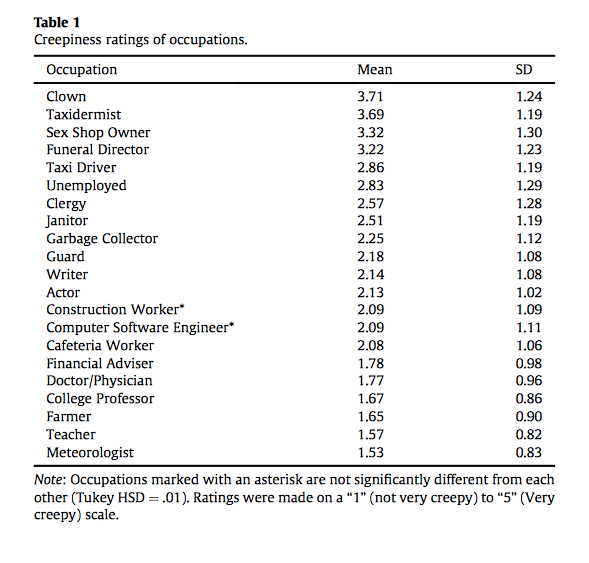
College professors aren’t that creepy. (Notwithstanding recent revelations from UC Berkeley further down this list.) Obviously, clowns are creepy. Gotta disagree about taxidermists though.Whoiscreepy

Continue reading

Impatience with the peer review process

Standard

Science has a thousand problems, but the time it takes for our manuscripts to be peer reviewed ain’t one. At least, that’s how I feel. How about you?

I hear folks griping about the slow editorial process all the time. Then I ask, “how long has it been?” And I get an answer, like, oh almost two whole months. Can you believe it? Two months?!” Continue reading

NSF’s Water Man award

Standard

When I was a tween, a cutsey feel-good book was a bestseller: All I Really Need to Know I Learned in Kindergarten. If we learn to solve problems as kids, that should help us solve similar problems as adults.

Let’s do a kindergarten-level exercise in math and pattern recognition. Can you figure out what shape comes next?seriesa

If you said star, you’re right! Congrats!

Let’s do another one. What shape do you expect to find next?

seriesb

If you said star again, then that means you’re two for two. Good job!

Let’s look for another pattern:

WaterMEN

What do you think comes next? If you guessed 2016, then you’re right! Your pattern recognition skills are fantastic! Continue reading

Using a grant writer

Standard

I’m working on a couple biggish grants at over the next couple months. I’m doing something that I haven’t done before, at least not as a PI. I’m working with grantwriters, under the support of my university. These are for grants to support a bunch of people doing a variety of things, with many organizational components that are only tangentially connected to the science. Continue reading

Education research denialism in university STEM faculty

Standard

Scientists regularly contend with irrational denialism of simple facts. In our classrooms, communities and the media, we hear patently absurd things like:

This is the logo of the Flat Earth Society.

This is the logo of the Flat Earth Society.

  • The world isn’t getting hotter, or even if it is, it’s not from carbon emissions.
  • Humans didn’t evolve from nonhuman ancestors.
  • Transgenic foods are unsafe.
  • Vaccines cause autism.

Any scientist who operates on the basis of evidence will regard those ideas as total bunk*.

But, as I’ve mentioned before, people aren’t rational beings. Especially when their emotions are involved (and they usually are), they’re not prone to think an expert is correct if their intuition tells them otherwise.

And scientists are people.

So I am not entirely surprised, but I am disheartened, when scientists are guilty of their own flavor of denialism: Education Research Denialism. Continue reading

Recommended Reads #74

Standard

41kUjfj5obL._SX333_BO1,204,203,200_Have you ordered a copy of Hope Jahren’s Lab Girl yet?

Here’s my review on Goodreads. A more professional review comes from the head of book reviews at the New York Times, who raved about it. And this is not a woman who raves about books. She says: Lab Girl “does for botany what Oliver Sacks’s essays did for neurology, what Stephen Jay Gould’s writings did for paleontology.” Continue reading

