Some posts you might have missed over the summer

Standard

Summer is over, not that we’d know it from the weather in Southern California. Anyway, the full complement of students are back. In the event your eyes were not glued to Small Pond over the summer, in no particular order, here are my favorite posts that you might have missed:

People are irrational. I come to terms with the fact that people are, by default, not rational. I tell a funny story about a guy who gets ants confused with snakes and doesn’t want to be wrong about it.

Why aren’t undergrads more like 8 year olds? Catherine Scott reports on her time from a science summer camp.

Universities that want research but don’t want researchers. It’s frustrating when some universities want to up their research game, and might invest into having more research, but don’t invest in the people who actually are doing the research. You can’t have it both ways: if you want research on campus, that means you need to support the people that make it happen.

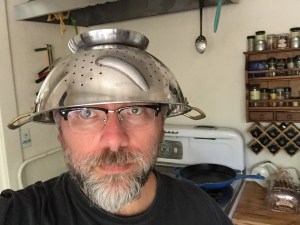
I explain why I chose to not put a pasta strainer on my head for my driver’s license photo. As atheism is slowly becoming less of a weird thing in the United States, the visibility of punchable atheists is growing, and this isn’t good for science education.

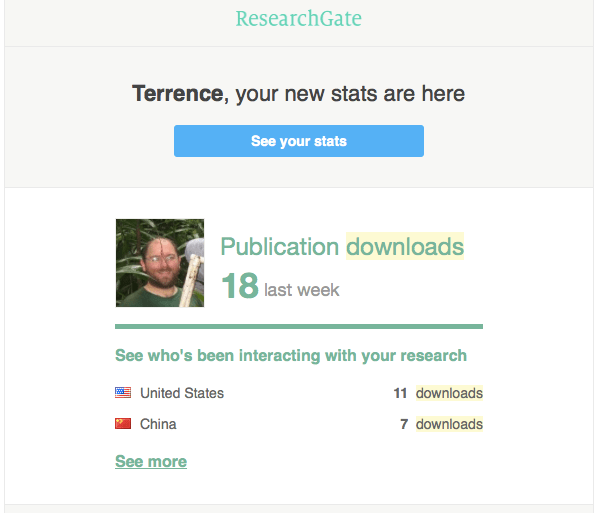
Some email from ResearchGate slipped through my spambox and I discover that this is actually an important way of getting papers to people who otherwise wouldn’t have access. Why I’m not ignoring ResearchGate anymore.

This is what I had to say about the Tim Hunt brouhaha. (In short, he doesn’t seem to be a monster, and he does seem to have been an advocate for specific women in science who have been in his lab. But he failed to capitalize on the events to advocate for women in science and ultimately it does seem that he thinks women in the lab cause problems for the men, but doesn’t seem as concerned about how men in the lab cause problems for women, which is a much bigger problem.)


16 things to consider as you assemble your syllabus

Standard
  1. Do you tell students how long it will take for you to respond to emails?
  2. Do you have clear-cut consequences for academic misconduct such as cheating and plagiarism? Do you know exactly what you plan to do when you find misconduct? (Here is how I deal with it.)
  3. Is your course designed to minimize the probability of cheating?
  4. Are you offering extra credit? If you are, do all students have equal opportunity to get the extra points, considering that different students have different schedules outside of class time? (Maybe extra credit isn’t a good idea.)
  5. Have you ever changed the date of an exam from the one on the syllabus? Be sure to put in print whether or not an exam date is a firm promise or just a guesstimate; students schedule around these dates.
  6. Is your grading scheme designed so that it is unambiguous, fair, and minimizes student stress (and in general make your life easier) ?
  7. Do you have a very clear-cut policy on laptops and phones? Many people have phone addiction issues and the learning environment is ruined if you don’t deal with it respectfully.
  8. Are you okay with students using earlier editions of the textbook, and is this on the syllabus? Students often ask or wonder because current editions are so expensive and typically are very similar to previous editions.
  9. If a student misses a class that has an assignment turned in or a quiz or exam, does the student know exactly what will happen? Is it possible to design your grading scheme so that accidentally missing a class will not be a personal disaster for the students? Could you design an assignment policy so that nobody will feel compelled to invent a dead grandparent?
  10. Do you include participation points? If so, are these points administered in an unbiased and transparent way so that the students will be able know their exact score at the end of the semester without having to guess? If not, your participation policy is too subjective and unfair.
  11. When students turn in written assignments, will they know the specific criteria upon which these will be evaluated? If you have expectations for writing, could you put the criteria for the rubric in your syllabus. Grading writing without a rubric is unfair to students as they won’t know what you are expecting in the written assignment before doing the work.
  12. You’re going to get grade disputes, even if you say that you do not entertain grade appeals. Do you have a clear policy about grade appeals on your syllabus? Do your policies and practices deter unreasonable appeals?
  13. Is it possible to assign grades to students not based on scores that they earn on assignments, but instead on what competencies they are able to show by the end of the semester?
  14. Some students really love getting their grades through the course management system (Blackboard/WebCT/Moodle/whatever). Do you specify in your syllabus how you use the online course system?
  15. Do any disabled students — including those with a learning disability — know that you’re prepared to provide accommodations for them? Some students can be anxious that faculty might not be receptive and going beyond institutionally required boilerplate can be helpful.
  16. Is there anything in your syllabus that would look bad on the internet? It’s now a very small world.


*Note: now that buzzfeed is starting to gain the appearance of something like journalism once in a while, I’ve decided that the title of this piece of writing is journalistic enough for today.

Recommended reads #58

Standard

So many great things came my way this week, I’ve had to unload them a week early. Enjoy!

A survival handbook for teaching large classes. This is good stuff.

Mad Max: Field Assistant

As a professor, here are five really simple things you can to do help single parents in your classes. Keep in mind you might have a single parent among your students but not be aware of it!

Maybe there is no such thing as renaissance person. Maybe these people are merely expert in an unrecognized speciality.

Simon Garnier explains how the big four in football made sports predictable. (For Americans and Aussies, he’s talking about soccer.) If you watch the EPL on occasion and enjoy statistics, this is a wonderful read.

Some months ago, a video about predatory ants carrying millipedes with daisy chains went viral. This inspired an investigation that has now gone through peer review, and the natural history story itself is mighty cool, and well worth watching and reading.

Five big ideas that don’t work in education. This is not gobbeldygook.

Speaking of certain kinds of ideas in education, Joan Strassmann is teaching statistics differently. In her class, understanding probability, distributions, and statistical concepts is getting passed over, so that students can jump right into knowing how to do analyses.

Oliver Sacks writes about the Day of Rest, as he sees his life coming to its last chapter.

The general secretary of the international Astronomical Union, and amateur butthead, chose to praise women by explaining that they have a special gift in being more caring and more dedicated educators.

That Netflix parental leave policy just got even worse. Not all Netflix workers will get unlimited parental leave.

Here’s your feel-good light happy human-interest story if you need one. A barber that gives kids free haircuts if the kids read to him.

Matt Might — who has a penchant for writing the best explainers ever — just wrote an inspiring “How to get tenure” piece. It’s most definitely worth reading (as are all of his articles on his site). He explains how he handled some tremendous challenges and stresses, and emerged all the better by focusing not on tenure, but instead on the transcendent things that really matter. (In that message, it bears resemblance to the story from a Harvard professor about how she got tenure by not worrying about it.)  I am reluctant about recommending this as a piece of how-to-get-tenure advice because on that count, it’s an a posteriori explanation. If you’re trying to decide about what really matters in life, then in my opinion Dr. Might is spot on. If you’re trying to decide how to handle your life balance as a pre-tenure faculty member, then this could be good advice. But it wouldn’t be good advice about how to get tenure, per se. If you can’t be happy and well-adjusted in the six years before tenure, then you probably can’t do that afterwards either. Dr. Might didn’t get tenure because he didn’t worry about it, he got tenure because he performed exceptionally. That exceptional performance happened either because, or in spite of, his insistence on the right priorities. Choosing family as a top priority is necessary to be happy and healthy and well-adjusted, but it’s not a ‘how-to’ for tenure. I don’t think that Might is suggesting that his recipe for tenure is one for us to follow in order to get tenure. I think his message is that worrying about bad consequences can prevent us from focusing on doing what is most necessary and most constructive. He’s saying you can get tenure without driving yourself insane by following academic norms, and if you reject those norms you can still get tenure. On the other hand, rejecting those norms doesn’t necessarily get you tenure.

Since I mentioned that Harvard professor ‘treat your job like a postdoc’ advice piece from two years ago that everybody but me loved, I might as well re-share my misgivings that I wrote back when it came out.

It didn’t make the rounds as much, but just as enjoyable as Might’s “How I got tenure story” is this one from Holly Dunsworth, which might have more directly practical utility for those of you on the tenure track.

What’s in John’s Freezer? A visit to the bird collection in the LA Natural History Museum.

Since I know a variety of people at University of Illinois Urbana-Champaign, I’ve been hearing about the continued horribleness of their now-former chancellor, Phyllis Wise, who just stepped down (or wasn’t allowed to so she could get fired) because of a scandal emerging from the Salaita affair. That’s was the newly-hired professor who was fired before getting to campus because he said things on twitter about Isreal and Palestine that the Chancellor didn’t like. Anyway, Wise made a point of deliberately conducting university business on her private email because she knew what she was doing was wrong. Here’s a recent take on it, if you want the salacious details.

Fivethirtyeight (that’s Nate Silver’s shop, better known as the presidential election stats dude) has an explainer about p-hacking. It shows how you can come to essentially opposite conclusions using the same dataset if you look hard enough, and explains how people often come to erroneous conclusions because of the way they handle data and they way they think about their experiments. I’m planning on including it in my biostats course this semester.

The AAAS Vision and Change report for undergraduate biology education is out from a conference they held last year. I haven’t read it, it looks like a tome with more self-congratulatory content than constructive examples, but that’s just what I saw from a quick browse, so go ahead and make up your own mind.

This year’s Burning Man has a huge number of bugs. (Mirids, I hear.) And people are freaking out, but really there’s no reason to freak out.

You probably heard how Ashley Madison got hacked. Ashley Madison is a site that married people pay a not-small amount of money to, to find other married people so they can have sex with one another. Now a lot of people have access to all of the email addresses (and more) on their website. This will result in some interesting consequences, with victims well beyond the people whose names appear in the database. Here’s a rundown on what the consequences of this data breach will mean.

Biodiversity conservation: the key is to not eat meat. Just putting it out there. It’s hard to argue with the numbers.

Mike the Mad Biologists dons a tinfoil hat but, well, data are data. It is hard to argue with the numbers, and I didn’t scrutinize it myself but I am never willing to underestimate the depth of nefariousness in electoral politics in the US.

Here is a love letter to PLOS One – an overly optimistic summary of the perverse incentives in the academic publishing environment in science.

While we’re on perverse incentives, this piece in PNAS hits home:

When universities publically brag that we are “Xth in federal research spending,” it is akin to an airline proclaiming, “we use more gasoline than any other airline!” or “we spend more per year transporting our passengers!” Consider the appearance and potential consequences if other segments of the national budget advertised in the same way: “The Army outspent the Navy and National Guard combined in 2015!” These proclamations offer nothing about what the public received for its money. Although winning grants is an exciting and necessary benchmark for researchers, the public’s interest is the degree to which we advance science with this massive investment.

Writing a doctoral dissertation improvement grant for NSF? Here are some very useful pieces of information and tips, including actual reviews of successful and unfunded proposals.

This essay about how British universities pick students is a great companion to the thing that I wrote earlier about NSF graduate fellowships being a part of the inequity problem in science.

Why botany matters in college. When I have taught an intro course on the ‘evolution and diversity of life,’ I spent more time on the evolution of plants than the evolution of animals, despite being an animal person (and also, an animal myself). So much of what happens in this world is tied to understanding precisely how plants reproduce, and how it came to be that they capture oxygen from the air and convert it into tissue, and how the changes in the environment have driven the changes in the biology of plants. So many biologists really don’t get how the alternation of generations in plants happens, and what the various parts of plants are. Understanding this isn’t just knowing stuff about organisms, it’s about understanding how our soil and air is the way it is. How this Earth breathes.

About writing clearly in academia: “I start the class with an exercise. I take a random page from a prestigious scholarly journal and make them compute the average number of words in each topic sentence. Then I take a page from whatever Jill Lepore New Yorker article happens to be my favorite and have them do the same. The last time I did this, the average for the “prestigious” journal was 46 words (versus 15 for The New Yorker), a number so outrageous that, whatever goals the author had in mind, communication wasn’t one of them.”

Last, I wanted to provide a very short report after finishing Ta-Nehisi Coates’s Between the World and Me. It was a short read, but I still learned a lot from it. (I wrote earlier that it was “revelatory.” Then I read the quote on the back from Toni Morrison and found that she convergently used the term “revelatory.” So I’m a little proud of myself that I have at least I have that much in common with her.) There are two specific thoughts I want to share about this book. First, if you’re trying to get your mind around what it is to be a black man in the United States — or what it is like to raise a black son in these United States — then this book communicates that experience. Second, one thing I didn’t expect to find in this book, but was a major piece, was the transformative power of higher education. Coates’s life, and his view on the world, was changed by college. He is very frank and transparent about his own evolution. It’s amazing to see how professors and fellow students can change one another’s lives because of what a university is designed to be. I don’t think that is the point of his book, but as a person who works with college students all the time, it’s great to reflect on his story from that angle.

Okay, I said that was the last thing but it wasn’t. More on Coates: Here’s a great interview between him and Roxane Gay. She asked him about what it means to be an ally (as the term itself and how it is used can be not so helpful, as Alex Bond explains), and he summed up clearly why he’s not so jazzed about the ‘ally’ thing in a way that really put logical clarity to vague notions that I’ve been feeling. By saying that you’re an ally, that’s tacitly saying that it’s not your problem:

RG: How can allies best serve as allies? What is an ally? Are they needed?

TC: I don’t know. I think it’s probably terribly important to listen. It’s terribly important to try to become more knowledgeable. It’s important to not expect that acquiring of that knowledge — in this case of the force of racism in American history — to be a pleasant experience or to proceed along just lines. They certainly don’t proceed that way for black people. It’s going to be painful. Finally I think one has to even abandon the phrase “ally” and understand that you are not helping someone in a particular struggle; the fight is yours.

Have a great weekend.
Review unto others as you would have them review unto you?

Standard

I am going to go ahead and assume we all want quality reviews of our journal submissions, however you define ‘quality’. Reviewers that take time to seriously evaluate your work, provide constructive feedback and ultimately improve the paper should always be appreciated. But as reviewers ourselves, we know that sometimes we don’t always give each paper our full attention. In general, I try to give good and helpful (to the author and editor) reviews. I try not to take on reviews when I know I don’t have the time to do a good job. Perhaps I am naïve but the impression I get from my colleagues and reviews of my papers is that in general most people are also trying to give good reviews. Continue reading

Practicing what you preach (or rather teach)

Standard

I have been fairly absent from here over the last many months. I’ve wanted to write and even started a few posts but they never got completed. The clashing of personal (husband’s surgery) and work stresses (major grant applications that will allow me to continue my position in Sweden) this spring made for a hectic time. I never really regained my balance before summer started. And well, I’m a field ecologist at heart, so between fieldwork and vacation the weeks have flown by. The end result is that I’m out of the habit of writing regularly and I miss it.

As the fall approaches and regular schedules settle in, my plan is to practice what I’m about to teach. Continue reading

Self-centered people who become famous scientists

Standard

I have a distinct recollection from my sophomore year in college. I was sitting in a hammock in my dorm room, reading The Double Helix, James Watson’s autobiographical account of how he sorted out the structure of DNA.

(And yes, apparently, I used to be that kind of dude who would go to the trouble of putting a hammock in his dorm room. Hey, people evolve.)

The Double Helix was recommended to me because it was a first-hand account thriller about a major discovery that revolutionized how we understand evolution and life in general. That part is true.

But that’s not what I was thinking when I was reading this book. My main thought was, “Wow, this guy is an asshole.” Continue reading

Recommended reads #57

Standard

If this piece of writing doesn’t move you, then you must be a very very heavy object: Oliver Sacks, the periodic table, and mortality.

Museum dioramas are inspirational, if not educational. And “endangered as the animals they contain.”

Beatrix Potter was a mycologist.

You really can be an academic parent and “have it all,” so long as that notion of all is realistic. This is a moving and inspirational post from Tenure, She Wrote.

And for men to have it all, let’s realize that all includes being a responsible parent? Dads need to bring more of home to work.

Isn’t it amazing that Netflix is giving its employees unlimited parental leave? Well, no. That “unlimited” leave reflects a unhealthy work-obsessed environment that is not good for families. It would be truly healthy if they actually gave employees a year or six months or some specific time, rather than “as much as you think you need” which is not so good. Here’s an insightful take from the inside.

And what’s the more hideous thing about the Netflix policy? Only their fancy-dandy white collar workers get parental leave. What about the regular working stiffs in the warehouses? Fuck them, said Netflix.

What really is a food web, anyway? You talk to different people and they have fundamentally different notions about what one is. (And you talk to K-12 teachers, who often have food webs featured heavily in the curriculum, you get something even different!) Here’s a review about the evolution of the idea of food web in ecology.

The Ecological Society of America announced that it is moving its publications over to the mega-publisher Wiley. This doesn’t seem to sit well with some advocates of “open science” – this post by Russ Mounce seems to provide a full summary of the misgivings.

I don’t have those misgivings. I think the shift to Wiley will strengthen society finances, and keep things sustainable as the publishing industry evolves. I agree that it would be a very good thing for all scientific papers to be instantly available to everybody as soon as they were published, and that it is a bad thing that anybody hits a paywall whenever they want to access a paper. Ecology and its sibling journals (aside from Ecosphere) have always had a paywall, of course, and this paywall has actually been growing in size as subscriptions to the journal have been sliding. [Correction – all ESA journals have been, and remain, “green open access,” meaning that you can’t get them for free from the journal but authors can self-archive them. Which means you can get them for free from the author or from a site like google scholar which will find self-archived articles. This is ESA’s current deal with Wiley. So really, nothing has changed.] This switch to Wiley isn’t removing that paywall, but will allow libraries that have agreed to the evil Wiley bundle to be able to include ESA journals. So it’s anticipated that more people will be able to get Ecology than if the switch did not happen.  So why didn’t ESA just go open access instead of shift over to Wiley? That’s a remarkably naive question that doesn’t take into account the financial aspects of publishing and marketing a journal, and the razor-thin financial margins on which academic societies usually operate. I don’t think anybody can predict what the publishing landscape will look like ten years from now, and thought the big publishers like Wiley, Springer and Elsevier are going through what the music industry went through ten years ago, where things will evolve is hard to see. But going open-access would greatly increase author costs, and considering how many students and postdocs publish in ESA journals, it’s not financially reasonable to ask them to assume those publication costs (which frankly are more than the price tag associated with PeerJ). As things sort themselves out, I think ESA is doing well and ride the financial wave of the big publishers for a while, who actually don’t make a profit off of society journals anyway. If there is any real crime here, it’s not failing to go open access, which currently is not financially viable. It’s using the name of ESA to sustain the legitimacy of an endangered corporate financial predator.

Yes! Putting the Ph back in PhD

Here is an interesting short explainer about how the contemporary way we eat meat was driven by the US military.

A recently-finished undergrad has tips for new ones.

I just finished Steve Martin’s Born Standing Up. (It’s funny, I was just about to buy it at the Festival of Books, but on an uncommon whim I decided against it. Then after moving away from the booth, saw it was in the stack of books my spouse bought. So it was meant to be.) Martin wrote a memoir about how he became famous as a stand-up comic, in an era when comedy clubs didn’t really exist. His insights about how he built his career, and how he took more than a decade to hone his craft, can be really informative to scientists. The way that you become popular as a comic isn’t that different than how you become popular as a scientist. Seven years ago, Mike Kaspari read the book right after it came  out and wrote a post about it. It’s no coincidence that the quotes that he pulled out convergently tugged at me.

The liberal arts degree has become tech’s hottest ticket, allegedly.

Some points for students about technology in the classroom. Here are some non-tech-phobic thoughts about how students might consider how they use technology in the classroom to help themselves learn, or do do well in class (which is not the same thing of course).

To the [UW] Eau Claires of the world, I say, keep fighting. No disrespect to Madison, or Boston, or New York City, but sometimes things look different from here. It would be nice to see that acknowledged before terrible decisions were made.”

White dreadlocks as cultural appropriation.

How do we build a diverse scientific community? Here’s a place to start:

Latino women and Black men had the highest levels of discouragement— half in the sample for both groups.

And who were the worst offenders?

Their college professors!  Almost half of those pointed to their college professors as the chief source their discouragement, and 60 percent reported they experienced dissuasion in college. African-American women were dissuaded the most by their professors — an alarming 65 percent.

Essay questions written by a first-year instructor who does not have the time or wherewithal to do the required reading.

George Washington University — (I’m sorry, it’s actually The George Washington University) — is no longer requiring standardized test scores for applicants. Before you think it’s about increasing diversity, evening the playing field, and just generalized sanity, keep in mind that the more parsimonious explanation is that they’re just gaming the university rankings, by attracting more applications and increasing their rejection rate.

A very high quality and easy-to-follow explainer about the fact of evolution from the BBC. Good for teaching non-majors, or alienating your creationist family members on Facebook.

The story about a renegade fishing vessel chased around the whole world by people committed to bringing them to justice, and to stop the illegal exploitation of the world’s fisheries. My gosh this was a good story and also a great lesson about the loosey goosey state of things once you leave the land.

Here is a great well-animated 4-minute explainer video about El Niño. Which actually is not as simple as people realize

There was yet another op-ed in the New York Times that sought to mock the idea of a university, or something like that I guess. Forget the original, but this response is worthwhile.

Reddit gonna reddit: “I fabricated some data for a term paper. My professor wants to publish it with me. What do I do?” Just in case that thread gets deleted or certain things get removed, here’s the web archive of as of Thursday morning.

On being the only one in the room.

This is the best thing I’ve ever read about the danger of DWB, by Tressie Cottom.

Why IFLScience is anti-science

In a public relations coup, the meth lab explosion at the NIST has actually not been in the news! This is the only update I could find, which is intriguing.

Why we work so much. Accompanied with interesting data.

Wait, so General Chemistry doesn’t help you do more advanced chemistry?

People who work with arthropods in biodiversity and community ecology projects often fail to store vouchers. The crustacean people are particularly bad about it. This is problematic. (And yeah, I think I’m part of this problem.)

No victor believes in chance.

Why being a straight A student isn’t necessarily a good thing.

Suicide on campus and the pressure of perfection.

Most climate models have most of southern Florida underwater in a hundred years. Yet the people in Miami are acting like this isn’t even happening. It’s totally bizarre. And it’s particularly problematic because the whole city is on porous limestone, so levies and similar machinations won’t do the trick. Here’s a story from The Guardian about the state of denial in Miami, which already is experiencing major problems from the tides.

Classroom observations are only really useful if the observers are capable and appropriate for evaluating. Considering that almost no college faculty are trained in pedagogy, who is qualified to evaluate teaching at the university level?

Just in case you somehow haven’t yet seen the Key & Peele Teaching Center video:

And not least by any means, is Ta-Nehisi Coates’ new book, Between the World and MeI’m halfway through it now, and I’m finding it revelatory.

Have a great weekend.

The folly of expecting institutionalized funding

Standard

When a child is raised, we provide them with a home, food, education, love and encouragement. Within a couple decades, give or take, the kid grows up and is expected to care for itself.

You can’t really expect the same of federally funded ventures.

Yes, sometimes research and education ventures support themselves after the funding runs out. But it doesn’t often work like that. Organizations are not people. (Even if Mitt Romney and the Supreme Court attempt to claim otherwise.)

If an agency wants something, then they can fund it. But when they stop funding it, then they’re saying that they don’t want it anymore. But it’s a grandiose hope that a funded venture can somehow exist in perpetuity because it was funded for a while. Continue reading

I’m going to stop ignoring ResearchGate

Standard

LinkedIn, Facebook, ORCID, Twitter, Instagram, Klout, Mendeley, ResearchGate.

I’m signed up for all of these things. Some are useful, some can be annoying, some I just ignore.

Some vague time ago, a friend in my department mentioned that I should sign up for ResearchGate. I said something like, “It’s just another one of those social networks, yadda yadda so what.” But I signed up anyway*.

At the time I signed up, I halfheartedly connected some of my papers, and since then I’ve ignored it. Jump to last week, when one of their emails was creative enough to find its way through my spam filter:

rgateclipI was like, huh? I chose to click over to my profile on ResearchGate.

Continue reading

Recommended reads #56

Standard

Some fundamental lessons from ten years of sciencing.

You know you want to look at this church shaped like a chicken.

A meth lab at the National Institutes of Standards and Technology exploded. I imagine more news will be forthcoming. I don’t know what is driving NIST employees in exurban Maryland to operate a meth lab.

A librarian is caught after having stolen more than hundred masterworks of art from his institution, and replacing them with his forgeries. His defense? Everybody else is doing it.

Workaholism isn’t a valid requirement for advancing in science.

When the end of human civilization is your day job. This is a great piece that discusses how scientists handle, think, feel, and discuss climate change, in Esquire. (Better than the testosterone-laden books-for-dudes list that came out in Esquire.) But the best thing I’ve ever read about how to feel and talk about climate change came from Hope Jahren.

The myth that academic science isn’t biased against women. This is an information-laden explanation why that PNAS paper (which claimed that the bias problem in hiring is over!) is just really off target.

There’s been a long-growing academic issue here in southern California that’s now amounted to a pretty big stink-up. USC has always been known as a place that has good athletic programs, but not so much for academic excellence, notwithstanding the fact that wealthy people who graduate from the so-called “University of Spoiled Children” often end up in powerful positions, and then go on to hire their fellow Trojans. Despite the social capital of USC, it’s alway been considered as an academic minnow compared to UCLA and pretty much every other major research institution in the region. (Not that I feel good about slighting one kind of fish over another.) But in the past decade, things have changed for USC, they’ve really stepped up their game in attempting to fix what was their miserable academic reputation. Lately, people are actually speaking highly of their academic programs. They’ve done this on a short time scale, and a big part of this strategy has been to absorb pre-existing facilities and programs. The latest poach is a research group from UCSD, that runs a huge Alzheimer’s research program. UCSD isn’t just letting USC take the whole program that easily, though. Says the provost of USC, “I don’t want San Diego to feel like the University of Southern California is being some threat.” This comes one year after USC attempted to subsume the Scripps Research Institute, in a secret deal with Scripps administration. The plan only ended at the last minute because someone leaked the news out to faculty before the deal was finalized. So, USC is basically trying to cash in its huge endowment to buy an academic reputation over a very short period of time. Which for people who care about reputations, I guess that’s fine, but the problem about doing this too quickly is that you end up screwing over people who are currently in the system.

So the career/editorial section of Science is just totally f’ed up. But Nature is noticeably less horrible. Especially this piece about how science professors need leadership training. So, so much this.

Also, this comment in Nature about improving undergraduate science education is a really great blog post. I mean, um, peer-reviewed publication in Nature. Same difference, right?

A book review of Field Notes for the Alpine Tundra. I don’t have plans to get up to the tundra anytime soon, but the review sure makes me want to pick up this book.

Why it’s not a good idea to kill venomous snakes in your yard. Just imagine the productive conversation this would lead to on Facebook.

A listicle of ten myths about teaching computer science.

This is a good post about the need to recalibrate the professional expectations of those into graduate school. Grad school is research training and a low-paid job, and also preparation for a great number of other things, if you go about it that way.

David Raup recently died at the age of 82. If you’re not familiar with his contributions to our understanding of the history of life, this obituary is a great explainer.

What do climate deniers talk about when they meet and talk about climate? It’s all pretty weird, apparently.

This transcript of the conversation that led to Sandra Bland’s arrest is infuriating and heartbreaking. This is the first chapter of an actual tragedy. But if you read it line by line as you would a screenplay, then you can feel the hate and racism oozing from the police officer. What makes this all the more horrible is that this happens every day in America. Let’s keep paying attention to this, to emphasize that black lives matter.

On a related note, renowned putz David Brooks penned a confoundingly ignorant review of Ta-Nehisi Coates’ new book. Here’s a great piece making fun of Brooks’s review. Here’s another one that explains how, if not why, Brooks is such a dumb person. I haven’t read the book itself, I am looking forward to it.

Are you heading to China but don’t know if the government firewall will let you use a certain website? Here’s a site you can use to test things out ahead of time.

How do you measure a scientist?

What happens when you talk about salaries at Google.

Have a great weekend.

A departmental retreat from another dimension

Standard

I once participated in a departmental retreat from the Twilight Zone. Or it might have taken place in an alternate-universe wormhole.

Details are fuzzy, but when I searched my google calendar, I found it still sitting there, way back from Spring 2006. There I remember a few things with uncommon clarity, on account of the weirdness. Continue reading

Ants With Superhero Powers and Real Ant-People

Standard

As an ant man, I’m psyched for the release of Ant-Man.

There are so many ants with real superpowers, that we know about because of amazing Real Ant People, genuine ant savants. Let me tell you about some ants with amazing superpowers.

Two classic superhero powers of ants are flight and invisibility. Continue reading

Can stealing from your neighbor be a mutualism?

Standard

Imagine that your neighbor sometimes goes into your house and takes some food out of your fridge. Sometimes you catch her, but you don’t get violent about it, you just push her out and tell her to not come back. But she keeps sneaking in.

Imagine that you’re also stealing food from your neighbors. Imagine that everybody in your neighborhood is stealing food from one another. Continue reading

Recommended reads #55

Standard

Liberal arts college, or celebrity baby name?

The New Yorker has a great piece about the backyard biodiversity work being done by the entomologists of the Natural History Museum of LA County.

Carl Zimmer on writing about science: “Imagine you’re a crime reporter writing a story about a shooting at a nightclub. Now imagine that none of your readers know what a gun is.”

Speaking of which, Ed Yong does a masterful writeup about a remarkable new discovery involving endosymbiosis.

Science is an art. You’re damn right it is!

Science students need the liberal arts.

“…A post about structural biases I’ve perceived within the NSF Biology system…They also aren’t inherently bad or need to be fixed, they just exist based on the pool of reviewers/panelists and timing of the grant cycles.”

Caroline Tucker has a nice review of a recent paper about a Periodic Table of Niches. If you think about convergent evolution – and how can you be an ecologist who sees the world and not be obsessed? – this post and the associated paper (Winemiller et al.) are good brain food.

Public higher education in the US used to be free or really cheap. Oregon is helping take a step back to where we used to be.

What overparenting looks like, from a Dean’s perspective.

A cool spatial data visualization (aka, a map) of logbook entries from ships of the 1700s and 1800s.

I’m behind the times, but I just heard about DORA, the San Francisco Declaration on Research Assessment. In short, it’s a concrete declaration to evaluate research based on its content and merit, not where it was published. Worth learning about.

And, PNAS says some convincing words about how they’re more interested in impact, not impact factor.

How to apply for a field job.

Meat is a complex health issue but a simple climate one.

There is a humorous and fascinating “Shit Academics Say” twitter account. This is the backstory in the Chronicle of Higher Education.

The job market is not a lottery. Saying you got ‘lucky’ allegedly perpetuates a pervasive and damaging myth.

Dynamic Ecology has just passed the three year mark. Brian, Jeremy and Meg wrote a post reflecting on what they’ve learned from writing for the site, and what surprised them. It’s a really interesting read, at least it was for me, as I’ve had a highly convergent set of thoughts and experiences. Seriously, if you want to know what I think about my experience blogging, then just go ahead and read what all three of them wrote. If you’re thinking about investing a nontrivial amount of time into blogging, then I imagine you’d have the same feelings as well.

Sports and politics-of-sports writer Dave Zirin explains why he’s done defending women’s sports.

Profiling Alex Morgan: routine sexism and a little plagiarism from FIFA.com

Nature covers the crisis facing North American herbaria.

How things are not necessarily 100% peachy right after tenure.

How can you be colorblind and racist? This is how.

A paean to the arctic and its insects.

Why we still collect butterflies.

Colleges and universities can’t have it both ways: “the institutions that are going to successfully navigate the transition that higher education is undergoing will be those that can most quickly figure out who they are and how they can best fulfill their niches. Those who try to continually operate under the rules of the old system likely have bleak futures.”

“You Draw It: how family income predicts college experience.” Both the tool, and the associated fact, is fascinating. And of course a source of worry.

“Science is about the future.” A worthwhile short comic about the measurement of scientific worth.

On a related note, “The Nobel Prize is bad.”

What it’s like as a “girl” in the lab.

This story is precisely why the public needs to understand natural history. Or at the very least, to be able to differentiate bear from non-bear.

A post about increasing your chances of getting funded by NSF. The short version is: work your ass off. But this post tells you specific ways to work your ass off in a way that increases your odds.

Here is a problem-solving puzzle that is interesting. I saw this in the context of a few facebook conversations, and the selection of people correctly ‘solved’ the puzzle and those who didn’t correctly ‘solve’ it was fascinating to me.

Data Scientist Jessica Kirkpatrick writes about confronting her own racism.

Contingency is now the exploitative norm in higher education rather than the exception.

Another piece that explains why using slide shows for teaching is horrible and why people still keep using it.

Take a video tour of E.O. Wilson’s office.

College is not a commodity. Stop treating it like one.


That’s all, folks. You might have noticed that it’s been a while since a recommended reads post, which normally comes out on alternating Fridays. Well, I took a vacation. A real vacation. For two whole frickin’ weeks which I didn’t work at all, except for remote advising of students conducting fieldwork. It was glorious. (If you want see some of the cool stuff I saw, natural beauty and kitsch, from northern California and Oregon, you can find them on Facebook or Instagram.)

HMCoSecondEdHobbits

Universities that want research but don’t want researchers

Standard

I’ve done most of my fieldwork at a biological field station. Many people come and go, but there are a lot of common interests and some longstanding friendships.

I’ve had the chance to befriend people over the course of several cohorts of doctoral students working on station. A subset of these folks — myself included — have found positions in academia and continued to do research down here. And of course there are lots of active scientists who I see at conferences. The ebb and flow of academic and personal interactions over the decades has its grandeur. Continue reading

Public scientists, the twitterverse, thought police, feminism, and the fanatical mob

Standard

I’m on vacation. But while I was posting a few photos on social media (amazing National Parks and a wooden carving of bigfoot drinking a beer) I stumbled on some extended silliness among fellow scientists that I want to discuss. Luckily, I woke up early, my family is sleeping in, so here goes.

A very-routine event has somehow caused some a great worry: A famous person said something rather hideous. This hideous opinion was put in quotes and got circulated on twitter. A storm-of-righteous-indignation built on twitter, and spilled over onto facebook and other media outlets. Within a few days, this famous person got “in trouble,” insofar as a famous and powerful person can genuinely get in trouble for voicing a contemptuous opinion.

This is a very common story. It’s a little different because of the specifics: Continue reading

Working away from work and making work home

Standard

Guest post by Rosie Burdon, a PhD student at Uppsala University in Amy Parachnowitsch’s lab. She is studying interactions between Penstemon digitalis and its pollinator Bombus impatiens in eastern USA. Here she shares her experiences of spanning multiple countries for a PhD and the benefits and challenges of having the USA as your long distance fieldsite. You can find her on Twitter at @RealRBurdon.

I love my job, it’s a 4-year contract asking questions about nature and ultimately answering some. Yes, it is a real job mum. Specifically, I get paid to ask questions about what plant volatiles and nectar rewards mean to bees/plant reproduction. I don’t do this in the country that employs me, or even the country I was born in. I moved from the UK to Sweden to work (where I spend most of my time) but I do my fieldwork in the US or else dwell in university of Salzburg labs. Continue reading

Universities that work hard to subvert student rights with FERPA waivers

Standard

Imagine this scene: A professor at work gets a phone call.

Phone Voice: Hi, I’m the parent of Bill Smith, a student in your intro class.

Professor: Um, hi..?

Phone Voice: Bill was upset about the score he got on a quiz last week, and he thought some of the questions were unfair.

Professor: I’m sorry but I’m prevented from discussing a student’s academic records under the protection of FERPA [the Family Education Rights and Privacy Act].

Phone Voice: But I am his parent and Bill told me it was okay to speak with you about it.

Professor: That might be true, but without evidence of a FERPA waiver signed by the student, I can’t have this conversation.

Phone Voice: Oh, we had that waiver form signed at orientation.

Professor: Whuaaa?

Phone Voice: During an orientation session together with our son, the university presented to him a waiver form to sign to waive access to FERPA. It’s on record. I can email a copy if you want.

Professor: I prefer the student talk to me about his own grades.

Phone Voice: I realize that, but I have the right to discuss his grades with you and I’d like to talk about question three on the quiz. Continue reading

Recommended reads #54

Standard

Here’s a post from Methods in Ecology and Evolution with the Top Ten Tips for Reviewing Statistics. I do wish people who review my stuff consistently followed these guidelines.

One of the most special things I’ve read in a while. About teaching, love, parenting, grief, and Pixar.

Crap Wildlife Jobs got featured in Nature.

Chris Buddle shares his reflections one year into his service as a “Deanlet,” a term he says he picked up from me. (I picked it up from Mo Donnelly, tropical herpetologist extraordinaire at FIU.)

This interview in Science with a dual-career couple about their job story is fascinating. And the part about their salaries is a doozy.

More evidence that active learning trumps lecturing.

It is very sad news to report that Rafe Sagarin, a marine ecologist, died in an accident this last week. Jarrett Byrnes, in his blog, wrote a passionate memorial for Dr. Sagarin.

I’m betting that you’ve heard about the messed-up “advice” from former AAAS president Alice Huang to a postdoc who is getting regularly ogled by her advisor: “I suggest you put up with it, with good humor if you can.” A lot has been written about this. All I have to say is that pretty much all advice says more about the person offering it than the recipient of the advice. (Which is why I do my best to avoid offering advice in these pages.) If you are interested in how the scientific community responded to Alice, Central Command for the “Don’t Ask Alice” responses is at Tenure, She Wrote.

I don’t give advice, but I sometimes link to self-avowed advice. Such as this excellent piece:  Career Advice From an Oldish Not-Quite Geezer. It’s about making sure that you don’t hit the tail end of your career and realizing you had the wrong priorities.

Why blogging is key to the future of higher ed.” Okay, the title for is dumb. But forgive the author, who probably didn’t write the title. The article itself is interesting if you’re interested in student writing.

As the token female member of this action-adventure team, my job is to kick.

CalArts — a relatively highfalutin’ arts school in the LA area — switched to a gender-blind admissions process for its animation program. And they were surprised to find they mostly accepted women!

Gender equality at work depends on gender equality at home:

The impact of the top leadership is profound; changing your workplace culture is going to be an uphill battle unless your management is committed to the idea that it’s a mistake to sacrifice part of the talent pool for reasons completely unrelated to the jobs being performed.

A paper in Biological Conservation claims that peer review is not a crapshoot. Or that’s what they say they can test with their data and that’s their conclusion.

Tenure, She Wrote wrote about supporting other people’s students.

Quality doesn’t have to come from exclusivity: what happened when a highly selective school in stopped being highly selective but still focused on educational quality.

The Good Enough Professor points out how the higher education funding situation is bad for both STEM and humanities faculty. But the way we are prepared to respond to the crisis differs. Below is a snippet, but go on and read the whole thing.

Everyone is feeling the constriction of publicly funded higher education.  As grant money dries up alongside state budgets, STEM faculty and liberal arts faculty alike are coping with dwindling resources. The difference is, non-liberal-arts faculty confront this reality with the tools they already have ready to hand: the capacity to explain why people should pay for what they have to offer.

Jeff Ollerton looks critically at a disagreement in the pages of Science about pollinator declines. He also wonders about the role of conservation biologists as political activists.

While we’re at it, Charley Krebs is asking if Conservation Biology is a science. He’s got a better case than you might initially imagine:

Now this is certainly a silly question. To be sure conservation ecologists collect much data, use rigorous statistical models, and do their best to achieve the general goal of protecting the Earth’s biodiversity, so clearly what they do must be the foundations of a science. But a look through some of the recent literature could give you second thoughts.

This is a fascinating study that quantified the amount of effort that it takes to write grants, and what actions that grant-seekers should take based on the probability of getting money. The take-home message is that with funding rates below 20%, you pretty much have to spend all of your time looking for money. That’s true, but the math behind it is instructive.

Along the same lines, this article in the LA Times lays out a crystal clear case for how funding for basic science in the US is really really horrible. Man, this is grim when you look at the long term trends. If you choose to read very few things about the science funding crisis, I recommend this one.

If you want something done, give it to a busy person. Then, the busy person becomes becomes miserable:

A new paper by a team of researchers from Duke University, University of Georgia, and University of Colorado looks at not only how extremely competent people are treated by their co-workers and peers, but how those people feel when, at crucial moments, everyone turns to them. They find that responsible employees are not terribly pleased about this dynamic either.

What is model organism Arabidopsis thaliana actually like outdoors?

How temporary economic downturns result in permanent career setbacks for college graduates.

Every little thing about this piece of writing: College students are not customers, is great. As is pretty much everything that Schuman writes. Even on the rare occasion when I disagree with her.

Hippos as meat for the USA:

In 1910, the United States—its population exploding, its frontier all but exhausted—was in the throes of a serious meat shortage. But a small and industrious group of thinkers stepped forward with an answer, a bold idea being endorsed by the likes of Theodore Roosevelt and The New York Times. Their plan: to import hippopotamuses to the swamps of Louisiana and convince Americans to eat them.

This New York Times piece on the absurdity and danger of extraordinarily high salaries for university administrators is on the mark. Yeah, this isn’t new news. But it’s important to keep focusing on it.

The acceptances that weren’t acceptances

Standard

Chatting with people at La Selva Biological Station in Costa Rica, the topic from a recent post came up: that journals have cut back on “accept with revisions” decisions.

There was a little disagreement in the comments. Now, on the basis of some conversations, I have to disagree with myself. Talking with three different grad students, this is what I learned:

Some journals are, apparently, still regularly doing “accept-with-revisions.” And they also then are in the habit of rejecting those papers after the revisions come in. Continue reading

This one simple trick to help fight the male scientist stereotype

Standard

This week, I did my one of my first ever phone-interviews with a reporter for a story about black widows in grapes. I was really nervous about being quoted (what if I say something that sounds stupid, or worse, is wrong?) but I agreed to do the interview anyway. Despite my fears, I made this decision for a couple of reasons. I am passionate about spiders and science communication and I think it’s really important to do what I can to correct misconceptions that are often presented in the media. I absolutely want to take every opportunity to provide accurate information about spiders (especially the ones I study) to the public. Furthermore, I think that I have an obligation to do this because taxpayers pay for my research and training, at least in part.

It wasn’t until I thought a bit about it after I gave the interview that I realized there is another really good reason for me to say yes to interview requests from the media. News stories about spiders come up pretty frequently. If a spider expert is quoted in these stories, I often see familiar names: Rick Vetter, Chris Buddle, Robb Bennett (arachnologists who are all doing a fantastic job educating people about spiders). I just did a quick google search for the word arachnologist under “News” and found several more names on the first page or so of hits. With two exceptions (both of which were stories about recent spider research with quotes from study authors) all of the spider experts quoted have one thing in common: they are white men.

Is it possible that this is simply a representative sample of available experts? Maybe… but let’s check. If you google “list of arachnologists” the first hit is a wiki page with a list of arachnologists who are original describers of spider species… not super useful for finding a living expert. The second relevant hit brings you to a page on Arachnological Society of America’s website, listing arachnologists willing to train graduate students. That seems like a more reasonable sample. There are 11 women and 37 men on the list. So assuming this is a representative sample of the population of senior arachnologists, about 23% of available experts are women. I’d be willing to bet that among more junior scientists who study spiders (like me), there are even more women – probably much closer to 50%. Take for example the members of the lab I’ll be joining this fall: 8 of 10 are women.

I’m personally interested in these numbers because I’ve had variations of the following conversation several times, and it’s getting pretty old. It goes something like this:

Man: “So what do you do?”

Me: “I’m a scientist! I study sexual communication in spiders.”

Man: “That’s an unusual career choice for a woman.”

In the past, I haven’t known how to respond to this because I didn’t have actual data on which to base a statement like “actually, XX% of arachnologists are women”. The data (at least for professors) turn out not to look that great, but I think it’s fair to say that female arachnologists are not particularly unusual. Anyway, the men in these conversations often go on to talk about how women in general or some women they know are afraid of spiders. I get that one of the reasons they think it’s strange for me to be a scientist who studies spiders is that women are more likely to be arachnophobic than men (it’s still an untrue stereotype that most or all women are afraid of spiders, but whatever). But it’s a fact that most people think of scientists in general as men. I recently read a piece about the male scientist stereotype and some thoughts on how to kill it on The Conversation. You should read it.

Women are just not seen as often as men talking about science in the media. Think about science TV shows – how many can you name that are hosted by women? A while back I attended a great talk by Dr. Jennifer Gardy for Ada Lovelace Day, and this was one of the things she talked about. Her main message was that things are (very slowly) getting better for women in science, but she made a bunch of suggestions about how to help continue to improve. One was related to increasing the diversity of scientists represented in popular media. Dr. Gardy regularly agrees to do media interviews, and she also occasionally hosts the CBC TV show The Nature of Things. Her advice to the women in the audience was to always say yes (when possible) to interviews. It’s a small thing, but I think it’s one important way to work toward improving diversity in science. If, for example, a girl sees a scientist who looks like her on TV, that could be the first time she realizes that becoming a scientist is something she could do. It just might help encourage her to aspire to become a scientist one day, and that would be awesome.

So great, if you’re a woman and/or a person of colour, saying yes to interviews is a good thing to do. What if you’re not? No problem! I’m definitely not saying that white dudes should avoid giving interviews. But what if you get asked to give an interview and you can’t? Do you suggest a colleague or student the journalist could ask? You almost certainly know some women who would be great choices. Suggest one of them! Even if you can do the interview but you know the journalist will probably be interviewing other experts too, why not suggest a woman they could talk to as well? Simple!

So that interview I gave about spiders this week? It was one of two that I gave, for different stories. Originally, Professor Chris Buddle was asked to give interviews by two journalists (he’s their go-to arachnologist, because he’s done interviews with them before and is always happy to talk about spiders), and he had to turn them down. He gave them both my name, and they contacted me. That easy! It’s not the first time he’s given my name to a reporter, but it’s the first time I said yes. I was busy visiting family last time, but I probably could have made it work – mostly I was afraid, but now I know it’s not so scary! I will be saying yes to interview requests whenever I can in the future. It’s a simple thing to do, and it’s important.

Academic Hazing

Standard

A recent conversation* on twitter made me think about academic customs. The conversation centered on PhD comprehensive exams (PhD candidacy in the US system that happens about halfway through the PhD) but applies to all gate keeping parts of a PhD (or Masters) program. These can vary a lot between countries, universities and even departments (I wrote about the defence a while back). But this conversation was basically about how these hoops/tests can drift towards a hazing function rather than a learning or career building function.

Let me just get my opinion out from the first. I don’t think hazing is useful, respectful or professional. Full stop.

But one of the things that struck me is the difference between true hazing and an experience that can feel like hazing or at least slightly ritualized torture but in hindsight really isn’t. I’m one of the lucky ones it seems in that my experience was more the latter. Continue reading

Receiving an FOIA request for your grant

Standard

Update, 02 September 2017: An article came out today in a well-known semi-journalistic website, for which I was interviewed. I’d like to be clear that this piece dramatically misrepresents my views. The quotes from me are real, though they were knowingly taken out of context by the authors of the piece, and attitudes and responses ascribed to me but not in quotes are in direct contradiction to things that I had said in my interview with them. (They represented me as someone who was upset and resentful at having received a legal and reasonable FOIA request for my work — I made it very clear I did not feel that way, and they linked to this piece here which made that point fully clear. They took a quote about a particular incident and implied it was about a different situation. I don’t think an FOIA request is a “jerky move,” it’s something we’re entitled to as people whose taxes support publicly funded research. What is a jerky move is contacting someone asking for a copy of their grant, and then saying that if you don’t want to hand it over, they’ll just FOIA it anyway. And an even bigger jerky move, by the way, is saying things about people that you know aren’t true. I’ve learned my lesson the hard way: if a journalist from a site that rhymes with Fuzzbead contacts you about a piece, think more than twice. I respect the work they’ve done on exposing sexual misconduct in academia, but this level of unprofessionalism leads me to doubt anything on their site, which is a damn shame. 

Continue reading

Recommended Reads #53

Standard

You know the spam from fake conferences and predatory journals? Wouldn’t it be interesting if someone collected those emails for a whole year and studied them?

If you’ve ever assessed whether ΔAIC>2 you have done something that is mathematically close to p>0.05.” Brian McGill has a spot-on lament about how AIC isn’t being used as it was originally intended, and how it hasn’t really improved the ability to infer things in ecology.

An argument for more blinded and impartial experiments in Ecology, from a paper in Frontiers in Ecology and Evolution. But really, we can’t look at the Frontiers journal series to learn about impartiality and unbiased science. (Keep in mind this story, though, is brought to you from Science about a journal affiliated with Nature. But it appears the facts are facts and this wasn’t originally broken by Science.)

Congrats! You have an all male panel! The ‘road to tenure’ one is particularly rich.

Life is truly amazing and its capacity to surprise us seems to be limitless. A tremendous story about wharf borers. If you like natural history, you’ll love this.

On a related note, the opah is warm-blooded.

Harry Greene shared his three tips about how to become a naturalist.

Meg Duffy explains why she’s “out” as a mom in science.

What ecology labs do you remember from when you were a student?

What, specifically, can institutions and people actually do to foster equity for women in science? This is a great list.

Girls With Toys. Kudos to Kate Clancy.

Telling men with a gender bias to grow a pair.

What’s up the women-in-science all the time in these links? This is why.  This is a powerful read.

UC Santa Cruz doesn’t support student activism like they used to.

On the origin of Moore’s Law.

Theory in population biology, or biologically inspired mathematics?

Why grant funding should be spread thinly.

“Kid who got in to every Ivy League school is going to the University of Alabama — and it’s a brilliant decision” Meanwhile, I’m thinking, that’s a lot of applications to fill out. Looks like he’s ready for the academic job market!

“Research and practical experience suggest that focusing on continual improvement of teaching is more effective than imitating best practices.”

Saving paper by spending time — a switch to electronic grading.

A paper in PNAS from several months ago had some fundamental errors in how the data were handled, leading to an unsupported conclusion. And the person who detected this error shared it on twitter, with a detailed figure showing the error. And the authors who got called out on twitter are upset. It violates “social norms” they say. Huh? I suppose they could have written a letter to the editor, waited to go back and forth and all that. Or they could just be more open with their findings and share it immediately.

There was an frustratingly myopic thinkpiece in the New York Times discussing what it means to be a professor. It yearned for the good ol’ days when students were better students and professors were inspirational and weren’t focused on customer service. And lots more bullshit like that. There have been a lot of responses, and the ones that I read and liked were from Kevin Gannon and Melonie Fullick. The one from Daniel Drezner is okay, too.

Has a rich donor asked your Dean to fire you? If you work at the University of Oklahoma, that might be the case.

About procrastination.

A scientific paper studying the travel traumas of Tintin.

I mentioned in the last rec reads that the University of Western Australia gave a fancy position and lots of money to anti-environmental wackadoodle Bjorn Lomborg. It turns out they changed their mind. Protest sometimes works.

I’ve talked with other writers who’ve had experiences with Wired. My experience is not unique. So as far as I can tell, they don’t cover the future. They produce a white male fantasy of the future. Which isn’t surprising. But I’m still allowed to be disappointed. Because for awhile there, I thought someone was telling me, “If you have something to say, you have the platform.” And I was going to take it.

Stuffheads like this make professors look bad. But there are people out there to redeem us, like this.

If you’re a bloggery person, then this from Claire Potter about her ten years of blogging might interesting.

5 things every data scientist should know about Excel.” Those aren’t my own words, for what it’s worth.

Stacey Patton, who always writes great things, discusses teaching evaluations.

How to convince a libertarian to support aggressive action to limit carbon pollution.

A tediously accurate scale model of the solar system. A lesson in scale, and visualizing data, and beauty.

Do university really want their professors to be public scholars? Really?

The messy business of deciding what math biologists take in college. There are a lot of biology professors who think that statistical literacy is secondary. This drives me nuts.

“For the love of God, rich people, stop giving Ivy League colleges money.” A thing that I wrote related to this is here.

An introduction to behavioral economics, or why people don’t make rational sense.

As summer rolls around, this story about vacation, kids, work, and parenting might sound familiar. In some communities, when kids get out of school, it’s really hard on the parents.

What ever happened to “major and minor revisions?”

Standard

Since I started submitting papers (around the turn of the century) editorial practices have evolved. Here’s a quick guide:

What used to be “Reject” is still called a “Reject.”

What used to be “Reject with Option to Resubmit” rarely ever happens anymore.

What used to be called “Major Revisions” is now called “Reject (With Invited Resubmission)” with a multiple-month deadline.

What used to be called “Minor Revisions” is now called “Reject (With Invited Resubmission)” with a shorter timeline.

And Accept is still Accept.

Here’s the explanation.

A flat-out rejection — “Please don’t send us this paper again” — hasn’t changed. (I’ve pointed out before, that it takes some experience to know when a paper is actually rejected.) Continue reading

Words can be powerful: encouraging young women in science.

Standard

I’m writing this post because I have been thinking about my career goals and how they have changed since my days as an undergraduate. It is only recently that I have seriously thought that becoming a professor is something I want to do and that it might actually be possible for me to do. One really simple thing helped me to come to this realization. It’s not the only thing, but it was a really important thing for me, so I want to share the story here.

I’ve read a lot of things about why there are fewer women than men in academic science, and one idea seems to be that women just aren’t as motivated as men to become professors. Maybe that’s true – but why?

Maybe girls grow up watching TV shows featuring scientist characters that are mostly male, nature documentaries mainly hosted by men, and news stories or interviews with scientists who are usually men. Maybe most of the science books and toys are marketed towards boys. Maybe girls aren’t encouraged to join the math club or Odyssey of the Mind. Maybe most of their science teachers and the scientists in their textbooks are male.

But putting all that aside for a moment, let’s assume a young woman can enter University with an open mind, believing that any career path is potentially open to her. I was such a young woman.

I didn’t really know what I wanted to do at first, but realized during my first year that I loved math, and entered a mathematics degree program. Over the course of this program, male professors taught all but one of my math courses. A female postdoc taught the exceptional course. Many students complained about the quality of the course and her teaching, and at least one wondered aloud about her qualifications. (She was actually an excellent teacher, but she had a quiet voice and a thick accent so her lectures were hard to follow with so many students talking over her. There was a male professor in the department who was also very soft-spoken and had an accent. When he was lecturing, the room was always silent.)

I never seriously considered a career in mathematics despite doing very well in my program. I did think that maybe teaching high school math was something I could end up doing – I learned that I loved teaching as an undergraduate TA for a first year calculus course in my 3rd and 4th year.

Later I went back to school while working part-time, taking some undergraduate courses in biology. Of the 13 biology courses I took, male professors taught 8. Of my 5 female teachers, four were full-time lecturers; only one was a professor. All of these women were amazing and inspiring teachers. My impression was that my one female professor must have been really exceptional to make it the way she has.

It turned out that I loved biology even more than I loved math. When I considered potential careers, I thought that maybe I could become a lecturer in biology – I still loved teaching. It never crossed my mind that becoming a professor was something I could do, until during my work as a summer research assistant, my PhD-student-mentor’s supervisor stopped me to chat in the hall one day. He told me that he hoped I would pursue a graduate degree in his lab, and that he saw me becoming a professor one day.

I was frankly shocked by that conversation, but also really excited. I still have some trouble imagining myself becoming a professor, but not quite so much as I did then. Since my recent MSc defense, when my supervisor* again told me that he believes I can and will become a professor, it’s something I’ve actually started thinking is within the realm of possibility.

My parents always told me I could do anything I set my mind to, and encouraged my interest in science. Maybe I’m just not that ambitious, and that’s why I didn’t aspire to become a professor during my undergraduate work, despite the fact that I knew I wanted to continue in science and enjoyed both research and teaching. I never consciously thought to myself, hmm, looks like professing is for men (and maybe the occasional extraordinary woman) so that’s obviously not open to me. But it’s pretty clear to me that when I was considering potential careers in science, I looked at the people around me (and noticed people’s attitudes towards them) and that influenced my thinking about what I might be able to do.

The number of women in academic science is increasing, and I think things are slowly improving in a lot of ways. Having good role models and mentors (both male and female), and being a role model and mentor, is really important for female students and academics. And whether you’re male or female, you can help by encouraging girls and young women to do science. Just telling them out loud that they can be scientists and professors if they want to might make a difference.


*My inspirational MSc supervisor was Gerhard Gries, who has been fiercely supportive ever since we first met. I am extremely grateful to him for his continued mentorship, and for always believing in me.