Do you love it when students waste office hours with questions that don’t help them learn? Do you want to cultivate anxious emails from students sent at 3 in the morning? Do you want your students to wager their grades by guessing what you think is the most important material?
Then don’t tell your students what is going to be on the exam.
It is entirely legitimate for a student to be told the basis of their evaluation. Students take a course, and earn a grade. They should be made aware, as specifically as possible, the foundation for this grade before they do what it takes to earn it. The less they know about the basis of their evaluation, the less fair we are to our students.
The more specific you are about what is on the exam, the happier the students will be. Moreover, specificity gives you control over the material that they will study. I have often heard colleagues frustrated that students aren’t focusing on studying the right material, or asking the right questions while studying. I seriously don’t get these questions from students, and I think that both they and myself are better off for it.
If students ask you what will be on the exam, please don’t reply, “Whatever I think is important.” That just will help the students who are better mind readers. (Which are probably those with a social and cultural background most similar to yourself.)
If students ask you what will be on the exam, please don’t reply, “Everything in the lectures and everything in the chapters.” This vague set of expectations will prevent students from focusing on facts and concepts which are most important, and may lead to some students wasting their time on minutia.
The more vague you are about what will be on the exam, the less control you have over what they study. The worry about the mysterious contents of the exam detracts from learning. Our value in the classroom isn’t our content knowledge itself, but our expertise that allows us to parse the useful, meaningful and relevant. Asking the students to master too much information will result in no mastery at all.
Several years ago, I decided that the exam guesswork was a bad thing. Now, I administer three types of exams, all of which are designed to remove guesswork on the part of students:
I give students a comprehensive exam preparation sheet, one or two weeks before the exam. I give them a solemn promise that everything on the exam will be covered by one or more items on the review sheet. Sometimes these items are very narrow but other times they could be rather open-ended. But they are never intended to be vague. I tell the students that if any question on the exam isn’t based on one of these review items, then I’ll drop it from the exam. I am also tempted to hand these out at the beginning of the semester, but I call too many audibles to make this a wise choice. Here is an example of one, from the first exam in a biostatistics course. You’ll note that there’s a lot of material on there. I can’t ask questions to cover every one of those items. But I can make sure that students study them all, but also make the scope narrow enough that it is do-able.
I can give a take-home exam. I only do this if I’m blessed with a small class. Because are a variety of problems associated with take-home exams, I typically only do this with a small graduate course.
One of the more annoying questions that a student can ask is, “What’s going to be on the exam?” I just have to answer that with a single piece of paper.
Sometimes some students will email me, “What’s the answer to number 8 on the exam prep sheet,” or they’ll write me an answer and ask me how it meets my expectations. I make a point to not evaluate their responses or give them any information, unless I do so for the entire class. I might clarify a question or an item, if a student doesn’t understand the words. Under all circumstances, I assiduously avoid evaluating providing privileged information for the students who feel more comfortable with approaching me for private studying advice, because that would be unfair to the students who don’t email me. I might send a reply to a question to the entire course.
I always schedule time during a class session prior to the exam so that students can ask me questions about any of the review items. Sometimes this lasts just a few minutes, and sometimes the bulk of the class period. (I do not hold separate reviews outside regular class hours, as I’ve mentioned before.) Usually when students email me a question, I ask them to save it for class, so that everyone can benefit from their question. But most of the review session is me saying, “I’m not going to reteach that entire lesson, but this is the nutshell version.”
The better I construct the exam prep information, the less time we spend in review during class, and the more time students spend studying with each other, which is where the real learning takes place.
Once in a while, tropical biologists get bot flies. We sometimes find this out while were are in the field. But on five occasions, my students have returned to the US, and then discovered that they are hosting a bot. They all contacted me for advice. I told them a few things, but the most important one was:
Whatever you do, don’t go see a doctor. That could be disastrous.
Nonetheless, three of these students went to the doctor.
A mature bot fly larva, Dermatobia hominis, that emerged from my student’s arm while he was sleeping. He intentionally reared this one out and allowed it to pupate. Pencil is for scale. Photo: T. McGlynn
This has always troubled me. Without any additional context, it looks like the students just didn’t trust me, and thought that I’m stupid. At the very least, it shows that they trusted their own intuition over my recommendation based on a long history of experience. It shows that they followed the misinformed advice of family and friends over the judgment of the person who was responsible for the trip to the rainforest.
It shows that when it really really really counts, my guidance ain’t worth much at all to my own students.
I don’t give students this instruction without an explanation. I tell them that nearly every doctor in the US will want to cut the creature out. History shows that bot fly larvae are smarter than doctors. If you present yourself to a US doctor with a bot inside you, the predictable result is that you leave the doctor with your bot inside you. You will also leave without a large chunk of flesh that the doctor removed in a futile attempt to get the bot. Sometimes the bot is killed in the surgery, but not excised, which leads to a rotting carcass and infection, and the need for serious antibiotics. I tell them that, if they can’t get it out using the variety of techniques we’ve discussed, and they feel compelled to go to a medical professional, they must go to a vet and not to a doctor. (The students who did the opposite of my recommendation came to regret their choice, if you’re wondering.)
These bot fly incidents are convergent with a recurring incident in a non-majors laboratory that I have taught. The week before an exam, I hand out a review sheet that specifies the scope of the exam. I then tell the class:
Check out item number three on the review sheet. This is a straightforward question about osmosis. The answer is that the volume of water in the tubing will “increase.” The correct answer to this question is “increase.” Just circle the word “increase” and do not circle the word “decrease.” I’m letting you know the answer to this question now and I guarantee — the odds of this question being on the exam next week are 100%. I promise to you, with all of my heart, that this question will be on the exam word for word, and this one question will be worth 20% of your grade on this exam. You don’t want to get this question wrong, and I’m telling you about it right now. So, be sure to write down in your notes that this question will be on the exam and be sure to remember the correct answer when you see it.
The reason that I’m being really obvious about telling you about this question its that in the past, half of the class has gotten the answer to this question wrong. It’s a simple question, and it addresses the main point of the lab we conducted for more than two hours last week, but still, lot of people got it wrong last semester.
You should know that those students also were told in advance what would be on the exam. Just like I’m telling you right now. They knew that 20% of their exam hinged on remembering one word, “increase,” and still the majority of them got it wrong. I’m telling you this now because I don’t want you to suffer the same fate of those other students. DON’T BE LIKE THE STUDENTS FROM LAST SEMESTER WHO WERE FED THE ANSWER AND THEN GOT IT WRONG THE FOLLOWING WEEK. Just remember that “increase” is correct and the other word is not correct. I’d like you to remember the physical mechanism that explains this osmosis, but more than anything else I’d like you to demonstrate that you can be prepared for the exam and remember this small fact which I am hand-feeding to you right now. I promise to you this exact question will be on the exam Learn from your predecessors, don’t make their mistake. I’m giving you 20% of the exam for free right now, so write this down.
As I give this slightly overwrought speech, the students are paying attention. There is eye contact. They might be note-taking activity. Nobody’s on their phone, and nobody’s chitchatting.
When I administer the exam, more than half of the class circles “decrease” instead of “increase.” This has happened four times, and each time it happens a little piece of my heart dies.
As you can imagine, many of the students in our non-majors class are as disengaged as humanly possible. By no means is this a difficult course, even with low standards, but the fail rate for the corresponding lecture course is about 50%. The students who fail are clearly doing so because they aren’t even making the slightest effort. The reason that I keep giving students that same question over and over, and give them the correct answer over and over, is to give me some reassurance that the wretched performance by so many of the students is not my fault. I do this to grant myself absolution.
In these labs, each week is designed to give students the opportunity to develop their own experiments, find new information on their own, and work together to solve problems. This happens to some degree. But half of the students do not exert the tiniest amount of thought about doing what it takes to pass the exam. Why don’t they even try even the slightest, despite my best efforts to both inspire and feed them the right answers?
The students who fail these exams trust their own intuition, or some other model of behavior, instead of my own advice. If anybody is the person to tell you how to pass the exam, it should be the professor who is telling you the answers to the exam. But in this case, the students weren’t even bothering to look at their notes for five seconds before stepping into the exam. They’ve presumably heard from other people that work is not required for this class whatsoever, or perhaps they don’t care for some other reason. All I know is that no matter what I do, I can’t get these students to care about their grade on the exam. Some are excited about the labs, but not necessarily in passing.
So, what do the bot fly story and the osmosis story have in common? No matter how hard we try, sometimes our students won’t follow our recommendations. At least, not mine.
We are fancy-pants PhD professors, with highly specialized training. We’re paid to be the experts and to know better. That doesn’t mean that our words are prioritized over other words. Anything we might say just ends up in a stream of ideas, most of these ideas just flow out as easily as they flow in. It’s no accident that my teaching philosophy is “you don’t truly learn something unless you discover it on your own.” This is why I focus on creating opportunities for self-discovery in teaching. This is the only way in which people truly learn.
No matter what we professors might say or do about bot flies, or studying for exams, or anything else, other people will rely on their own judgment over our own. Even when the experts are overtly correct on the facts, even smart people often use misguided intuition when making important decisions, even when they are obviously wrong on the facts and the experts are overtly correct.
It’s easier to listen to other people than it is to heed their words. As a professor and research mentor, I’ve given up on the expectation of being heeded. I just work to speed up the process of self-discovery of important ideas. But, for the most part, I still don’t know how to do that. I think it’s an acquired skill, and a craft, and I think I still have a ways to go.
Here’s an incident, or really just a conversation, that left a little scar on me.
Around the time I was finishing up my PhD, I was given the opportunity to give a seminar at my alma mater. I had sit-down conversations with some of my undergraduate professors. As I was somewhere in the process of starting a faculty position, this was a mind-bending role change, no longer a student but now a junior colleague of my former professors.
I took three excellent courses with one professor, whose courses were well designed, all with engaging and creative labs, and with lecture content well grounded in the primary literature. I worked somewhat hard and I learned a helluva lot, especially in Evolutionary Biology and Biogeography. He definitely had his theoretical biases (a la Gould & Lewontin), but this didn’t stop him from being an excellent instructor.
When we were chatting, he was interested in learning what I was up to, and how I ended up working on the ecology of ants. I told him that my interest started with the evolution of sociality, and that I was curious about the Hamiltonian predictions for colony structure. (When I started my dissertation, people had only just abandoned using allozymes to look at relatedness inside colonies). He tilted his head and said asked me a bit more. Before I realized what was happening, he let me know he wasn’t familiar with kin selection theory. He said that he hadn’t heard of any of the WD Hamilton papers from the 1960s. He didn’t seem think that this wasn’t a big deal, that this was just an inside baseball discussion among social insect experts. We moved on to new topic.
But it was a huge deal. If you’re not a biologist, you might not recognize this But if you are a biologist, you’ll recognize that my professor openly volunteered (to his credit?) that he was ignorant of something really foundational in his field. Frankly, nobody teaching evolutionary biology at the college level, at the time, should have been unfamiliar with the concept of kin selection.
This blew my mind in three ways. First, it’s bizarre to think that the man who started me on the path to Ecology and Evolutionary Biology didn’t have an adequate map of the territory. Second, he was a top-notch instructor and it was clear to me that we didn’t suffer much (if at all) for his lapses of awareness in the field. Third, I suddenly realized why the supposed controversies that I learned in college were actually tired arguments among everybody in grad school. My professor was merely out of date.
In hindsight, I see he was a classic example of driftwood. But not deadwood. He was a dedicated teacher and engaged evolutionary biologist, but his research was not well engaged off campus.
The stereotype of the professor who teaches outdated material is one who is retired-on-the-job, uses the same powerpoints over and over, appears bored, and uses old textbooks because they can’t bother to update the course. That stereotype was not embodied by my Evolutionary Biology professor. But the content itself was not only stale, but it wasn’t even up to date at the outset. And he was an evolutionary biologist!
Ironically, I think the content of the course would have been more representative of introductory evolutionary biology if it was taught by someone who was not an evolutionary biologist. This instructor would have been relying more heavily on a textbook, and covered the major topics as decided by the textbook authors.
So, which one would have been better for me? Either the professor who was an amazing teacher and specialist who was aware of some topics, or one someone who was not a specialist who covered all of the bases? I think that’s an unfairly dichotomous question, so I won’t answer it. But it’s fuel for thought.
If I had to list three undergradaute-level course titles that would be in my field of expertise, they would be ecology, insect biology and tropical biology. I would clearly choose to amplify some topics over others, and these decisions would result in a course that would look very different than if it were structured by a non-specialist who was merely assigned these courses.
For example, I’m not a cracker-jack population biologist, and I don’t build life tables for my work. This is, however, bread and butter for introductory ecology courses. Since I don’t regularly work in population biology, I can’t honestly tell you whether this is an actual skill that every undergraduate biology majors needs to know. (I’m not sure it is, though some of the embedded concepts are very important.) Would I include in my class? You bet I would, because it’s in every textbook and it’s expected of everyone who finishes introductory ecology and I wouldn’t want to be responsible for underpreparing my students. Even though I’m an ecologist, I wouldn’t teach only the parts of the ecology that are my specialty. But I can see how some others can be tempted to leave life tables out of an ecology course. And, I wonder if they need to be within the 30 lessons we get to teach each semester.
Overall, I have no idea how the community collectively decides what concepts are truly important. I don’t think the K-12 approach of statewide standards is the way to go for higher education, and the culture of Assessment is still leaving us plenty of latitude, which is good. But why do we teach some things as canon, and overlook others?
I get that some topics are important. But what makes them important? What defines a field? is it the people actively doing research or the people looking at a distance? When we define the topics of lessons in our syllabi, what are the criteria we use when making our choices? I haven’t thought much about this other than “I think it’s important,” but I realize that’s not good enough.
Faculty jobs involve teaching, research, and mentoring. Different kinds of universities expect faculty to conduct these activities in different proportions. What is your ideal balance? Consider the figure to find out where you belong.
Figure by T McGlynn
For the uninitiated, SLAC indicates “Small Liberal Arts College.”
This figure implies a lot of mechanisms that differentiate institutions, and there are a bunch of reasons why the distribution for a regional comprehensive (where I work currently) fills in the gaps that other institutions don’t occupy.
This post is about a revoked job offer at a teaching institution that was in the news, and is also about how to negotiate for a job. I’ve written about negotiation priorities before, but this missive is about how to discuss those priorities with your negotiating partner.
Part A: That rescinded offer in the news
Last week, a story of outrage made the rounds. The capsule version is this: A philosopher is offered a job at a small teaching school. She tries to negotiate for the job. She then gets immediately punished for negotiating, by having the offer rescinded.
This story first broke on a philosophy blog, then into Inside Higher Ed, and some more mainstream media, if that’s what Jezebel is. There are a variety of other posts on the topic including this, and another by Cedar Reiner.
Some have expressed massive shock and appall. However, after reading the correspondence that caused the Dean to rescind the job offer, I’m not surprised at all. After initial conversations, the candidate wrote to the Dean:
As you know, I am very enthusiastic about the possibility of coming to Nazareth. Granting some of the following provisions would make my decision easier.
1) An increase of my starting salary to $65,000, which is more in line with what assistant professors in philosophy have been getting in the last few years.
2) An official semester of maternity leave.
3) A pre-tenure sabbatical at some point during the bottom half of my tenure clock.
4) No more than three new class preps per year for the first three years.
5) A start date of academic year 2015 so I can complete my postdoc.
I know that some of these might be easier to grant than others. Let me know what you think.
Here is what the Dean thought, in her words:
Thank you for your email. The search committee discussed your provisions. They were also reviewed by the Dean and the VPAA. It was determined that on the whole these provisions indicate an interest in teaching at a research university and not at a college, like ours, that is both teaching and student centered. Thus, the institution has decided to withdraw its offer of employment to you.
Thank you very much for your interest in Nazareth College. We wish you the best in finding a suitable position.
There has been a suggestion of a gendered aspect. That viewpoint is expressed well here, among other places. (There doesn’t seem to be a pay equity problem on this campus, by the way.) I wholly get the fact that aggressive negotiation has been seen as a positive trait for men and a negative trait for women. I think it is possible that gender played a role, but in my view, the explanation offered by the Dean is the most parsimonious one. (Now, my opinion will be dismissed by some because of my privilege as a tenured white dude. Oh well.) Given the information that we’ve been provided, and interpreted in light of my experiences at a variety of teaching campuses, I find the “fit” explanation credible, even if it’s not what I would have done.
A job offer is a job offer, and once an offer is made the employer should stand behind the offer. Then again, if some highly extraordinary events unfold before an agreement is reached, the institution can rescind the job offer. In this circumstance, is the candidate’s email highly extraordinary?
Did this start at “negotiation” communicate so many horrible things about the candidate that the institution should have pulled its offer? The Dean’s answer to that question was, obviously, “Yes.”
I would have answered “no.” Many others have done the yeoman’s blog work of explaining exactly how and and why that was the wrong answer to the question. I’m more interested in attempting to crawl inside the minds of the Dean and the Department that withdrew the offer. What were they thinking?
The blog that first broke this story called these items “fairly standard ‘deal-sweeteners.’” I disagree. If I try to place myself in the shoes of the Dean and the Department, then this is how I think I might have read that request:
I am not sure if I really want this position. If you are willing to stretch your budget more than you have for any other job candidate in the history of the college, then I might decide to take the job, because accepting it is not an easy decision.
1) I realize that your initial salary offer was about what Assistant Professors make at your institution, but I want to earn 20% more, as much as your Associate Professors, because that’s what new faculty starting at research universities get.
2) I’d know that 6 months of parental leave is unofficial policy and standard practice, but I want it in writing.
3) I’d like you to hire adjuncts for an extra sabbatical before I come up for tenure. By then I’m sure I’ll need a break from teaching, even though everybody else waits until after tenure to take a sabbatical.
4) Before I take this special extra sabbatical, I want an easier teaching schedule than everybody else in my department.
5) I want to stay in my postdoc for an extra year, because I’d rather do more research somewhere else than teach for you. I realize that you advertised the position to fill teaching needs, but you can hire an adjunct.
While some of these requests are the kind that I’d expect to be fulfilled by a research institution, I’m hoping that you are able to treat me like a professor from a research institution. Now that you’ve offered me this teaching job, I want my teaching obligations to be as minimal as possible. Let me know what you think.
And the Dean did exactly that: she let her know what she thought. I’m not really joking: that’s really how I think it could be seen, inside the context of a teaching- and student-centered institution.
Here is a more unvarnished version of what I imagine the Dean was thinking:
Holy moly! Who do you think we are? Don’t you realize that we want to hire you to teach? I didn’t pull the salary out of thin air, and it was aligned with what other new Assistant Professors earn here. And if you want to teach here, why the heck do you want to stay in your postdoc which presumably pays less money? If you wanted to stay in your for 18 months earning a postdoc salary, instead of coming to teach for us at a faculty-level salary, then why would you even want this job at all? Also, didn’t you realize that we advertised for the position to start this year because we need someone to teach classes in September? If you have such crazy expectations now, then I can only imagine what a pain in the butt you might be for us after you get tenure. I think it’s best if we dodge this bullet and you can try to not teach at a different university. We’re looking for someone who’s excited about teaching our students, and not as excited about finding ways to avoid interacting with them.
The fact remains that the candidate is actually seeking a teaching-centered position. However, she definitely was requesting things that an informed candidate would only ask from a research institution. I don’t think that she necessarily erred in making oversized requests, but her oversized requests were for the wrong things. They are focused on research, and not on teaching. While it might be possible that all of those requests were designed to improve the quality of instruction and the opportunities to mentor students, it clearly didn’t read that way to the Dean. We know it didn’t read that way, because the Dean clearly wrote that she thought the candidate was focused too heavily away from teaching and students. I’m not sure if that’s true, but based on the email, that perspective makes a heckvualotta sense to me.
I’d would be more inclined to chalk the unwise requests to some very poor advice about how to negotiate. I’d would have given the candidate a call and try to figure out her reasons, and if the answers were student-centered, then I’d continue the negotiation. But I can see how a reasonable Dean, Department, and Vice President of Academic Affairs could read that email and decide that the candidate was just too risky.
New tenure-track faculty hires often evolve into permanent commitments. You need to make the most of your pick. Hiring a dud is a huge loss, and it pays to be risk averse. If someone reveals that they might be a dud during the hiring process, the wise course of action is to pick someone who shows a lower probability of being a dud. However, once an offer is made, the interview is over.
But according to Nazareth College, this candidate showed her hand as a total dud, and a massive misfit for institutional priorities. Though I wouldn’t have done it, I have a hard time faulting them for pulling the offer. If they proceeded any further, they would have taken the chance that they’d wind up with an enthusiastic researcher who would have been avoiding students at every opportunity. Someone who might want to bail as soon as starting. Or maybe someone who got a better job while on the postdoc and not show up the next year. The department only has four tenure-track faculty, and would probably like to see as many courses taught by tenure-line faculty as possible.
Having worked in a few small ponds like Nazareth, I don’t see the outrageousness of these events. We really have no idea, though, because there is a lot of missing context. But we know that the Dean ran this set of pie-in-the-sky requests by the Department and her boss. They talked about it and made sure that they weren’t going to get into (legal) hot water and also made sure that they actually wanted to dump this candidate. It’s a good bet that the Department got this email and said, “Pull up, pull up! Abort!” They may have thought, “If we actually are lucky enough to fill another tenure-track line, we don’t want to waste it on someone who only wants to teach three preps before taking a pre-tenure sabbatical while we cover their courses.” I don’t know what they were thinking, of course, but this seems possible.
Karen Kelsky pointed out that offers are rescinded more often at “less prestigious institutions.” She’s definitely on to something. Less prestigious institutions have more weighty teaching loads and fewer resources for research (regardless of the cost of tuition). These are the kinds of institutions that are most likely to find faculty job candidates who are wholly unprepared for the realities of life on the job.
When an offer gets pulled, I imagine it’s because the institution sees that they’ve got a pezzonovante on their hands and they get out while they still can.
At teaching institutions, nobody wants a faculty member who shies away from the primary job responsibility: teaching.
In a research institution, how would the Dean and the Department feel if a job candidate asked the Dean for reduced research productivity expectations and a higher teaching load for the first few years? Wouldn’t that freak the Department out and show that they didn’t get a person passionate for research? Wouldn’t the Dean rethink that job offer? Why should it be any different for someone wanting to duck teaching at a teaching institution?
I don’t know what happened on the job interview, but that email from the candidate to the Dean is a huge red flag word embroidered with script that reads: “I don’t want to teach” and “I expect you to give me resources just like a research university would.” Of course everybody benefits when new faculty members get reassigned time to stabilize. But these requests were not just over the top, they were in orbit.
If I were the Dean at a teaching campus, what kinds of things would I want to see from my humanities job candidates? How about a guarantee for the chance to teach a specialty course? Funds to attend special conferences and funds to hire students as research assistants. Someone wanting to start early so that they could start curriculum development. Someone wanting a summer stipend to do research outside the academic year?
Here’s the other big problem I have with the narrative that has dogpaddled around this story. It’s claimed that the job offer was rescinded because she wanted to negotiate. But that’s not the case. The job candidate was not even negotiating.
Part B: What exactly is negotiation and how do you do it with a teaching institution?
A negotiation is a discussion of give and take. You do this for me, I do this for you. You give me the whip, and I’ll throw you the idol.
In the pulled offer at Nazareth College, the job candidate was attempting to “negotiate” like Satipo (the dude with the whip), but from other side of the gap.
What the Dean received from the candidate wasn’t even a start to a negotiation. It was, “Here is everything I want from you, how much can you give to me?” That is not a negotiation. A negotiation says, “Here are some things I’m interested in from you. If you give me these things, this is what I have to offer.”
How should this candidate have started the negotiation? Well, actually, the email should have been a request to schedule a phone conversation. What should the content of that conversation have been? How could the candidate have broached the huge requests (pre-tenure sabbatical, starting in 18 months, very few preps, huge salary)? By acknowledging that by providing these huge requests, huge output would come back.
“Once I get a contract for my second book, could you give me a pre-tenure sabbatical to write this book?”
“I’m concerned I won’t be able balance my schedule if I have too many preps early on. If you can keep my preps down to three per year, I’ll be more confident in my teaching quality and I should be able to continue writing manuscripts at the same time.”
“Right now, I am working on this exciting project during my postdoc, which is funded for another year. If it’s possible for me to arrive on campus after I finish my postdoc, this work will really help me create an innovative curriculum for [a course I will be teaching]. During this postdoc, I’d be glad to host some students from the college for internships and help them build career connections.” Of course, it’s very rare a teaching institution wants to wait a whole extra year. They want someone to teach, after all! It couldn’t hurt much to ask, if you phrase it like this, verbally.
“After running the numbers, I see that a salary of $65,000 is standard on the market for new faculty at sister institutions. But from what I’ve seen from the salary survey, this is well above the median salary for incoming faculty. If you can find the funds to bring me in at this salary, I’m okay if you trim back moving expenses. Being paid at current market rate in my field is important to me, and if you let me know what level of performance is tied to that level of compensation, I’ll deliver.”
By no means am I a negotiation pro. What I do know comes mostly from the classic book, “Getting to Yes.” The main point of this book is that “positional negotiation” is less likely to be successful. This approach involves opposite sides taking extreme positions and then finding a middle ground. Just like asking for a huge salary, and lots of reassigned time and easy teaching.
Getting to Yes explains how to do “principled negotiation.” In this case, you have a true negotiating partner in which you understand and respect one another’s interests. So, instead of haggling over salary like buying a used piece of furniture at a swap meet, you discuss the basis for the salary and what each of you will get out of it.
If you are asking for a reduced teaching load, then you explain what you will deliver with this reduced teaching load (higher quality teaching and more scholarship), and what the consequences will be if you don’t get it (potential struggle while teaching and fear that you won’t have time to do scholarship). And so on. The quotes I suggested above are what you’d expect to see in a principled negotiation. The book is a bit long but there are some critical ideas in there, and I’m really glad I read it before I negotiated my current position. When it was done, both I and the Dean thought we won, and we reached a fair agreement.
If you are in the position of receiving an academic job offer, negotiating for the best starting position is critical. You don’t have to be afraid of having the offer withdrawn as long as you’re negotiating in good faith. That mean you communicate an understanding the constraints and interests of your negotiating partner. And being sure that when you are ask for something, your reason is designed to fulfill the interests of your partner as much as yourself. So, asking for a bunch of different ways to get out of teaching responsibilities is a non-starter when your main job responsibility is teaching.
It’s not only acceptable to negotiate when you are starting an academic job, it’s expected. The worst lesson to take from this incident is Nazareth is that there is peril in negotiation. I suggest that the lesson is that you must negotiate. And, keep in mind that negotiation is a conversation and a partnership towards a common goal. Even when it comes to money, there is a common goal: You want to be paid enough that you’ll be happy and stay, and they want you to be paid enough that you’ll stay.
You won’t have anybody pull a job offer from you if you’re genuinely negotiating. It’s okay to ask for things that your negotiating partner can’t, or may not want to, deliver. However, what you ask for should reflect what you really truly want, and at the moment you’re asking, provide a clear rationale, so that you appear reasonable. If you’re interviewing for jobs, then I recommend picking up a copy of Getting to Yes.
Grades are a necessary evil. I record grades because it’s a required part of my job, even though the existence of grades makes my job harder.
Grades are primarily a measure of how good students are at getting good grades, not a measure of how much they learned.
My job is to foster curiosity and independent learning. I want students to grow by fulfilling a personally motivated need to understand. Grades inhibit that process. Grades make students focus on doing what it takes to get a good grade. That’s not a good thing.
People learn far more deeply when the information is discovered through a self-directed process of inquiry. When students are studying for an exam, what they are doing is the exact opposite of self-directed inquiry. They’re working to anticipate what others might expect of them and they’re working to fulfill the external expectations. When I have to give an exam to students, the last thing I would ever want is for them to study by trying to anticipate what is going to be on the exam. Because then they’ll be studying to just cover their bases.
In other words, when we make students jump through hoops, we get in the way of genuine learning. Students working towards a grade are not looking past the final exam. If none of my students are interested in the material after the exam is over, then I have earned an F for the semester.
Students can be prepared to answer a ton of questions, on a variety of topics. They then can do what it takes to get a good grade. And then, it’s possible to not really know a damn thing about the topic months later, after the exam, when the grade is in their transcript. That’s because their relationship with the curriculum was about learning stuff to get a grade. It might have been interesting or fascinating at the time, but if the motivator is the grade, then the motivation isn’t the pressing need to understand anything.
So, when we assign grades to students, what are we really measuring? Are we measuring effort? Are we measuring the ability to memorize stuff? Are we measuring the ability to explain things eloquently? Are we measuring the ability to anticipate what will be on an exam?
I don’t like any of the preceding options. What I’d like my grades to measure is how well the students have mastered the central concepts in the course. The problem, however, is that all of the ways of measuring that – the mastery of the central concepts – get biased by the ability of students to do all of that other stuff in the preceding paragraph. When students are assigned grades, the outcome is determined more by their academic gamesmanship than how much they actually learned.
Academic gamesmanship, caused by grades, gets in the way of genuine curiosity. Far too often, students get good grades only because they know how to earn good grades in the system; just as often, students who learn earn poor grades because of poor gamesmanship. The last thing I want is for the grades in my course to reflect a student’s savvy rather than learning.
I don’t know how universal this is, but my university requires that all syllabi have clearly stated “Expected Learning Outcomes.” Grades need to reflect how well students fulfill the expected outcomes. If designed right, these outcomes can allow students the intellectual breathing room to develop their own critical thinking process about a course.
In my opinion, the best way to liberate students from academic gamesmanship is to remove every bit of mystery from the grading process. Nothing on an exam should ever come as a surprise, nor should students be in a position in which they feel like they need to interpret what you think is important about the subject. Nor should students have to worry about cramming for a laundry list of concepts.
Our grades can’t really measure genuine learning. But the less our grades reflect gamesmanship, the greater the chance our students will be genuinely engaged in the content.
Sometimes I hear questions like, “Why is academic freedom so important? Why should university professors should have total control over what they teach?”
Let me answer those questions with a cautionary tale.
Last semester, a shortage of academic freedom in one department at my university caused what can only be characterized as a tragic boondoggle. This is causing an entire cohort of students to graduate one year late.
Over fifty Biology majors were enrolled in the second semester of General Chemistry. An adjunct lecturer planned and taught this course. The tenure-track faculty in Chemistry implemented their own common internal exam to be administered to all General Chemistry students. The instructor was not privy to the contents of this exam while she was teaching this course. Consequently, over the entire semester, the lectures and homework assignments did not correspond to the material that the students were tested on at the end of the course.
The students, who had been performing well throughout the semester, were blindsided with an exam that looked nothing like they had been studying for the whole semester. This class historically has a pass rate exceeding 80%. Last semester, however, more than 80% of the students failed. The instructor of record for this course, who taught the whole semester, did not apparently have authority over the grading of the exams, nor final authority over the grades that she was directed to submit to the university. This sounds outrageous, but also sounds like the only sensible explanation for what transpired.
Most of these students clearly did not deserve to fail. They did not deserve an exam that did not reflect the content of the course itself. They deserved an instructor who has the authority to control the grades assigned in the course.
The chair of the department is not making any accommodation for the students who got screwed over in her department. The chair claims that the students simply weren’t prepared for the exam. I don’t dispute that fact, but in this circumstance the lack of student preparation is the fault of the Chemistry department, not the students. The students fulfilled the academic expectations of the instructor, but that had no connection to their grade. That is flat-out unethical.
The consequences of this F go well beyond this single course. None of the students can retake the course this semester, because those sections were filled by those who passed preceding course in the sequence.
The soonest these victims can retake the course is one year after they were originally enrolled, but now we have twice as many students trying to take this course and the Chemistry Department refused to offer any additional sections to its victims from last semester.
This course is a prerequisite to Organic Chemistry, which is a prerequisite for other courses. Nearly all of our majors in this section – more than fifty students – are now going to graduate at least one year later than they had planned.
What’s the worst part of all this? It happened two months ago, and as far as I can tell, the only people who aware and troubled are the ones who have no power to change anything.
If any of our students had families donating large sums of money to the school, this situation would have been resolved lickety-split. If anybody with authority in Chemistry actually cared about the students, this would have been fixed before the semester ended. If department had any confidence in their trained contingent faculty, then this unjust situation wouldn’t have emerged.
The students can file a grade grievance, but that won’t fix the problem. It takes at least a year for that process to go through the system. (I served once as a “preliminary investigator” for a grade grievance claim, and the incident happened three semesters earlier.)
You might ask, “Aren’t common exams an effective way to make sure that there is consistency in grading when section are taught by different instructors?” The answer to that question is yes. However, that consistency has a price. In this case, the price is reasonable academic progress for scores of students. Keep in mind that most of our students work long hours in addition to a full class load, and also have substantial family concerns at home. Being in school is a great challenge, and we just made made the climb to graduation even steeper.
The required use of common exams deprives instructors of the academic freedom to evaluate their own students.
If similar events had taken place in any of the three private institutions in which I’ve taught (as adjunct, visiting, and tenure-track), this disgrace would be unthinkable and scandalous. There would be mass protest. But at this disadvantaged university, it’s just one more injustice.
At this point, I’m not even sure if our administrators are aware of this incident. I have a huge amount of confidence in the Dean and the President, who I imagine would do everything they can to resolve this situation, insofar as it is possible. The fact that this problem wasn’t a howling and yelling crisis at their doorstep at the end of last semester is a sad testament to the fact that our students are just accustomed to being disempowered, and they just roll with being wronged. It’s our job, as faculty, to prevent these wrongs from at the outset. That starts with giving all instructors that academic freedom over their own workload.
If any instructor is good enough to be hired as to teach for the university, then they’re good enough to be trusted by the university to carry out their job independently. Any department that lacks the faith that its own instructors can teach appropriately has huge problems that can’t be fixed by imposing a top-down exam.
–
As a postscript, I should note that common exams are not always a disaster, though I think they are inadvisable. In grad school, I used to teach three sections in a class that had more than 40 sections. All of the TAs gave the same exam, and we had little control over this exam. We didn’t even get to see it until a few days before we taught, because it was a practicum set up at the last moment. I see the need for consistency among sections taught by graduate students with little to not teaching experience. I don’t see the need, however, for this particular solution.
How the heck was I supposed to know what to teach when I didn’t know the basis on which students were going to be evaluated? This was obviously a problem for students. (I also lacked the experience and professionalism to deal with this situation effectively.) This was mostly an annoyance, though, and the students did just fine in the end as best as I can recall. The lab was not overly detailed, and the exams weren’t overly idiosyncratic. As a novice instructor, I found the system to be unfair to both myself and the students. If instructors are teaching a course, they should be able to construct or choose their own evaluation. If for some reason that doesn’t happen, at the very least the faculty need to know exactly what is in exams before the start of the semester.
People sometimes make decisions and solve problems without using reason. It’s part of our nature. People seek understanding through a variety of modalities. It’s normal.
I don’t use reason and science to deal with everything I encounter in the world, but I rely heavily on evidence. Faith remains perplexing to me, and not for the lack of education about a variety of religious traditions. Faith is the choice to believe that something is true without evidence. I won’t choose to use faith about anything of real consequence. I am not a religious person, and I choose against faith.
I am aware that my approach to understanding remains a minority view. Remembering this fact is an important part of my job, if I am to be an effective science educator.
Last year, the blog Sci-Ed (I’m a fan of the site) ran a piece by Adam Blankenbicker arguing that we should not “believe” in science because the belief requires faith, whereas knowledge is gained though evidence and investigation. With respect to the facts and the concepts, I agree with Mr. Blankenbicker, wholeheartedly.
However, I never would attempt to sell his concept, as written, in a blog devoted to science education. Science is about evidence, but just because science educators put an emphasis on evidence that does not mean that we need to go out of the way to insult belief.
In contemporary culture, the prevailing view is that faith is a virtue rather than a vice. On the other hand, many scientists have gone to the great trouble to point out that faith more often leads to bad behavior. But, as a science educator, that’s never an argument I want to actively seek out. That conversation will not be resolved anytime soon, and if you bring that conversation to the forefront of science education, the conversation will promptly stall.
One cannot win the argument that faith is a vice, if the definition of winning includes earning respect from people of all backgrounds. In my book, science education wins when everybody learns and loves evidence-based science, and that includes people of faith.
Some science educators, such as Mr. Blankenbicker, attempt to convince others that the use of faith is a vice. I may agree with him, but delivering that argument would hobble my own efforts as a science educator. Once a person who has strong religious faith sees the “faith = bad” idea coming from science educator, the analytical part of the brain turns off.
Too much science education involves preaching to the converted, in which people who are already interested in science learn even more about science. A different approach is required when informal education efforts target an audience that arrives with both scientific ignorance and suspicion of the motives of the science educator. With some topics that are (allegedly) connected to religious doctrine, such as the origin of life on Earth and the diversification of biodiversity, lessons involving facts, knowledge, and evidence won’t be accepted if the same lessons simultaneously attack faith.
To bring new people over to science, we can’t start by insulting them. No matter how many fan emails published by Dawkins, this basic fact remains: Whenever a science educator argues that religious faith is a delusion, the receptivity of the target audience shrivels.
To put it more simply, when someone feels that an educator just insulted their beliefs, they’re not going to consider the content of that educator’s science lesson. Ever since Sci-Ed published a piece insulting the use of faith, I imagine that religious readers of the site, if any remain, will be less receptive to the science content within. I find it dismaying that some science educators have written off the majority of the US population because they are religious. That religious population is the one that informal science educators need to reach the most, if we are to reverse the nation’s decline in science education.
When people don’t trust science educators for information, they’re not necessarily leaning heavily on Descartes either. Lots of people simply make decisions without any useful evidence. Most people who reject facts generated by science don’t necessarily see their views as a product of “faith” or “belief.” Some people use faith about empirical matters in which it is often useless, when knowledge would be more useful is more useful. But most people who use faith for spiritual matters don’t have the theological or philosophical training to understand which kinds of decisions are better solved with knowledge instead of faith.
Here is a small story, to illustrate how people use faith when knowledge and reason is required. When my son was in kindergarten, he was having a friend over, and they were playing with some toys. The friend was struggling mightily to join together two pieces in a puzzle, even though these pieces weren’t designed to connect to one another. Literally, one piece had a square peg and the other had a round hole. When the friend was told that the pieces would not fit together, the child replied, “They will fit. I have faith that they’ll fit.” Then he continued to twist and push, but the pieces never joined.
If you know typical 5-year-olds, that conversation is perfectly normal except for the fact that the child specifically explained that he made his decision based on faith. This child learned, at home, to use faith to solve an everyday problem to which knowledge was suited. It so happens that one of his parents was being trained as an evangelical minister. I have no idea if the parents would have been proud of the child’s faith in this circumstance. I don’t know how the parents would have handled the situation if they were present. I’m sure that he eventually figured out that spatial problems using puzzles are solved using reason, and not with faith.
When it comes to more complicated problems that take a little more than round holes and square pegs, I don’t know if he’ll learn to drop faith and pick up knowledge. Will he use the same reasoning as biologists to measure natural selection and reconstruct evolutionary histories? Will he use the same logic and evidence that geologists and physicists use when seeking to understand the age of the Earth? Many adult Americans inappropriately apply faith instead of reason to these topics. Or, they use poor quality reasoning from lines of inquiry that originate from faith-based assumptions.
To get to the factually correct answers, faith must be set aside. Effective science education doesn’t require that the entire audience reject the use of faith for everything. It just requires that the audience uses reason when it comes to matters of science. Emphasizing that knowledge is useful and appropriate is a positive, but emphasizing that faith is useless and inappropriate is a negative. People rarely learn, or adopt constructive approaches, by focusing on the negative.
As far as I’m concerned, as a science educator, it’s beyond my job description to judge other people if they use faith about matters that are not informed by science. Moreover, if I do judge other people because they use faith, then I’ve just made my job impossible because I have cut myself off from my target audience. Some science educators don’t worry so much about teaching science content, but instead primarily argue that it’s stupid to be religious. This approach is not going to solve the science education crisis in the United States.
I want everybody to use the knowledge gained from science to make factual decisions about the natural world. If I can demonstrate that knowledge provides answers, then others will be able to conclude that faith is not suited to scientific matters. There are a small number of people who insist on using faith to directly controvert factual evidence. These people have no interest in knowledge, and these people are lost to science education efforts.
If science educators focus heavily on the small minority of the uber-faithful and anti-factual, we alienate the nearly everybody else: the people who who use faith at some times in their life but are open to knowledge. Effective outreach begins with respecting the notion that some people use faith and religion in some aspects of their life. Any science educator who can’t respect the fact some of the audience is religious and uses faith at times is in the wrong line of business.
Science and religion may or may not be compatible. But much of the country is religious, and it’s in all of our interests for this majority to use reason to understand and accept facts that have been established through science. It’s the job of the science educator to convince the faithful that science requires reason and knowledge. You can’t do it successfully if you start by insulting the faithful for their faith.
I don’t know more than a few science undergraduates who regularly read literature.
If I’m training excellent scientists, that means I’m training excellent thinkers and problem-solvers. I’m training people who see things beyond their own perspective. One huge route for that is literature. But my students don’t read literature. So, am I training truly excellent scientists?
There’s a conversation I often have, during lab, or waiting for class to start. I broadly ask, What good books have you read lately? Then I ask, When was the last time you’ve read a non-required book? Through the silence you can hear the sound of crickets (and raccoons fighting over the food put out for feral cats).
When I ask students why they don’t read novels, I always hear that they don’t have time. If I have a good rapport, then I call BS on that claim. I suggest the idea that, maybe, they have the time, but haven’t prioritized reading. I then get some pushback, about how busy they are. This, I cannot deny. Nearly everybody works long hours and has major family obligations on top of coursework.
But, they really still have time for reading.
I’ve asked how much TV they watch, and they say “not much.” Then I ask which shows they are currently following, and how many games per week they watch on TV, and for nearly all students, it’s a long list. We do the math together, and it seems that they’re watching 10 or more hours per week at a minimum. My eyebrows indicate that the lack of literature in their life is a choice.
I’m not a TV-is-bad-for-adults sourpuss, but I am a no-reading-is-bad sourpuss.
One of the great things about academic freedom is that we have broad latitude over what happens in our classrooms. Even if the course needs to conform to a tight curriculum, you have broad interpretive latitude about how you go about things.
There are tons of great novels that feature protagonists who are scientists, or are in settings that are relevant to the course at hand. I don’t think I’d throw students into challenging literary fiction if they aren’t used to it. But I could assign things like The Poisonwood Bible, Angels and Insects, The Monkeywrench Gang, House of Leaves, Dirt Music, Never Let Me Go. These books have people at the heart, not science, but they are infused with ideas tied to science or nature.
I haven’t yet assigned an unabashedly not-a-science-book novel in a class; I’ve assigned non-fiction books like Beak of the Finch in the past. But I’m open to the idea. At least at my university, students don’t get too many novels to read in the route to getting a B.S. in a STEM field. Academic freedom allows me the latitude to decide that reading literature is an important of learning how to do science. Of course, by requiring it, I have to make students accountable for having done it, and make it a large enough part of the grade to make sure they read it. And I wouldn’t scale back any other part of the course, and I’d make sure that all other course objectives are met as always.
Do you know anybody in a STEM field who has done this? If you did this, how much guff would you get from your department mates? What are some other books that you think would be good?
People learn when they are engaged. So, then, what is engagement? Don’t hold me to this definition, but I think it’s when students are actively thinking about a topic. Engagement is not just paying attention. It happens when concepts are evaluated, synthesized, compared, and all that. Engagement is when the mind is actively churning on the topic at hand.
Effective teaching happens when we do things that promote engagement, and ineffective teaching is when we do things that allow students to disengage.
Whenever I’ve had any kind of professional development about engagement, one of the first topics that gets mentioned is raising hands in class. And the message is always the same:
No raise hands good. Raise hands bad.
And I agree with this.
It’s what K-12 teachers are taught when they’re being trained as teachers, and the concept is just as relevant for university faculty as well.
When we ask a question to a class, we shouldn’t do it in a way that requires only a small number of students to volunteer. This allows the entire class an opportunity to put their brains into cruise control. Some students, regardless of engagement, will never raise their hands. Over time, they’ll know that they aren’t required to engage, and they might not.
Good teaching keeps everybody on their toes and requires everyone to think. Calling out questions and asking people to raise their hands with the answer is the opposite of requiring everybody to think.
I want my students to emerge from the classroom thinking that they’ve had an exhausting mental workout. A gym for the brain. Zumba instructors don’t call on certain members of class participate. Likewise, in my classroom, everybody has to dance.
There is a variety of ways to ask questions and make sure that everybody is engaged. One great way is a think-pair-share. I know some people who use set of index cards and draw student names randomly for every question. If I don’t want to make a big deal about a question, sometimes I just call on a student arbitrarily. Sometimes I make a point of calling on a student who doesn’t appear to be engaged, though if this happens too often then some students might (correctly) think that they’re being singled out unfairly.
And, of course, the entire rationale behind clickers is that they prevent the disengagement that happens when only asking a small number of students raise their hands. But you can engage students just as well without clickers, but you don’t get the data in a digital format. In a very large lecture, using clickers could be an effective strategy if classroom management of group work is difficult to manage.
Another reason to not ask students to raise hands is that there is a clear gender bias at work. Men are far more likely to raise hands, and with many instructors, men are more likely to be called. So, by asking students to raise hands, men are more likely to be engaged by the instructor than women. This, obviously, is no good.
Do you have other ways of asking questions to the class that keep everyone engaged?
Last month, l linked to a series of posts about my job search after tenure denial, and how I settled into my current job. Here is the promised follow-up to put my tenure denial ordeal, now more than seven years ago, in some deeper context.
As I was getting denied tenure, nobody suggested that tenure denial was actually a blessing. Nevertheless, if anybody would have had the temerity to make such a suggestion, they’d have been right.
I don’t feel a need to get revenge on the people who orchestrated the tenure denial. But if the best revenge is living well, then I’m doing just fine in that department. I’m starting my fourth year as an Associate Professor of Biology in my hometown. Without asking, I was given the green light to go up for promotion to full Professor two years early. In the last few years, I received a university-wide research award and I was elected to a position of honor in my professional society. I feel that all aspects of my work are valued by those who matter, especially the students in my lab. I’ve managed to keep my lab adequately funded, which is no small matter nowadays. Less than a year ago, I started this blog. That’s been working out well.
The rest of my family is also faring well, professionally and personally. We are integrated into the life of our town. We have real friendships, and life is busy, fun and rewarding.
I’m high enough on life that I don’t often reflect on the events surrounding my tenure denial. There’s nothing to be gained by dedicating any synapses to the task. Three years ago, I wrote that hindsight didn’t help me understand why I was denied tenure. One might think that a few more years wouldn’t add additional hindsight. But a recent surprise event put things in perspective.
As part of work for some committees, I’ve been reading a ton of recommendation letters. One of these letters was written for someone who I know quite well, and the letter was written by my former colleague, “Bob.” (I don’t want to out the person for whom the letter was written, so I have to keep things vague.) This letter was both a revelation and a punch to the gut.
Bob was a mentor to me. He was an old hand who knew where the bodies were buried and was an experienced teacher. I knew Bob well, and I thought I understood him. When came upon Bob’s recommendation letter for this other person I know, I was stunned.
Bob primarily wrote in detail about a single and irreparable criticism, and then garnished the letter with faint praise. The two-page letter was written with care. Based on how well I know Bob, or how well I thought I knew him, I am mighty sure that it was not written with any intention of a negative recommendation. (I also happen to know the person about whom the letter was written better than Bob, and it’s also clear that the letter was off the mark.)
Being familiar with Bob’s style, if not his recommendation-writing acumen, I clearly see that he thought he was writing a strong positive letter, short of glowing, and that he was doing a good deed for the person for whom he wrote the letter. He didn’t realize in any way that he was throwing this person under the bus.
How could Bob’s judgment be so clouded? I am pretty sure he merely thought that he was providing an honest assessment to enhance the letter’s credibility. In hindsight, I see that Bob often supported others with ample constructive criticism. (For example, he once gave me a friendly piece of advice, without a dram of sarcasm, that I was making a “huge mistake” by choosing to have only one child.)
It didn’t take long for me to connect some dots.
I remembered something that my former Dean mentioned about his recommendation to the independent college committee (which oddly enough, also included the Dean as a member): the letters from my department were “not positive enough.” (I never had access to any of these letters.) Because my department, and Bob in particular, claimed to support me well, I found this puzzling.
At the time, I suspected that the Dean’s remarks reflected the lack of specific remarks and observations, as most of my colleagues skipped the required task of observing me in the classroom, despite my regular requests. Presumably nobody bothered to visit my classroom because they thought I was meeting their standards.
Then I recalled that one of the few colleagues who actually visited my classroom on a regular basis was Bob. Did his letter for me look like the one that I just read? Did he write that my teaching had some positive attributes, but I that my performance fell short of his standards for a variety of reasons?
Did Bob try to offer some carefully nuanced observations to lend credibility but, instead, inadvertently wrote a hit piece? That seems likely.
Considering the doozy of a letter that he wrote for this other person who I know well, it’s hard to imagine that he even knows how to write a supportive recommendation letter. Since he was my closest mentor and the only other person in my subfield, I’m chilled to think of what he wrote for my secret tenure file.
Meanwhile, it’s likely that my other official mentor wrote a brief, weak, letter, because he couldn’t even spare the time to review the narrative for my tenure file before I submitted it to the department. Thanks to the everlasting memory of gmail, check out what I just dug out of my mailbox:
So, why was I denied tenure? It’s not Bob’s fault for writing a bad letter. The most parsimonious conclusion is that I just didn’t fit in.
I saw my job differently. At the time, I would have disagreed with that assessment. But now, I see how I didn’t fit. The fact that I didn’t even realize that Bob would be writing bad recommendation letters shows how badly my lens was maladjusted. If I fit in better, I would have been able to anticipate and prepare for that eventuality. I trusted the wrong people and was myopic in a number of ways, including how others saw me. I probably still am too myopic in that regard.
How was I different? I emphasized research more, but I also worked with students in a different manner. Since I’ve left, my trajectory has continued even further away from the emphasis of my old department. I’m teaching less as my research and administrative obligations grow, and my lab’s productivity is greater than could have been tolerated in my old department. My lab is full of extraordinary students that would have been sorely out of place in my old university.
I work in a public university with students whom my former colleagues would call “poor quality.” I am changing more individual lives than I ever could have before, by giving students with few options opportunities that they otherwise could not access.
It is fitting that my current position, at a university that gives second chances to underprepared students from disadvantaged backgrounds, is also a second chance for myself.
I might not have gotten tenure in my last job, but I had lots of opportunities to work with students. These interactions transcended employment; they were mutualistic and some have evolved into friendships. I look on my time there with great fondness, despite the damage that my former colleagues inflicted on me. I am gratified that I made the most in an environment where I didn’t belong.
I hope that it is obvious to those who know me and how I do my job, that my tenure denial does not make me look bad, but makes my former institution look bad. If I were to draw that conclusion at the time it happened, it would seem like, and would have been, sour grapes. Now that more time has passed, I’m inclined to believe the more generous interpretation that others have proffered.
I resisted that interpretation for a long time, because others would correctly point out that I would be the worst person to make such an assessment. I still have that bias, but I also have more information and the perspective of seven years. Is it possible that my post-hoc assessment paints a skewed picture of what happened? Of course; I can’t be objective about what happened. If I have any emotion about that time, it’s primarily relief: not just that I found another job, but that I found one where people make me feel like I belong.
I don’t stay in touch with anybody in my old department, as I snuck away as quietly as possible. Tenure denial is a rough experience, and I didn’t have it in me to maintain a connection with my department mates, even those who claimed to be supportive. We had little in common, other than a love for biology and a love for teaching, but both of those passions manifested quite differently.
I don’t have any special wisdom to offer other professors that have the misfortune of going through tenure denial. Tenure denial was the biggest favor I’ve ever received in my professional life, but I wouldn’t recommend it for anyone else. If it were not for tremendously good luck, I probably would have been writing far grimmer report.
Update: After a couple conversations I realize I should clarify how evaluation letters worked where I was denied. In the system at that time, every professor in the department is required to write an evaluation letter that goes straight into the file. These are all secret evaluations and it’s expected that the candidate is not aware of what is in the letters. If I had the option of asking people to write letters, I don’t think I ever would have asked Bob to write a letter for me, because I had several colleagues who I knew would write me great ones. The surprise about Bob was had the capacity to write such a miserably horrible letter and not even realize it. He is even worse at nuance than I expected.
If you make it through the upcoming semester without having busted any students for cheating, then the odds are that you failed to detect the academic misconduct that happened in your class.
Cheating is pedestrian and commonplace. The bulk of tests and assignments are probably done honestly, but cheating, plagiarism and other forms of academic misconduct are super-duper common. Academic dishonesty happens far, far more often than we detect. Most students arrive into college from a “culture of cheating.”
There’s no shortage of peer-reviewed literature indicating that most college students cheat, and that cheating happens all of the time, and that situations when nobody cheats are the outliers.
I always start my courses telling my students that I have no expectation that any individual will violate the academic integrity policy. But I also let them know that nearly every semester, one or more students have received an F course that I teach because they were found to intentionally violate the academic integrity policy. And I spend time with my class on the topic so that it is wholly clear what constitutes cheating and plagiarism. There can be no valid cries of ignorance once academic misconduct is detected.
Most important: I show students how to do their work honestly. I don’t know how much of this lesson takes, because at the start, most of my students have no idea how to do non-plagiarized written assignments. This is a sad truth.
Aside from plagiarism, lots of students just flat-out cheat on exams and quizzes. Using old-school cheat sheets, notes on their bodies, looking over at their neighbors, peeking into their notes, and looking stuff up on their phones. This is not an oddity. This is the norm. I realize that I miss most instances, but I also detect it once in a while. I set up the situation in my classroom to minimize these incidents, but it still happens. And I recognize that more students get away with it than get caught.
When designing my syllabus, I aim to minimize the benefit of cheating as well as the opportunity to do so. I also make it so that when it happens, it’s more readily detected. And I make sure that people know what happens whenever I discover academic dishonesty.
There’s no shortage of information to find out about how to design a course to dissuade cheating and plagiarism. Some of these measures are more onerous than others. Everybody needs to chart their own path, but the journey should start with understanding the fact that cheating is pervasive.
When I did a survey of ecology teachers earlier this year*, I left a space for further comments on teaching in ecology. Here, I got perhaps some of the most interesting opinions. One respondent took the time to practically write a post themselves, which I have pondered quite a bit. Instead of commenting on bits and pieces, I decided to post it in full:
There is a big difference between large lecture hall sophomore courses (Introductory) and upper division courses. My approach to these is almost totally in opposition. In the upper division course I do many of the new fangled things you mention above including- think-pair-share, multiple drafts of written work, in class presentations, etc. In the lower division course, though, this kind of activity is nearly impossible to execute- and the students, many of whom are uninterested, don’t WANT any of that. So it becomes a pure waste of time. I have tried many of these techniques in the large lecture hall setting and it becomes mayhem and nothing is accomplished. So I settled back into pretty straight lecturing, which seems to work just fine- students are happy, they seem to get it, and my time is not wasted.
My Upper division courses are the opposite end of the spectrum. Sometimes students enroll in my upper division course because they LIKED my large lecture hall technique, and they end up displeased with all the group interactions, presentations, class participation, etc. that happens in the upper division course. I actually have a little trouble in my reviews from students RESISTING those techniques (that we all think are student friendly).
I approach upper division courses like a “workshop” and I tell them that before we begin at the start of the semester. Interestingly, some of my smartest students have told me personally, and also in evaluations- ” YOU are the expert in this field- I don’t want my time wasted by listening to the novice opinions of other students.” I think that is an interesting perspective, although most of the students like a more participatory setting.
Finally, I have been involved in a number of teaching workshops and I think it is important to point out that those kinds of settings can become akin to moralizing. Preachy, in fact. And, I have excellent data to support the notion that sometimes the strongest advocates of new, “modern,” student friendly, engaging, technologically innovative, etc. are also people who have terrible natural rapport with students! I have had advisees come into my office and complain bitterly about how terrible faculty member X is, and how everyone tries to avoid their sections of the class, when I know for a fact that faculty member X is the leading advocate on campus for all of these supposedly student – friendly techniques. In contrast, I know faculty members who have been around for a long time who just us chalk and a chalk board- that is it- 100% lecture, no AV at ALL, who the students love and get a ton from.
E.g., I went to a session once all about how students these days are “Millennials” and they expect to have information delivered in small packages etc. Have you ever spelled out that tripe to actual students? I did in my class a couple of times and the students themselves think this is absolutely ridiculous. They are not a simple “they” and “they” don’t fit into pigeonholes easily, and they don’t want you stereotyping them this way.
There is a high-horse mentality, and even taking this survey I could feel it a little bit… I expect to see some report from this survey bemoaning how ecology teaching is “behind the times” or missing opportunities for real “student engagement.”
I urge extreme caution before making any kind of statements of this sort. What is missing from any of this discussion is actual OUTCOMES for students! Has there been content delivery? We watched some Youtube clips, had a scientific debate on twitter, used clickers, paired and shared, etc—-so what? Did they get more than would have been accomplished through use of chalk? Data on this are VERY scanty in my view- and, unfortunately, a lot of our critique of teaching has absolutely no rigor when it comes to measuring OUTCOMES.
As outlined above, I use many of these techniques, and appreciate them- and I will vocally support anyone who choses to use them. But, I think they are mostly irrelevant to success in teaching. In my experience, teaching is pretty simple:
(1) Bring good material to the classroom (2) Be organized, have a plan for the semester- explain the plan- and stick to it. (3) Demonstrate that you care about the students- you are not there to battle them or prove them stupid, that you really do want them to “get it” (4) Be transparently fair in grading and other forms of evaluation. (5) Demonstrate passion for the topic.
There are things I agree with and many I don’t in this commentary, but I want to be careful to not simply argue with what is written here. Instead, the comments have got me thinking about many of the assumptions, biases and difficulties around talking about teaching. Some of those are highlighted above, some not. Mainly I want to use the comments as a springboard. What follows are the somewhat random thoughts that this reading inspired…
First, should we be concerned with whether techniques are “student-friendly” or not? Or what the students want? I keep coming back to this one. Ultimately, as the commenter suggests, it is the outcomes that are important. So regardless of what the students think they want or are comfortable with, I believe we should be doing what helps them to learn.
That leads me to the purpose of teaching in the first place. What are our goals? Do we want students to pass our tests or to take the fundamentals learned in our courses with them for life? Are we exposing students to ideas or do we want them to understand them? Is the main thing to get students to be passionate or at least respect the natural world around them? None of these are mutually exclusive, of course but the goals we have as teachers will determine the kind of teaching we do. And for some, teaching is just the price for working at a university, the goal is get by doing as little as possible. But in general, it seems to me that we as teachers should mindful of our goals and do what is best able to achieve those. It seems to me that there is a fair amount of evidence that straight lecturing isn’t the best way to achieve learning. However, there are many different ways to engage students.
Another assumption is that technology = engagement. Students can be just as engaged with chalk as with clickers. A YouTube video is just as passive as a lecture. What I find interesting is that using some forms of technology such as clickers can force you as a teacher to be more purposeful with engagement. Maybe it doesn’t come naturally to you to get students engaged, so directly incorporating activities aimed at engagement will make that happen. But one of the things I’ve taken from my teaching is that for anything to be successful, you need to think through what you’re trying to achieve.
Are the data truly scant? It seems to me that there is a lot of research on teaching and learning. I’ve only dipped my toe in the literature but it is its own discipline. I don’t think I’m really qualified to assess whether there is enough data on particular techniques, etc. I’d have to read much more. But it seems to me that we as teachers could benefit a lot from knowing more about what has been studied. Some of the best exams I ever took as an undergraduate were in a psychology class called simply “Memory”. Now that prof knew how to cut through our crap and ask a multiple choice question that actually tested our understanding. Although I didn’t realise it at the time, that course impressed upon me that understanding how our minds work could lead to better teaching and testing materials.
But one of the big questions I am left with is: Why can teaching be so difficult to talk about? I worked hard to ask questions in the survey in a very neutral tone. I was curious, but not coming from a place of judgement. I wanted to know what people were doing but am a far cry from knowing what the best practises are/should be. But despite that, even asking about teaching leads some to think that the results will lead to critical conclusions about the field, without even knowing the outcome of the questions. But what are we so protective of? If the data exists that we’re doing it ‘wrong’, shouldn’t we change? And what if we’re doing it ‘right’? How can we know without investigating, both the teaching practice and the learning outcomes? And does discussing teach techniques always come off as moral/preachy? I’ve certainly had different experiences. But I wonder about where the preachy overtones come from—is it the presenters or perceptions of the receivers of the information? I’m sure it varies from situation to situation. But why is it there at all?
Honestly, I was a bit nervous to send out the survey broadly in the first place. I wasn’t sure how people would respond and it was a new kind of data collection for me. Overall, I got a lot of very positive responses to my doing the survey and sharing it on this blog. But I still wonder why resistance to discussing teaching exists. Are we so sure that we know what it takes to be a good teacher? I know I’m not. I certainly look for feedback on my research from experts in the field—why should teaching be any different?
What are your thoughts? Do you think teaching seminars/workshops are too preachy? Are we paying enough attention to the outcomes or getting caught up with flashy new technologies? Should there be more data on what works? Do we pay enough attention to the data that exists?
*for those interested there are some other posts on the results of the survey to be found: here (and links within)
This week I’ve been a bit distracted by instructions I’ve been given for a demonstration teaching lecture. It is for a permanent position in my department so the interview is stressful, important, and far from certain. There are three others interviewing for the spot, all colleagues and/or collaborators*, all friends, and all deserving of the position. It is also a little strange in that you can exactly know the CV of your fellow candidates and that all of us will show up for work after the interview, regardless of the result of the job search. The only difference is that one of us will have a permanent job and the others will not (still). I have talked a bit about the Swedish interview process previously and the upcoming one will function in a similar way. One major difference is that in addition to a short research lecture, we’ve been asked to give a 20 min teaching lecture. The topic is outside everyone’s expertise (Ecology of Plant-Pathogen Interactions), so in some senses an even playing field.
I have taught classes previously but not on this particular topic. But given that I’ve never done a demonstration lecture, I’ve been thinking a lot about how to tackle the task. Unfortunately, teaching talks don’t seem to be a common feature of the interview process, so unlike the research seminars and chalk talks, there isn’t so much out there (see Meg Duffy’s post on links for tenure-track job searches, for example).
However, I did find this helpful post about giving test lectures with a focus on those given to actual students in an on-going class (yikes!). It would be tough to drop in on a class that has already established a rhythm between the students and teacher, although I think it would be a good test of your teaching. It might not be fair to the students in the course, however, if they are continually interrupted by different interviewees. The teaching talks I’ve heard of are more commonly to faculty and maybe grad students. Anurag Agrawal compiles some advice on finding an academic job with this bit of wisdom on the teaching lecture (you can find more advice here; HT: Meg):
Teaching talks: Many places will have you give a teaching talk—they may give you a topic or let you choose one from a list. Some will want a sample lecture—others may actually want a verbal statement of your teaching philosophy. In general, ask those around you that actually teach those subjects for outlines or notes. It is usually fine to have notes for your teaching talk. They will probably ask you to not use slides, but overheads and handouts may be very useful. The faculty may interrupt you during your talk and pretend to be students asking questions. Try not to get flustered by them, but rather have fun with them.
Even before reading this, I began my canvasing of people for lectures on plant-pathogen interactions. So far I haven’t found it to be a common topic in ecology courses (if you lecture on the topic and are willing to share, yes please!). So after researching for this interview, I might also advocate for including the lecture in one of our ecology courses (I have funding for two more years regardless of the outcome of the interview).
I’ve only had one experience with this sort of interview requirement and that was indirect. When I was a masters student, my department was hiring a number of people to expand and we were also going to an Integrative Biology model from an organismal division (merging depts). So there were a lot of positions (~6) and likely a lot of opinions on how to best fill them from colleagues who hadn’t worked together before. In any event, I got to witness a bunch of job talks and meet with a lot of candidates. It was a useful lesson as a grad student but the one portion that was closed was the test lectures. I’m guessing these were to distinguish people’s ability from very different fields but I don’t know what the exact instructions were. We (the grad students) did hear rumours that some people’s talks were terrible, so it clearly doesn’t do to blow teaching talks off. But how to do it well?
Turning to advice on how to give lectures can give some clues. Improving lecturing has a bunch of hints and tips for generally improving your lectures. Another list of practical pointers for good lectures is focused mainly on the classroom but can also be helpful in thinking about how to demonstrate your teaching. I had to link this good talk advice for the hilarious nostalgia it created for the overhead strip tease (advice: don’t do it, and I think this also applies to powerpoint reveals).
From the Columbia University Graduate School of Arts & Sciences Teaching Center (many useful pdfs here including one on giving effective talks), it is better to:
Talk than read
Stand than sit
Move than stand still
Vary your voice’s pitch than speak in a monotone
Speak loudly facing your audience rather than mumble and speak into your notes or blackboard
Use an outline and visual aids than present without them
Provide your listeners with a roadmap than start without an overview
There is also this simple and eloquent advice from a twitter friend:
My plan is to demonstrate how I would give a lecture to a course, including emphasizing where I would stop lecturing and turn things over to the students. As I move away from straight lecturing, it feels a little strange to demonstrate my teaching through lecturing only. But I only have 5 minutes to describe the structure of the course, where this lecture would fit in and how I would evaluate learning, followed by the first 15 minutes of the lecture. Given all that is required to pack into 20 mins, this teaching talk is really a demonstration, rather than a lecture. I won’t prepare for it as I would do for a regular course lecture and given my unfamiliarity with the topic, it is also going to take a fair amount of research. This is a job interview, so I know it isn’t really a teaching lecture, it is a performance. One I’m hoping will convince the committee to let me get on with actual teaching for years to come.
I’d love to hear from anyone who’s done a teaching lecture as a part of their interview! Advice on how to nail this will be greatly appreciated by me but I’m sure others on the TT job search will also appreciate pointers.
As academics, we spend a lot of time reading primary literature (although we often feel it is not enough). It is a real skill to learn to decipher how journal articles are written and how to read them effectively. One barrier is the language and learning a discipline involves learning the language. However, even if you know all the words and concepts, the format of papers is different from most everything else we might read.
From a survey I did of ecology teachers*: many think that reading primary literature is important in teaching ecology. I included answers for reading textbooks as a comparison. I wasn’t surprised that there was a bit less emphasis on textbook reading but it is obvious still a useful resource for teaching ecology. I certainly also had the impression that reading journal articles was important as an undergraduate but I wasn’t quite sure how to do it.
So if you are using or want to use primary literature in an undergraduate class, how should you go about it? There are perhaps 101 ways to effectively use journal articles as teaching tools. The link is a detailed article which outlines what you can use primary literature for, how to identify good articles, challenges with using primary literature and how to overcome them and finally how to assess learning. There is tons of good advice there, so if you are looking for ways to incorporate the literature but are unsure how, it is a good place to start. Here’s a more personal account of one professor’s approach to integrating the primary literature into a class. I like the idea of building up understanding and directing the students so that their reading is productive.
I found when I was an undergrad, I basically learned how to read primary literature by doing it a lot. My first attempts felt a bit like looking through a fog. I would attend discussion sections where we’d read papers and there were a few students presenting each time. I don’t think I learned anything until I presented a paper myself. Before that, it seemed that every time I missed the main point of the paper.
So when I started running my own section for a writing intensive group of an ecology course as a teaching assistant, I realised I didn’t want my students to be stuck in the rut I had been in. We were to discuss many papers during the semester and I couldn’t wait for the end for all of them to be comfortable. I also didn’t want the focus to be on me (the section was meant to facilitate their independence), so I didn’t want to break down every paper for them. Inspired by discussions in a class about how to teach writing that I was taking, I came up with a simple plan to get students to overcome any issues they might have with discussing primary literature.
The methods were simple**:
Choose recently published papers on topics that students will be able to understand without much background.
Describe the general layout of a paper and how to read it (be brief to give students as much time as possible to read).
Break students into pairs, and have each pair read a different paper for 10-15 minutes.
Allow the pairs to discuss the paper for ~5 minutes.
Give each pair 2-3 minutes to tell the class what the paper was about.
As instructors, we often discuss how to approach reading a paper but we rarely address the intimidation that many students feel when reading scientific writing. Often students get so bogged down in the details of a paper that they can’t see the forest through the trees. So I wanted students to avoid getting caught up in details they didn’t understand (e.g. statistical methods are particularly prone to this). My hope was that I could help students overcome their fears of both reading primary literature and then having something to say about it. I have to admit the first time I tried this I was terrified. I knew that I could briefly read a paper before a discussion and contribute if I needed (sometimes happened more than I’d care to admit as a grad student) but I wasn’t sure how they would do. I wasn’t asking them to describe in detail the paper and I specifically choose papers that were relatively easy to understand the main points. I hoped this was enough. To my relief, it worked!
“Was useful because it helped me think about the essential information”
“Speed reading will be a skill I keep-usually I spend so much time I get confused in the readings.”
“Great. Not only familiarized us with various ecological concepts and studies but helped with the ability to skim/read scientific papers for pertinent information.”
“Speed reading was helpful in understanding take away messages from papers—it is a great skill.”
“very useful”, “relevant and important”, “practical”
I was able to describe paper reading very briefly in the beginning of section because my students had all been exposed to reading primary literature in previous courses. If this is the first time your class has seen a journal article, maybe more effort would be needed here. At the end of class I would also take a few moments to point out what they couldn’t pick up from their quick reading. For example, I’d ask some directed questions to the teams about the articles that I was pretty sure that they wouldn’t have picked up on. My goal was to get them to be able to figure out the main story of a paper and realise that they could understand that without knowing all the details. But I didn’t want the take away message to be that fully reading a paper is never necessary. The rest of the semester we discussed many papers and they also needed to read and summarize papers working up to their final proposal so there was many opportunities to teach them about how to read and learn from the literature.
I was lucky because I had small groups of students to work with. I can see ways in which you could modify the activity for larger groups. Maybe having them share what the paper is about in smaller groups rather than the whole class, for example. Mainly I think it is important for them to have to say something about the paper. It is through being forced to quickly summarize the points that students actually learn to ignore all the detailed methodology that they tend to get caught up in. We can tell them to focus on the big picture but most of them (including me as an undergrad) won’t. By not giving the time to get bogged down, they quickly learned to look at the big picture. I was really pleased that both times my students were able to use this experience throughout the course. The discussions were more lively than I’d ever had before as a TA and I did very little talking.
In general, I think incorporating primary literature is important for learning in the sciences. Whether it is exposing students to the papers themselves or their products in an deconstructed way, efforts we make to teach students how to read the scientific literature can only expand their understanding of what science is all about. Now whether they should be able to access the literature after their degree is complete is a whole another debate…
*if you are new to Teaching Tuesdays, I’ve been doing a series of posts that have derived from a survey I distributed broadly to ecology teachers earlier this year. If you are interested in knowing more about what ecology teachers are up to, you can read more here (intro, difficulties, solutions, practice and writing).
**after doing this activity with my students in a couple of courses I remember reading something similar. I think the article was maybe in an ESA newsletter (Eco 101, perhaps) but my cursory searching hasn’t found it. Although I had thought I downloaded it, there is nothing on my hard drive either. If you know of this article, please send me the link! (Update: link, thanks Gary)
I’ve often emphasized the importance of transparency and fairness in teaching. The evaluation of written assignments is an inherently subjective activity, at least from the perspective of students. The grading of written assignments is most prone to the appearance of unfairness. When students think they’re being treated unfairly, they are not inclined to focus on learning.
Moreover, in the grading of written assignments we are most likely to be inadequately transparent and unfair. By using rubrics to grade writing, we can mitigate, or perhaps even eliminate, this problem.
Some folks don’t like using rubrics because they think that written assignments should be evaluated holistically or by gestalt. As experts in our field, we can tell apart a B paper from a C paper based on reading without the use of a rubric, and we can explain to students in our evaluation how this distinction is made without resorting to over-simplified categories. We can reward deep insight without being captive to a point-making system.
Even if the concepts in the preceding paragraph were factually correct, the choice to formulate is such an argument indicates a lack of focus on student learning. Rubrics should be used to grade written assignments not only because they lend themselves to the appearance of fairness in the eyes of students, they actually result in more fairness.
Grading written assignments without a rubric is unfair. Why is that? It’s very simple: when an assignment is graded without a rubric, students do not know the basis upon which their writing is to be evaluated. Fairness requires that students know in advance the basis upon which their grade is being assigned.
There are many different components to good writing, and presumably someone who grades holistically takes all of these into account in an integrated fashion and then assigns a grade. However, if the purpose of the assignment is to learn about writing, then the student needs to which components are important constituents of good writing. And then the student needs to receive credit for including these components, and not receive credit if not including these components.
If a professor wishes to reward students for making “deep insights,” then these deep insights can be placed as a category on the rubric. And, when handing out the rubric when assigning work to students, the professor can then explain in writing on the rubric what constitutes deep insights that are worthy of receiving points in the rubric.
Rubrics don’t rob professors of flexibility in grading written assignments; they only prevent professors from ambushing students with criticisms that the students would not have been able to anticipate. They also prevent professors from unfairly rewarding students who are able to perform feats that satisfy the professor’s personal tastes even though these feats are not a required part of the assignment.
Is bad grammar something that deserves points off? Put it on the rubric.
Should it be impossible to get an A without a clearly articulated thesis and well supported arguments? Build that into the rubric.
Does citation format matter to you? Put it on the rubric? Don’t care about citation format? Then don’t put it on the rubric.
When you’re grading, you should know what you are looking for. So, just put all of those things on the rubric, and assign the appropriate amount of points to them as necessary. Of course any evaluation of “clear thesis” and “well supported argument” is to some degree subjective. However, when students know that the clarity of their theses and the quality of their arguments are a big part of their grade, then they will be aware that they need to emphasize that up front, and focus on writing well. This point might be obvious to faculty, but it’s not necessarily obvious to all of the students. To be fair, every student needs to know these kinds of things up front and in an unbiased fashion.
There are several other reasons to use rubrics:
Rubrics help reduce the unconscious effects of cultural biases. Students who write like we do are more likely to come from similar cultural backgrounds as ourselves, and students who write well, but differently than we do, are likely to come from a different cultural background. If grading is holistic, then it is likely that professors will favor writing that reflects their own practices. Without the use of a rubric, professors are more likely to assign higher grades to students from cultural backgrounds similar to their own.
Rubrics save your time before grading. Students often are demanding about their professors’ time when they are anxious about whether they are doing the right thing. The more specific information students receive about what is expected of them, the more comfortable they are with fairness and transparency in grading, the less often instructors are bothered with annoying queries about the course, and the more often they’ll contact instructors about substantial matters pertaining to the course material.
Rubrics save your time while grading. If you grade holistically without using a rubric, and it takes you appreciably less time than it takes with a rubric, I humbly suggest that you’re not performing an adequate evaluation. The worse case scenario, with respect to time management while grading, is that a complete evaluation happens without a rubric, and then it takes only a few moments for the professor to then assign numbers on a rubric after being done with a holistic evaluation.
Rubrics save your time after grading. If students are unpleased with a grade on a written assignment, and all they have to go on is a holistic assessment and written comments – regardless of verbosity – they are far more likely to bother you to ask for clarification or more points. If they see exactly where on the rubric they lost points, they are far more likely to use their own time to figure out what they need to do to improve their performance rather than hassle you about it.
Most importantly, rubrics result in better writing practices from your students.It is a rare student who relishes receiving a draft of an assignment with massive annotations and verbose remarks about what can be done better. Those remarks are, of course, very useful, and students should get detailed remarks from us. When fixing the assignment, students will be focused on getting a higher grade than they received on their draft. The way to do promote success by students is to provide them specific categories on which they lost points. This kind of diagnosis, along with any written comments that professors wish to share, is more likely to result in a more constructive response and is less likely to terrify students who are unclear how to meet the expectations of a professor who gave a bad grade without providing a specific breakdown about how that bad grade was assigned. If a student wonders, “what can I do to produce excellent writing?” all they’ll need to do is look at where they lost points on the rubric. That’s a powerful diagnostic tool. If you think the use of a rubric in your course cannot be a great diagnostic tool, then you haven’t yet designed an adequate rubric.
Of course, it’s okay to disagree with me about writing rubrics. If you do, I’d be really curious about what your students think. The last time I graded a written assignment (a take-home exam), I asked my students if they wanted to receive a copy of a grading rubric before I handed out the exam. They all wanted it, and they all used it. By choosing carefully what I put on the rubric, I was sure that their efforts were allocated in the best way possible.
In my continuing series on teaching ecology, I am going to focus on using writing in ecology classes. The following is a lot of my opinion, some of the results related to writing from a survey of ecology teachers and a few links to writing resources that I find helpful. If you are interested in exploring past posts stemming from the survey I did of ecology teachers you can read them here (intro, difficulties, solutions, and practice).
Writing is a particular interest of mine, stemming from before I taught a ‘writing in the majors’ section of ecology as a graduate student. Students applied for this section and they attended two sections a week with me with their grades based on my section rather than exams. I was given an amazing amount of freedom to run the section and both times it was incredibly fun. I didn’t need to give lectures (they attended those with the rest) but I had my first opportunity to organise a syllabus and be in charge as a teacher. It was a wonderful experience as a graduate student. In conjunction to teaching a writing-intensive section, teaching assistants for these writing-intensive classes also took a short course on how to teach writing. I learned an incredible amount by taking the course and teaching myself. My advice to any PhDs out there is if you have the opportunity to do something like this: do it! The skills I learned teaching these sections have been invaluable to me as a teacher.
I think that learning to write and specifically scientific writing is an important skill. Of course, writing is crucial if you want to go on in science, but scientific writing is also something that students can benefit from regardless of what they ultimately do. So I’m showing my colours and biases here. I think writing is essential and if we haven’t made an effort to teach students to be better writers, than I think we have failed as university teachers. Of course, it is possible to divide the responsibility of teaching writing skills across classes in a program and there are places where it is easier to do (fewer students, for example). However, I always find it disappointing when I see upper level undergraduates that have been able to get by without being able to write well. I know that some think that their subject should take precedent over skills like writing (they should have learned that elsewhere!). Given how important the ability to write is for science careers and so many others, I think we need to have some focus on writing in every course. After all, what is the use of knowing an answer if you can’t communicate it?
Maybe we ecologists are just a communicative bunch, but 62% of the responses said that writing is essential for teaching ecology.
So how many use writing assignments in their courses? Well, a quarter rarely or never assigns writing research papers or proposals. So there seems to be a bit of a contradiction here. It could also be that teachers are using different forms of writing assignments in their courses or make exams that emphasize writing as well as content. Being a skill, writing takes practice, so if we want students to learn to write we need to give them the opportunity to do so. I think with effective time management and teaching, writing can be incorporated to any class. For example, I’ve had students write exam questions and figure captions as very short writing assignments. Of course one of the best ways to learn how to write, as well as how ‘real writing’ works, is to have multiple drafts. I was lucky enough to be exposed to forced multiple drafts as an undergrad. Without the forced part, I wasn’t really learning how to improve my writing but that is only something I realised after the fact. For an upper-level plant ecology class I took, Elizabeth Elle had a clever way to use her time efficiently by doing not quite multiple drafts of the same work. We had a report early on in the class that was heavily commented on and then a larger paper towards the end. Even though these papers weren’t the same topics, capitalizing on the fact that students tend to make many of the same general mistakes again and again, we had to show that we had improved any issues in the final paper. Later working with Elizabeth and my masters advisor, Chris Caruso, really helped me hone my writing. I am still appreciative of their patience. It was only working through many drafts of my writing that got me to think directly about the writing, rather than just the content I needed to include. For me, writing is an on-going learning process. However, multiple drafts are time-consuming for students and teachers and only 15% of ecology teachers always use them. The trend is generally that fewer who have writing assignments also get students to do multiple drafts but the difference isn’t by much. To me this suggests that many who emphasize writing in class are also utilising feedback on drafts to help students learn the skill. I think that with effective time management and
So if writing is important, than how should we teach it? I’ve gathered a few sources that are mostly directed towards professional scientific writing but I think they contain lots of good tips than can be adapted to use in classes as well.
Here’s a detailed post on clear writing including a macro that detects your most verbose of sentences. Honestly, I’m a little afraid to use it, I tend towards long and involved sentences where I include lots of information that I end up needing to break up into smaller pieces in the revision process but I would probably benefit from getting those run-on sentences highlighted in red straight away. Here’s some more tips on how to write a scientific paper and on the beginning, middle and end of scientific papers. There is also this simple intro to writing for scientific journals and as mentioned by Brian McGill in his post about clear writing the Duke scientific writing site is also useful.
Writing in ecology assignments can also include summarizing existing research, so this plain language summaries post might give you some useful tips for students. It is written for scientists who want to communicate their findings more broadly but it seems that this is a good way to also assess if students really understand the literature they are reading.
Further guidance for writing detailed research proposals can be found as an example in TIEE (teaching issues and experiments in ecology). Here the students build upon data they collect and then create proposals but it also provides lots of good tips on helping students to come up with ideas and write proposals.
Up next week: ? I have a few more posts in mind from the survey results, including getting into the demographics and potential biases of the answers. I also haven’t included all the questions thus far and there are a few interesting things to discuss from the comments section. I want to reflect a bit more on what I’ve already written about and what might be left that is interesting to say. If you have anything in particular you want me to address, just leave it in the comments and I’ll see if I can include it.
Biologie & Anatomie & Mensch, via Wikimedia commons
Like many grad students in Ecology and Evolutionary Biology, I my made a living through grad school as a TA.
One semester, there were open positions in the Human Anatomy cadaver lab. I was foolish enough to allow myself to be assigned to this course. What were my qualifications for teaching an upper-division human anatomy laboratory? I took comparative vertebrate anatomy in college four years earlier. We dissected cats. I barely got a C.
You can imagine what a cadaver lab might be like. The point of the lab was to memorize lots of parts, as well as the parts to which those parts were connected. More happened in lecture, I guess, but in lab nearly the entire grade for students was generated from practical quizzes and exams. These assessments consisted of a series of labeled pins in cadavers.
My job was to work with the students so that they knew all the parts for quizzes and exams. (You might think that memorizing the names of parts is dumb, when you could just look them up in a book. But if you’re getting trained for a career in the health sciences, knowing exactly the names of all these parts and what they are connected to is actually a fundamental part of the job, and not too different from knowing vocabulary as a part of a foreign language.)
The hard part about teaching this class is: once you look inside a human being, we’ve got a helluva lotta parts, all of which have names. I was studying the biogeography of ants. Some of the other grad student TAs spent a huge amount of time prepping, to learn the content that we were teaching each week. Either I didn’t have the time, or didn’t choose to make the time. I also discovered that the odors of the preservatives gave me headaches, even when everything was ventilated properly. Regardless of the excuse that I can invent a posteriori, the bottom line is that I knew far less course material than was expected of the students.
Boy howdy, did I blow it that semester! At the end, my evaluation scores were in the basement. Most of the students thought I sucked. The reason that they thought I sucked is because I sucked. What would you think if you asked your instructor a basic question, like “Is this the Palmaris Longus or the Flexor Carpi Ulnaris?” and your instructor says:
I don’t know? Maybe you should look it up? Let’s figure out what page it is in the book?
The whole point of the lab was for students to learn where all the parts were and what they were called. And I didn’t know how to find the parts and didn’t know the names. I lacked confidence, and my students were far more interested in the subject. It was clear to the students that I didn’t invest the time in doing what was necessary to teach well. They could tell, correctly, that I had higher priorities.
Even though students were in separate lab sections, a big chunk of the grade was based on a single comprehensive practical exam that was administered to all lab sections by the lecture instructor. Even though I taught them all semester – or didn’t teach them at all – their total performance was measured against all other students, including those who were lucky enough to be in other lab sections taught by anatomy groupies. Even I at the time realized that my students drew the short straw.
One of my sections did okay, and was just above the average lab section. The other section – the first of the two – had the best score among all of the lab sections! My students, with the poor excuse of an ignoramus instructor, kicked the butts of all other sections. These are the very same students that gave me the most pathetic evaluation scores of all time. They aced the frickin’ final exam.
Now, I know even less human anatomy than I did back then. (I remember the Palmaris Longus, though, because mine is missing.) I bet my students would learn even more now than mine did then, and I also bet that I’d get pretty good evals, to boot. Why is that?
I’d teach the same way I taught back then, but this time around, I’d do it with confidence. If a student asked me to tell the difference between the location of muscle A and muscle B, I’d say:
I don’t know. You should look it up. Find it in the book and let me know when you’ve figured it out.
The only difference between the hypothetical now, and the actual then, is confidence. Of course, there’s no way in heck that I’ll ever be assigned to teach human anatomy again, because the instructors really should have far greater mastery than the students. In this particular lab, I don’t think mastery by the instructor really mattered, as the instructor only needed to tell the students what they needed to know, and the memorization required very little guidance. (For Bloom’s taxonomy people this was all straight-up basic “knowledge.”)
I do not recommend having an ignorant professor teach a course. If a class requires anything more than memorizing a bunch of stuff, then, obviously, the instructor needs to know a lot more than the students. Aside from a laboratory in anatomy, few if any other labs require (or should require) only straight-up memorization of knowledge. Creating the most effective paths for discovery requires an intimate knowledge of the material, especially when working with underprepared students.
For contrasting example, when I’ve taught about the diversity, morphology and evolutionary history of animals, I tell my students the same amount of detail that I told my anatomy students back then: nothing. I provide a framework for learning, and it’s their job to sort it out. If a students asks about the differences between an annelid and a nemadote, I refrain from busting into hours of lecture. But I don’t just lead them to specimens and a book. I need to provide additional lines of inquiry that put their question into context. It’s not just memorizing a muscle. In this case, it’s about learning bigger concepts about evolutionary history and how we study attempt to reconstruct the evolutionary trees of life. I ask them to make specific comparisons and I ask leading questions to make sure that they’re considering certain concepts as they conduct their inquiry. That takes expertise and content knowledge on my part.
To answer the non-rhetorical question that is the title of this post, then I guess the answer is: It will be a disaster.
But if you act with confidence and don’t misrepresent your mastery, then it might be possible to get by with not knowing so much and still have your students learn. Then again, if you’re teaching anything other than an anatomy lab that involves only strict memorization, I’d guess that both you and your students are probably up a creek if you don’t know your stuff.
The semester after was the TA for human anatomy, I taught Insect Biology lab. That was better for everybody.
Continuing on in my presentation of results from a survey of higher education in ecology, I am going to spend this post summarizing how teachers are teaching ecology to (mainly) undergraduates and whether they think there are barriers to changing the way they teach. If you are just coming upon this Teaching Tuesday now and want to know more, you can find a brief introduction, what ecologists find difficult to teach and effective teaching tools in past posts. (update: links should be fixed)
To follow up everyone’s favorite teaching tools, I want to dissect a little more what ecology teachers are actually doing in their courses. The majority of respondents were basing their answers on what they are doing in undergraduate courses (43%, introductory and 43% upper level).
First, I wanted to tease apart the time spent lecturing by teachers and the amount of course time students spent listening to lectures. There is a lot of evidence out there that simply listening to lectures is not an effective way to learn, but I wanted to assess how common it actually is for students to only listen to lectures. Because ecology courses can often have separate sections for labs/field work and these might be taught by different people (teaching assistants, for example), I thought it was useful to contrast the teachers’ role from the students’ perspective. Following are the answers to: What percentage of your in-class teaching time is spent lecturing? and For your students, what percentage of your course is spent listening to lectures?
Indeed, students seem to generally spend less time in lectures than the teachers are lecturing, suggesting that students might be getting some of the non-lecturing time with other instructors/teaching assistants. But just to be sure, I also came at this question from another angle and asked how frequently teachers used extensive lecturing. Many do frequently use extensive lecturing and the majority think that lecturing is important or essential for teaching ecology.
There is a lot of lecturing going on in ecology classes, likely because the teachers think it is important but there is also obviously more to the story. So what is happening when teachers aren’t lecturing?
We saw last week, few ecologists are using clickers in their courses but think-pair-share (basically getting students to talk to each other about an issue before a larger class discussion) was mentioned as an effective teaching tool. There are a number of people using the technique, but about half are basically not. However, I think that there might be a bit of skewing here because some might actually use similar techniques without realising there is a name for it. Although it is impossible to know specifically what kind of class discussions these include, the majority of ecology teaching does include class discussions.
Further on the theme of students talking to one another, group work is common, and a similar pattern was seen in the answers for cooperative learning. Therefore, ecologists are getting their students talking and learning from one another.
Letting students decide course content is not common but interestingly, it is not unheard of in ecology classes. Almost half of the people said students select topics at least some of the time and about a third occasionally use just-in-time teaching.
I expect in line with many of our experiences, ecology instruction involves quite a bit of lecturing but this is spiced up with other activities. But say that you wanted to change the way a course was run or try a new technique, what are the biggest barriers for ecology teachers? Well, I’m sure that this won’t be a shock but it comes down to two basic things: time and money.
But what about large class sizes and students who are resistant to change? Well, people do seem to find some issues there, but not nearly as strong as time and resources:
What about the classic stereotype that ‘professors’ (in quotes because the survey includes different positions involved with teaching) don’t care about teaching and just want to do research?
With the strong caveat that people who take time out of their day to answer a survey about teaching may have some strong opinions about teaching and be personally motivated to change/try new things, personal motivation is not a strong barrier to change. (Or, you could take the negative view and say that people won’t admit that it is.) Probably related to the time issue, distraction from research is seen as a stronger barrier to change than personal motivation. Time invested in one activity must come from somewhere, thus a somewhat classic tug-of-war between teaching and research can occur. However, if people had more access to the logistics of trying a new technique and knew better how to make that efficient, than perhaps changing teaching styles/techniques wouldn’t be such a time sink. As a commenter on last week’s post said, maybe we shouldn’t be reinventing the wheel for every course but instead can learn from one another.
But here is the real kicker: if teaching effort is not appreciated or rewarded, than it becomes harder to put those activities to the top of your list.
Of course, there is a bit of circularity here. If teaching is appreciated by your department/university, than they will likely also invest in ways to create time and resources, including training, for their teachers. But for those with limited time, resources and appreciation, it is not surprising that people continue to teach as they have in the past. I definitely got a taste of this with a course I was asked to teach. Everything happened fairly last minute with changes to the course leadership and teachers (including me). Given that I didn’t have a lot of time to prepare, I generally followed the previous lectures and activities given in the course. Now I am looking for ways to improve my section of the class but of course, it would take up much less of my time if I just retaught the way I (and those before me) have done before.
Despite some of these challenges to change, if this survey is any indication, ecology teachers are doing some innovative things with their classes.
Up next week (if I can manage to get some time to write surrounding the pollination conference I’m attending): Writing in ecology.
As an antidote to last weeks challenges to teaching ecology, here I’ve collected all the responses to the question: What teaching tools do you find most effective in ecology courses? As before, text in italics is quoted from responses.
It was somewhat heartening to me that the most common effective teaching tool used by ecologists is the outdoors. Field trips were mentioned 55 times as the best way to teach ecology and they are also frequently used in courses.
Now I know that all ecology isn’t field-based but getting outside seems to be a good way to inspire students and getting them thinking about the world around them in a different way. On this general theme, laboratory exercises and hands-on-activities were also frequently mentioned. There were also a couple mentions of using videos as an effective teaching tool and if you are thinking about incorporating videos into your classroom you should stop right now and head over to Dynamic Ecology. There you will find an amazing list complied by Meg Duffy of all sorts of ecology/evolution videos handily categorized by subject. Videos can be also be a way of “getting outside” in courses where this is tough to do by giving real world examples of ecological phenomena.
A second theme to emerge was “activelearning” techniques. Active learning basically refers to any technique that involves a more student-centered approach than straight lectures. In part, the involvement of labs and field exercises for ecology courses and the importance that most place on these activities already adds active learning to an ecology course. However, there was this little gem of a comment to remind us that our job as teachers is to create an integrated course with a purpose to the various activities: Making sure lecture and lab are well integrated. But it also seems that ecologists are finding it useful to break-up or replace lectures with active learning activities like clicker questions, think-pair-share, and the like.
Clickers—some love them, some do not and it seems that most ecologists do not use them. Meg Duffy also has a pair of posts on why she uses clickers in her courses (Part 1 and Part 2) with some links to pedagogy behind them (found in part 1). As you can see below, Meg is quite the maverick in the field (only 12% use clickers sometimes to always) but there is a growing acknowledgment that these kinds of teaching tools can be highly effective for teaching (e.g. this article in Science is behind a paywall but you can listen to the podcast for free). And here’s a glowing account of clickers in science classrooms. Another suggested TopHat, which is a platform where you can use cellphones, computers or tablets instead of buying a particular clicker system. But, of course, it is important to remember that it is all about the questions you ask using clickers and that to be effective these need to be thoughtful. Unfortunately, we are at the stage where most of us aren’t using clickers, so there is not a resource of questions that you can modify for your course.
I also want to share this anecdote of one person’s experiment with how to change up a lecture. It highlights some of the pluses of engaging students during lecture time—it can be more fun, tell you about where the student’s understanding is at and demonstrate to the students what they do and do not know. As the author suggests, there are probably many ways that this kind of engagement can be involved but the game show style seemed like a fun idea. I find that it’s easy for students to sit in lecture and think they understand a concept without knowing that they don’t really get it. This year I started having 3 students at a time come up to the board and I’d ask them a question (e.g. draw a graph of productivity and how it would be influenced by different levels of disturbance). They could get help from their “fans” behind them (1 student from the left, 1 center and 1 right were chosen so their audience behind them was their fan base) so there wasn’t so much pressure on the selected students up front. It was actually a great way for me to find out what they knew. For instance, the first time I did it I learned that nobody in the class knew how to draw standard error bars… If I had just drawn it, I think they’d all just nod and think “oh yeah, I knew that” but when they were pressured to stand up and do it themselves, even with help from the fans, nobody could do it. It showed me that I had a different expectation of what they knew than what they did know (I just assumed everyone in their Junior year of college would know how to draw standard errors). Later in the class I asked them a density dependent question and they all got it in under 10 seconds – I was so surprised! I thought that one would stump them. I think the same thing can be done with clickers, I just haven’t taken the time to figure out how to get clickers to work in my class (and frankly the game-show environment of the 3 contestants up front is sort of a fun way to break up the monotony of a lecture.
In direct contrast, there was the following comment: I have tried lots of alternative techniques but students like straight lecture the best. I think there is a real issue here; whatever the teaching tool or technique you use, you need to make it work for you. We are all different in our teaching styles and there is no one solution fits all. And not to pick on this one commenter, there are a number of potential reasons for this problem. It might be that the teacher likes to lecture best and therefore puts more effort into that activity, stacking the cards for lecturing. Or it might be that they never got training on how to make the alternative techniques they’ve tried effective. Whatever the reason, this comment also made me ponder whether we should care what students like best. Of course it is nice (and sometimes very important) to get back good student evaluations of your teaching and course. However, if we are in the business of teaching and care about it, than we should be more concerned with whether students learn than how much they liked how they were taught.
Discussions can be a useful way to get students thinking about the material and gaging how well it is understood. Think-pair-share is a basic technique where students first think about a question, then discuss with their partner/neighbour and then the results of these discussions are shared with the class. I suspect even the person who commented that they didn’t know what this was, has some idea of it in practice. But even general class discussions were frequently mentioned as useful to teaching ecology.
Flipped classes are an approach where students learn content at home (via video lectures, reading, etc) and do “homework” in the classroom. Class time is then used to interact with the instructor and fellow students, rather than passively listen to lectures. One person answered by saying that they wanted to do this more and it is what I imagine you’d see in Terry’s classes. I plan to do some more of this next spring for my Ecological Methods course. I have been slowly shifting from the lectures that were given in the past in this course to more active techniques, in part because lectures on things like quadrat size and shape tend to be dry for both the students and me.
Ecology is a science, and many suggested that the best way for students to learn is by doing. Everything from reading primary literature to designing experiments to writing proposals to conducting studies/experiments to analyzing data to presenting findings, basically teachable versions of what ‘real’ ecologists do was suggested as a useful way to teach ecology. I hope that every student walks away from their ecology courses at least knowing how scientists study ecology.
Finally, a number of people suggested particular tools or sites that they find useful.
TIEE, Teaching Issues and Experiments in Ecology, was brought up twice as an effective teaching tool and I can personally second the use. Last year, I revamped the diversity section of the course I am involved with teaching (Ecological Methods). Instead of using a made-up dataset that had been used in previous years, I tried the lab on diversity in tall grass prairie. Students really appreciated being able to relate the diversity estimates to real data and I think it was a useful way to approach the subject before they collected their own data.
Simulations of ecological processes are an alternative to running labs and field exercises. SimUText got this this endorsement “Love it!” and the associated EcoBeaker was also recommended. Judging from the answers to the question: “What tools would you like to be more available for use in teaching ecology?” cheap affective computer simulations are one of the top requests. Clearly there is a desire to use these tools, especially as resources for courses diminish and lab/field components seem to be under increasing pressure.
Although directed at high school students, one person suggested this site for good activities for non-majors. When I was a TA for a biology major required evolution course, we also used the activity for demonstrating natural selection. So in some contexts these might also work for entry-level majors courses.
And then there was this: chalk (seriously). There is definitely something to be said for writing things out for students to follow your process.
This is a class I would like to attend: I prepare 2-5 slides/lecture about news stories or papers I’ve read since the last lecture that are relevant to the course, to make the point with the students that what they’re learning has relevance to the rest of their lives, and that my goal is to make them educated voters, citizens, taxpayers. A high goal but one I certainly hope that we can achieve through our teaching.
Next week: How do ecologists teach and are there barriers to change?
If you did not plan adequately, it is not acceptable to unilaterally decide that class can be stretched beyond the scheduled time.
Your students might have another class to get to, or a study appointment, or a job. And, they probably want class to end and whatever you want to squeeze in during the last few minutes isn’t likely to have the desired educational outcome anyway. (Unless all you wish to do is blithely “cover material.”) Also, someone else might need to occupy the room, and if it’s a professor who is using digital stuff during the lesson, they need to get hooked up to make that happen and that could take a few minutes.
Here are some guidelines that I suggest, on handling the timing of class sessions:
Make sure that a clock is visible to you while you are teaching.
Tell your students at the beginning of the semester that you vow to always end class on time.
Ask your students to inform you when the end of the class period arrives. If this happens while you’re still in the middle of a lesson, stop at that moment and say “see you next time” immediately. No content is important enough to keep your students captive beyond the time allotted to a class session. (This still happens to me a few times per semester, and I’m thankful that students are comfortable enough to call me out on it.)
Start your class on time, even if people haven’t arrived or settled in. This promotes professionalism about the use of time in your classroom.
Assign your homework and reading, collect assignments and do other bookkeeping at the start of class, so that it doesn’t make the end stretch longer than planned.
Plan for your lessons to end a few minutes early. If they go to the end of the period, you’re okay. If you have a few minutes left as planned, you can do a quick “muddiest point” for students to complete on their way out. You might find muddiest points to be an important part of the course and it is useful to regularly leave time for them.
Write exams that can fit within your class period. Write them so that slower students can finish them within the prescribed time. (It varies by discipline, but a chemist colleague once said that if it took more than five minutes to take his own exam, then the exam is too long.)
If you can’t start a class on time because the room is being occupied by another class that has gone over schedule, quietly sneak up to the front and tell the instructor that your students will be entering the room in a minute. This will give them the time to make sure their students can leave the class unimpeded before you claim the room scheduled for your time slot. If you suspect that this instructor is a novice teacher, you might want to give them a few more minutes because they’re still learning how to run a class.
It’s easy to get peeved when students start rustling their bags and packing up before class is over. It annoys me, too. This bag-rustling is not its own problem but merely a symptom of poor engagement and time anxiety. The engagement problem is a whole ‘nother enchilada: you can’t be expected to keep everyone rapt at every moment. But you can take care of the time anxiety by being reliable and predictable. Students pack up when they feel like they are done and want to leave. If they know that they are staying until a precise time, and that they will always be free to leave at that precise time, then you’ll hear fewer zippers and rustles. You might even keep them more engaged.
Do you have any thoughts about managing the duration of a lesson, or have particular challenges with managing when to end class? How do you design exams to evaluate what you need to but make sure that nobody feels rushed? Any other tips you wish to share?
Today I begin in earnest a series stemming from results of a teaching survey I sent to higher education people teaching ecology (introduction here). In describing the results, I decided that the best place to start was in the middle. In later posts I will include more information on the analyzable data that came from the survey and, although it is definitely interesting, some of the most revealing information was found in the free-form answers. So to kick off the series, I summarize what people find most challenging to teach and in following weeks we’ll explore some of the tools and techniques people use to overcome these challenges.
The exact question that the following responses answered: What ecological concepts do you find are commonly misunderstood or difficult to teach? Here I am pulling together all of the verbal responses to the question (was a voluntary question answered by 138/220); anything in italics is quoted from individual response.
I’m sure it is no surprise that mathematical concepts ranked high on people’s minds as a difficult/misunderstood component of teaching ecology. Statistics and modeling (with many mentions Lotka-Volterra) figured prominently in the answers. Roughly 45 responses involved mathematical/statistical concepts suggesting the prevalence of the issue. As a particular component of statistics one person mention the philosophy of null hypotheses and the general concepts of variability, uncertainly and probability can be problematic. Probability is also a fundamentally misunderstood concept in terms of risk and risk assessment or genetic drift/evolution. And more basically, data interpretation is a stumbling block for many.
The following quotes nicely summarize the general feeling that many have about the resistance to math:
Anything involving mathematics, which many biology students consider an unfair imposition. Students who like science but not math seem to believe that by choosing a biology program they have entered into some unspoken pact whereby they will not have to look at equations again.With this Theoretical ecology comes up against a brick wall (and an enduring one – how many theoretical ecologists do you know that actually came through a biology stream?).
My students struggle with anything that involves even algebra. They come from high school thinking ecology is all about memorizing biomes and are not ready for the quantitative aspects of ecology.
anything involving math and modeling; students want to solve equations rather than understand them
And about pre-med students: they think that Ecology is a class where you think about your feelings about trees and flowers
But it isn’t only about the math itself. As three further responses suggest, we also have a hard time getting students to translate the statistical/mathematical concepts to anything ecological. One specifically referred to understanding statistical interactions in ecological terms, another talked about the difficulty of getting students to relate graphical interpretations to the underlying ecology and another mentioned the difficulty of relating models to ecology. These problems can than translate into students (in this case, senior undergraduates) that still struggle when discussing primary literature and relating it to common ecological concepts.
So we as teachers are up against the perception that ecology is easy and about facts that can be easily memorized. That means that students are not only challenged by the mathematical concepts presented to them but can be resistant to learning them as well. As an undergraduate I think I came into my first ecology classes with a similar perception, although honestly it is tough to reconstruct how I thought then. But I do distinctly I remember my first mid-term exam in Animal Ecology with Larry Dill at Simon Fraser University (BC, Canada). It was a transformative moment for me—all of a sudden I was asked to think and understand, rather than memorize. It was incredible and tough. I can’t remember how I did on that exam but I remember a stern talking to the class by Larry afterwards. Looking back now, I’m pretty sure this was a practised speech that he gave almost every time he taught. This course (followed by those taught by some othergreatpeople at SFU) was the beginning of me understanding what ecology was really about. For me, I never looked back, but our challenge as teachers is to get all our students to understand what ecology (and science in general) is, whether or not this turns into a life-long pursuit.
From a more topic centered approach, biodiversity, along with its alpha, beta and gamma types, was frequently mentioned. Competition and species/trophic interactions, population dynamics/growth, life tables, and the niche where also mentioned more than once. Nutrient cycling is a difficult subject, perhaps because it is drier than other aspects of ecology and requires memorization (as was mentioned by two commenters). So some students seem to want to only memorize facts rather than understand, but not when it comes to the nutrient cycle or taxonomy (another person’s comment). But at a basic level, students are misunderstanding basic concepts. For example, where organisms get their energy and the idea thatALL living things respire and produce CO2. So photosynthesis and respiration also showed up in the answers. Overcoming the concept that there is a balance in nature and therefore what ecosystems are and are not is also challenging. For myself, growing up in a hippy, back-to-the-land, part of Nova Scotia certainly coloured my perception of things like herbal medicine. Along the way, I had to face my own inconsistencies and now when I’m visiting old family friends, I have to decide when to get into those discussions about homeopathy or the like. But these kinds of attitudes are not unique and you don’t have to be surrounded by hippies to have them. Knowing whether these ideas are prevalent in your students can only increase your ability to reach them.
There was two topics that were consistently brought up that maybe difficult to understand/teach in and of themselves but can also be political issues: climate change (11) and evolution (19).
For those students who think that they can avoid evolution in ecology classes, the number of responses involving evolution suggests otherwise. Four responses were “natural selection” and fifteen involved evolution/genetic drift/adaptation/population genetics. Of course as an evolutionary ecologist, I’m excited to see that many are including evolutionary concepts in their ecology courses. However, it is a challenge that so many find this difficult both to understand (student’s perspective) and to teach. I am guessing that cultural context plays a role in the difficulty of teaching evolution as expressed in one response: evolution is difficult to teach without being seen as preachy or offensive. Interestingly, not all comments that suggest teaching evolution is challenging/misunderstood came from that large country with issues of teaching evolution in schools, highlighting that evolution can be a difficult subject in its own right. Further, the connections between ecology and evolution are often misunderstood such as the fact that species interactions evolve as well as the relationship and scale of ecological and evolutionary processes.
Teaching is an interaction in itself. Therefore the difficulties can come from either side of the equation. Many responses spoke of student-centered issues that impact learning.
I find the human-centric and animal-centric bias among our students to be a barrier to learning.
I feel that some simply have developed effective study skills and some have not. As always, the latter seem to have trouble “knowing what they don’t know” – they feel as though they have mastered content when they really haven’t.
And on not doing homework: Many students do not read the assigned reading which also limits their learning. And from another: Difficult to teach: Discussion seminar when students haven’t read the literature.
Math is not the only thing student’s think they can avoid in Biology: scientific report writing (Students often take Biology as they do not want to write).
But others acknowledged their own role in the teaching equation:
the less well I personally know an ecological concept, the harder it is to teach.
I find diversity patterns especially hard to get across, partly because I have trouble myself linking them to biology.
Since every class is a unique combination of students and teacher this likely plays into why challenges vary from year to year.
As a counter to all the individual topics people have difficulty teaching: No individual concept is commonly misunderstood or difficult to teach in my opinion, but making connections across concepts is difficult for students and is challenging to teach. These two further comments speak to the complexity of teaching ecology: anything complex and all complex and therefore counter-intuitive issues, which, however, are quite common in ecology.
I want to note that not everyone had a particular difficulty and there were a few answers that said as much, as well as the many who chose not to answer. The wording of this self-assessment was amusing to me: misunderstood = evolution; difficult to teach = none. Sometimes it would be nice to have that kind of confidence but I certainly find some subjects more challenging to teach than others. And it seems that I am not alone.
So the moral of this story is that there is no magic bullet concept that once solved will make all ecology teaching smooth sailing. No surprise there. Although I wasn’t surprised by the diversity of answers to this question, seeing what they were has been very interesting. It seems many of us have a lot of challenges when teaching ecology, both from our students and ourselves. I hope these challenges don’t set a negative tone to the series and in future posts I will explore how ecology teachers overcome these hurdles.
Up next week: effective teaching tools in ecology.
Ps. After I have completed these posts, I will provide a link to the data for anyone interested in accessing it.
I’ve built up a little speech that I make on the first day of class, after we’re done going over the syllabus and before we start the first lesson. It sounds something like this:
This semester, my goal is to teach you absolutely nothing.
If I do my job as well as possible, then I will not teach one single fact or concept. Instead, I will set up the circumstances for you to discover information on your own. You only really learn something if you discover it on your own. So, our classes will be set up so that you sort through and find information provided to you, to answer questions, and to go through experiences that enable you to make your own inferences and figure out concepts on your own. And you’ll be reading a lot outside class.
We learn better when we are conscious about the fact that we are learning, and when we are aware of the methods that we are using to learn. In other words, we need to study metacognitively. Cognition is what happens in your brain when you sort through things and learn. Megacognition is being cognitive about cognition.
Different kinds of facts and concepts are best learned in different ways. Lectures are pretty much the worst method for most concepts. When we do activities in this class, and when you are working on assignments, or solving problems on your own or in groups, these are designed for you to have a cognitive experience.
As you are going through your cognitive experience, it is useful to be mindful of the fact that you are having a cognitive experience. In other words, when you are solving a problem in a group, you should keep in mind that the process of solving this problem, itself, is provided so that there is something specific for you to learn and understand. When you are aware that there is a set of concepts tied to cognitive activities, that practice of metacognition will help you guide your cognitive processes towards the central question at hand.
If you wander through a maze without paying attention to your route, you may eventually get out, but it will be inefficient and probably unpleasant. However, if you are aware of the fact that you are in a maze, and you focus on the methods that you are using to get out of the maze, then you will not only get out of the maze more quickly but the process of solving the puzzle might be more fun as well.
This course has a route. We will discuss this route and there are lots of concepts that interconnect. However, if I show you a map of the maze, then you will be deprived the opportunity of truly learning the maze by building the map yourself. Don’t blindly study the concepts in this course, but be metacognitive in your approach to learning about the concepts and how they relate to each other. When you are working on a question or a problem, be sure to recognize specifically how, that your approach to studying is tied to the larger questions at hand.
You might have some classes in which you’re expected to write down notes from powerpoint during every lecture session. That won’t be happening here – we’re using our time together to interact and learn from one another and engage substantially with both the material and as a group. Metacognitively, you should be aware that this approach is not because I don’t like to lecture, but because the science of learning is unambiguous that we learn better when interacting and working in groups. Learning solitarily is lot more difficult, and learning by digesting notes from a lecture is inefficient. This may be different from the bulk of your classes, but I ask that you put some trust in me and that when your work is evaluated throughout the semester, that this approach will not only be fair but also provide you with a better opportunity to learn.
The measuring stick of how well I teach is not about my performance as a theater exercise, but how well you learn. I’m not talking about how well you do on an exam in this course — though that matters — I’m talking about what you know about this topic ten years from now. [for statistics] Do you fundamentally understand how a statistical test works, and what a p-value represents? Can you identify an experiment with solid design and can you create an experiment that isn’t pseudoreplicated? If you can’t do that ten years from now, then I will have failed. But to accomplish that goal, I need to choose ideas carefully because there are only so many topics that we can cover with such depth that they stick with you for a long time. I refuse to barrage you with information that you will soon forget, and instead I’m choosing to teach a small number of concepts, chosen carefully, that will stick with you well after this course is over.
I’m sorry to lecturing to you for so long about this. Hopefully, if I do my job well, I won’t do this much speaking again throughout the whole semester.
Among other consequences of this little speech, I’ve found that it reduces the number of students who are uncomfortable working in groups or who feel dopey when class doesn’t have lecture but has problems to be solved. How to get students to engage, especially in a larger room with more students, is a challenge for classroom management. How the tone is set on the first day goes a long way.
This isn’t a real post but rather a heads up for the coming weeks.
As a part of a course on scholarly teaching I took last winter, I began to think more deeply about teaching styles and techniques. I was finding a stark contrast between what I was discovering about effective teaching and learning and the experiences I had as a student or a part of the teaching team. So for my project in the course, I decided to ask ecologists about how they were teaching and why. I created a survey (link still active here if you want to add your voice: teaching survey) and sent it to as many ecologists as I could reach through various list serves, facebook and twitter. I summarized a portion of the results (from Swedes) for a teaching conference at my university in the spring but haven’t had the chance to share the dataset in its entirety with the ecology community and especially those that so kindly took the time to answer the survey. This blog seems to be the perfect venue to share the results. And so I begin a series called Teaching Tuesdays. Over the coming weeks I will share the insights into ecology teaching and practice I’ve gleaned from the survey. Hopefully I will succeed in summarizing the data into some digestible chunks.
Before I start the series, I want to acknowledge all the people who took the time out of their busy schedules to fill in the questionnaire. I truly appreciate the generosity of the ecological community. Without you this would not be possible!
Next week: What do ecologists find difficult to teach?
My job, as a tenured associate professor of biology, wouldn’t be possible without a sizable crew of adjunct instructors in my department.
Here is some context about the role of adjuncts in my particular department: At the moment, the ratio of undergraduate majors to tenure-line faculty is about 100:1. This isn’t unprecedented, but is on the higher end of laboratory science departments in public universities. Because we have so few tenure-line faculty, and so many lectures and labs to teach, we hire a slew of adjuncts every semester.
It’s not like the adjuncts are there to make life easier for tenure-line faculty. They’re here to keep the department from falling apart and to teach classes that otherwise we would be unable to teach. One thing that keeps us tenure-line faculty busy is advising. All of our majors required to be advised every semester in half-hour appointments, one-on-one with tenure-line faculty, in order to be able to register for the subsequent semester. In addition to our base teaching assignment of four lecture courses per semester and the standard research and service expectations, we’re worked mighty heavily.
Lest I complain, I am thankful on a daily basis that I am paid a living wage, if below market rate, and I am in a union that has mostly held on to benefits like our parents fathers used to expect from their employers. That’s more than our many adjuncts can say. If it were not for a stroke of tremendous fortune in a very difficult time, I would not be able to be in this position.
While I do have some additional responsibilities that are not expected of our adjuncts, this disparity between job expectations is tiny compared to the massive disparity between our relative pay, benefits and job security. While I would hope to think that the things I offer on top of my teaching (research opportunities and individualized mentorship for a small number of students, external grants to bring money and reputation to the institution, and a meaty role in institutional governance) bring value, I cannot reasonably rationalize that those services justify the massive gap between the my compensation and that of my adjunct colleagues.
I also am conscious that many tenure-line faculty in my university do little to nothing more than some of the adjuncts, skipping out on faculty governance, making themselves unavailable to students outside class, and not providing research opportunities. These faculty are more like adjuncts with a full professor’s paycheck and pension. What’s worse is that I could choose to devolve into such a role with no consequences for my pay, benefits or security of employment.
I have particularly benefited from the contributions of adjunct labor. In my current university, I actually have never taught the full base teaching load, as I’ve always had some fraction of my time reassigned to additional research, administration, outreach or professional development activities. (And, to be clear, I spend more time on the jobs to which I am reassigned than is expected of me while teaching.) The only way that I have been able to carve out time to keep my research lab ticking, write grants and run some programs is because others have stepped in to get the work done. These people are as qualified as I am to teach these courses, have plenty of teaching experience, and are getting paid less than I would if I were to teach those courses.
Hiring an adjunct instructor as a one-off to cover a course that needs to be covered isn’t necessarily exploitation. But if this temporary labor pool is not truly temporary, and if these are not one-off arrangements but instead a machine that requires the dedicated effort of many contingent workers on a long term basis, this is overtly exploitative of the contingent labor pool.
It is wrong that my department has several people who teach lots of courses for us, year after year, and aren’t able to receive an appointment as a professional ‘lecturer’ that acknowledges their professionalism and compensates them as one would expect from an employer after providing years of service. It’s not criminal, but in some countries, it might be.
When I graduated from a mighty-fine private liberal arts college twenty years ago, the catalog had the name of a tenure-track professor next to every course. I had taken two courses with adjuncts the whole time I was there (one of which was taught by a senior and established person in the field who did for it fun and for the students). Now, students on this campus take many courses with adjunct instructors, the campus catalog no longer has the professor’s names tied to courses, and there is a large and growing pool of adjuncts clamoring for equitable treatment. This isn’t a sign of the decline of this institution, but instead an indicator of the adjunctification of higher education.
Like the house elves in the Harry Potter series, an army of highly-qualified and hard-toiling adjuncts make the magic happen in a university, without recognition or reward. Faculty members on the tenure-line are not ignorant of this massive injustice that empowers their existence, but mostly feel powerless to rectify the systemic situation. Universities have created a caste system, and how is it that individual members of one caste can create an equitable labor arrangement? Short of a quixotic revolution, what is there to do?
We can agitate for change. We can decry the situation. We can write blog posts, articles and books about the exploitation of adjuncts as working-class academics. That’s part of moving towards change, I guess.
However, I feel that this isn’t enough considering that I am a member of the caste that benefits from the labor of the adjunct caste. I’m not saying that I don’t deserve the compensation that I receive, but it is abundantly clear that long-term adjuncts don’t deserve the lack of compensation that they receive. I just don’t see any particular course of action that I can do within the context of my own job. I can, and do, treat adjuncts as full colleagues, and I can join the others in our union to advocate for adjunct rights.
I do not have the power to make right any systemic wrongs, and neither does my Chair, nor my Dean. I suppose the power is within the Provost’s office to make these changes but the budget isn’t there. The entire university system has been calibrated to cut costs on the backs of adjuncts.
If tenure-line faculty members are failing to press hard for the reasonable and fair employment of the adjunct labor pool, then it’s probably not because they aren’t aware or because they don’t care. It’s the same reason that they don’t take specific action in their lives to reduce their own carbon emissions, and it’s the same reason they don’t buy all of their clothes that are certified sweatshop-free, and the same reason why they don’t buy books from independent booksellers. The problem is so big and so systemic, that it’s overwhelming.
Individuals have trouble remembering that individual actions, at the right place and the right time, make change happen. The university is not making things easier for tenure-line faculty either, who need to take up a greater share of the non-teaching work as tenure-line positions fizzle away. I want to rage for adjunct rights, and it makes me upset, and I want to do something. So I wrote a blog post, but I can’t imagine that this will change anything.
Some professors are so dedicated to the success of their students that they are generous enough to hold review sessions before an exam, outside regular class hours.
This is a tremendously poor idea, for one big reason and one smaller reason.
The big reason is that it is inherently unfair to the students. Not every student is equally available to make it to an additional session outside class hours. Holding a session that not all students are available to attend confers an advantage to the students who are more available for the times designated for a review session. (This rationale is similar to the one fort why we shouldn’t offer extra credit.)
Students are aware that these review sessions are a moment of the big reveal about what is going to be on the exam, where professors give hints about what is important to study and what is less important. Even if this isn’t true, this is the widespread perception. I know that when I was a student, not attending one of these sessions was a huge disadvantage.
Therefore, students will go to all extremes to attend a outside-class review session. I know students who have skipped out on their work obligations to make such a session, and I also a student that once missed an important and difficult-to-schedule medical appointment for this kind of session.
A standard lecture course at my university has about 45 contact hours. If that’s not enough time to cover the curriculum and prepare students for exams, then the solution isn’t to add another hour of optional class. Instead, the curriculum, or how it’s taught, should be fixed so that everything that students need for exams can happen within the time scheduled for class.
Students who might feel that outside-class review sessions are unfair are likely to not complain. Such a complaint would arouse the ire of fellow students, would be particularly upset if the gift of a review session were revoked because of a spoilsport.
I ask: why is such a review session needed? It is because the students haven’t learned as much as they needed to prior to the exam? If that is the case, it is the result of deficiencies on the part of the instructor or of the students. If it’s the deficiency of the students, then those who didn’t invest as much as others don’t need an extra boost, just like they shouldn’t receive extra credit. If the failure of students to be adequately prepared for the exam is the fault of the instructor, then adding extra optional class time isn’t a professional way to fix pedagogical shortcomings.
The smaller reason to not hold out-of-class review sessions is that this practice increases the emphasis on high-stakes testing and further drives students to obsess about what is on the exam rather than learning the material comprehensively.
Let’s face it: students who attend these sessions and ask questions are, predominantly, focused on discovering what questions will be on the exam. They may very well be seeking knowledge and understanding about the course material, but their focus is to do well on the exam rather than to learn. Moreover, I believe that’s the focus of faculty who offer such sessions as well, to help students do well on the exam by providing even more preparation. That’s an admirable goal, but all students deserve equal and fairly distributed access to such opportunities.
So, what’s the harm with offering a review session that gets students to study more than they would otherwise? Here’s the harm: it gets them studying for an exam. If students are cramming for an exam, they’re not learning in the long term. Instead of spending time focusing our teaching on getting students to jump through the hoops of exams, we could design our classes for substantial and long-term engagement with the material. The more we freak students about exams and focus on them, the less they will engage in genuine, self-driven, inquiry.
When working with others, it is good to respect differing perspectives and values, even if we don’t understand them. Professionals maintain this respect even when the behavior of others is overly selfish or inadequately respectful.
When I have read about how some of my colleagues at other universities regard their undergraduate students, I’m reminded of the saying, perhaps originally from W.J. King of UCLA:
A person who is nice to you but rude to the waiter, or to others, is not a nice person.
Likewise, a person who is nice to you, but not nice to undergraduates, is not a nice person.
It’s never an easy task to get inside someone else’s head. There is no universal change that happens as a 20-year-old evolves into a professor. But change definitely happens. I think back about my priorities when I was in college, and it’s hard to imagine the processes that resulted in the me-of-now evolving from the me-of-then.
The me-of-then is a not a model for my own students. Nonetheless, if I can imagine what I was like back then, it helps me keep a more open perspective when my students seem irrational to me. While I recognize that people can differ in their values and priorities, seeing the fact that my own perspective changed radically over time makes me sensitive to differences of opinion with other people.
Here are two literature-based examples. Before senior year of (private, male, Catholic) high school, we were assigned three fat books to read. One of these books was John Fowles’s The Magus. I didn’t get into it, and gave up, and just didn’t do well on the exam on the first day of school. But then my friends told me what a cool book it was, so when I had the chance, before starting college, I read it. It blew me away, in a couple different dimensions. The protagonist (Nicholas Urfe) gets his mind messed with by a bizarre, kind-of-conspiracy, and so does the reader along for the ride. I felt sorry for Nicholas and felt like I related with him in some way.
Last year, I re-read the same book, more than 20 years later. It still was an amazing book, but wow, was I myopic the first time I read it! Nicholas is self-centered, small-minded and overestimates his own understanding of the world. While he didn’t necessarily create his problems, he was a partner in their making. On this re-read, l still felt sorry for the guy, not because of what he experienced but because of who he was. I was sorry for Nicholas because he was a pretentious womanizing oaf and didn’t know how to not be one.
Back then, I was oblivious. I don’t think the me-of-then would have appreciated hearing about being so fundamentally wrong about Nicholas’s character. (Maybe the me-of-the-future will think that the me-of-now is wrong.)
Here’s the second example: I was also required to read Ayn Rand’s Atlas Shrugged. This book has over a thousand pages of transparent characters and inane plot, designed as a vehicle for Ayn Rand’s infantile “philosophy.” (Why is it that a high school requires this book is whole other issue. As I learned at my high school reunion, my class did end up producing a gaggle of Paul Ryanesque economic predators.)
This is how messed up the me-of-then was: I didn’t think that Atlas Shrugged book was a massive piece of shit. Moreover, I read the whole thing! Any reasonable person would give up within a few hundred pages, because the book drones on about the same selfishness-is-good pablum over and over and over and that’s pretty much it. I haven’t re-read that book since then, but I remember how monotonous it was. With hindsight I see that a variety of young men of that age have a flirtation with Ayn Rand, so at least I wasn’t alone.
I don’t judge my students for any foolishness they might harbor with respect to Ayn Rand, though the topic is unlikely to emerge in the classes that I’m teaching. However, if one of my students manages to say something unwise in any other aspect, I can remember a time when I was fool, and be open to the prospect that I might be one at this moment.
If I liked Atlas Shrugged, and didn’t realize Nicholas Urfe was a pretentious prat, then I was a straight-up misanthropic fool. Or maybe I was just immature. Or maybe the two are the same.
Regardless, as a professional in the classroom, I need to give everyone the same respect that the me-of-then felt that he deserved. It is foolish to publicly complain about dealing with the occasionally foolish actions of our students, when being unwise on occasion is par for the course for anybody. If someone is going to learn a lesson from a poor decision, that lesson won’t be received any better when spiced with negativity and judgment. If a student does something slightly foolish, such as emailing their teaching assistant a simple question that could be answered by reading syllabus, that student still deserves respectful treatment of the instructors of the course.
It’s our job as college instructors to work with college students. They are adults. We need to expect them to act like adults and treat them as adults.
Keep in mind, though, that plenty of well-seasoned adults have ridiculous expectations, bizarre biases and are outrageously self-centered. If an undergraduate acts this way, it’s not because they’re an undergraduate, but because they are human beings.
If our students act toward us in a way that isn’t professional, then we need to respond with tolerance and establish an environment that minimizes the negative aspects of these interactions. It is nonproductive to assign blame to people who make poor choices.
In short, we need to treat the undergraduates in our courses with the same professionalism and respect that we show to our colleagues.
In case you’re wondering, this post is a rebuttal to something that I read last week.
I’ve known scores of students who would work their butts off for five extra points when they wouldn’t work nearly as hard for a normal 100-point assignment. It’s disheartening to witness such irrational behavior. However, this isn’t why I don’t offer extra credit.
I don’t offer extra credit because it’s inherently unfair.
I treat my students professionally. I respect their time and I expect the same courtesy from my students. When professors decide on an extra credit assignment in the middle of the course, this looks to me like poor planning. Even if the possibility or certainty of extra credit is placed in the syllabus at the start of the semester, that doesn’t make it fair to everybody in the course.
Just because all students are given equal opportunities, doesn’t mean that they are being treated fairly.
When students sign up for our classes, they are expected to attend class at the scheduled times, and complete the studying and assignments outside of class, though not at any particular time because they have other courses, jobs, and private lives. The syllabus says what is in the class and why the class exists. If a professor adds additional stuff to the course, at some point through the semester, then this provides a disadvantage to the student who has more commitments outside of regular class hours.
Maybe there are some ways that extra credit is used that is fair to everyone. I can’t think of any. If there is a regular part of the course that is used for points above 100%, that’s not extra credit, that’s just spreadsheet voodoo. Extra credit, as I consider it, is when students are given a chance to earn extra points by doing some stuff that is outside the typical curriculum of a course, or is scheduled outside class hours, or is connected to performance on an assignment in the middle of the semester.
Let me address different reasons that people might use extra credit, and why I view these reasons as unjustified:
1. Extra credit is a carrot to get students to do favors for their institutions. The most common one that I’ve seen that students get extra credit for attending seminars by visiting speakers. This drummed-up audience prevents anybody from being embarrassed by paltry attendance. This practice is manipulative, and doesn’t show adequate respect for time of students. Moreover, because not everyone may have equal availability to earn such extra credit, this gives some students an opportunity to earn more points than other students. (Assigning written assignments to students who cannot attend an extracurricular event to earn extra credit is punitive.) If students need to attend seminars for their courses, then this needs to be built into the course and scheduled during class hours, or placed in the course description. It’s not right to reward the students who have enough spare time to attend events while others might be working or have other commitments.
2. Extra credit is an opportunity for students to earn additional points if their exam scores were particularly low. I have seen some professors give students extra work, including an opportunity to revise exams, in order to improve their scores on exams. If a professor doesn’t like the mean score on an exam, the proper course of action is to give everybody a boost. If most students in the class performed below expectations, then offering extra credit to everybody is relatively punitive to the students who did perform higher than their peers. Some students did better than other students on an exam for a reason. To respect all of your students, honor those reasons and look to the future when students tank an exam. (For edu-folks: exams are summative assessments. Keep it that way.) The only way students should have a chance to revise an assignment or exam for additional credit is if it was structured that way in the first place and the students were aware of this policy at the outset. Anything else is unfair to those who did their best at the start.
3. Extra credit is assigned to motivate students. If students aren’t working hard enough, and extra credit is the incentive, then I humbly suggest that there is a suite of pedagogical approaches that will increase student effort and engagement that don’t involve the inherent unfairness in extra credit. Extra credit encourages students to obsess over their scores rather than focus on the content of the course. If you have students jump through hoops to get a higher grade than they think they would otherwise be getting, then how does this help them learn?
4. Extra credit keeps students happier. I’m doubt this is true. Does extra credit help professors out by boosting their evaluations? I’m not aware of any evidence along these lines and my anecdotal observations suggest that some students are aware that extra credit is manipulative. Even if extra credit would pacify some otherwise unhappy students, priority should be placed on fairness.
5. Extra credit is assigned because the professor overestimated or underestimated the difficulty of the curriculum. If students are underperforming because the course was harder than the professor intended, then the scale should be shifted. If students are overperforming and extra credit is required to give students enough material for learning, then other curricular changes within the bounds of the course should be implemented.
6. Extra credit is assigned to engage students with the community. If student involvement in the community through some extracurricular activity (such as a beach cleanup, or volunteer tutoring at a local elementary school) is desired by the professor, then it should be built into the required curriculum. It’s acceptable to integrate service learning in all kinds of courses. If you don’t want to require it, but want to provide the option, then you could make this activity one of a variety of things that are worth equal required points, or you could offer the possibility without giving student an academic reward for extracurricular activities.
Don’t get me wrong – I’m all in favor of an instructor calling an audible during the semester to change up all kinds of things. I often have a large amount of points to ‘homework and in class assignments.’ I often don’t know exactly what those are going to be when I start the semester. However, I’m not going to give extra points on top of those assignments. It’s simply unfair and doesn’t respect my students’ time.
When students come see me about extra credit during the semester, I explain that I don’t give extra credit because it’s unfair to students who have their time budgeted to other activities and to those who were able to perform well consistently throughout the semester. Nobody’s argued with any substance, other than, “Are you sure?” Yes, I am sure.
One strategic reason to be clear about not offering extra credit is that some students accustomed to the practice might not try hard to learn the course material in the first part of the course, hoping that extra credit might bail them out in the end. By not having extra credit, and making sure this is well known, then you might get a higher investment throughout the whole semester.
The professor-student relationship is structured by the power that the professor has over the student. By coming up with (seemingly) capricious ways to increase student scores throughout the semester, this looks like an abuse of that power to make things easier for the professor and (seemingly) harder on the students who don’t need the extra credit.
If you are providing a carrot to some students, then those who aren’t able to eat or fully digest the carrot will then see extra credit as a stick. When I start my classes each semester, I tell my students: “The world isn’t fair. But in this classroom, I place a high value on endeavoring to be as fair as possible.” If I offered extra credit, then I’d be undermining that notion.
Many of my students work long hours outside of school, in addition to a full course load, and they also have families to care for. I’m not going to ask anything more of them other than what was in the course catalog and what I made very clear in the course syllabus. Even if I taught a bunch of students on a residential campus, who did not have major family obligations including a paying job, I still feel that extra credit would be an unprofessional manipulation that wouldn’t fairly treat those who did their best throughout the course.
Sometimes, an idea gets explosively popular for a day or two. Earlier this week, that happened with the twitter hashtag for Overly Honest Syllabi, for university instructors who made remarks on ideas that might cut too deep to share with students in writing. But somehow it’s okay to broadcast it globally on twitter.
If you’re a twitter person, it was #overlyhonestsyllabi. Non-twitter people: Ugh, I know.
I tried my hand at a few:
@hormiga: Extra credit, schmextra credit
@hormiga: Don’t apologize after you skip class. It’s not a personal offense. Your choices merely reflect your priorities.
@hormiga: You’re over 18, you’re an adult. I’m treating you like one and expect you to act like one, whether you like it or not.
These are all concepts that I find often find myself explaining to students throughout the semester, and if students actually read the syllabi closely, then including these in an overly honest syllabus might save me a number of redundant conversations.
I guess I broke the rules of twitter, because those are things that I do put in the syllabus, or tell my students on the first day of class. They all know that I don’t take attendance, I don’t assign extra credit opportunities, and I don’t take it personally if they choose to skip class because they need to approach their role in the classroom professionally. My students also know that they’re my top priority tied to my job, that I will respond as promptly as reasonably possible to correspondence, and that I vow that they will not be surprised by anything at all on the exams. And a whole bunch of other stuff.
However, there were all kinds of approaches to this hashtag genre, that were different from my own.
If you want to read about a bunch of ugly ones by professors who don’t seem to have much respect for their students, then here is a blog post by someone else about that. (The comments on the post, in my view, are particularly interesting, so check those out.) The author of the post had an experience teaching first-generation students from underrepresented groups, with many non-scholastic obligations who were “at risk.” (Maybe she was adjuncting at my university, for all I know.) Anyway, this experience with students who are underprepared and are accustomed to little support was a huge amount of work and a huge inspiration. I know where the author is coming from and I’ve been fortunate enough to have that kind of job every semester.
So, I’m also sensitive when faculty do things that show overt disrespect for their students. And there was plenty of that in this distributed conversation on twitter, because, well, most university instructors don’t seem to enjoy teaching. That’s not news, though. Some professors are jerks. Our students often act unprofessionally when they interact with us. Dealing with inappropriate behavior by some students is part of our job. Working with underprepared students is definitely our job. Venting on twitter only alienates the students, who are listening to this conversation.
There were a couple other currents in this Overly Honest Syllabi conversation that were really interesting. One was that faculty want to inform students about the feudal state of universities and the fact that the bulk of instruction comes from poorly paid part-time labor:
@phillyprof03: B4 you complain that your adjunct prof didn’t spend enough time mtg w/ you, know that many of them teach at 4-5 places.
@drugmonkeyblog: I am an adjunct and yes, I teach this same class over at the CC. You could pay a quarter of what the U is charging.
@GracieG: I am an adjunct faculty member who has been hired to teach this class for less than your student loan refund check.
@_JoyCastro: Be aware that there’s only a 30% chance I’m a tenure-line professor. More likely, I’m overworked & underpaid.
While ironic humor is typically overvalued on twitter, there are also some spectacular ones that show the great hearts of faculty, especially Dr. Dez:
@docdez: This class is a SOOC (Small, Optimal, Offline Course). Thank your lucky stars, and use it to your advantage.
@docdez: While all emails will be answered, you’ll get more pedagogical bang for your tuition buck if you talk to me in person.
@docdez: Let’s not both simply aim to survive this semester. Let’s shoot for thriving.
@drisis: The non-traditional student working and trying to take your class may think college is not viable for them
@Salmon_language: My comments will be intentionally illegible because it’s the only way I can get any of you to come to office hours.
@drdanoconnor: “I’d never let on, but these two hours with you guys are actually my favorite part of the job”
And, once again, there are a ton of jerky ones out there. Some professors seemingly don’t understand that when there is a power differential, and differences in experience and maturity, all people still deserve equal respect.
Students seeing this might, justifiably, look at this conversation and realize that their professors are inclined to mock them once they step away from the classroom. And, there can be truth to that, and I’ve once worked in an environment like that.
For students reading this, let me reassure you that this is far from universal, and the bulk of your faculty have good intentions and are working with the goal of your success. Some are better at it than others, and many of them have a hard time understanding where you’re coming from. You probably have a good idea which of your professors respect you, because respect is shown with deeds.
The internet, like everything else, can be a lens. A lens is only as good as where you focus.
What is the big lesson in “Overly Honest Syllabi” for students? I think it was summed up best by a colleague of mine:
@Jspagna1: While a professional, your instructor is human and can’t help but take some things personally.
In this post, I’m not talking about an outdoor lab section during the semester. I’m thinking of a course that is based somewhere away from the university, in a field location apart from a university. These are immersive experiences, that don’t last a whole semester, but include a semester’s worth of work in a shorter period of time. They are taught in a way similar to how courses in the block system are taught.
It’s getting harder to find these courses within universities. Why is that? I think there are a number of complex intertwined factors. I’d like to single out one of those factors:
At many universities lacking a strong tradition of field courses, students don’t get enough academic credit for their field courses, and faculty don’t get enough credit to teach these courses.
This creates a disincentive for faculty to offer such courses and for students to enroll in them. This isn’t the only reason field courses have experienced atrophy, but I think it’s a big piece.
You might ask, “What atrophy? We have plenty of great field courses at my university over the winter break and in the summer!” I might then, ask you, “How many semester hours of credit go with the courses, relative to the hours of instruction, and how much credit do faculty get towards their annual teaching loads?”
Field courses are often undervalued relative to traditional courses taught within the university. This undervaluation reflects not just the funds allocated towards operating the courses, but also the work of the students and faculty. After chatting with some colleagues at an international field station, I’ve discovered that some of the faculty teaching field courses are working out of generosity, because they’re being undercompensated. Moreover, the students on field courses are participating even though they’re not earning the academic credit that should be associated with their effort on the course. I’ve discovered more often, though, that faculty aren’t teaching field courses because it’s not worth their time, the way that their universities account for their time.
I do realize – and have witnessed – that some field courses could actually be light on academics and hard work, and could amount to a vacation for all people involved. (Taking an undergraduate course traveling throughout Costa Rica is definitely not my kind of vacation.) For a course to receive appropriate credit, it’s only reasonable for there to be some degree of accountability so that everyone involved knows the hours of specific directed academic work that were conducted by the students on the course. However, this entirely point is a red herring because the potential for a no-work vacation-like aspect of courses is independent of the field. Lots of on-campus labs and lecture courses lack rigor, perhaps more often than field courses.
Here’s my relevant anecdote: Just weeks into my first tenure-track position, I put together a new course proposal that I brought to a departmental meeting. The proposal was well-vetted and approved by my chair, who was a lab-oriented scientist. The proposal was for a standard field course in Tropical Biology, in a few sites in Costa Rica, during the university’s January break. The proposal was straightforward, without any hitches, resembled excellent courses with which I was familiar, and followed standard practices. Running an entire class as a field course, with a few pre-departure sessions, was a novelty in my department at the time.
The department thought the course was great. However, they wanted it to be offered as a three-unit course, not as a four-unit course, as I had proposed. I looked at how much time was being spent on the course, how much work was scheduled for the students. I also looked at university guidelines for the hours of instruction and lab activity are supposed to be associated with units.
My proposed four units was a lowball, because the amount of class time and field activities with the course far exceeded a typical 4-unit course, even if the time frame was relatively short. This notion didn’t sway my department from the request that the proposed course run at three units.
Most of my new colleagues simply thought that the duration of the course shouldn’t merit four units. They wanted me to lengthen the course by several days if I wanted a four-unit class. I said if I did that, then I wouldn’t have any time for my own field research, and that also wouldn’t be fair to the students who would be doing much more than 4 units’ worth of work. (Alternatively, I could have organized the course for students to be working fewer hours per day, which I rejected a recipe for mischief, as I’ve seen in other undergraduate course traveling around Costa Rica.)
They asked, what’s my priority? Teaching or research? Do you have a problem with spending all of winter break teaching a four unit course? I thought to myself, I do have a problem if it’s far more than four units worth of work for myself and for the students.
Essentially, my department rejected my argument, not with any specific rebuttal about the value of units or how much work or time was spent on the course. They just didn’t like the idea that students could earn four units over such a short period of time. I think they didn’t realize how much I’d be working the butts off of these students on the course. They didn’t think I’d be running a field course with twelve solid hours of work per day. I’ve seen such courses, and in my view they’re the most successful ones.
I dropped the proposal.
Instead, I resolved to make as many field opportunities as possible for research students.
I thought my experience in getting mildly shafted on the units was rather unique, but then I was chatting with a variety of people and realized that this limited-units situation might be the norm rather than the outlier. One of my field station buddies just finished teaching a demanding field course this summer. The students just went home.
I asked her if the summer course counted towards her academic year teaching load. She said it did, that the field course counted for half of a regular lecture course.
I saw her course in action. They were traveling around for multiple weeks, and working in earnest 12 hours per day, if not more. Even if you run the numbers so that all activities are considered as a “lab” rather than a “lecture,” then it’s obvious to everyone that the students should be earning a full lecture course credit for the experience, and also that the instructor receives full credit for a teaching a full course. Clearly, from where I sit, this course was far more work, cumulatively, than any normal lecture course during a regular semester. Yet she only got a half-course credit.
She said that she was turned down for full credit for the course, and she taught it anyway. Her circumstance was similar to my own, but the difference is that her students benefited from her decision to sacrifice herself.
I told her I was surprised that she decided to do it. (We’ve never had problems sharing our unsolicited opinions with one another.) If I were in her shoes, I wouldn’t be teaching it again unless everybody involved got appropriate credit. She had wonderful reasons for teaching the course. She provided amazing opportunities to a group of students that she likes and at her university. If she didn’t do it, those opportunities wouldn’t exist. If our job is to inspire and change the lives of our students, then her field course epitomizes her success as a teacher, from what I saw.
I also saw how much time she had put into the experience: far more than any normal course, and for half of the credit. That’s not only unfair, it’s also unsustainable. I can’t imagine anybody sensible person doing a more than a full course’s worth of work for the credit of a half-course on a regular basis.
Why do these field courses not get enough credit from universities? This might be overly simplistic, but I suspect it’s because most faculty – who don’t teach these courses and probably have never taken one – don’t understand them. Perhaps we could invite them along to join one of these courses for a few days and then evaluate if they’re worth the credit. If they’re not willing to invest their own time into sizing it up, then they should be willing to abandon their objections. The understanding of these field courses is inherently experiential.
I don’t know whether, from campus to campus, the problem is more often at the level of the department, the college, or the dreaded and dreadful curriculum committee. Perhaps if students finishing up a course wrote a summary of exactly what they did, and what they learned, and how it fit into the calendar, it would make a difference.
In theory, the numbers should be the numbers. But at some places, the number of hours in lecture and the lab (or field) aren’t enough to satisfy critics, who might find other reasons to oppose full credit, with the tacit bias that fieldwork isn’t as valuable as labwork.
Have any of you helped gain adequate credit for a field course in a system that had undervalued them? Does your university offer strong field courses, and if so, are they accompanied with a robust credit structure for students and faculty?


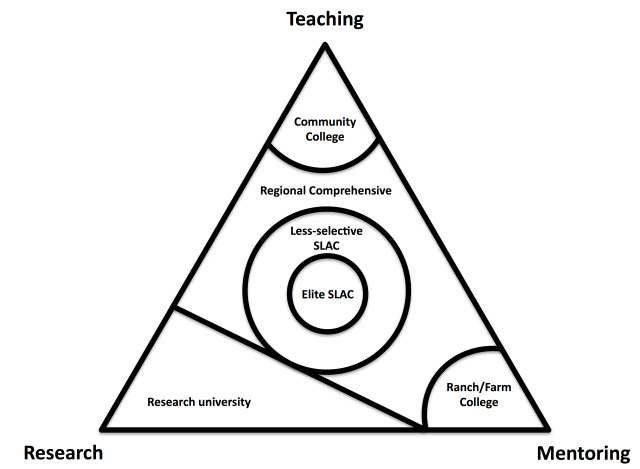
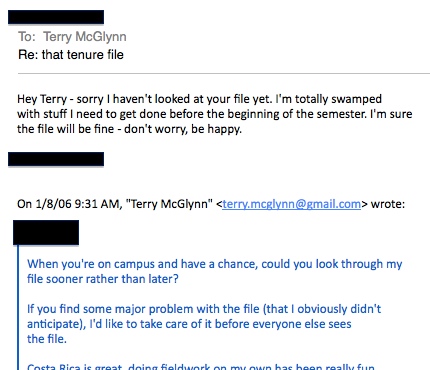
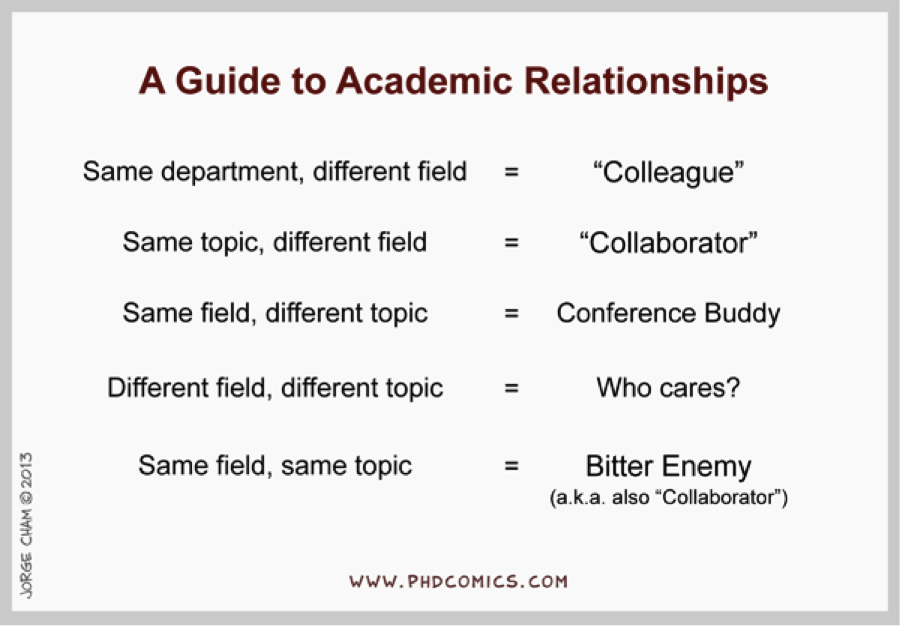
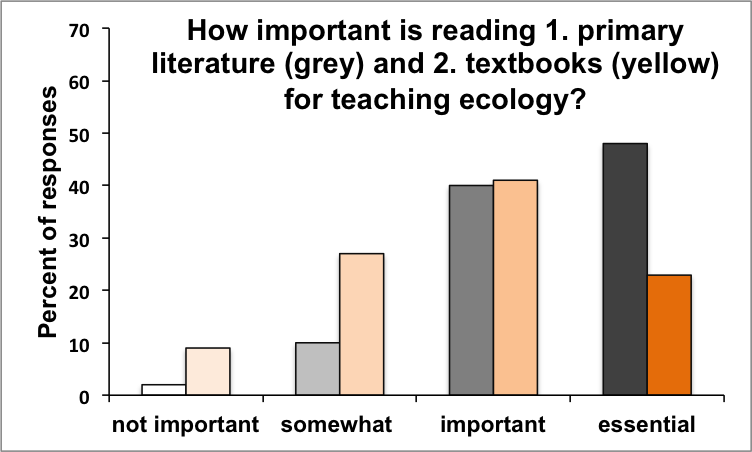
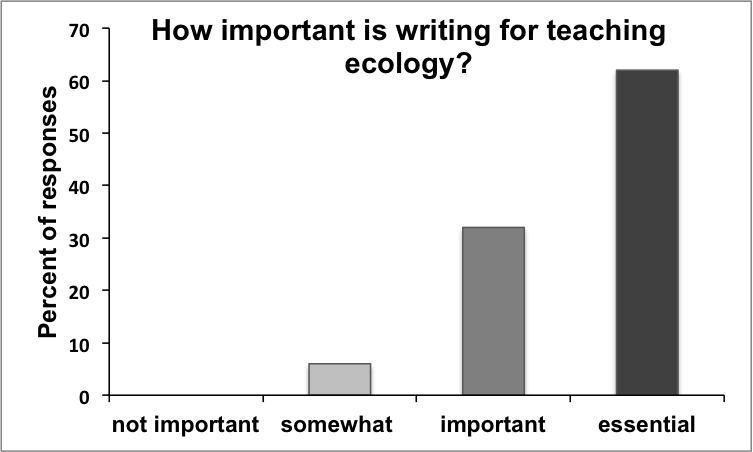
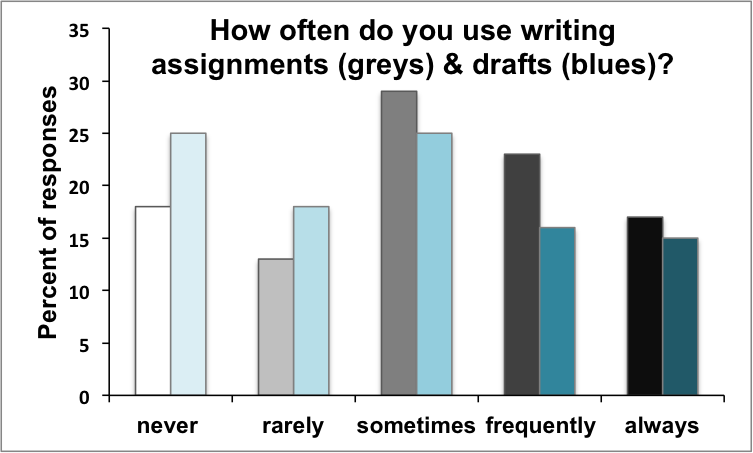

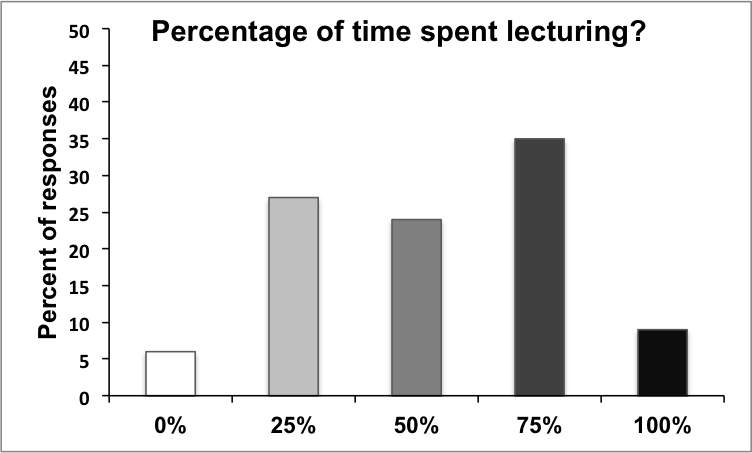
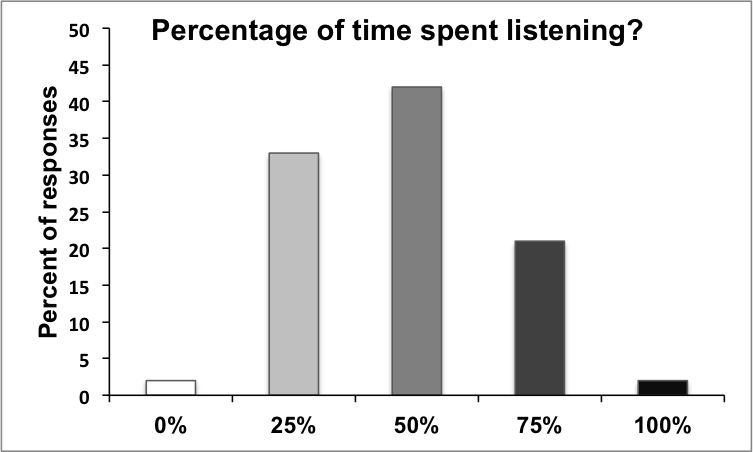
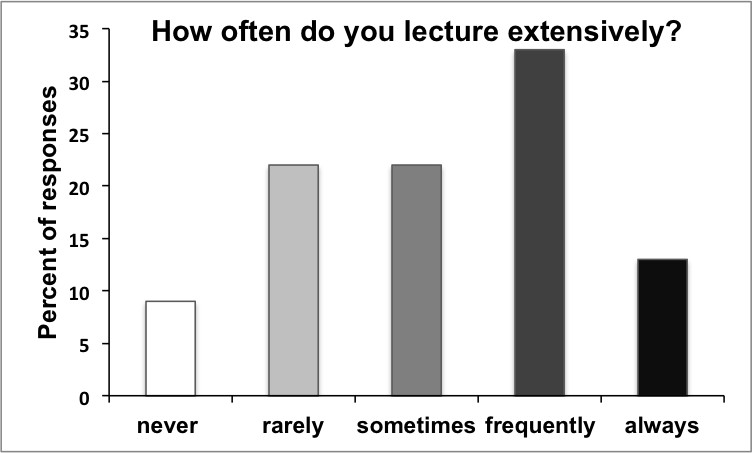
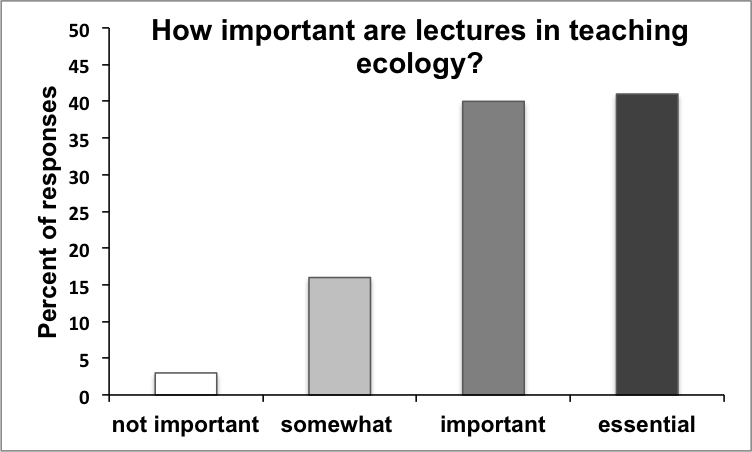
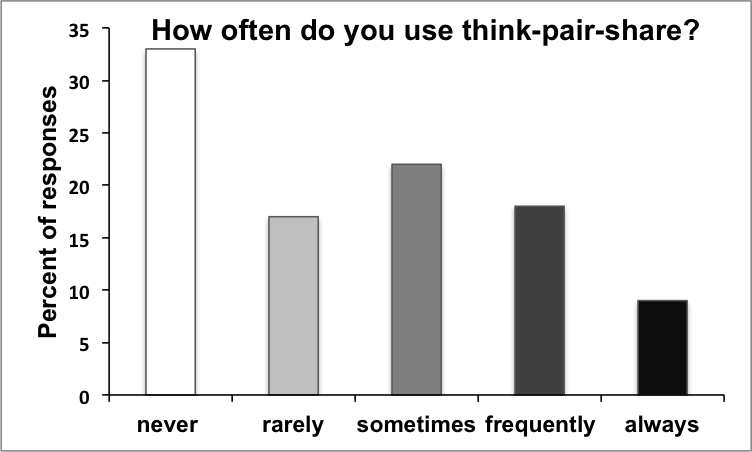
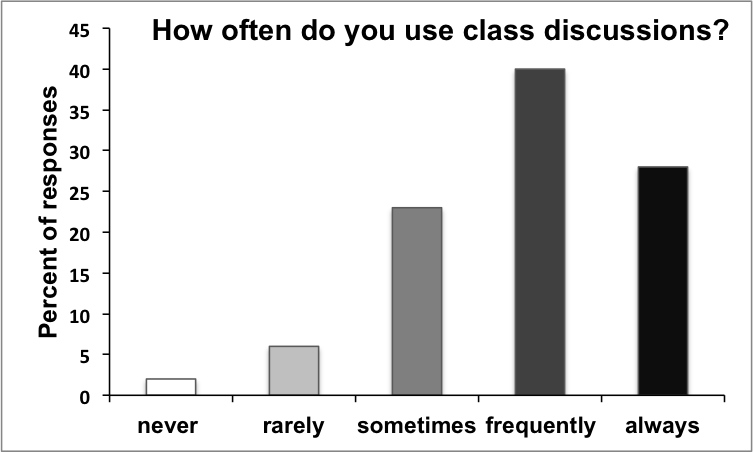
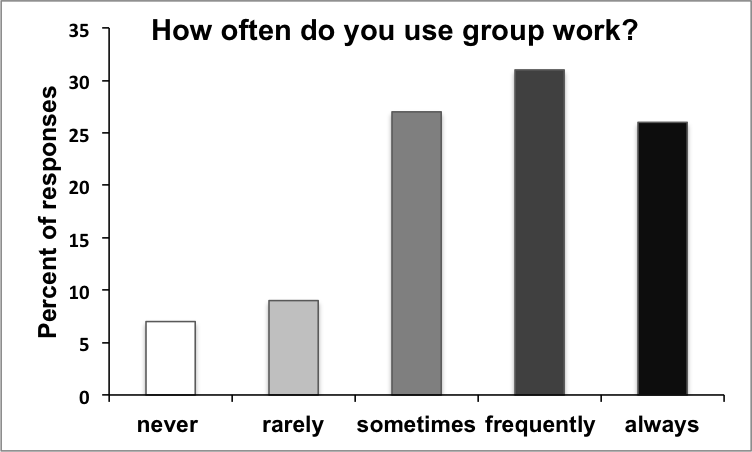
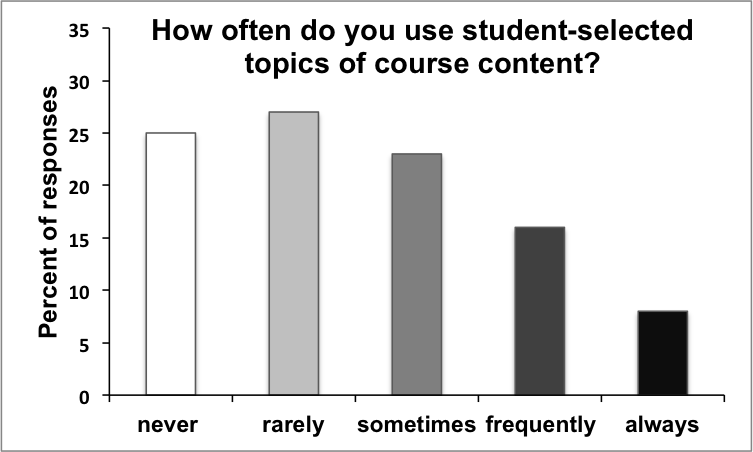
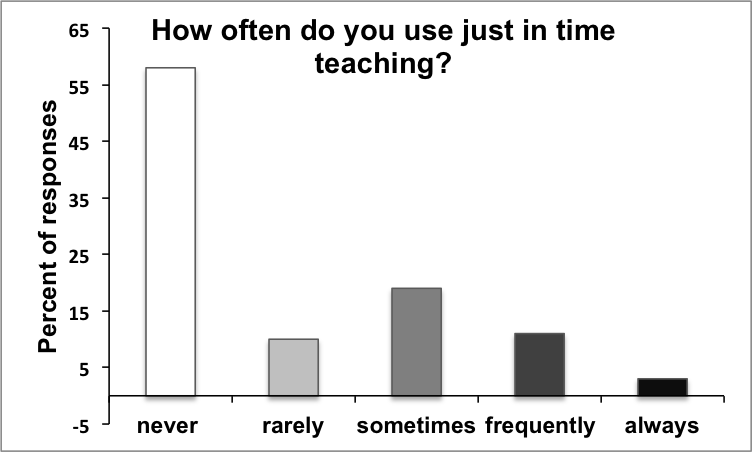
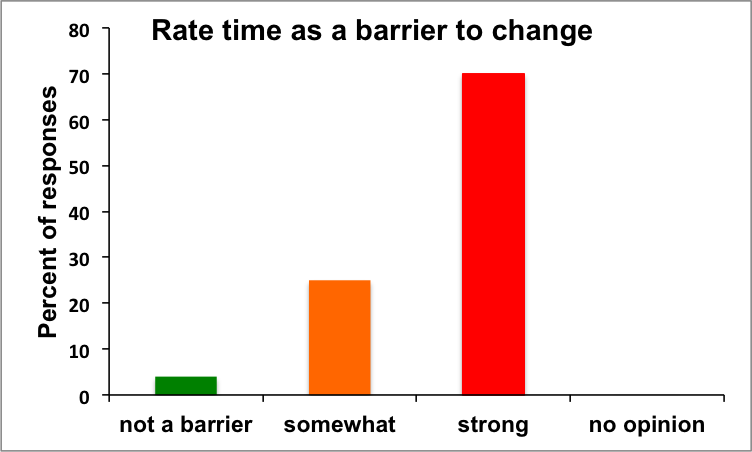
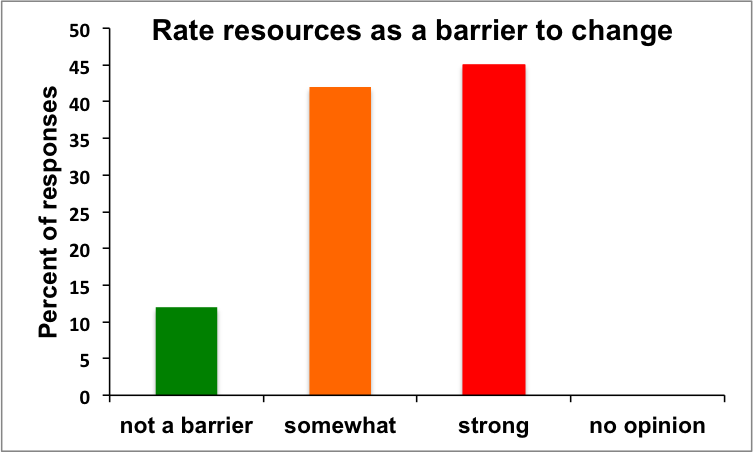
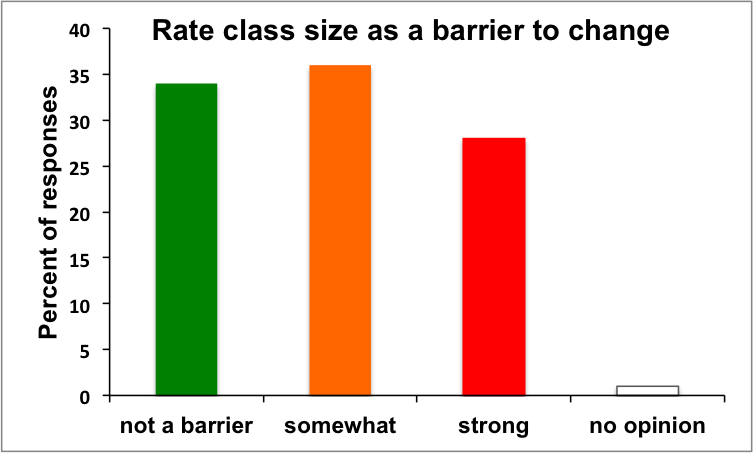
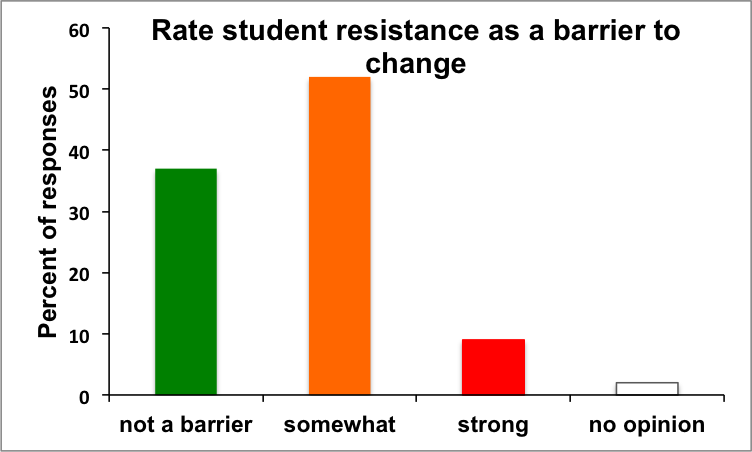
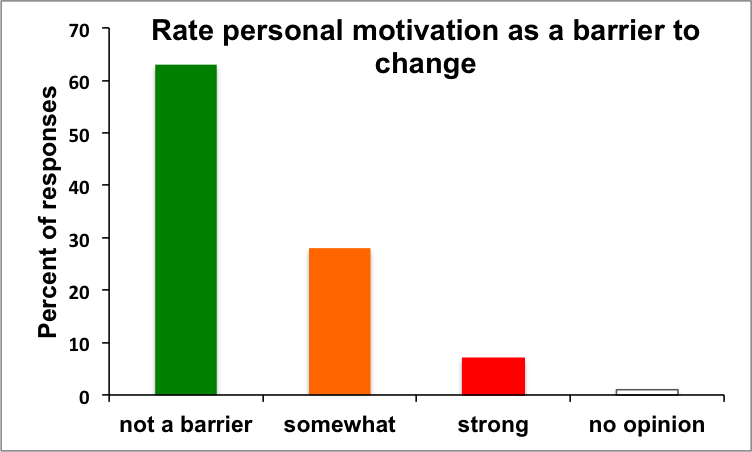
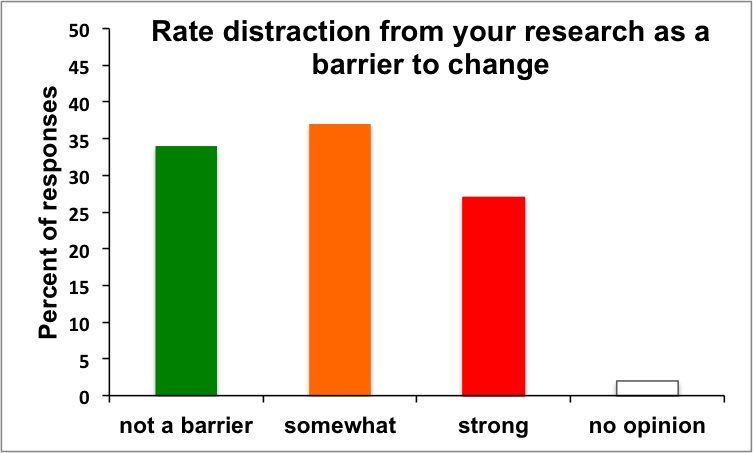
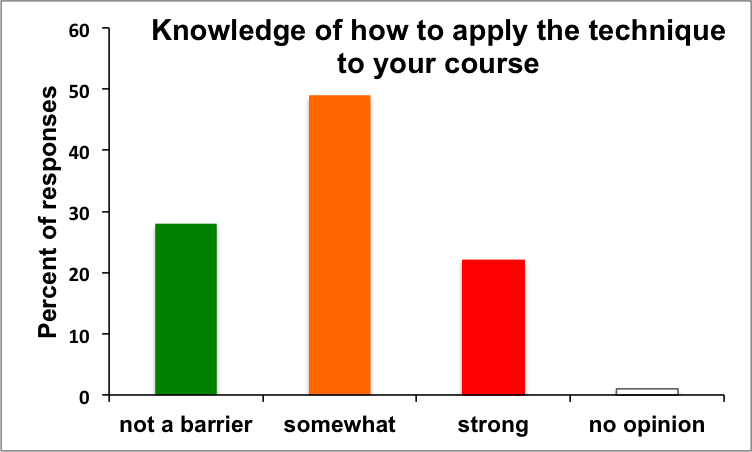
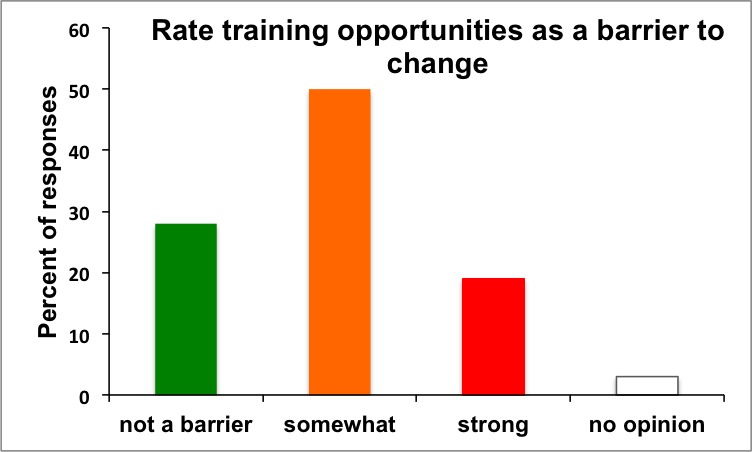
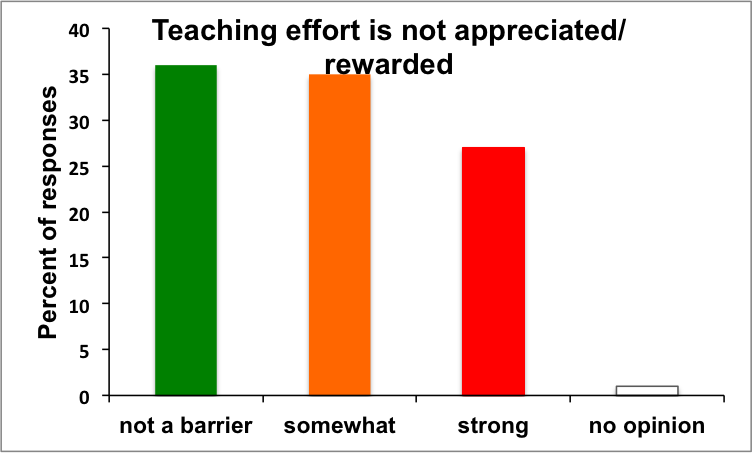
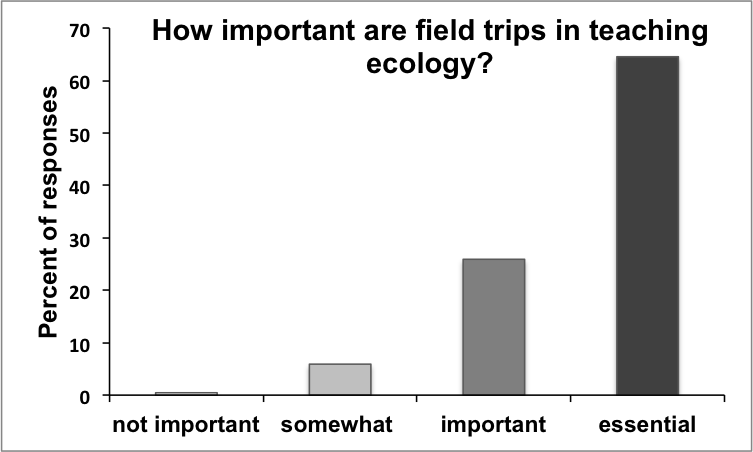
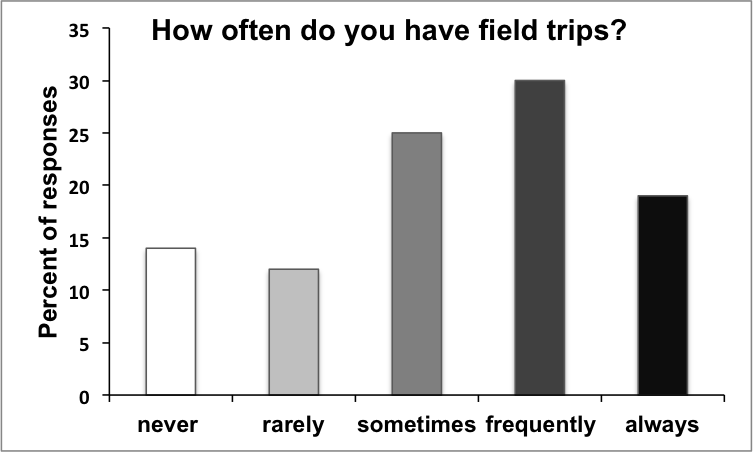
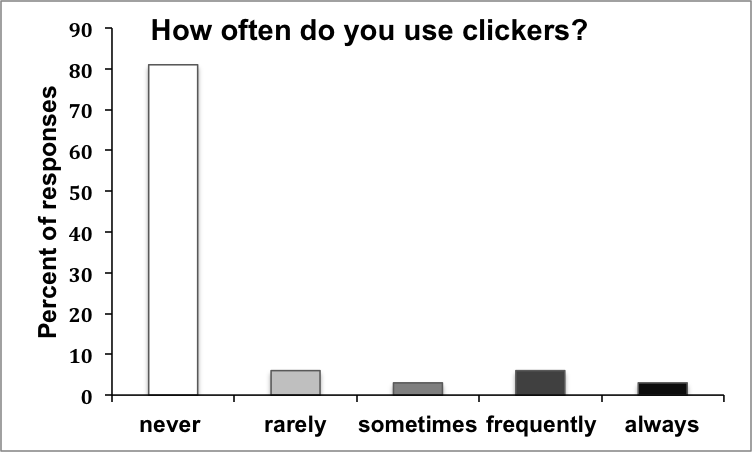
 Class needs to end when it is supposed to end.
 Small Pond Science