Why I knit (and give thanks)

Standard

I am Canadian, and living in Sweden, I often get comments suggesting that I’m really American (North American, true but somewhere along the line the United States took over the term ‘American’). So, although I know that I am very similar to my American neighbours in many ways, I always bristle a bit at being called an American (probably the one unifying trait of Canadians!). One small thing I could never wrap my head around was American Thanksgiving. I lived in the US for 5 years, so that was 5 Thanksgivings to get used to the idea. But still it always came as a surprise (4-days off work, now?) and I rarely had plans like everyone else seemed to because the date wasn’t engrained on my mental landscape. And it is not like Canadians are foreign to the idea of Thanksgiving… But as a grad student it was often a time to catch my breath during the semester and I usually didn’t leave town or doing anything big.

It is work as usual today in Sweden but Thanksgiving talk on facebook, twitter and whatnot has got me thinking about taking a moment and catching my breath.

As a scientist, a mother to a young child, partner to an also busy man, it is easy to forget to take moments to reflect. I know I’m happier when I do, but that doesn’t mean I always manage it. I like the tradition of taking time to gather your friends and family and remember what you are thankful for. Whenever I take a moment, I realise how much I am truly thankful for.

So Happy Thanksgiving to my American friends! Hope you have a lovely one this year.

As I was thinking of taking a moment to ground yourself and in my case this fall, just calm the f*ck down (interviews, rejections, and other stressors), I starting thinking about on what helps me actually do that. For me, it isn’t surprising given my ecology leaning that being in nature is a good way to restore balance. With our recently purchased row house, I’m also rediscovering the meditation of gardening (although that is mostly come to an end for the season). Exercise always helps. But I also find cooking/baking calming and I’ve always loved to make things with my hands. I come from a crafty family and I have a whole closet full of supplies for beading, sewing and knitting.

In all of this, I started thinking about knitting more and why I do it.

What does knitting have to do with ecology or academics? On the surface, maybe not so much. I happen to do both, so maybe I see connections that few would. Strangely enough, knitting and science came hand in hand for me. When I started my masters program, there was a knitting group starting up. I went out and got some random wool and needles and showed up. One fun discovery was that my hands remembered the motion of knitting learned and quickly abandoned around age 10. I don’t think I ever even finished a scarf then but I guess I did it enough to learn the skill.

Since my knitting has developed along side my science career, the two are loosely linked for me. Here is my semi-random list of what I have learned from knitting and how it applies (in my mind at least) to ecology/academia.

The big picture. It is pretty easy to get caught up in the details of a project. It is only through keeping the big picture in mind that you can troubleshoot along the way and end up with something useful.

Seeking patterns. Now this might mean different things in ecology and knitting but ultimately in both I find that I spend a lot of time collecting information on patterns. In both it is good to know when it is time to stop seeking (reading the literature, etc) and start doing. Research is good but you’ll never have that scarf if you don’t start it. The same applies with a study, experiment or whatever.

Be willing to tear it all apart. Once you’ve constructed a sweater, it would be nice to say, ok, it is done; the same with a manuscript. In both cases, I have had times where things just didn’t fit or weren’t working as I wanted. Whether that means unraveling a sweater or completely reworking an introduction, you need to be able to both accept when it isn’t working and be willing to take it apart to make it better.

Creativity is important. Sure you can always follow someone else’s pattern but some of the best projects are often those that modify an existing pattern. Build on what others have learned but do something new with it. This philosophy works for my knitting and my research.

There is beauty everywhere. Even the most simple, functional items can have a beauty to them. The world around us is a beautiful place. If I pay attention to that beauty, of a well-constructed garment or a weed in a crack in the sidewalk, I tend to be happier and more grounded. In all the hard work (and sometimes frustration) that goes into a project, sometimes it is easy to forget the beauty of it. There is beauty in understanding the world, even the small piece of it that I study. As much as knitting reminds me to keep the big picture/end product in mind, it also helps me appreciate the small things.

Mistakes are common and ok. It’s life. Some mistakes require big fixes but others you need to just let go. Sure it is a lofty goal to make something without mistakes (slipped stitches, typos, …), it is important to remember that we all make them and learn from them. Learning to let go of perfection is important, otherwise the expectation of perfection can be crippling. Although I do admit to cringing at the typos I have missed in a publication.

Everything gets easier with practice. I can now knit simple patterns without constantly looking at the work and there are so many skills that I’ve picked up along the way in my career. Skills all start out slow and awkwardly but with practise can become automatic. It is good to remember that when facing down that new challenge. Maybe someday I’ll try a more complicated colour work pattern (such as Fair Isle) and then there is that spectrophotometer I’ve just order for the lab…

Ultimately, I find knitting calming. It helps clear my mind and lets me feel productive when I just want to shut down my brain. There is something very soothing about being able to directly observe my progress as well. Unlike science, when I learn a knitting technique or stitch or whatever, I can see the results right away. The progress of a project is visible rather than abstract. Sometimes it is nice to have that to contrast the ephemeral accomplishments in science.

What are the things you do to calm down and remind yourself of what you are thankful for?
On creating your own path through life

Standard

This weekend, I took my kid to a Mythbusters live show. When I left, I was inspired.

The source of inspiration wasn’t the world’s most impressive paintball gun, modified from an anti-aircraft machine gun. Though that was pretty cool.

I was inspired by learning about the wandering path taken by Jamie Hyneman. He’s the quieter Mythbuster that always wears a beret and has walrus-y facial hair. A one-page bio of Hyneman was in the big glossy program connected to the show.

As long as it’s all true, it seems that Jamie Hyneman has led one hell of a life. I’ll try to capture his trajectory, based on what I learned from his bio as well as his Q&A session during the show. The timing of all these things is rather vague to me, but here are highlights:

  • He grew up in a small Midwestern town. When he was 14, at his request, his parents sent him to a hardcore wilderness survival training school in Wyoming.
  • When he graduated from high school he bought a pet shop, and then sold it after a few years.
  • He went to college and got a degree in Russian. At one point along the line, he worked as a librarian for the United Nations in Geneva.
  • He worked as crew on sailing vessels in the Caribbean. He eventually bought his own ship, and got all the certifications to be a captain, and sailed around for a living.
  • He was interested in the various creative challenges with movie effects, so he left for New York City, where he started working in entry-level jobs in movie production, working to gain new skills.
  • He moved to San Francisco to access more exciting movie production work, and when his company folded he bought up the shop and went into business for himself. One of the guys he hired along the line was Adam Savage. At some point he asked Adam to join him in a pilot for Mythbusters, and you can figure out the trajectory for the following ten years up to the present.

I hear far too often, “What can I do with a degree in X?” This question comes with a false assumption: what you do after college must directly follow from the undergraduate degree. When a premed asks me what’s a good major, I say: “What do you find interesting? Since you’re going to be a doctor for your whole life, then what do you want to do before you get trained as a doctor? Art? Philosophy? Economics? Cell Biology? Music?”

Jamie Hyneman became a Mythbuster, with a degree in Russian. One of my siblings became a financial manager with a degree in Art. Another became a middle school special education teacher with a degree in Theater. A friend of mine became an FBI agent with a degree in Biology.

We chart our own paths in life. Far too often, we let our past decisions dictate our future directions far more than necessary.

The way that academics discuss their jobs in the university, they make it sound like we are captive to our disciplines. Tenure has been called the golden handcuffs. That’s pretty much the silliest notion ever. You can study — and do — whatever you want with tenure.

Linus Pauling, a tenured protein chemist, won a goddamn Nobel Peace Prize because of his social activism. This didn’t happen because he was handcuffed to the laboratory. Then again, nobody ever used the term “golden handcuffs” in the day of Linus Pauling. Nobody told him he couldn’t be both a scientist and social activist.

Jamie Hyneman could have made a go at his Indiana pet shop until retirement, or he could have stayed on as a Russian librarian, or he could have been running a sailing business in the Caribbean for his career. Or he could have kept to movie effects and never made a TV pilot. Mythbusters isn’t the culmination of his life. It’s just one chapter, albeit a very public one. He’s chosen an exciting and rewarding route.

All of our lives are short, and from the looks of it, Jamie Hyneman is making the most of his.

My trajectory is as linear as Hyneman’s has been circuitous. I went to high school, then college. Then I farted around for a year before grad school. Then I did a postdoc, visiting faculty, assistant professor, associate professor. I’ve lived in different places but I have been a scientist since the age of 20, and I enjoy science so much, that I’ll just keep doing it.

I have a very rare gift – tenure – and I don’t want to waste it. I have the opportunity to attempt the extraordinary, and am able to keep my stable job and pension in my back pocket the whole time. I’d like to think that what I am doing, on a day-to-day basis, is a part of this attempt. This blog is part of the attempt, and the continued effort to provide opportunities to my students is part of that attempt. This attempt at the extraordinary means that I will continue to pursue high-risk experiments that might not work but could turn out to be exciting. I’d like to think that with less personal security, I’d be just as inclined to take chances. I don’t know how true that would be.

The most extraordinary endeavors can also appear, on the outside, to be the most mundane. Being a parent, and spouse, is a special responsibility and joy. Sometimes the most extraordinary thing is making waffles for my family on a weekend morning. That might seem like an odd take-home message from a night out with the Mythbusters. But if Jamie can give up his gig as a Russian librarian to become a movie special effects wiz, then I can be, and do, far more than the stereotyped professor, husband and father.

This purposefulness about living an intentional life did not emerge in isolation. Overwhelming anything related to Mythbusters, this weekend my family experienced a loss that was was simultaneously sudden and gradual. I’ve been freshly reminded of the brevity and preciousness of life.

Perhaps the best way to honor those that have given us life is to make utility of this life as much as possible. It can be entirely workable that inspiration for our own utility can come from unconventional sources.

Friday Recommended Reads #11

Standard

Alfred Russel Wallace gets his first statue, unveiled by David Attenborough.

About ten years before AR Wallace got his due, Antarctic Explorer Mrs. Chippy was memorialized with a statue, in honor of Harry McNish, the carpenter who was instrumental in the survival of the the entire Shackleton expedition.

It’s very rewarding to work with first generation college students. This site is designed to help more students be able to say, “I’m first!” There are a huge number challenges connected with the leap of going to college, but life without having gone to college is a lot more difficult. That notion might be obvious to those with an academic background, but could be a rare and unsupported concept for students without family members who have graduated from college. This site can help make these concepts more tangible and looks like it has the potential to be a powerful outreach tool.

It is crazy how many museum administrators and board members have no grasp of basic museum ethical guidelines regarding curatorial practices. Here’s a story about how the San Diego Natural History Museum (which recently adopted the unfortunate moniker “The NAT”) narrowly stopped a sale of valuable fossils in their collection.

This one made big rounds in social media but I want to share it anyway: A collection of lists of things that people were surprised about when they came to the United States.

There was a great story on the BBC about an engineer who learned he had Marfan syndrome, a lack of elasticity in his aorta. So he invented a new fix for it and convinced his doctors to implement it.

Here is a non-link reading item: There is a growing trend for public shaming of tourists doing big-game “hunting” in Africa by broadly distributing the photos that the perpetrators share on social media. Anybody who is both willing to shoot a lion or elephant as a trophy and stupid enough to circulate a picture of themselves celebrating their actions really deserves these photos to be widely distributed.

If you’re looking for a longish vacation, in a home rather than a hotel or rental unit, then home exchanges are awesome. This article about a California family’s exchange with a Parisian family is so much like my own family’s experience it’s summer, it’s like we could have written it ourselves. Including the part about not easily figuring out how to find reverse on the gearshift of our host family’s car. (I’ve done two home exchanges so far, and I’ll probably doing it a bunch more.)

Have you noticed the deflating uniformity shared by rehabilitated and upper-class locations? Is it the case that true local character is destroyed by wealth? Here’s a thought-provoking article about that idea, which is also about Paris.

I’ve always been pleased to tout Chris Buddle’s great roundup of things in the world of science called Expiscor, with a tilt towards charismatic spiders. He’s sold out moved up to a new home hosted by SciLogs, tied to nature.com. (And hey, I’d link to Expiscor even if the First Segment didn’t feature my ant-y stuff.)

Thanks to Andrew Farke (@AndyFarke) for a link.

Oh, and this’ll be the last time I mention Jared Diamond, I promise: As recompense for the creatively titled monomaniacal review I linked to earlier, here’s a review in the pages of the London Review of Books that is far more measured, and as a result, is even more damning: The final sentence reads, “We have virtually no credible evidence about the world until yesterday and, until we do, the only defensible intellectual position is to shut up.”

Have a great weekend, and as always, feel free to add your own recommended reading in the comments.

The three most important members of your department

Standard

Everybody matters. But on a day-to-day basis at work, there are three people who have a lot of power. They can make things very pleasant, or the converse.

Here’s a slightly premature Thanksgiving. Unless you’re Canadian, which would make this a late Thanksgiving.

First, our departmental administrative assistant is five steps above spectacular. When I say that I don’t know how she does all that she does, it is not hyperbole. I truly can’t imagine how she handles all that she does, and she does it so well. She schedules, she allocates, she does politics, she is a central information center, she shares, she supervises, she tolerates, and she handles. She won the university-wide staff award this year. If we put in a bid for her every year, there’s a very good argument to be made that she should win every year.

Second, our techs who set up labs are not only models of effectiveness, but they are masters at making do with few resources. Not only do they fix problems when they come up, but they are even better at anticipating and avert them before they happen. They’re excellent teachers on top of all of this, too, and our students benefit so much from working with them. Our senior tech in the department won the university-wide staff award, the year they invented the award, two years ago.

Third, my chair. He protects us from unnecessary bureaucracy as much as possible, and he arranges our teaching schedules, taking us into account as human beings, and to maximize our efficiency in teaching. He has to deal with all the crap that we don’t want to, and he doesn’t like it any more than we do ,but he does it as a service to his faculty to help the department serve its students well. He works hard to make opportunities for our students and he sees how being in charge of stuff, done right, really can make a difference. My chair is spectacular. Somebody needs to give this man an award.

I have an exceptionally collegial department, and it’s a privilege and a pleasure to work with everybody. I’m grateful, and a little humbled, because the folks I listed above do their job to facilitate what faculty do in classrooms, labs, and our research programs. This work is inadequately appreciated, and when it’s done well, it’s not even obvious. Labs are set up with things I didn’t even knew I needed. Paperwork glitches get resolved without me being aware they happened. Phone calls get made on my behalf without me even putting in a request. These kinds of things are priceless, and I’m ever so thankful.

Are you a fighter? A women in science post.

Standard

Earlier this fall, I had an interview for a tenure-track job here in Sweden. I didn’t get the job, which was of course disappointing, but that isn’t really why I am writing here. The interview process was stressful and it is tough sitting in front of a panel addressing their questions one after another. It feels a bit like everything about you is on trial. I was prepared to answer tough questions about my work, how I would function in the department, as an advisor, etc. But there was one single question that really threw me: ‘Are you a fighter?’

In the interview, my mental response was basically WTF? It felt like a gender-specific question—are you one of those women who will just trying to please everyone and do as you are told or are you a fighter? Now to be fair, I’m pretty sure the question was asked to see how I would respond and I heard the other candidates had a similar kind of experience. Regardless of the reason, the fact that such a question could be construed as gender-specific was disturbing to me.* It pushed a button because I realised that I am a fighter and what is more I have had to be to get where I am.

I have been incredibly fortunate in my scientific career. I’ve had great, if sometimes difficult, relationships with my mentors and advisors. But really, I’ve had lots of support throughout. I also have not experienced any direct sexual harassment in a professional context. So, in that sense, science has been a safe place for me. This fall, twitter and the blogosphere are showing that this is not the case for many (one summary), which is unfortunately not at all surprising (wouldn’t say I’ve lived a harassment-free life). I have been deeply saddened by the revelations about race and gender and sexual harassment. I truly applaud the bravery of the women who are speaking out because I know first-hand how tough that can be. But I’ve been quiet about my own feelings, in part because I haven’t had my own experiences to share.

Unfortunately, there has been another development recently with an inappropriate/offensive joke video where Einstein is seen sexually harassing Curie. If you are not a part of the “online science community”, you’re probably sheltered from these discussions. Being pretty new to blogging and twitter myself, I’ve felt mostly like an outsider—I haven’t been directly affected by what’s happening and I haven’t known any of the players. But all the events have got me thinking about many aspects of privilege and gender.

Of course there have been times where I wonder how my gender plays a role in where I am. Have I been passed over for opportunities because I am female? Have I been asked/hired/etc because I’m female? These doubts can play a role in undermining who we are as women and scientists. Follow #ripplesofdoubt on Twitter to see how pervasive this can be and #ripplesofhope to see positive reflections on change.

Although I haven’t faced direct discrimination, there have been situations where my gender has been at the forefront:

  • On not getting a talk award (think it was meant to be consoling): “Men are more convincing because they have deeper voices and sound more confident. Your voice is too high.”
  • An off-handed comment about having met with someone in a professional context: “He does like talking to the ladies.”
  • Or undermining responses course evaluations about my appearance rather than my teaching.
  • Or those times I’ve watched younger students/mentees turn to a male colleague to seek answers/approval.
  • Or having your male colleagues worry they don’t have a chance at a job because they are male and thereby implying that you have a leg up because of your gender.
  • Or that time I was talking to a high profile evolutionary biologist and I mentioned my daughter as one reason for not staying on in my PhD to do more experiments. The response “Can you publish that?” immediately told me that I wasn’t in a safe place and reminded me that I could be judged for considering anything other than the science when making decisions.

But like many women, I have tended to shrug these incidents off. I haven’t wanted to be too sensitive, and too, well, female. So I pretend that the comments don’t matter and they don’t affect me. But of course they do. Although these are subtle forms of suggesting that I don’t belong or aren’t good enough, they are a part of what many of us experience.

One positive thing that has come out in the last few months has been that people have begun to speak up. I have come to realise that I need to make more effort to do the same. Although it is tough, it is important to speak up both for myself and for other women. Ignoring and internalizing comments changes nothing. We all need to be allies. I’ve been encouraged by the efforts to be positive and change things for the better (e.g., see here for lots of good ideas on supporting other women). Science is a tough gig; it’s what drives many of us. But I hope we can all move towards a more inclusive place where we support each other regardless of race, gender, age, size, hair cut, clothing, family….. Hopefully discussions surrounding causal and not so causal sexism/harassment can help us all get there.

At the interview, when asked if I was a fighter I was thrown off. I was mad and I struggled to regain my footing in the interview. I highly doubt that it cost me the job but I left the interview unsettled.

The next time someone asks me whether I’m a fighter, I know what I’ll say: I am a scientist. I am a woman. I’m here. Of course I am a fighter, what else could I be?**

Post script: writing about sexual harassment and discrimination while simultaneously watching cartoons is both very strange and comforting at the same time. I’m home with my sick 4-year old daughter and being with her reminds me part of why I want to do my bit to change things for the better.


*When discussing questions afterwards with two male collaborators who where also interviewing, we were able to match most of the things we were asked, except they were not asked if they were fighters.

**I think that men also face some of the same struggles in academia. You have to have a bit of fight in you to stay in this game.

Journal prestige and publishing from a teaching institution

Standard

Finally. There are journals publishing quality peer-reviewed research, but leave it to the reader to decide whether a paper is sexy or important. Shouldn’t this be better than letting a few editors and reviewers reject work based on whether they personally think that a paper is important or significant?

This newish type of journal uses editors and reviewers to assure quality and accuracy. The biggie is PLoS ONE. A newer one on the block is PeerJ. Another one asked me to shill for them on this site.

The last few years have seen a relatively quick shift in scientific publishing models, and there has been a great upheaval in journals in which some new ones have become relatively prestigious (e.g., Ecology Letters) and some well-established journals have experienced a decline in relative rank (e.g., American Journal of Botany). These hierarchies have a great effect on researchers publishing from small ponds.

Publishing in selective journals is required to establish legitimacy. This is true for everybody. Because researchers in small teaching institutions are inherently legitimacy-challenged, then this is the population that most heavily relies on this mechanism of legitimacy.

Researchers in teaching institutions don’t have a mountain of time for research. Just think about all of the time that could be spent on genuine research, instead of time wasted in the mill of salesmanship that is required to publish in selective journals. (I also find that pitching research as a theory-of-the-moment to be one of the most annoying parts of the business.)

With new journals that verify quality but not the sexiness, we can hop off the salesmanship game and just get stuff published. Sounds great, right?

After all, the research that takes place at teaching institutions can be of high quality and significant within our fields. But, on average, we just don’t publish as much. That makes sense because our employers expect us to focus on teaching above all else.

Since we’re less productive, then every paper counts. We want to get our research out there, but we also need to make sure that every paper represents us well. What we lack for in quantity, we need to make up for in (perceived) quality.

How do people assess research quality? The standard measure is the selectivity of the journal that publishes the paper. It’s natural to think that a paper in American Naturalist (impact factor 4.7) is going to be higher quality than American Midland Naturalist (impact factor 0.6).

People make these judgments all the time. It might not be fair, but it’s normal.

And no matter how dumb people say it might be, no matter how many examples are brought up, assessments of ‘journal quality’ aren’t going away. No matter how much altmetrics picks up as another highly flawed measure of research quality, the name of the journal that publishes a paper really matters. That isn’t changing anytime soon.

The effect of paper on the research community is tied to the prestige of the venue, as well as the prestige of the authors. Fame matters. If any researcher – including those of us at teaching institutions – wants to build an influential research program, we’ve got to build up a personal reputation for high quality research.

Building a reputation for high quality research is not easy at all, but it’s even harder while based at a teaching institution. Just like having a paper in a prestigious journal is supposed to be an indicator of quality research, a faculty position at a well-known research institution is supposed to be an indicator of a quality researcher. Since our institutional affiliations aren’t contributing to our research prestige, we need to make the most of the circumstances to establish the credibility and status of the work that comes out of our labs.

If journal hierarchies didn’t exist, it would be really hard for researchers in lesser-known institutions, who may not publish frequently, to readily convince others that their work is of high quality. Good work doesn’t get cited just because it’s good. It needs to be read first. And work in non-prestigious journals may simply go unread if the author isn’t already well known.

If journal hierarchies somehow faded, it’s not as if the perception of research quality would evolve into some perfect meritocracy. There are lots of conscious and unconscious biases, aside from quality, that affect whether or not work gets into a fancy-pants journal, but it is true that people without a fancy-pants background still can publish in elite venues based on the quality of their work. This means that people without an elite background can gain a high profile based on merit, though they do need to persevere though the biases working against them.

If journals themselves merely published work but without any prestige associated with them, then it would be even more difficult for people without well-connected networks to have their work read and cited. It wouldn’t democratize access to science; it would inherently favor the scientists with great connections. At least now, the decisions of a small number of editors and reviewers can put science from an obscure venue into a position where a large audience will see it. On the other hand, publishing in a journal without any prestige, like PLoS ONE, will allow work to be available to a global audience, but actually read by very few.

If I want my work to be read by ecologists, then publishing it in a perfectly good journal like Oikos will garner me more readers than if I publish it in PLoS ONE. Moreover, people will look at the Oikos paper and realize that at some point in its life, there was a set of reviewers and an editor who agreed that the paper was not only of high quality but also interesting or sexy enough to be accepted. It wasn’t just done well, but it’s also useful or important to the field. That can’t necessarily be said of all PLoS ONE papers.

Not that long ago, I thought that these journals lacking the exclusivity factor were a great thing because it allowed everybody equal access to research. What changed my mind? The paper that I chose to place in PLoS ONEI chose to put a paper that I was really excited about in this journal. It was a really neat discovery, and should lead to a whole new line of inquiry. (Also, the editorial experience was great, the reviewers were very exacting but even-handed, and the handling editor was top notch.)

Since that paper has come out just over a year ago, there have been a number of new papers on this or a closely related topic. But my paper has not been cited yet, even though it really should have been cited. Meanwhile they’re citing my older, far less interesting and useful, paper on the same topic from 2002.

Why has nobody cited the more recent paper? Either people think that it’s not relevant, not high enough quality, or they never found it. (Heck, the blog post about it has been seen more times than the paper itself.) Maybe people found it and then didn’t read it because of the journal. It’s really a goddamn great paper. And it’s getting ignored because I put in PLoS ONE. I have very little doubt that if I chose to put it in a specialized venue like Insectes Sociaux or Myrmecological News, both good journals that are read by social insect biologists, that it would be read more heavily and have been cited at least a few times. This paper could have been in an even higher profile journal, because it’s so frickin’ awesome, but I chose to put it in PLoS ONE. Oh well, I’ve learned my lesson. There are some papers in that venue that get very highly cited, but I think most things in there just get lost.

I would love for people to judge a paper based on the quality of its content rather than the name of the journal. But most people don’t do this. And I’m not going to choose to publish in a venue that may lead people to think that the work isn’t interesting or groundbreaking even before they have chosen to (not) read it. I’ll admit to not placing myself on the front of reform in scientific publishing, even if I make all of my papers immediately and universally available. I have to admit that I’m apt to select a moderately selective venue when possible, because I am concerned that people see my research as not only legitimate but also worthwhile. I’m not worried that my stuff isn’t quite good, but I want to make sure it’s not done in vain. Science is a social enterprise, and as a working scientist I need to put my work into the conversation.

Could twitter have saved the lives of seven astronauts?

Standard

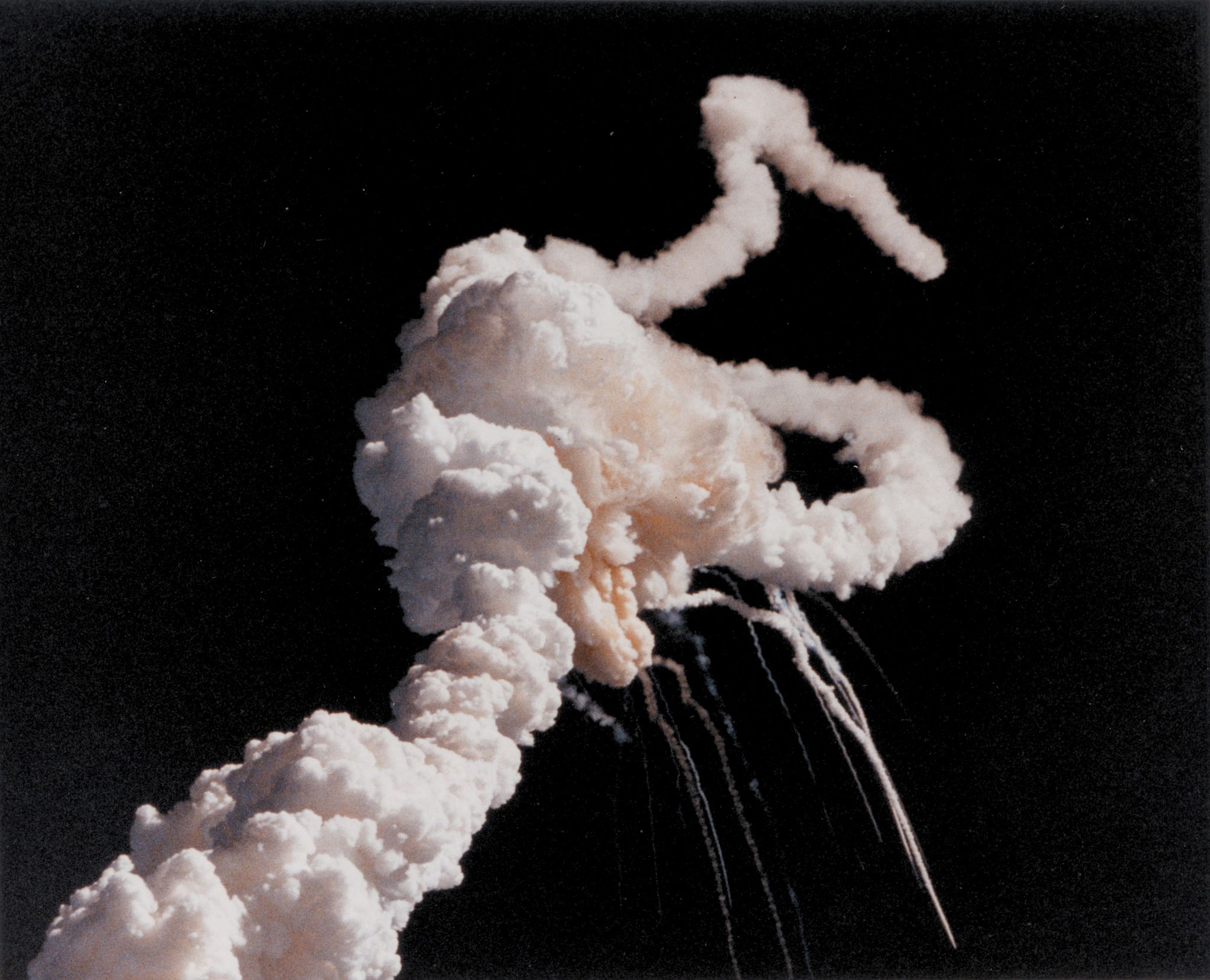
When the space shuttle Challenger launched on the morning of 28 January 1986, Roger Boisjoly couldn’t muster the fortitude to watch the launch of the shuttle, as its engines ignited on the launch pad. Moments later, the crew was lifted through the sky to their deaths. Boisjoly and some of his colleagues had spent the preceding night petitioning and pleading, in vain, to avert this tragedy.

Boisjoly was an engineer working for Utah-based NASA contractor Morton Thiokol, who worked on the design of the solid rocket boosters for the space shuttle program. (Morton Thiokol received a $800 million in contracts for their work on the shuttle program, equivalent to a value of almost $1.5 billion today.) Boisjoly and his colleagues were terrified about the prospect of a disaster on this particular launch, because of the weather forecast for Cape Canaveral. The cold temperature triggered events resulting in the loss of the entire vehicle in the timespan of a couple heartbeats.

The explosion of the Space Shuttle Challenger in 1986.

The explosion of the Space Shuttle Challenger in 1986.

Is Boisjoly complicit in the deaths of the shuttle crew? Not at all – he was a true hero. He did everything he could, ultimately sacrificing his own career.

This disaster may be blamed on those who failed to heed the specific and detailed warnings offered by Boisjoly over the year preceding the avoidable tragedy. However, this might not be what you will read in the Rogers Commission report issued in the wake of the disaster.

The Challenger disaster occurred because of a failure of leaders who did not think that public knowledge would, or could, have any bearing on the life-or-death decisions happening in NASA headquarters.

A lot has changed since 1986. The veil that separates the public from governmental and industrial organizations has been partially lifted, through the distributed access to information through social media. When the public has access to technical information about government operations, then the mechanisms of accountability may change.

In the media environment of 2013, is it possible that Boisjoly could have prevented a disaster like the loss of the Challenger? Could Twitter have saved the lives of the Challenger astronauts?

Imagine these tweets, if they came out 24 hours before a predictably fatal shuttle launch:

https://twitter.com/RogBoisjoly/status/400856882463535104

https://twitter.com/RogBoisjoly/status/400857411348467712

Why was Boisjoly so fearful that shuttle was going to blow up? One component of the design of the solid rocket boosters was an O-ring that would become predictably unsafe when launching in cold temperatures. The forecast on that fatal morning was for conditions colder than any previous launch — below freezing — and below the temperature threshold that Boisjoly knew was required for safe performance of the elastic component of the O-ring seal. (If you’re older than 40, then I would bet that you must remember hearing a lot about the O-ring.)

Three weeks after the disaster, in an interview with NPR, Boisjoly reflected:

I fought like Hell to stop that launch. I’m so torn up inside I can hardly talk about it, even now.

One year later, in a subsequent interview, he explained how close he could have been to stopping the launch, if he could have been more convincing:

We were talking to the people who had the power to stop that launch.

Is it possible that the people — the taxpaying public — could have been the ones with that power? I don’t know the answer, but it’s an interesting question. If Boisjoly was an active twitter user, with followers who were fellow engineers able to evaluate and validate his claims, wouldn’t they have amplified his concerns on twitter and other social media? Wouldn’t it be possible that, in just an eight hour period, that a warning presaging the explosion of the Challenger would be retweeted so many times that the mass media and perhaps even NASA would have to take notice?

Wouldn’t aggregator sites like The Huffington Post and Drudge pick up a tweet like Boisjoly’s warning, if it got retweeted several thousand times?

Wouldn’t the decision-makers at NASA have to include very public warnings about a disaster in their calculation about whether to greenlight or delay a launch? Don’t you think they’d get even more anxious about the repercussions of overlooking the engineers’ concerns?

Wouldn’t the risk of an disaster, after warnings by an engineer who worked on the project, alter the cost/benefit calculus in the minds of the people who would have been able to delay the shuttle launch? Even if they didn’t believe the claims of Boisjoly and his colleagues, then maybe they would choose to delay the launch anyway, if engineers using social media were claiming it would explode? Just maybe?

Social media has altered the power relationships among large agencies, the media, and the public. Individuals with substantial issues may have their voices heard, worldwide, over a very short period of time. It is possible that information sharing on social media could have prevented the loss of the Challenger?

Even though Boisjoly was, obviously and without any doubt, in the right, he was shuffled out of the industry because he dared to challenge authority in order to save lives. He should have been lauded as a hero, but I only heard of his heroics when I read his obituary last year in the LA Times.

If Boisjoly was successful in his bid to delay the launch using a rogue social media campaign, he still would have been blackballed by the industry as a whistleblower. If such a plea would have been successful, then none of us would ever have known for certain if his actions prevented a tragedy. All of us, including the lost crew of the Challenger, would be able to live with that uncertainty.

Richard Feynman was a member of the Rogers Commission investigating the loss of the Challenger. He issued personal observations as an appendix to the official report, and it’s not surprising that they deal with technical details with accurate conversational aplomb, while also cutting to the heart of the matter:

NASA owes it to the citizens from whom it asks support to be frank, honest, and informative, so that these citizens can make the wisest decisions for the use of their limited resources.     For a successful technology, reality must take precedence over public relations, for nature cannot be fooled.

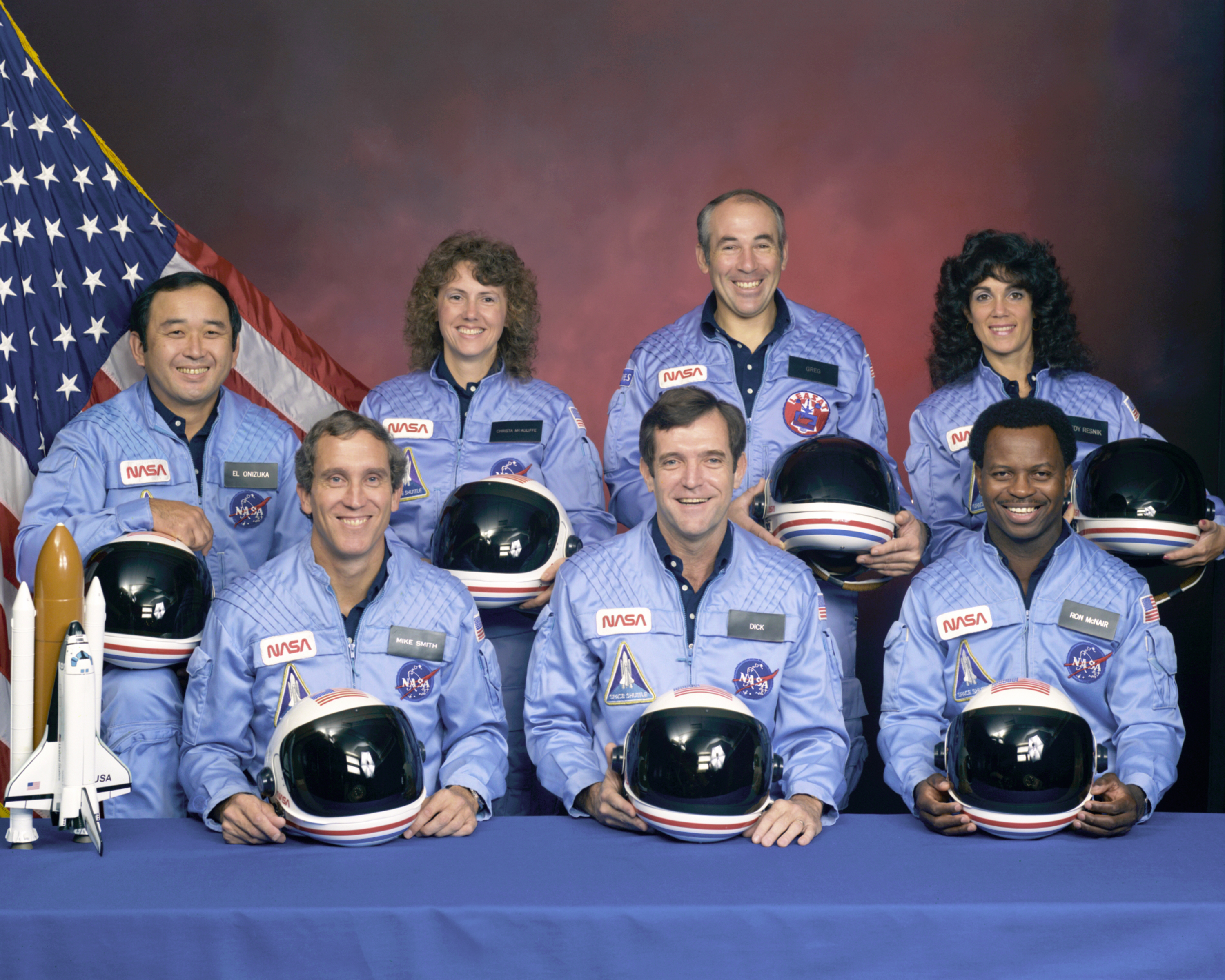
The crew of mission STS-51L: Francis R. Scobee, Michael J. Smith, Judith A. Resnik, Ellison S. Onizuka, Ronald E. McNair, Gregory B. Jarvis and Sharon Christa McAuliffe.  Image from NASA

The crew of mission STS-51L: Francis R. Scobee, Michael J. Smith, Judith A. Resnik, Ellison S. Onizuka, Ronald E. McNair, Gregory B. Jarvis and Sharon Christa McAuliffe. Image from NASA

Ant science: Ants try to eat protein beverages like solid food

Standard

Collectively, ants are efficient, and you might even call them smart. But individual ants are so dumb that they don’t even know how to feed themselves, as we show in the latest paper to come out of my lab. You could say that these ants have a drinking problem.

A bullet ant with a bubble of sugar solution in its mandibles. Image by Alex Wild

A bullet ant with a bubble of sugar solution in its mandibles. No scale bar is needed; this ant is about the size of your pinky finger, unless you have a small hand. Image by Alex Wild.

If you’re given a protein smoothie, you drink it. But if you give bullet ants a protein drink, they chomp and pull at it. If they knew how to use a fork, they’d probably try that, too.

The bullet ant Paraponera clavata has a boring diet: workers mostly collect sugar water from the rainforest canopy, supplemented with chunky prey items, like other ants and pieces of caterpillars. When they eat carbs, it’s in the form of a liquid which they gather in a droplet held by their mandibles. When they get protein, it’s in the form of a solid which they chomp and bite.

While attempting to do an experiment, we discovered that these ants are absolutely hopeless at drinking a liquid, if it’s a protein solution.

What does it look like when ants try to drink something and when they try to chomp at solid food? Here are two very short videos taken by Jenny Jandt:

We asked: what sensory cues do the ants use to decide whether to drink a fluid or to grasp at it as if it were a solid? We ran a field experiment with factorial combinations of various sugar (sucrose) concentrations and various protein (casein) concentrations, and used ethograms to measure behavioral responses. We replicated this across a bunch of colonies, randomized the order of presentation, and did other good stuff to make sure the experimental design wasn’t messed up. (We’re pros, you know.)

We mostly didn’t get stung while running the experiment. This matters because they are called “bullet ants” for good reason.

We found that the higher the concentration of sugar, the more likely the ants were to drink. If there was a little protein and no sugar at all, the ants would most likely grasp.  Once protein concentrations got near 1 micromolar concentration, however, the concentration of sugar did not affect the grasping response to protein.

So, if these ants are thinking, then this is what they’re thinking to themselves: “If I taste protein, it must be food. So I’ll chomp at it, even though it’s a liquid.” But, it doesn’t look like they’re thinking much at all.

We found that the ants demonstrate a fixed action pattern of feeding behavior in response to assessing the nutritional content of food. This operationally works for them in nature, because texture and nutritional content are coupled. When we experimentally decoupled texture and nutritional content, then we were able to identify the cues that the ants used to make their food handling decision. They decide to drink when they detect carbohydrates and they decide to chomp when they detect protein, and texture has little to do with the decision.

How this project happened in a teaching-centered institution

In the first half of 2011, Hannah Larson (a Master’s student in my lab) was spending several months at La Selva Biological Station in Costa Rica, working with a microbial symbiont of bullet ants. She discovered the phenomenon of bullet ants chomping at protein solutions when she tried to experimentally feed colonies a protein solution, and the colonies opted to dismember the plastic pipets instead of drinking from them. She worked out other ways of delivering protein for her experiments, but we wanted to document and further understand this discovery.

That summer, I paired up my colleague Dr. Jenny Jandt up to mentor a student from my university on a totally different project. We all found this protein-chomping behavior so cool, and Jenny made the time for a second trip to Costa Rica after I helped her flesh the project out. My undergrad Peter Tellez was her wingman, and they did the experiment using the template of the many colonies that Hannah established for her thesis work. In late 2011, I drove out to visit Jenny in Tucson for a couple days, to work on this and another manuscript, in which the bulk of the paper was put together. Jenny put the finishing touches on this paper with just a bit of help from myself, Hannah and Peter. As it was a side project for all of us, it lingered a bit but Jenny persisted and she’s pretty much everything I could ask for in a collaborator and mentor to our students.

Where are they now? Jenny took a postdoc in the rockin’ lab of Amy Toth at Iowa State. Hannah is now in her second year of the DPT program at the Univ. of Washington and Peter is now a PhD student in the lab of Sunshine Van Bael at Tulane.)

In short, this cool paper came together because I was able to talk my postdoc buddy Jenny into coming down to the rainforest to work with my students for about a month. She is otherwise a wasp and bee behavior person, and I was glad to give her an avenue to work with ants and tropical rainforests, and my students greatly benefited from her careful mentorship and expertise in individual and collective behaviors of social insect colonies.

Reference: Jandt, J., H.K. Larson, P. Tellez, and T.P. McGlynn 2013. To drink or grasp? How bullet ants (Paraponera clavata) differentiate between sugars and proteins in liquids. Naturwissenschaften. DOI: 10.1007/s00114-013-1109-3

A copy of this paper is available on my lab website here.

This work was conducted under support of the National Science Foundation (OISE-0854259 and OISE-1130156).

Teaching Tuesday: Interviewing–the teaching test lecture

Standard

This week I’ve been a bit distracted by instructions I’ve been given for a demonstration teaching lecture. It is for a permanent position in my department so the interview is stressful, important, and far from certain. There are three others interviewing for the spot, all colleagues and/or collaborators*, all friends, and all deserving of the position. It is also a little strange in that you can exactly know the CV of your fellow candidates and that all of us will show up for work after the interview, regardless of the result of the job search. The only difference is that one of us will have a permanent job and the others will not (still). I have talked a bit about the Swedish interview process previously and the upcoming one will function in a similar way. One major difference is that in addition to a short research lecture, we’ve been asked to give a 20 min teaching lecture. The topic is outside everyone’s expertise (Ecology of Plant-Pathogen Interactions), so in some senses an even playing field.

I have taught classes previously but not on this particular topic. But given that I’ve never done a demonstration lecture, I’ve been thinking a lot about how to tackle the task. Unfortunately, teaching talks don’t seem to be a common feature of the interview process, so unlike the research seminars and chalk talks, there isn’t so much out there (see Meg Duffy’s post on links for tenure-track job searches, for example).

However, I did find this helpful post about giving test lectures with a focus on those given to actual students in an on-going class (yikes!). It would be tough to drop in on a class that has already established a rhythm between the students and teacher, although I think it would be a good test of your teaching. It might not be fair to the students in the course, however, if they are continually interrupted by different interviewees. The teaching talks I’ve heard of are more commonly to faculty and maybe grad students. Anurag Agrawal compiles some advice on finding an academic job with this bit of wisdom on the teaching lecture (you can find more advice here; HT: Meg):

Teaching talks: Many places will have you give a teaching talk—they may give you a topic or let you choose one from a list. Some will want a sample lecture—others may actually want a verbal statement of your teaching philosophy. In general, ask those around you that actually teach those subjects for outlines or notes. It is usually fine to have notes for your teaching talk. They will probably ask you to not use slides, but overheads and handouts may be very useful. The faculty may interrupt you during your talk and pretend to be students asking questions. Try not to get flustered by them, but rather have fun with them.

Even before reading this, I began my canvasing of people for lectures on plant-pathogen interactions. So far I haven’t found it to be a common topic in ecology courses (if you lecture on the topic and are willing to share, yes please!). So after researching for this interview, I might also advocate for including the lecture in one of our ecology courses (I have funding for two more years regardless of the outcome of the interview).

I’ve only had one experience with this sort of interview requirement and that was indirect. When I was a masters student, my department was hiring a number of people to expand and we were also going to an Integrative Biology model from an organismal division (merging depts). So there were a lot of positions (~6) and likely a lot of opinions on how to best fill them from colleagues who hadn’t worked together before. In any event, I got to witness a bunch of job talks and meet with a lot of candidates. It was a useful lesson as a grad student but the one portion that was closed was the test lectures. I’m guessing these were to distinguish people’s ability from very different fields but I don’t know what the exact instructions were. We (the grad students) did hear rumours that some people’s talks were terrible, so it clearly doesn’t do to blow teaching talks off. But how to do it well?

Turning to advice on how to give lectures can give some clues. Improving lecturing has a bunch of hints and tips for generally improving your lectures. Another list of practical pointers for good lectures is focused mainly on the classroom but can also be helpful in thinking about how to demonstrate your teaching. I had to link this good talk advice for the hilarious nostalgia it created for the overhead strip tease (advice: don’t do it, and I think this also applies to powerpoint reveals).

From the Columbia University Graduate School of Arts & Sciences Teaching Center (many useful pdfs here including one on giving effective talks), it is better to:

  1. Talk than read
  2. Stand than sit
  3. Move than stand still
  4. Vary your voice’s pitch than speak in a monotone
  5. Speak loudly facing your audience rather than mumble and speak into your notes or blackboard
  6. Use an outline and visual aids than present without them
  7. Provide your listeners with a roadmap than start without an overview

There is also this simple and eloquent advice from a twitter friend:

https://twitter.com/labroides/status/398443862529941504

My plan is to demonstrate how I would give a lecture to a course, including emphasizing where I would stop lecturing and turn things over to the students. As I move away from straight lecturing, it feels a little strange to demonstrate my teaching through lecturing only. But I only have 5 minutes to describe the structure of the course, where this lecture would fit in and how I would evaluate learning, followed by the first 15 minutes of the lecture. Given all that is required to pack into 20 mins, this teaching talk is really a demonstration, rather than a lecture. I won’t prepare for it as I would do for a regular course lecture and given my unfamiliarity with the topic, it is also going to take a fair amount of research. This is a job interview, so I know it isn’t really a teaching lecture, it is a performance. One I’m hoping will convince the committee to let me get on with actual teaching for years to come.

I’d love to hear from anyone who’s done a teaching lecture as a part of their interview! Advice on how to nail this will be greatly appreciated by me but I’m sure others on the TT job search will also appreciate pointers.

*

relationships

Friday Recommended Reads #10

Standard

This story was buried off the front page of my local paper, but did you hear about the discovery that when Yasser Arafat died in 2004 it was an assassination by Polonium radiation poisoning? The use of Polonium as a murder weapon wasn’t described publicly until a couple years later, when a KGB agent was killed this way in London.

Grandma got STEM. That’s what the site is called.

One hundred years ago this week, one of my heroes died: Alfred Russell Wallace. While science in the Victorian era was mostly the province of wealthy men, Wallace was a notable outlier. Whether you know the story of his remarkable life or not, I predict that any biologist will greatly enjoy this account told through superb paper puppetry. Nobody can go wrong picking up The Malay Archipelago and giving it thorough read.

Holy moly. The Australian government is seriously gutting its research labs.

You ever read a really cool science story in the news that sounds so awesome that it’s hard to believe? The latest one is about a fly with scary-looking critters patterned on its wings – believable but awesome. All kinds of people got duped but Morgan Jackson knows enough about flies that he looked at the same set of facts, got the story right, and then retold the story with high class.

Science never gets better than when you find out you’re wrong. Here’s a great story about that from Alan Townsend.

I’m loving this post by Chris Buddle about how he has his students do the teaching.

It’s wonderful to get to know undergraduates in my department. But boy howdy, it sure is crass when they try to buddy up with me with purpose of cultivating a letter of recommendation. Supporting students with letters is both my duty and my pleasure, but I want my relationships to be genuine. A recommendation letter should emerge as a natural by-product of a faculty-student relationship, rather than be the primary purpose of the relationship. Please do not regard your relations with people as mere tools for your own ends.

Do you know a young affluent person of privilege that is interested in using their position to facilitate positive social change? There are are a huge number of 1% kids that disdain the heritable inequity in their midst, but in their social realm might not feel empowered to realize all of the good things that they can do. In a comment on Wednesday’s post, Lirael shared a link to Resource Generation, which provides education and means for action. I spent some time on this site. it’s pretty cool.

By the way, if you’re looking for a fun read with or for your kid, check out the 2010 Newbery Winner When You Reach Me, which I read this summer. There are a number of elements of A Prayer for Owen Meany, if you’re a John Irving kind of person.

Have a great weekend – feel free to share more links in the comments.

Why I don’t take high school students into my lab

Standard

Once in a while, I am approached about taking on a high school student over the summer. I always say no, for the same reason that I turn away most premeds: they want research “experience.”

Bungee jumping is an experience. Discovering that you’re allergic to seafood is an experience. Going backpacking in Europe is an experience. I don’t provide research “experiences” for students; I train scientists. I’m a scientist and a university instructor, not an unpaid private tutor.

High school students want to look awesome so that they can get into a fancy university. That has nothing to do with why I am paid to work for the State of California, so I’ll take a pass. But I don’t let the high school students off with a simple “No, thank you.”

The primary purposes of my research lab are to get research done and to train scientists. My lab doesn’t have room for tourists having an “experience,” because there is only space for researchers. I turn away high school students because they take resources (time, space, roles) away from the students who really need it and deserve the opportunity. These students that want to join my lab are the kind that end up winning science fairs because of privileged access to university resources.

I have another reason for turning away the high school students that come to me in search of a research experience.

The high school students who have sought research experiences have two common denominators: The first is that they’re wealthy. They attend either an expensive prep school, or attend public school in a district with million-dollar homes and a well-endowed foundation supplementing the inadequate funding provided by the State of California. These high school students think it’s perfectly normal – perhaps even laudable – to seek out research experiences at the local university that trains undergraduates.

The second common denominator among the high school students who ask to volunteer in my lab is they never, ever, will even consider attending my university, CSU Dominguez Hills.

When high school students ask me for a slot in my lab, the first thing I do is ask them about their college plans. They name schools with pricetags that would clean out the bulk of my salary. I then give these students some umbrage:

Do you think it’s acceptable for me to spend taxpayer dollars giving you free research training?

If getting research experience in my lab is good enough for you as a high school student, then why isn’t it good enough for you in college?

Why do you think that you might deserve a space in my lab over students who are enrolled at Dominguez Hills? Presumably you’re hard-working and smart, but how does that entitle you to special opportunities over the hard-working and smart students who have chosen to come to Dominguez Hills?

If this campus not good enough for you in two years, how is it good enough for you now? Why don’t you want to come to this university?

I have scant tolerance for people who think that prep school students can slum around my low-income university to get free research credentials, as a way to further their access to elite institutions that my students are unable to access. Moreover, these people wanting a spot in my lab expect that it’s somehow part of my job to provide this training for free to students who have already chosen to opt out of the state university system.

This particular form of entitlement is offensive to my values and to my students. Even asking for the opportunity to join my lab as a high school student, while simultaneously ruling out the possibility joining as an undergraduate, shows how little these students and their families value education as a public good. I refuse to be their tool.

While not in my lab, in labs all around the country, wealthy high school students are getting high quality research training at universities while the majority of the nation’s public school children are now living in poverty and qualify for subsidized school meals. If I were to use my lab at CSU Dominguez Hills to provide research opportunities to the 1%, I’d only worsen this tragic failure of our nation.

I’m not inherently opposed to taking on a high school student, but I’ll be damned if I take an opportunity away from an low-income student who truly needs it and transfer it to one who comes from a position of privilege.

I’m not going to be an instrument of the upper class by perpetuating the heritability of educational and economic disparities.

Of course, if some parents of a high school student pony up the $2 million for an endowed chair at my university, I’d be pleased to reopen a conversation on the topic.

Teaching Tuesday: Incorporating primary literature into courses

Standard

As academics, we spend a lot of time reading primary literature (although we often feel it is not enough). It is a real skill to learn to decipher how journal articles are written and how to read them effectively. One barrier is the language and learning a discipline involves learning the language. However, even if you know all the words and concepts, the format of papers is different from most everything else we might read.

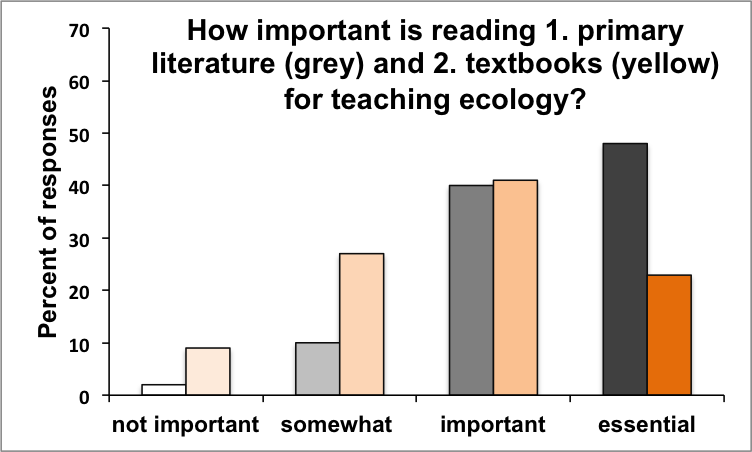
From a survey I did of ecology teachers*: many think that reading primary literature is important in teaching ecology. I included answers for reading textbooks as a comparison. I wasn’t surprised that there was a bit less emphasis on textbook reading but it is obvious still a useful resource for teaching ecology. I certainly also had the impression that reading journal articles was important as an undergraduate but I wasn’t quite sure how to do it.

reading

So if you are using or want to use primary literature in an undergraduate class, how should you go about it? There are perhaps 101 ways to effectively use journal articles as teaching tools. The link is a detailed article which outlines what you can use primary literature for, how to identify good articles, challenges with using primary literature and how to overcome them and finally how to assess learning. There is tons of good advice there, so if you are looking for ways to incorporate the literature but are unsure how, it is a good place to start. Here’s a more personal account of one professor’s approach to integrating the primary literature into a class. I like the idea of building up understanding and directing the students so that their reading is productive.

I found when I was an undergrad, I basically learned how to read primary literature by doing it a lot. My first attempts felt a bit like looking through a fog. I would attend discussion sections where we’d read papers and there were a few students presenting each time. I don’t think I learned anything until I presented a paper myself. Before that, it seemed that every time I missed the main point of the paper.

So when I started running my own section for a writing intensive group of an ecology course as a teaching assistant, I realised I didn’t want my students to be stuck in the rut I had been in. We were to discuss many papers during the semester and I couldn’t wait for the end for all of them to be comfortable. I also didn’t want the focus to be on me (the section was meant to facilitate their independence), so I didn’t want to break down every paper for them. Inspired by discussions in a class about how to teach writing that I was taking, I came up with a simple plan to get students to overcome any issues they might have with discussing primary literature.

The methods were simple**:

  1. Choose recently published papers on topics that students will be able to understand without much background.
  2. Describe the general layout of a paper and how to read it (be brief to give students as much time as possible to read).
  3. Break students into pairs, and have each pair read a different paper for 10-15 minutes.
  4. Allow the pairs to discuss the paper for ~5 minutes.
  5. Give each pair 2-3 minutes to tell the class what the paper was about.

As instructors, we often discuss how to approach reading a paper but we rarely address the intimidation that many students feel when reading scientific writing. Often students get so bogged down in the details of a paper that they can’t see the forest through the trees. So I wanted students to avoid getting caught up in details they didn’t understand (e.g. statistical methods are particularly prone to this). My hope was that I could help students overcome their fears of both reading primary literature and then having something to say about it. I have to admit the first time I tried this I was terrified. I knew that I could briefly read a paper before a discussion and contribute if I needed (sometimes happened more than I’d care to admit as a grad student) but I wasn’t sure how they would do. I wasn’t asking them to describe in detail the paper and I specifically choose papers that were relatively easy to understand the main points.  I hoped this was enough. To my relief, it worked!

Student comments on this activity:

  • “An invaluable skill! Keep encouraging this. Thank you!”
  • “Was useful because it helped me think about the essential information”
  • “Speed reading will be a skill I keep-usually I spend so much time I get confused in the readings.”
  • “Great. Not only familiarized us with various ecological concepts and studies but helped with the ability to skim/read scientific papers for pertinent information.”
  • “Speed reading was helpful in understanding take away messages from papers—it is a great skill.”
  • “very useful”, “relevant and important”, “practical”

I was able to describe paper reading very briefly in the beginning of section because my students had all been exposed to reading primary literature in previous courses. If this is the first time your class has seen a journal article, maybe more effort would be needed here. At the end of class I would also take a few moments to point out what they couldn’t pick up from their quick reading. For example, I’d ask some directed questions to the teams about the articles that I was pretty sure that they wouldn’t have picked up on. My goal was to get them to be able to figure out the main story of a paper and realise that they could understand that without knowing all the details. But I didn’t want the take away message to be that fully reading a paper is never necessary. The rest of the semester we discussed many papers and they also needed to read and summarize papers working up to their final proposal so there was many opportunities to teach them about how to read and learn from the literature.

I was lucky because I had small groups of students to work with. I can see ways in which you could modify the activity for larger groups. Maybe having them share what the paper is about in smaller groups rather than the whole class, for example. Mainly I think it is important for them to have to say something about the paper. It is through being forced to quickly summarize the points that students actually learn to ignore all the detailed methodology that they tend to get caught up in. We can tell them to focus on the big picture but most of them (including me as an undergrad) won’t. By not giving the time to get bogged down, they quickly learned to look at the big picture. I was really pleased that both times my students were able to use this experience throughout the course. The discussions were more lively than I’d ever had before as a TA and I did very little talking.

In general, I think incorporating primary literature is important for learning in the sciences. Whether it is exposing students to the papers themselves or their products in an deconstructed way, efforts we make to teach students how to read the scientific literature can only expand their understanding of what science is all about. Now whether they should be able to access the literature after their degree is complete is a whole another debate…

*if you are new to Teaching Tuesdays, I’ve been doing a series of posts that have derived from a survey I distributed broadly to ecology teachers earlier this year. If you are interested in knowing more about what ecology teachers are up to, you can read more here (intro, difficulties, solutions, practice and writing).

**after doing this activity with my students in a couple of courses I remember reading something similar. I think the article was maybe in an ESA newsletter (Eco 101, perhaps) but my cursory searching hasn’t found it. Although I had thought I downloaded it, there is nothing on my hard drive either. If you know of this article, please send me the link! (Update: link, thanks Gary)

Inequality in computer science curricula

Standard

This is a guest post by Lirael.

I’m a PhD student in computer science at a university where most of the undergrads come from pretty affluent, educationally privileged backgrounds (as I did myself, back in my undergrad days).  I’m a teaching assistant and/or tutor for a couple of different programs that we have for students who are not from such backgrounds.  One is for students who are motivated but have been educationally disadvantaged in some way (whether this was poverty, major illness in high school, an unstable housing situation, war in their home country, or any other life circumstance that would have left them at a disadvantage in their schooling), who take catch-up classes as a cohort and get extensive advising in order to prepare them for a full undergrad program.  The other is for students who are first-generation college students or who come from families with incomes below 150% of the poverty line, and gives them free tutoring, extensive advising, career prep, and leadership development.  Some students are in both programs.  Neither program is exclusively for students of color or poor students, but in practice, most of my students are both.

Computer science has unusual status compared to most science, social science, and humanities programs, because so many people associate it so strongly with a quick and direct path to good jobs.  There is some truth to this association – when I graduated from college at 22 and started my first industry job, I had a salary that put me in the top 20% of all US wage earners, plus excellent benefts and good working conditions.  This gives computer science obvious appeal for my students (and for other marginalized groups — I have a friend, a trans woman, who teaches at a program to ecnomically empower other trans people by teaching them to code).  It also makes it very popular at, for example, many community colleges.

My concern, though, is what sort of computer science marginalized and underrepresented groups are learning in the name of economic advantage.

Some community colleges have excellent offerings, of the sort that will prepare their students well for upper-level classes.   In others, the curriculum seems to be dominated by courses that could be described as “How to use a currently-popular technological tool for immediate commercial applications.”  Sometimes they are “Intro to a currently-popular computer language.”  There’s generally a data structures class, but not much else on the more foundational side of CS.  Some four-year departments like this approach too.  The thing is that in the tech world most of these skills and languages are likely to be archaic in a few years – I don’t often see job listings asking for people who know Pascal or BASIC or who can hand-write websites in HTML or make an eye-catching GeoCities site, all of which were in the currently-popular category when I was in high school.  The CS programs, much more than, say, the biology or history programs, stress the idea that this is vocational training.  Again, I don’t want to imply that every community college or state non-flagship is doing this, but I have noticed that plenty do, especially community colleges.

At schools where the idea that learning specific current tools = employability doesn’t drive the curriculum quite so hard –- which includes affluent schools with affluent student bodies — students focus on subjects like AI, algorithms, operating systems, robotics, computational biology, distributed computing, software design.  They learn specific currently-popular skills in class projects or paid industry internships where they apply, say, AI to creating Android apps, or software design to creating a new video game.  They don’t seem to have a problem getting good tech jobs after they graduate.  Meanwhile, if a student from a vocationally-focused school wants to transfer to a prestigious one, will they be prepared for the classes at the new school?  Will their credits from the vocationally-focused classes transfer?

Are there tech jobs where hiring managers care mostly that applicants have a list of buzzword Skills O’ the Day, and will seriously consider candidates whose whole CS education is an associate’s degree?  Yep.  What kinds of tech jobs, in general, are those?  The crappy tech jobs.  The code monkey jobs.  The ones that pay less.  The ones with less prestige and less respect.  The ones that get outsourced to developing countries.

I think it’s incredibly important that people be able to get jobs after they graduate from college.  It’s often more important for students from poor or working-class backgrounds, who don’t have family money to fall back on if they don’t get a job right away, so I understand why schools with many such students would be very concerned about employability.  But I worry that focus on vocational training will ironically lead to less employability, and less upward mobility, for the people who need it the most.  I also worry that increased focus on college as preparation for the workforce, which has had consequences already for the humanities and social sciences, will push computer science in the direction of vocational training.

I am not saying that there should be no vocational focus at all in computer science (indeed, some affluent schools have been criticized for not having enough of one) only that there needs to be balance.  The course that I TA is an intro to computer science course focused on game design.  Students learn basic computing and engineering concepts along with skills like how to create their own webpage and how to use game-creation software.  I make a point of talking about how they can use what they’re learning in other fields, like biology or public health or economics, as well, since after all not all of them want to go into computer science.  My hope is that they’ll get something out of it no matter what field they go into, and that if they do want to continue in computer science, they’ll be well-prepared to do so.

Friday Recommended Reads #9

Standard

There’s a long tradition of using anthropomorphic common names for animals that do things analogous to humans. Years ago, there was some disagreement about whether we should stop using the term “slave making ants.” Alex Wild recalls that episode and proposes a new common name for these creatures: “kidnapper ants.” In terms of sensitivity to victims of crimes, I’m not sure this is a big step up. I just call ’em Polyergus.

Mulling over job interviews and offers usually presents big-time dilemmas. Mizuki Takahashi discusses his own experience with frank detail. The seasonality and non-synchronicity of interviews leads to some interesting thoughts about bet-hedging and game theory, with really high stakes.

On Wednesday morning, I heard a heartbreaking story on NPR about a Pakistani family that traveled to Washington DC to testify in a hearing about drone strikes. They recounted the remote-controlled murder of their grandmother by the US Government. One thing that they didn’t mention on NPR, as much as I recall, is that only five members of Congress attended this hearing.

Sometimes blogs include posts about blogging. This post by Simon Goring is about the personal motives for blogging and how whether, or not, it matters how well read your blog is. This post ended up getting seen, and commented on, by a bunch of other bloggers and the comments are worthwhile if you’re interested in the topic. (Note: this link starts out saying really nice stuff about this site. That’s not why I linked to it, though I always appreciate nice words.)

You know when a Senior Editor of scholarly journal is really pissed when the editorial is simply entitled, “Fuck Jared Diamond.” That message was brought to you by David Correia.

The density of people on the planet is unevenly distributed, to put it mildly. This animation of birth and death events, simulated using real demographic data, is really cool.

What if Darwin died on The Beagle? Jeremy Fox reviews the book Darwin Deleted that delves into this thought experiment. It was an interesting review, so interesting that I think I might not have to read the book. I’m not big on the alternative history genre, but I did enjoy and learn a lot from Philip Roth’s The Plot Against America when it came out.

Thanks to Boing Boing and Jane Zelikova for links.