Are you a fighter? A women in science post.

Standard

Earlier this fall, I had an interview for a tenure-track job here in Sweden. I didn’t get the job, which was of course disappointing, but that isn’t really why I am writing here. The interview process was stressful and it is tough sitting in front of a panel addressing their questions one after another. It feels a bit like everything about you is on trial. I was prepared to answer tough questions about my work, how I would function in the department, as an advisor, etc. But there was one single question that really threw me: ‘Are you a fighter?’

In the interview, my mental response was basically WTF? It felt like a gender-specific question—are you one of those women who will just trying to please everyone and do as you are told or are you a fighter? Now to be fair, I’m pretty sure the question was asked to see how I would respond and I heard the other candidates had a similar kind of experience. Regardless of the reason, the fact that such a question could be construed as gender-specific was disturbing to me.* It pushed a button because I realised that I am a fighter and what is more I have had to be to get where I am.

I have been incredibly fortunate in my scientific career. I’ve had great, if sometimes difficult, relationships with my mentors and advisors. But really, I’ve had lots of support throughout. I also have not experienced any direct sexual harassment in a professional context. So, in that sense, science has been a safe place for me. This fall, twitter and the blogosphere are showing that this is not the case for many (one summary), which is unfortunately not at all surprising (wouldn’t say I’ve lived a harassment-free life). I have been deeply saddened by the revelations about race and gender and sexual harassment. I truly applaud the bravery of the women who are speaking out because I know first-hand how tough that can be. But I’ve been quiet about my own feelings, in part because I haven’t had my own experiences to share.

Unfortunately, there has been another development recently with an inappropriate/offensive joke video where Einstein is seen sexually harassing Curie. If you are not a part of the “online science community”, you’re probably sheltered from these discussions. Being pretty new to blogging and twitter myself, I’ve felt mostly like an outsider—I haven’t been directly affected by what’s happening and I haven’t known any of the players. But all the events have got me thinking about many aspects of privilege and gender.

Of course there have been times where I wonder how my gender plays a role in where I am. Have I been passed over for opportunities because I am female? Have I been asked/hired/etc because I’m female? These doubts can play a role in undermining who we are as women and scientists. Follow #ripplesofdoubt on Twitter to see how pervasive this can be and #ripplesofhope to see positive reflections on change.

Although I haven’t faced direct discrimination, there have been situations where my gender has been at the forefront:

  • On not getting a talk award (think it was meant to be consoling): “Men are more convincing because they have deeper voices and sound more confident. Your voice is too high.”
  • An off-handed comment about having met with someone in a professional context: “He does like talking to the ladies.”
  • Or undermining responses course evaluations about my appearance rather than my teaching.
  • Or those times I’ve watched younger students/mentees turn to a male colleague to seek answers/approval.
  • Or having your male colleagues worry they don’t have a chance at a job because they are male and thereby implying that you have a leg up because of your gender.
  • Or that time I was talking to a high profile evolutionary biologist and I mentioned my daughter as one reason for not staying on in my PhD to do more experiments. The response “Can you publish that?” immediately told me that I wasn’t in a safe place and reminded me that I could be judged for considering anything other than the science when making decisions.

But like many women, I have tended to shrug these incidents off. I haven’t wanted to be too sensitive, and too, well, female. So I pretend that the comments don’t matter and they don’t affect me. But of course they do. Although these are subtle forms of suggesting that I don’t belong or aren’t good enough, they are a part of what many of us experience.

One positive thing that has come out in the last few months has been that people have begun to speak up. I have come to realise that I need to make more effort to do the same. Although it is tough, it is important to speak up both for myself and for other women. Ignoring and internalizing comments changes nothing. We all need to be allies. I’ve been encouraged by the efforts to be positive and change things for the better (e.g., see here for lots of good ideas on supporting other women). Science is a tough gig; it’s what drives many of us. But I hope we can all move towards a more inclusive place where we support each other regardless of race, gender, age, size, hair cut, clothing, family….. Hopefully discussions surrounding causal and not so causal sexism/harassment can help us all get there.

At the interview, when asked if I was a fighter I was thrown off. I was mad and I struggled to regain my footing in the interview. I highly doubt that it cost me the job but I left the interview unsettled.

The next time someone asks me whether I’m a fighter, I know what I’ll say: I am a scientist. I am a woman. I’m here. Of course I am a fighter, what else could I be?**

Post script: writing about sexual harassment and discrimination while simultaneously watching cartoons is both very strange and comforting at the same time. I’m home with my sick 4-year old daughter and being with her reminds me part of why I want to do my bit to change things for the better.


*When discussing questions afterwards with two male collaborators who where also interviewing, we were able to match most of the things we were asked, except they were not asked if they were fighters.

**I think that men also face some of the same struggles in academia. You have to have a bit of fight in you to stay in this game.

Journal prestige and publishing from a teaching institution

Standard

Finally. There are journals publishing quality peer-reviewed research, but leave it to the reader to decide whether a paper is sexy or important. Shouldn’t this be better than letting a few editors and reviewers reject work based on whether they personally think that a paper is important or significant?

This newish type of journal uses editors and reviewers to assure quality and accuracy. The biggie is PLoS ONE. A newer one on the block is PeerJ. Another one asked me to shill for them on this site.

The last few years have seen a relatively quick shift in scientific publishing models, and there has been a great upheaval in journals in which some new ones have become relatively prestigious (e.g., Ecology Letters) and some well-established journals have experienced a decline in relative rank (e.g., American Journal of Botany). These hierarchies have a great effect on researchers publishing from small ponds.

Publishing in selective journals is required to establish legitimacy. This is true for everybody. Because researchers in small teaching institutions are inherently legitimacy-challenged, then this is the population that most heavily relies on this mechanism of legitimacy.

Researchers in teaching institutions don’t have a mountain of time for research. Just think about all of the time that could be spent on genuine research, instead of time wasted in the mill of salesmanship that is required to publish in selective journals. (I also find that pitching research as a theory-of-the-moment to be one of the most annoying parts of the business.)

With new journals that verify quality but not the sexiness, we can hop off the salesmanship game and just get stuff published. Sounds great, right?

After all, the research that takes place at teaching institutions can be of high quality and significant within our fields. But, on average, we just don’t publish as much. That makes sense because our employers expect us to focus on teaching above all else.

Since we’re less productive, then every paper counts. We want to get our research out there, but we also need to make sure that every paper represents us well. What we lack for in quantity, we need to make up for in (perceived) quality.

How do people assess research quality? The standard measure is the selectivity of the journal that publishes the paper. It’s natural to think that a paper in American Naturalist (impact factor 4.7) is going to be higher quality than American Midland Naturalist (impact factor 0.6).

People make these judgments all the time. It might not be fair, but it’s normal.

And no matter how dumb people say it might be, no matter how many examples are brought up, assessments of ‘journal quality’ aren’t going away. No matter how much altmetrics picks up as another highly flawed measure of research quality, the name of the journal that publishes a paper really matters. That isn’t changing anytime soon.

The effect of paper on the research community is tied to the prestige of the venue, as well as the prestige of the authors. Fame matters. If any researcher – including those of us at teaching institutions – wants to build an influential research program, we’ve got to build up a personal reputation for high quality research.

Building a reputation for high quality research is not easy at all, but it’s even harder while based at a teaching institution. Just like having a paper in a prestigious journal is supposed to be an indicator of quality research, a faculty position at a well-known research institution is supposed to be an indicator of a quality researcher. Since our institutional affiliations aren’t contributing to our research prestige, we need to make the most of the circumstances to establish the credibility and status of the work that comes out of our labs.

If journal hierarchies didn’t exist, it would be really hard for researchers in lesser-known institutions, who may not publish frequently, to readily convince others that their work is of high quality. Good work doesn’t get cited just because it’s good. It needs to be read first. And work in non-prestigious journals may simply go unread if the author isn’t already well known.

If journal hierarchies somehow faded, it’s not as if the perception of research quality would evolve into some perfect meritocracy. There are lots of conscious and unconscious biases, aside from quality, that affect whether or not work gets into a fancy-pants journal, but it is true that people without a fancy-pants background still can publish in elite venues based on the quality of their work. This means that people without an elite background can gain a high profile based on merit, though they do need to persevere though the biases working against them.

If journals themselves merely published work but without any prestige associated with them, then it would be even more difficult for people without well-connected networks to have their work read and cited. It wouldn’t democratize access to science; it would inherently favor the scientists with great connections. At least now, the decisions of a small number of editors and reviewers can put science from an obscure venue into a position where a large audience will see it. On the other hand, publishing in a journal without any prestige, like PLoS ONE, will allow work to be available to a global audience, but actually read by very few.

If I want my work to be read by ecologists, then publishing it in a perfectly good journal like Oikos will garner me more readers than if I publish it in PLoS ONE. Moreover, people will look at the Oikos paper and realize that at some point in its life, there was a set of reviewers and an editor who agreed that the paper was not only of high quality but also interesting or sexy enough to be accepted. It wasn’t just done well, but it’s also useful or important to the field. That can’t necessarily be said of all PLoS ONE papers.

Not that long ago, I thought that these journals lacking the exclusivity factor were a great thing because it allowed everybody equal access to research. What changed my mind? The paper that I chose to place in PLoS ONEI chose to put a paper that I was really excited about in this journal. It was a really neat discovery, and should lead to a whole new line of inquiry. (Also, the editorial experience was great, the reviewers were very exacting but even-handed, and the handling editor was top notch.)

Since that paper has come out just over a year ago, there have been a number of new papers on this or a closely related topic. But my paper has not been cited yet, even though it really should have been cited. Meanwhile they’re citing my older, far less interesting and useful, paper on the same topic from 2002.

Why has nobody cited the more recent paper? Either people think that it’s not relevant, not high enough quality, or they never found it. (Heck, the blog post about it has been seen more times than the paper itself.) Maybe people found it and then didn’t read it because of the journal. It’s really a goddamn great paper. And it’s getting ignored because I put in PLoS ONE. I have very little doubt that if I chose to put it in a specialized venue like Insectes Sociaux or Myrmecological News, both good journals that are read by social insect biologists, that it would be read more heavily and have been cited at least a few times. This paper could have been in an even higher profile journal, because it’s so frickin’ awesome, but I chose to put it in PLoS ONE. Oh well, I’ve learned my lesson. There are some papers in that venue that get very highly cited, but I think most things in there just get lost.

I would love for people to judge a paper based on the quality of its content rather than the name of the journal. But most people don’t do this. And I’m not going to choose to publish in a venue that may lead people to think that the work isn’t interesting or groundbreaking even before they have chosen to (not) read it. I’ll admit to not placing myself on the front of reform in scientific publishing, even if I make all of my papers immediately and universally available. I have to admit that I’m apt to select a moderately selective venue when possible, because I am concerned that people see my research as not only legitimate but also worthwhile. I’m not worried that my stuff isn’t quite good, but I want to make sure it’s not done in vain. Science is a social enterprise, and as a working scientist I need to put my work into the conversation.

Could twitter have saved the lives of seven astronauts?

Standard

When the space shuttle Challenger launched on the morning of 28 January 1986, Roger Boisjoly couldn’t muster the fortitude to watch the launch of the shuttle, as its engines ignited on the launch pad. Moments later, the crew was lifted through the sky to their deaths. Boisjoly and some of his colleagues had spent the preceding night petitioning and pleading, in vain, to avert this tragedy.

Boisjoly was an engineer working for Utah-based NASA contractor Morton Thiokol, who worked on the design of the solid rocket boosters for the space shuttle program. (Morton Thiokol received a $800 million in contracts for their work on the shuttle program, equivalent to a value of almost $1.5 billion today.) Boisjoly and his colleagues were terrified about the prospect of a disaster on this particular launch, because of the weather forecast for Cape Canaveral. The cold temperature triggered events resulting in the loss of the entire vehicle in the timespan of a couple heartbeats.

The explosion of the Space Shuttle Challenger in 1986.

The explosion of the Space Shuttle Challenger in 1986.

Is Boisjoly complicit in the deaths of the shuttle crew? Not at all – he was a true hero. He did everything he could, ultimately sacrificing his own career.

This disaster may be blamed on those who failed to heed the specific and detailed warnings offered by Boisjoly over the year preceding the avoidable tragedy. However, this might not be what you will read in the Rogers Commission report issued in the wake of the disaster.

The Challenger disaster occurred because of a failure of leaders who did not think that public knowledge would, or could, have any bearing on the life-or-death decisions happening in NASA headquarters.

A lot has changed since 1986. The veil that separates the public from governmental and industrial organizations has been partially lifted, through the distributed access to information through social media. When the public has access to technical information about government operations, then the mechanisms of accountability may change.

In the media environment of 2013, is it possible that Boisjoly could have prevented a disaster like the loss of the Challenger? Could Twitter have saved the lives of the Challenger astronauts?

Imagine these tweets, if they came out 24 hours before a predictably fatal shuttle launch:

https://twitter.com/RogBoisjoly/status/400856882463535104

https://twitter.com/RogBoisjoly/status/400857411348467712

Why was Boisjoly so fearful that shuttle was going to blow up? One component of the design of the solid rocket boosters was an O-ring that would become predictably unsafe when launching in cold temperatures. The forecast on that fatal morning was for conditions colder than any previous launch — below freezing — and below the temperature threshold that Boisjoly knew was required for safe performance of the elastic component of the O-ring seal. (If you’re older than 40, then I would bet that you must remember hearing a lot about the O-ring.)

Three weeks after the disaster, in an interview with NPR, Boisjoly reflected:

I fought like Hell to stop that launch. I’m so torn up inside I can hardly talk about it, even now.

One year later, in a subsequent interview, he explained how close he could have been to stopping the launch, if he could have been more convincing:

We were talking to the people who had the power to stop that launch.

Is it possible that the people — the taxpaying public — could have been the ones with that power? I don’t know the answer, but it’s an interesting question. If Boisjoly was an active twitter user, with followers who were fellow engineers able to evaluate and validate his claims, wouldn’t they have amplified his concerns on twitter and other social media? Wouldn’t it be possible that, in just an eight hour period, that a warning presaging the explosion of the Challenger would be retweeted so many times that the mass media and perhaps even NASA would have to take notice?

Wouldn’t aggregator sites like The Huffington Post and Drudge pick up a tweet like Boisjoly’s warning, if it got retweeted several thousand times?

Wouldn’t the decision-makers at NASA have to include very public warnings about a disaster in their calculation about whether to greenlight or delay a launch? Don’t you think they’d get even more anxious about the repercussions of overlooking the engineers’ concerns?

Wouldn’t the risk of an disaster, after warnings by an engineer who worked on the project, alter the cost/benefit calculus in the minds of the people who would have been able to delay the shuttle launch? Even if they didn’t believe the claims of Boisjoly and his colleagues, then maybe they would choose to delay the launch anyway, if engineers using social media were claiming it would explode? Just maybe?

Social media has altered the power relationships among large agencies, the media, and the public. Individuals with substantial issues may have their voices heard, worldwide, over a very short period of time. It is possible that information sharing on social media could have prevented the loss of the Challenger?

Even though Boisjoly was, obviously and without any doubt, in the right, he was shuffled out of the industry because he dared to challenge authority in order to save lives. He should have been lauded as a hero, but I only heard of his heroics when I read his obituary last year in the LA Times.

If Boisjoly was successful in his bid to delay the launch using a rogue social media campaign, he still would have been blackballed by the industry as a whistleblower. If such a plea would have been successful, then none of us would ever have known for certain if his actions prevented a tragedy. All of us, including the lost crew of the Challenger, would be able to live with that uncertainty.

Richard Feynman was a member of the Rogers Commission investigating the loss of the Challenger. He issued personal observations as an appendix to the official report, and it’s not surprising that they deal with technical details with accurate conversational aplomb, while also cutting to the heart of the matter:

NASA owes it to the citizens from whom it asks support to be frank, honest, and informative, so that these citizens can make the wisest decisions for the use of their limited resources.     For a successful technology, reality must take precedence over public relations, for nature cannot be fooled.

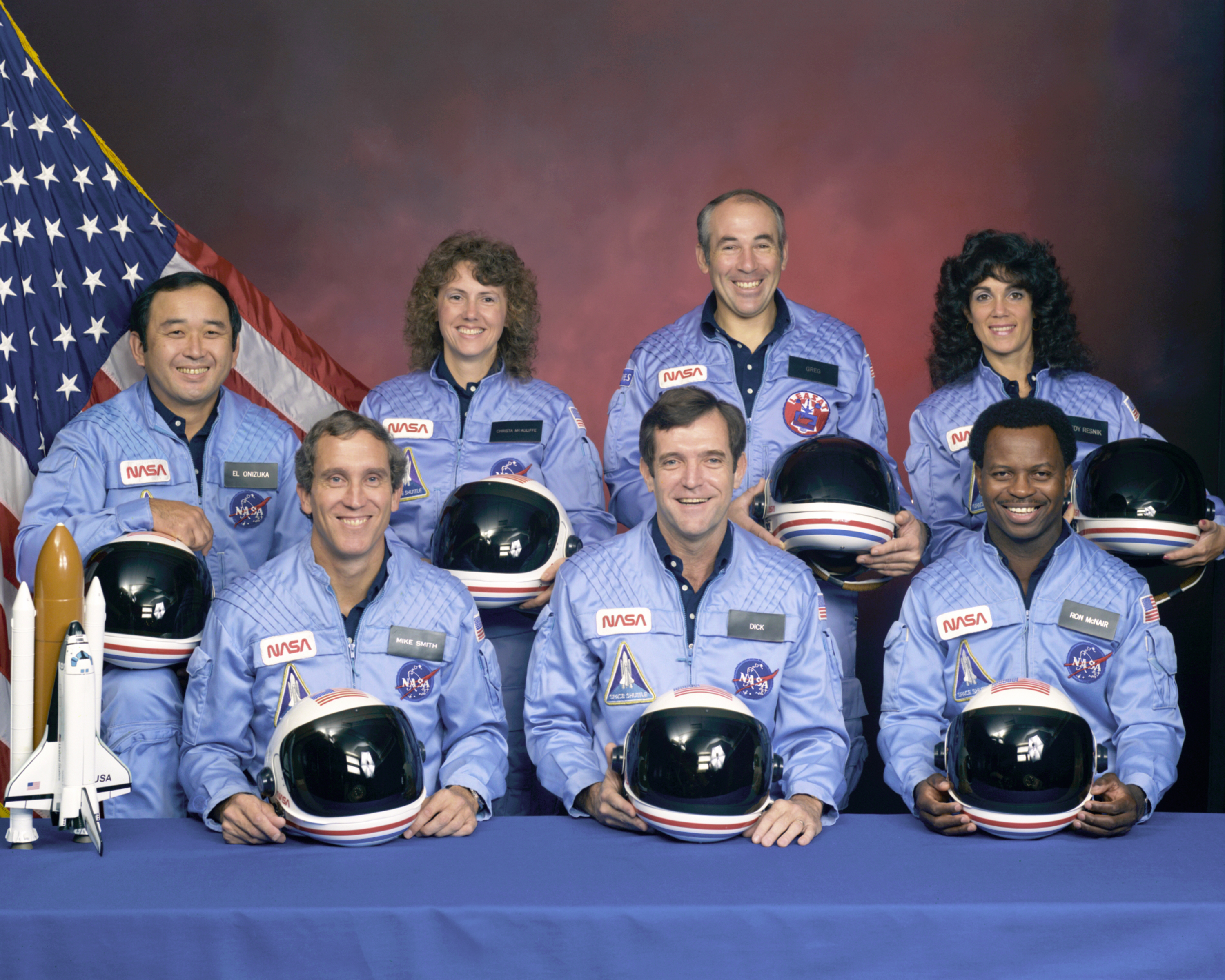
The crew of mission STS-51L: Francis R. Scobee, Michael J. Smith, Judith A. Resnik, Ellison S. Onizuka, Ronald E. McNair, Gregory B. Jarvis and Sharon Christa McAuliffe.  Image from NASA

The crew of mission STS-51L: Francis R. Scobee, Michael J. Smith, Judith A. Resnik, Ellison S. Onizuka, Ronald E. McNair, Gregory B. Jarvis and Sharon Christa McAuliffe. Image from NASA

Ant science: Ants try to eat protein beverages like solid food

Standard

Collectively, ants are efficient, and you might even call them smart. But individual ants are so dumb that they don’t even know how to feed themselves, as we show in the latest paper to come out of my lab. You could say that these ants have a drinking problem.

A bullet ant with a bubble of sugar solution in its mandibles. Image by Alex Wild

A bullet ant with a bubble of sugar solution in its mandibles. No scale bar is needed; this ant is about the size of your pinky finger, unless you have a small hand. Image by Alex Wild.

If you’re given a protein smoothie, you drink it. But if you give bullet ants a protein drink, they chomp and pull at it. If they knew how to use a fork, they’d probably try that, too.

The bullet ant Paraponera clavata has a boring diet: workers mostly collect sugar water from the rainforest canopy, supplemented with chunky prey items, like other ants and pieces of caterpillars. When they eat carbs, it’s in the form of a liquid which they gather in a droplet held by their mandibles. When they get protein, it’s in the form of a solid which they chomp and bite.

While attempting to do an experiment, we discovered that these ants are absolutely hopeless at drinking a liquid, if it’s a protein solution.

What does it look like when ants try to drink something and when they try to chomp at solid food? Here are two very short videos taken by Jenny Jandt:

We asked: what sensory cues do the ants use to decide whether to drink a fluid or to grasp at it as if it were a solid? We ran a field experiment with factorial combinations of various sugar (sucrose) concentrations and various protein (casein) concentrations, and used ethograms to measure behavioral responses. We replicated this across a bunch of colonies, randomized the order of presentation, and did other good stuff to make sure the experimental design wasn’t messed up. (We’re pros, you know.)

We mostly didn’t get stung while running the experiment. This matters because they are called “bullet ants” for good reason.

We found that the higher the concentration of sugar, the more likely the ants were to drink. If there was a little protein and no sugar at all, the ants would most likely grasp.  Once protein concentrations got near 1 micromolar concentration, however, the concentration of sugar did not affect the grasping response to protein.

So, if these ants are thinking, then this is what they’re thinking to themselves: “If I taste protein, it must be food. So I’ll chomp at it, even though it’s a liquid.” But, it doesn’t look like they’re thinking much at all.

We found that the ants demonstrate a fixed action pattern of feeding behavior in response to assessing the nutritional content of food. This operationally works for them in nature, because texture and nutritional content are coupled. When we experimentally decoupled texture and nutritional content, then we were able to identify the cues that the ants used to make their food handling decision. They decide to drink when they detect carbohydrates and they decide to chomp when they detect protein, and texture has little to do with the decision.

How this project happened in a teaching-centered institution

In the first half of 2011, Hannah Larson (a Master’s student in my lab) was spending several months at La Selva Biological Station in Costa Rica, working with a microbial symbiont of bullet ants. She discovered the phenomenon of bullet ants chomping at protein solutions when she tried to experimentally feed colonies a protein solution, and the colonies opted to dismember the plastic pipets instead of drinking from them. She worked out other ways of delivering protein for her experiments, but we wanted to document and further understand this discovery.

That summer, I paired up my colleague Dr. Jenny Jandt up to mentor a student from my university on a totally different project. We all found this protein-chomping behavior so cool, and Jenny made the time for a second trip to Costa Rica after I helped her flesh the project out. My undergrad Peter Tellez was her wingman, and they did the experiment using the template of the many colonies that Hannah established for her thesis work. In late 2011, I drove out to visit Jenny in Tucson for a couple days, to work on this and another manuscript, in which the bulk of the paper was put together. Jenny put the finishing touches on this paper with just a bit of help from myself, Hannah and Peter. As it was a side project for all of us, it lingered a bit but Jenny persisted and she’s pretty much everything I could ask for in a collaborator and mentor to our students.

Where are they now? Jenny took a postdoc in the rockin’ lab of Amy Toth at Iowa State. Hannah is now in her second year of the DPT program at the Univ. of Washington and Peter is now a PhD student in the lab of Sunshine Van Bael at Tulane.)

In short, this cool paper came together because I was able to talk my postdoc buddy Jenny into coming down to the rainforest to work with my students for about a month. She is otherwise a wasp and bee behavior person, and I was glad to give her an avenue to work with ants and tropical rainforests, and my students greatly benefited from her careful mentorship and expertise in individual and collective behaviors of social insect colonies.

Reference: Jandt, J., H.K. Larson, P. Tellez, and T.P. McGlynn 2013. To drink or grasp? How bullet ants (Paraponera clavata) differentiate between sugars and proteins in liquids. Naturwissenschaften. DOI: 10.1007/s00114-013-1109-3

A copy of this paper is available on my lab website here.

This work was conducted under support of the National Science Foundation (OISE-0854259 and OISE-1130156).

Teaching Tuesday: Interviewing–the teaching test lecture

Standard

This week I’ve been a bit distracted by instructions I’ve been given for a demonstration teaching lecture. It is for a permanent position in my department so the interview is stressful, important, and far from certain. There are three others interviewing for the spot, all colleagues and/or collaborators*, all friends, and all deserving of the position. It is also a little strange in that you can exactly know the CV of your fellow candidates and that all of us will show up for work after the interview, regardless of the result of the job search. The only difference is that one of us will have a permanent job and the others will not (still). I have talked a bit about the Swedish interview process previously and the upcoming one will function in a similar way. One major difference is that in addition to a short research lecture, we’ve been asked to give a 20 min teaching lecture. The topic is outside everyone’s expertise (Ecology of Plant-Pathogen Interactions), so in some senses an even playing field.

I have taught classes previously but not on this particular topic. But given that I’ve never done a demonstration lecture, I’ve been thinking a lot about how to tackle the task. Unfortunately, teaching talks don’t seem to be a common feature of the interview process, so unlike the research seminars and chalk talks, there isn’t so much out there (see Meg Duffy’s post on links for tenure-track job searches, for example).

However, I did find this helpful post about giving test lectures with a focus on those given to actual students in an on-going class (yikes!). It would be tough to drop in on a class that has already established a rhythm between the students and teacher, although I think it would be a good test of your teaching. It might not be fair to the students in the course, however, if they are continually interrupted by different interviewees. The teaching talks I’ve heard of are more commonly to faculty and maybe grad students. Anurag Agrawal compiles some advice on finding an academic job with this bit of wisdom on the teaching lecture (you can find more advice here; HT: Meg):

Teaching talks: Many places will have you give a teaching talk—they may give you a topic or let you choose one from a list. Some will want a sample lecture—others may actually want a verbal statement of your teaching philosophy. In general, ask those around you that actually teach those subjects for outlines or notes. It is usually fine to have notes for your teaching talk. They will probably ask you to not use slides, but overheads and handouts may be very useful. The faculty may interrupt you during your talk and pretend to be students asking questions. Try not to get flustered by them, but rather have fun with them.

Even before reading this, I began my canvasing of people for lectures on plant-pathogen interactions. So far I haven’t found it to be a common topic in ecology courses (if you lecture on the topic and are willing to share, yes please!). So after researching for this interview, I might also advocate for including the lecture in one of our ecology courses (I have funding for two more years regardless of the outcome of the interview).

I’ve only had one experience with this sort of interview requirement and that was indirect. When I was a masters student, my department was hiring a number of people to expand and we were also going to an Integrative Biology model from an organismal division (merging depts). So there were a lot of positions (~6) and likely a lot of opinions on how to best fill them from colleagues who hadn’t worked together before. In any event, I got to witness a bunch of job talks and meet with a lot of candidates. It was a useful lesson as a grad student but the one portion that was closed was the test lectures. I’m guessing these were to distinguish people’s ability from very different fields but I don’t know what the exact instructions were. We (the grad students) did hear rumours that some people’s talks were terrible, so it clearly doesn’t do to blow teaching talks off. But how to do it well?

Turning to advice on how to give lectures can give some clues. Improving lecturing has a bunch of hints and tips for generally improving your lectures. Another list of practical pointers for good lectures is focused mainly on the classroom but can also be helpful in thinking about how to demonstrate your teaching. I had to link this good talk advice for the hilarious nostalgia it created for the overhead strip tease (advice: don’t do it, and I think this also applies to powerpoint reveals).

From the Columbia University Graduate School of Arts & Sciences Teaching Center (many useful pdfs here including one on giving effective talks), it is better to:

  1. Talk than read
  2. Stand than sit
  3. Move than stand still
  4. Vary your voice’s pitch than speak in a monotone
  5. Speak loudly facing your audience rather than mumble and speak into your notes or blackboard
  6. Use an outline and visual aids than present without them
  7. Provide your listeners with a roadmap than start without an overview

There is also this simple and eloquent advice from a twitter friend:

https://twitter.com/labroides/status/398443862529941504

My plan is to demonstrate how I would give a lecture to a course, including emphasizing where I would stop lecturing and turn things over to the students. As I move away from straight lecturing, it feels a little strange to demonstrate my teaching through lecturing only. But I only have 5 minutes to describe the structure of the course, where this lecture would fit in and how I would evaluate learning, followed by the first 15 minutes of the lecture. Given all that is required to pack into 20 mins, this teaching talk is really a demonstration, rather than a lecture. I won’t prepare for it as I would do for a regular course lecture and given my unfamiliarity with the topic, it is also going to take a fair amount of research. This is a job interview, so I know it isn’t really a teaching lecture, it is a performance. One I’m hoping will convince the committee to let me get on with actual teaching for years to come.

I’d love to hear from anyone who’s done a teaching lecture as a part of their interview! Advice on how to nail this will be greatly appreciated by me but I’m sure others on the TT job search will also appreciate pointers.

*

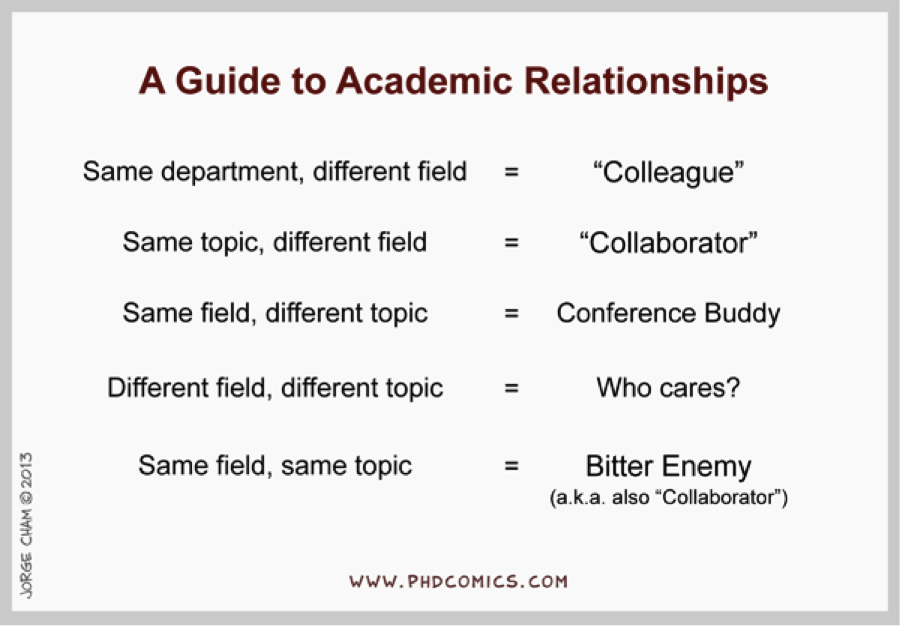
relationships

Friday Recommended Reads #10

Standard

This story was buried off the front page of my local paper, but did you hear about the discovery that when Yasser Arafat died in 2004 it was an assassination by Polonium radiation poisoning? The use of Polonium as a murder weapon wasn’t described publicly until a couple years later, when a KGB agent was killed this way in London.

Grandma got STEM. That’s what the site is called.

One hundred years ago this week, one of my heroes died: Alfred Russell Wallace. While science in the Victorian era was mostly the province of wealthy men, Wallace was a notable outlier. Whether you know the story of his remarkable life or not, I predict that any biologist will greatly enjoy this account told through superb paper puppetry. Nobody can go wrong picking up The Malay Archipelago and giving it thorough read.

Holy moly. The Australian government is seriously gutting its research labs.

You ever read a really cool science story in the news that sounds so awesome that it’s hard to believe? The latest one is about a fly with scary-looking critters patterned on its wings – believable but awesome. All kinds of people got duped but Morgan Jackson knows enough about flies that he looked at the same set of facts, got the story right, and then retold the story with high class.

Science never gets better than when you find out you’re wrong. Here’s a great story about that from Alan Townsend.

I’m loving this post by Chris Buddle about how he has his students do the teaching.

It’s wonderful to get to know undergraduates in my department. But boy howdy, it sure is crass when they try to buddy up with me with purpose of cultivating a letter of recommendation. Supporting students with letters is both my duty and my pleasure, but I want my relationships to be genuine. A recommendation letter should emerge as a natural by-product of a faculty-student relationship, rather than be the primary purpose of the relationship. Please do not regard your relations with people as mere tools for your own ends.

Do you know a young affluent person of privilege that is interested in using their position to facilitate positive social change? There are are a huge number of 1% kids that disdain the heritable inequity in their midst, but in their social realm might not feel empowered to realize all of the good things that they can do. In a comment on Wednesday’s post, Lirael shared a link to Resource Generation, which provides education and means for action. I spent some time on this site. it’s pretty cool.

By the way, if you’re looking for a fun read with or for your kid, check out the 2010 Newbery Winner When You Reach Me, which I read this summer. There are a number of elements of A Prayer for Owen Meany, if you’re a John Irving kind of person.

Have a great weekend – feel free to share more links in the comments.

Why I don’t take high school students into my lab

Standard

Once in a while, I am approached about taking on a high school student over the summer. I always say no, for the same reason that I turn away most premeds: they want research “experience.”

Bungee jumping is an experience. Discovering that you’re allergic to seafood is an experience. Going backpacking in Europe is an experience. I don’t provide research “experiences” for students; I train scientists. I’m a scientist and a university instructor, not an unpaid private tutor.

High school students want to look awesome so that they can get into a fancy university. That has nothing to do with why I am paid to work for the State of California, so I’ll take a pass. But I don’t let the high school students off with a simple “No, thank you.”

The primary purposes of my research lab are to get research done and to train scientists. My lab doesn’t have room for tourists having an “experience,” because there is only space for researchers. I turn away high school students because they take resources (time, space, roles) away from the students who really need it and deserve the opportunity. These students that want to join my lab are the kind that end up winning science fairs because of privileged access to university resources.

I have another reason for turning away the high school students that come to me in search of a research experience.

The high school students who have sought research experiences have two common denominators: The first is that they’re wealthy. They attend either an expensive prep school, or attend public school in a district with million-dollar homes and a well-endowed foundation supplementing the inadequate funding provided by the State of California. These high school students think it’s perfectly normal – perhaps even laudable – to seek out research experiences at the local university that trains undergraduates.

The second common denominator among the high school students who ask to volunteer in my lab is they never, ever, will even consider attending my university, CSU Dominguez Hills.

When high school students ask me for a slot in my lab, the first thing I do is ask them about their college plans. They name schools with pricetags that would clean out the bulk of my salary. I then give these students some umbrage:

Do you think it’s acceptable for me to spend taxpayer dollars giving you free research training?

If getting research experience in my lab is good enough for you as a high school student, then why isn’t it good enough for you in college?

Why do you think that you might deserve a space in my lab over students who are enrolled at Dominguez Hills? Presumably you’re hard-working and smart, but how does that entitle you to special opportunities over the hard-working and smart students who have chosen to come to Dominguez Hills?

If this campus not good enough for you in two years, how is it good enough for you now? Why don’t you want to come to this university?

I have scant tolerance for people who think that prep school students can slum around my low-income university to get free research credentials, as a way to further their access to elite institutions that my students are unable to access. Moreover, these people wanting a spot in my lab expect that it’s somehow part of my job to provide this training for free to students who have already chosen to opt out of the state university system.

This particular form of entitlement is offensive to my values and to my students. Even asking for the opportunity to join my lab as a high school student, while simultaneously ruling out the possibility joining as an undergraduate, shows how little these students and their families value education as a public good. I refuse to be their tool.

While not in my lab, in labs all around the country, wealthy high school students are getting high quality research training at universities while the majority of the nation’s public school children are now living in poverty and qualify for subsidized school meals. If I were to use my lab at CSU Dominguez Hills to provide research opportunities to the 1%, I’d only worsen this tragic failure of our nation.

I’m not inherently opposed to taking on a high school student, but I’ll be damned if I take an opportunity away from an low-income student who truly needs it and transfer it to one who comes from a position of privilege.

I’m not going to be an instrument of the upper class by perpetuating the heritability of educational and economic disparities.

Of course, if some parents of a high school student pony up the $2 million for an endowed chair at my university, I’d be pleased to reopen a conversation on the topic.

Teaching Tuesday: Incorporating primary literature into courses

Standard

As academics, we spend a lot of time reading primary literature (although we often feel it is not enough). It is a real skill to learn to decipher how journal articles are written and how to read them effectively. One barrier is the language and learning a discipline involves learning the language. However, even if you know all the words and concepts, the format of papers is different from most everything else we might read.

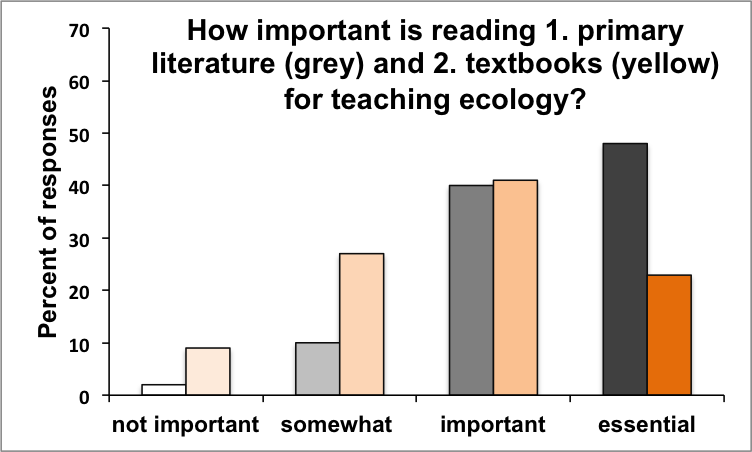
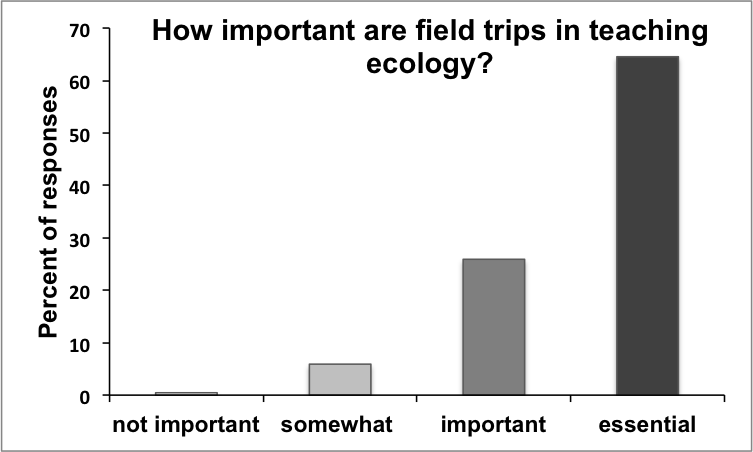
From a survey I did of ecology teachers*: many think that reading primary literature is important in teaching ecology. I included answers for reading textbooks as a comparison. I wasn’t surprised that there was a bit less emphasis on textbook reading but it is obvious still a useful resource for teaching ecology. I certainly also had the impression that reading journal articles was important as an undergraduate but I wasn’t quite sure how to do it.

reading

So if you are using or want to use primary literature in an undergraduate class, how should you go about it? There are perhaps 101 ways to effectively use journal articles as teaching tools. The link is a detailed article which outlines what you can use primary literature for, how to identify good articles, challenges with using primary literature and how to overcome them and finally how to assess learning. There is tons of good advice there, so if you are looking for ways to incorporate the literature but are unsure how, it is a good place to start. Here’s a more personal account of one professor’s approach to integrating the primary literature into a class. I like the idea of building up understanding and directing the students so that their reading is productive.

I found when I was an undergrad, I basically learned how to read primary literature by doing it a lot. My first attempts felt a bit like looking through a fog. I would attend discussion sections where we’d read papers and there were a few students presenting each time. I don’t think I learned anything until I presented a paper myself. Before that, it seemed that every time I missed the main point of the paper.

So when I started running my own section for a writing intensive group of an ecology course as a teaching assistant, I realised I didn’t want my students to be stuck in the rut I had been in. We were to discuss many papers during the semester and I couldn’t wait for the end for all of them to be comfortable. I also didn’t want the focus to be on me (the section was meant to facilitate their independence), so I didn’t want to break down every paper for them. Inspired by discussions in a class about how to teach writing that I was taking, I came up with a simple plan to get students to overcome any issues they might have with discussing primary literature.

The methods were simple**:

  1. Choose recently published papers on topics that students will be able to understand without much background.
  2. Describe the general layout of a paper and how to read it (be brief to give students as much time as possible to read).
  3. Break students into pairs, and have each pair read a different paper for 10-15 minutes.
  4. Allow the pairs to discuss the paper for ~5 minutes.
  5. Give each pair 2-3 minutes to tell the class what the paper was about.

As instructors, we often discuss how to approach reading a paper but we rarely address the intimidation that many students feel when reading scientific writing. Often students get so bogged down in the details of a paper that they can’t see the forest through the trees. So I wanted students to avoid getting caught up in details they didn’t understand (e.g. statistical methods are particularly prone to this). My hope was that I could help students overcome their fears of both reading primary literature and then having something to say about it. I have to admit the first time I tried this I was terrified. I knew that I could briefly read a paper before a discussion and contribute if I needed (sometimes happened more than I’d care to admit as a grad student) but I wasn’t sure how they would do. I wasn’t asking them to describe in detail the paper and I specifically choose papers that were relatively easy to understand the main points.  I hoped this was enough. To my relief, it worked!

Student comments on this activity:

  • “An invaluable skill! Keep encouraging this. Thank you!”
  • “Was useful because it helped me think about the essential information”
  • “Speed reading will be a skill I keep-usually I spend so much time I get confused in the readings.”
  • “Great. Not only familiarized us with various ecological concepts and studies but helped with the ability to skim/read scientific papers for pertinent information.”
  • “Speed reading was helpful in understanding take away messages from papers—it is a great skill.”
  • “very useful”, “relevant and important”, “practical”

I was able to describe paper reading very briefly in the beginning of section because my students had all been exposed to reading primary literature in previous courses. If this is the first time your class has seen a journal article, maybe more effort would be needed here. At the end of class I would also take a few moments to point out what they couldn’t pick up from their quick reading. For example, I’d ask some directed questions to the teams about the articles that I was pretty sure that they wouldn’t have picked up on. My goal was to get them to be able to figure out the main story of a paper and realise that they could understand that without knowing all the details. But I didn’t want the take away message to be that fully reading a paper is never necessary. The rest of the semester we discussed many papers and they also needed to read and summarize papers working up to their final proposal so there was many opportunities to teach them about how to read and learn from the literature.

I was lucky because I had small groups of students to work with. I can see ways in which you could modify the activity for larger groups. Maybe having them share what the paper is about in smaller groups rather than the whole class, for example. Mainly I think it is important for them to have to say something about the paper. It is through being forced to quickly summarize the points that students actually learn to ignore all the detailed methodology that they tend to get caught up in. We can tell them to focus on the big picture but most of them (including me as an undergrad) won’t. By not giving the time to get bogged down, they quickly learned to look at the big picture. I was really pleased that both times my students were able to use this experience throughout the course. The discussions were more lively than I’d ever had before as a TA and I did very little talking.

In general, I think incorporating primary literature is important for learning in the sciences. Whether it is exposing students to the papers themselves or their products in an deconstructed way, efforts we make to teach students how to read the scientific literature can only expand their understanding of what science is all about. Now whether they should be able to access the literature after their degree is complete is a whole another debate…

*if you are new to Teaching Tuesdays, I’ve been doing a series of posts that have derived from a survey I distributed broadly to ecology teachers earlier this year. If you are interested in knowing more about what ecology teachers are up to, you can read more here (intro, difficulties, solutions, practice and writing).

**after doing this activity with my students in a couple of courses I remember reading something similar. I think the article was maybe in an ESA newsletter (Eco 101, perhaps) but my cursory searching hasn’t found it. Although I had thought I downloaded it, there is nothing on my hard drive either. If you know of this article, please send me the link! (Update: link, thanks Gary)

Inequality in computer science curricula

Standard

This is a guest post by Lirael.

I’m a PhD student in computer science at a university where most of the undergrads come from pretty affluent, educationally privileged backgrounds (as I did myself, back in my undergrad days).  I’m a teaching assistant and/or tutor for a couple of different programs that we have for students who are not from such backgrounds.  One is for students who are motivated but have been educationally disadvantaged in some way (whether this was poverty, major illness in high school, an unstable housing situation, war in their home country, or any other life circumstance that would have left them at a disadvantage in their schooling), who take catch-up classes as a cohort and get extensive advising in order to prepare them for a full undergrad program.  The other is for students who are first-generation college students or who come from families with incomes below 150% of the poverty line, and gives them free tutoring, extensive advising, career prep, and leadership development.  Some students are in both programs.  Neither program is exclusively for students of color or poor students, but in practice, most of my students are both.

Computer science has unusual status compared to most science, social science, and humanities programs, because so many people associate it so strongly with a quick and direct path to good jobs.  There is some truth to this association – when I graduated from college at 22 and started my first industry job, I had a salary that put me in the top 20% of all US wage earners, plus excellent benefts and good working conditions.  This gives computer science obvious appeal for my students (and for other marginalized groups — I have a friend, a trans woman, who teaches at a program to ecnomically empower other trans people by teaching them to code).  It also makes it very popular at, for example, many community colleges.

My concern, though, is what sort of computer science marginalized and underrepresented groups are learning in the name of economic advantage.

Some community colleges have excellent offerings, of the sort that will prepare their students well for upper-level classes.   In others, the curriculum seems to be dominated by courses that could be described as “How to use a currently-popular technological tool for immediate commercial applications.”  Sometimes they are “Intro to a currently-popular computer language.”  There’s generally a data structures class, but not much else on the more foundational side of CS.  Some four-year departments like this approach too.  The thing is that in the tech world most of these skills and languages are likely to be archaic in a few years – I don’t often see job listings asking for people who know Pascal or BASIC or who can hand-write websites in HTML or make an eye-catching GeoCities site, all of which were in the currently-popular category when I was in high school.  The CS programs, much more than, say, the biology or history programs, stress the idea that this is vocational training.  Again, I don’t want to imply that every community college or state non-flagship is doing this, but I have noticed that plenty do, especially community colleges.

At schools where the idea that learning specific current tools = employability doesn’t drive the curriculum quite so hard –- which includes affluent schools with affluent student bodies — students focus on subjects like AI, algorithms, operating systems, robotics, computational biology, distributed computing, software design.  They learn specific currently-popular skills in class projects or paid industry internships where they apply, say, AI to creating Android apps, or software design to creating a new video game.  They don’t seem to have a problem getting good tech jobs after they graduate.  Meanwhile, if a student from a vocationally-focused school wants to transfer to a prestigious one, will they be prepared for the classes at the new school?  Will their credits from the vocationally-focused classes transfer?

Are there tech jobs where hiring managers care mostly that applicants have a list of buzzword Skills O’ the Day, and will seriously consider candidates whose whole CS education is an associate’s degree?  Yep.  What kinds of tech jobs, in general, are those?  The crappy tech jobs.  The code monkey jobs.  The ones that pay less.  The ones with less prestige and less respect.  The ones that get outsourced to developing countries.

I think it’s incredibly important that people be able to get jobs after they graduate from college.  It’s often more important for students from poor or working-class backgrounds, who don’t have family money to fall back on if they don’t get a job right away, so I understand why schools with many such students would be very concerned about employability.  But I worry that focus on vocational training will ironically lead to less employability, and less upward mobility, for the people who need it the most.  I also worry that increased focus on college as preparation for the workforce, which has had consequences already for the humanities and social sciences, will push computer science in the direction of vocational training.

I am not saying that there should be no vocational focus at all in computer science (indeed, some affluent schools have been criticized for not having enough of one) only that there needs to be balance.  The course that I TA is an intro to computer science course focused on game design.  Students learn basic computing and engineering concepts along with skills like how to create their own webpage and how to use game-creation software.  I make a point of talking about how they can use what they’re learning in other fields, like biology or public health or economics, as well, since after all not all of them want to go into computer science.  My hope is that they’ll get something out of it no matter what field they go into, and that if they do want to continue in computer science, they’ll be well-prepared to do so.

Friday Recommended Reads #9

Standard

There’s a long tradition of using anthropomorphic common names for animals that do things analogous to humans. Years ago, there was some disagreement about whether we should stop using the term “slave making ants.” Alex Wild recalls that episode and proposes a new common name for these creatures: “kidnapper ants.” In terms of sensitivity to victims of crimes, I’m not sure this is a big step up. I just call ’em Polyergus.

Mulling over job interviews and offers usually presents big-time dilemmas. Mizuki Takahashi discusses his own experience with frank detail. The seasonality and non-synchronicity of interviews leads to some interesting thoughts about bet-hedging and game theory, with really high stakes.

On Wednesday morning, I heard a heartbreaking story on NPR about a Pakistani family that traveled to Washington DC to testify in a hearing about drone strikes. They recounted the remote-controlled murder of their grandmother by the US Government. One thing that they didn’t mention on NPR, as much as I recall, is that only five members of Congress attended this hearing.

Sometimes blogs include posts about blogging. This post by Simon Goring is about the personal motives for blogging and how whether, or not, it matters how well read your blog is. This post ended up getting seen, and commented on, by a bunch of other bloggers and the comments are worthwhile if you’re interested in the topic. (Note: this link starts out saying really nice stuff about this site. That’s not why I linked to it, though I always appreciate nice words.)

You know when a Senior Editor of scholarly journal is really pissed when the editorial is simply entitled, “Fuck Jared Diamond.” That message was brought to you by David Correia.

The density of people on the planet is unevenly distributed, to put it mildly. This animation of birth and death events, simulated using real demographic data, is really cool.

What if Darwin died on The Beagle? Jeremy Fox reviews the book Darwin Deleted that delves into this thought experiment. It was an interesting review, so interesting that I think I might not have to read the book. I’m not big on the alternative history genre, but I did enjoy and learn a lot from Philip Roth’s The Plot Against America when it came out.

Thanks to Boing Boing and Jane Zelikova for links.

Efficient teaching: Rubrics for written assignments

Standard

I’ve often emphasized the importance of transparency and fairness in teaching. The evaluation of written assignments is an inherently subjective activity, at least from the perspective of students. The grading of written assignments is most prone to the appearance of unfairness. When students think they’re being treated unfairly, they are not inclined to focus on learning.

Moreover, in the grading of written assignments we are most likely to be inadequately transparent and unfair. By using rubrics to grade writing, we can mitigate, or perhaps even eliminate, this problem.

Some folks don’t like using rubrics because they think that written assignments should be evaluated holistically or by gestalt. As experts in our field, we can tell apart a B paper from a C paper based on reading without the use of a rubric, and we can explain to students in our evaluation how this distinction is made without resorting to over-simplified categories. We can reward deep insight without being captive to a point-making system.

Even if the concepts in the preceding paragraph were factually correct, the choice to formulate is such an argument indicates a lack of focus on student learning. Rubrics should be used to grade written assignments not only because they lend themselves to the appearance of fairness in the eyes of students, they actually result in more fairness.

Grading written assignments without a rubric is unfair. Why is that? It’s very simple: when an assignment is graded without a rubric, students do not know the basis upon which their writing is to be evaluated. Fairness requires that students know in advance the basis upon which their grade is being assigned.

There are many different components to good writing, and presumably someone who grades holistically takes all of these into account in an integrated fashion and then assigns a grade. However, if the purpose of the assignment is to learn about writing, then the student needs to which components are important constituents of good writing. And then the student needs to receive credit for including these components, and not receive credit if not including these components.

If a professor wishes to reward students for making “deep insights,” then these deep insights can be placed as a category on the rubric. And, when handing out the rubric when assigning work to students, the professor can then explain in writing on the rubric what constitutes deep insights that are worthy of receiving points in the rubric.

Rubrics don’t rob professors of flexibility in grading written assignments; they only prevent professors from ambushing students with criticisms that the students would not have been able to anticipate. They also prevent professors from unfairly rewarding students who are able to perform feats that satisfy the professor’s personal tastes even though these feats are not a required part of the assignment.

Is bad grammar something that deserves points off? Put it on the rubric.

Should it be impossible to get an A without a clearly articulated thesis and well supported arguments? Build that into the rubric.

Does citation format matter to you? Put it on the rubric? Don’t care about citation format? Then don’t put it on the rubric.

When you’re grading, you should know what you are looking for. So, just put all of those things on the rubric, and assign the appropriate amount of points to them as necessary. Of course any evaluation of “clear thesis” and “well supported argument” is to some degree subjective. However, when students know that the clarity of their theses and the quality of their arguments are a big part of their grade, then they will be aware that they need to emphasize that up front, and focus on writing well. This point might be obvious to faculty, but it’s not necessarily obvious to all of the students. To be fair, every student needs to know these kinds of things up front and in an unbiased fashion.

There are several other reasons to use rubrics:

Rubrics help reduce the unconscious effects of cultural biases. Students who write like we do are more likely to come from similar cultural backgrounds as ourselves, and students who write well, but differently than we do, are likely to come from a different cultural background. If grading is holistic, then it is likely that professors will favor writing that reflects their own practices. Without the use of a rubric, professors are more likely to assign higher grades to students from cultural backgrounds similar to their own.

Rubrics save your time before grading. Students often are demanding about their professors’ time when they are anxious about whether they are doing the right thing. The more specific information students receive about what is expected of them, the more comfortable they are with fairness and transparency in grading, the less often instructors are bothered with annoying queries about the course, and the more often they’ll contact instructors about substantial matters pertaining to the course material.

Rubrics save your time while grading. If you grade holistically without using a rubric, and it takes you appreciably less time than it takes with a rubric, I humbly suggest that you’re not performing an adequate evaluation.  The worse case scenario, with respect to time management while grading, is that a complete evaluation happens without a rubric, and then it takes only a few moments for the professor to then assign numbers on a rubric after being done with a holistic evaluation.

Rubrics save your time after grading. If students are unpleased with a grade on a written assignment, and all they have to go on is a holistic assessment and written comments – regardless of verbosity – they are far more likely to bother you to ask for clarification or more points. If they see exactly where on the rubric they lost points, they are far more likely to use their own time to figure out what they need to do to improve their performance rather than hassle you about it.

Most importantly, rubrics result in better writing practices from your students. It is a rare student who relishes receiving a draft of an assignment with massive annotations and verbose remarks about what can be done better. Those remarks are, of course, very useful, and students should get detailed remarks from us. When fixing the assignment, students will be focused on getting a higher grade than they received on their draft. The way to do promote success by students is to provide them specific categories on which they lost points. This kind of diagnosis, along with any written comments that professors wish to share, is more likely to result in a more constructive response and is less likely to terrify students who are unclear how to meet the expectations of a professor who gave a bad grade without providing a specific breakdown about how that bad grade was assigned. If a student wonders, “what can I do to produce excellent writing?” all they’ll need to do is look at where they lost points on the rubric. That’s a powerful diagnostic tool. If you think the use of a rubric in your course cannot be a great diagnostic tool, then you haven’t yet designed an adequate rubric.

Of course, it’s okay to disagree with me about writing rubrics. If you do, I’d be really curious about what your students think. The last time I graded a written assignment (a take-home exam), I asked my students if they wanted to receive a copy of a grading rubric before I handed out the exam. They all wanted it, and they all used it. By choosing carefully what I put on the rubric, I was sure that their efforts were allocated in the best way possible.

Collected observations from travels among universities

Standard

Invited seminars and job interviews offer a unique opportunity to learn (and remember) what grad school is like and how universities work. You get to have a lot of intentional sit-down conversations on a wide variety of topics. Spending time meeting new people and learning new stuff rocks. And when you chat with other people about themselves, and their work, labs and universities, you have a chance to put your own way of doing things in perspective.

I’ve had a few such opportunities in the past month. There were a number of recurring conversational themes and undercurrents. During these visits, you get to have conversations to learn not just about all kinds of research, but about how people chose the directions that led to their current trajectories. And, you often learn about how personal lives shape our research directions and priorities, both by design and by hap.

Here are some of the highlights. None of these observations are shocking news by any measure. But I was struck by the obviousness of these ideas and the frequency with which they emerged, even when I wasn’t looking for them:

  • Research universities are no longer primarily oriented towards training excellent scientists. They are now primarily oriented towards teaching students how to publish and to get grants. If a grad student develops the desire to become an excellent practitioner of science, this is probably going to emerge from the undergraduate experience.
  • Anybody currently building a future in the quantitative sciences needs to learn how to write code to promote their own research success. Being able to manage and analyze super-duper huge datasets (bioinformatics) is really useful.
  • High quantity data will never be a substitute for high quality data.
  • People need to get off their goddamn phones.
  • Genomics is now at the point when all flavors of biologists are in a practical position to figure out heritable mechanisms accounting for phenomena involving organisms in nature. For many kinds of questions, any species can now be a model system.
  • Most ecological theories are ephemeral, and are either myopic or wrong. The parenting of popular, ephemeral and myopic theories is the prevailing route to success.
  • It’s difficult to maintain the presence of mind to recognize the power of one’s own authority.
  • In ecology and evolutionary biology, women fall out of academic careers most heavily in the transition phase between from Ph.D. to faculty. Lots of parties are at fault, but the ones that seem to be the most significant are some senior faculty (of both genders) and some spouses. Deans have many opportunities to proactively make positive changes, but that rarely happens.
  • The number of students who want to do serious, long-term, field biology in the service of contemporary research questions has sharply declined. This limits our potential to answer some major wide open questions in biology.
  • Universities that maintain a strong faculty actively keep their professors from going on the market in search of greener pastures. Universities would not lose valued faculty members as often as they do, if they actually supported faculty commensurate with the degree to which they are valued. Once someone is driven to look for a new faculty job on the market, then it’s impossible to not take a great offer seriously, even when there are many good reasons to not move.
  • The beauty of life – both in biodiversity and our relations with fellow humans – is immense beyond words. Humanity might be ugly, but people are gorgeous.

Teaching Tuesday: Writing in Ecology

Standard

In my continuing series on teaching ecology, I am going to focus on using writing in ecology classes. The following is a lot of my opinion, some of the results related to writing from a survey of ecology teachers and a few links to writing resources that I find helpful. If you are interested in exploring past posts stemming from the survey I did of ecology teachers you can read them here (intro, difficulties, solutions, and practice).

Writing is a particular interest of mine, stemming from before I taught a ‘writing in the majors’ section of ecology as a graduate student. Students applied for this section and they attended two sections a week with me with their grades based on my section rather than exams. I was given an amazing amount of freedom to run the section and both times it was incredibly fun. I didn’t need to give lectures (they attended those with the rest) but I had my first opportunity to organise a syllabus and be in charge as a teacher. It was a wonderful experience as a graduate student. In conjunction to teaching a writing-intensive section, teaching assistants for these writing-intensive classes also took a short course on how to teach writing. I learned an incredible amount by taking the course and teaching myself. My advice to any PhDs out there is if you have the opportunity to do something like this: do it! The skills I learned teaching these sections have been invaluable to me as a teacher.

I think that learning to write and specifically scientific writing is an important skill. Of course, writing is crucial if you want to go on in science, but scientific writing is also something that students can benefit from regardless of what they ultimately do. So I’m showing my colours and biases here. I think writing is essential and if we haven’t made an effort to teach students to be better writers, than I think we have failed as university teachers. Of course, it is possible to divide the responsibility of teaching writing skills across classes in a program and there are places where it is easier to do (fewer students, for example). However, I always find it disappointing when I see upper level undergraduates that have been able to get by without being able to write well. I know that some think that their subject should take precedent over skills like writing (they should have learned that elsewhere!). Given how important the ability to write is for science careers and so many others, I think we need to have some focus on writing in every course. After all, what is the use of knowing an answer if you can’t communicate it?

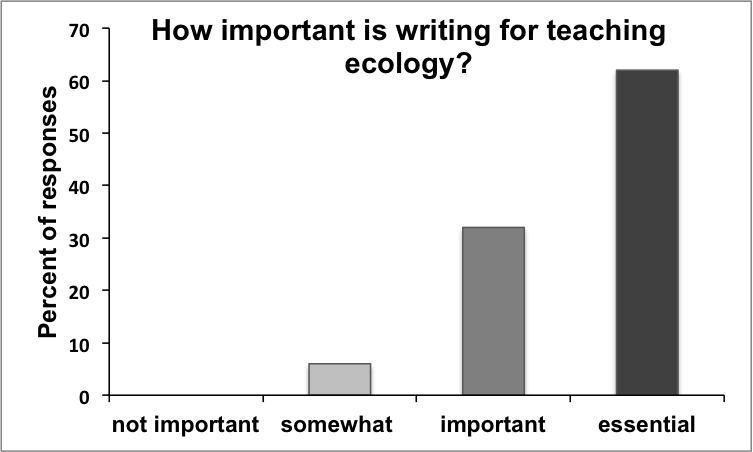
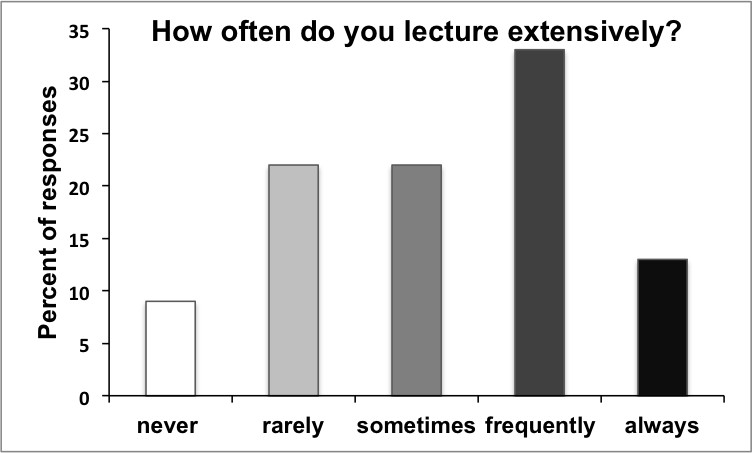
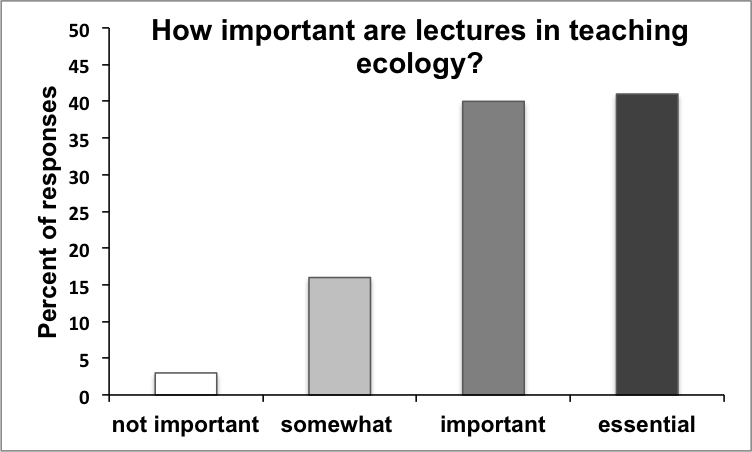
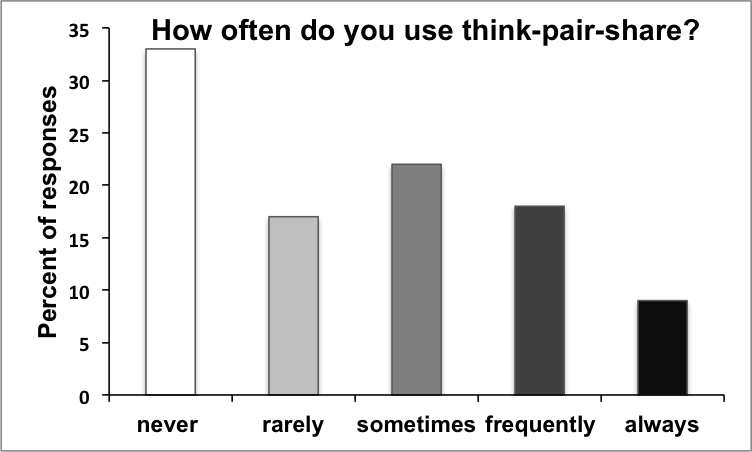
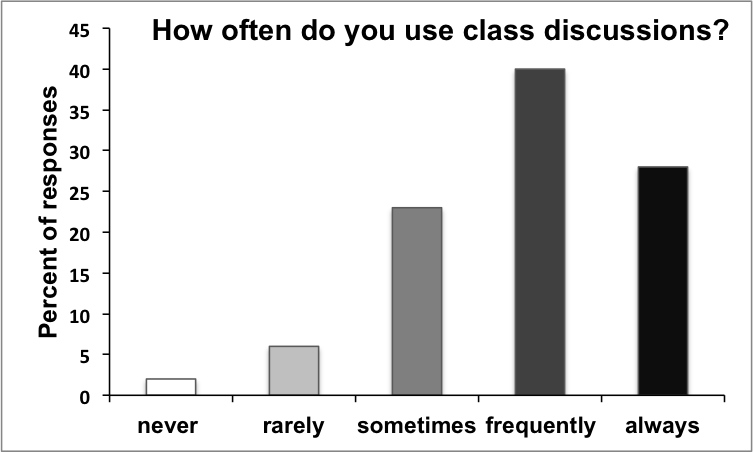
Maybe we ecologists are just a communicative bunch, but 62% of the responses said that writing is essential for teaching ecology.

writingimportance

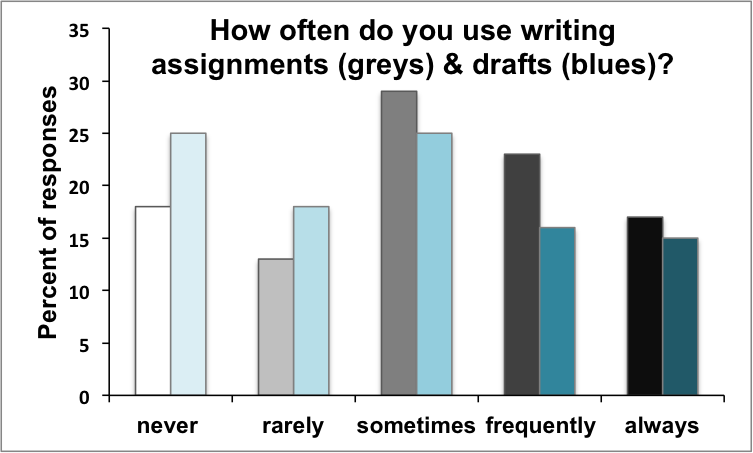
So how many use writing assignments in their courses? Well, a quarter rarely or never assigns writing research papers or proposals. So there seems to be a bit of a contradiction here. It could also be that teachers are using different forms of writing assignments in their courses or make exams that emphasize writing as well as content. Being a skill, writing takes practice, so if we want students to learn to write we need to give them the opportunity to do so. I think with effective time management and teaching, writing can be incorporated to any class. For example, I’ve had students write exam questions and figure captions as very short writing assignments. Of course one of the best ways to learn how to write, as well as how ‘real writing’ works, is to have multiple drafts. I was lucky enough to be exposed to forced multiple drafts as an undergrad. Without the forced part, I wasn’t really learning how to improve my writing but that is only something I realised after the fact. For an upper-level plant ecology class I took, Elizabeth Elle had a clever way to use her time efficiently by doing not quite multiple drafts of the same work. We had a report early on in the class that was heavily commented on and then a larger paper towards the end. Even though these papers weren’t the same topics, capitalizing on the fact that students tend to make many of the same general mistakes again and again, we had to show that we had improved any issues in the final paper. Later working with Elizabeth and my masters advisor, Chris Caruso, really helped me hone my writing. I am still appreciative of their patience. It was only working through many drafts of my writing that got me to think directly about the writing, rather than just the content I needed to include. For me, writing is an on-going learning process. However, multiple drafts are time-consuming for students and teachers and only 15% of ecology teachers always use them. The trend is generally that fewer who have writing assignments also get students to do multiple drafts but the difference isn’t by much. To me this suggests that many who emphasize writing in class are also utilising feedback on drafts to help students learn the skill. I think that with effective time management and

writingassignments

So if writing is important, than how should we teach it? I’ve gathered a few sources that are mostly directed towards professional scientific writing but I think they contain lots of good tips than can be adapted to use in classes as well.

Here’s a detailed post on clear writing including a macro that detects your most verbose of sentences. Honestly, I’m a little afraid to use it, I tend towards long and involved sentences where I include lots of information that I end up needing to break up into smaller pieces in the revision process but I would probably benefit from getting those run-on sentences highlighted in red straight away. Here’s some more tips on how to write a scientific paper and on the beginning, middle and end of scientific papers. There is also this simple intro to writing for scientific journals and as mentioned by Brian McGill in his post about clear writing the Duke scientific writing site is also useful.

Writing in ecology assignments can also include summarizing existing research, so this plain language summaries post might give you some useful tips for students. It is written for scientists who want to communicate their findings more broadly but it seems that this is a good way to also assess if students really understand the literature they are reading.

Further guidance for writing detailed research proposals can be found as an example in TIEE (teaching issues and experiments in ecology). Here the students build upon data they collect and then create proposals but it also provides lots of good tips on helping students to come up with ideas and write proposals.

Finally, a list of common writing errors.

Up next week: ? I have a few more posts in mind from the survey results, including getting into the demographics and potential biases of the answers. I also haven’t included all the questions thus far and there are a few interesting things to discuss from the comments section. I want to reflect a bit more on what I’ve already written about and what might be left that is interesting to say. If you have anything in particular you want me to address, just leave it in the comments and I’ll see if I can include it.

A snapshot of the publication cycle

Standard

I was recently asked:

Q: How do you decide what project you work on?

A: I work on the thing that is most exciting at the moment. Or the one I feel most bad about.

In the early stages, the motivator is excitement, and in the end, the motivator is guilt. (If I worked in a research institution, I guess an additional motivator would be fear.)

Don’t get me wrong: I do science because it’s tremendous fun. But the last part – finessing a manuscript through the final stages – isn’t as fun as the many other pieces. How do I keep track of the production line from conception to publication, and how do I make sure that things keep rolling?

At the top center of my computer desktop lives a document entitled “manuscript progress.” I consult this file when I need to figure out what to work on, which could involve doing something myself or perhaps pestering someone else to get something done.

In this document are three categories:

  1. Manuscript completed
  2. Paper in progress
  3. In development projects

Instead of writing about the publication cycle in the abstract, I thought it might be more illustrative to explain what is in each category at this moment. (It might be perplexing, annoying or overbearing, too. I guess I’m taking that chance.) My list is just that – a list. Here, I amplify to describe how the project was placed on the treadmill and how it’s moving along, or not moving along. I won’t bore those of you with the details of ecology, myrmecology or tropical biology, and I’m not naming names. But you can get the gist.

Any “Student” is my own student – and a “Collaborator” is anybody outside my own institution with whom I’m working, including grad students in other labs. A legend to the characters is at the end.

Manuscript completed

Paper A: Just deleted from this list right now! Accepted a week ago, the page proofs just arrived today! The idea for this project started as the result of a cool and unexpected natural history observation by Student A in 2011. Collaborator A joined in with Student B to do the work on this project later that summer. I and Collab A worked on the manuscript by email, and I once took a couple days to visit Collab A at her university in late 2011 to work together on some manuscripts. After that, it was in Collab A’s hands as first author and she did a rockin’ job (DOI:10.1007/s00114-013-1109-3).

Paper B: I was brought in to work with Collab B and Collab C on a part of this smallish-scale project using my expertise on ants. I conducted this work with Student C in my lab last year and the paper is now in review in a specialized regional journal (I think).

Paper C: This manuscript is finished but not-yet-submitted work by a student of Collab D, which I joined in by doing the ant piece of the project. This manuscript requires some editing, and I owe the other authors my remarks on it. I realize that I promised remarks about three months ago, and it would take only an hour or two, so I should definitely do my part! However, based on my conversations, I’m pretty sure that I’m not holding anything up, and I’m sure they’d let me know if I was. I sure hope so, at least.

Paper D: The main paper out of Student A’s MS thesis in my lab. This paper was built with from Collab E and Collab F and Student D. Student A wrote the paper, I did some fine-tuning, and it’s been on a couple rounds of rejections already. I need to turn it around again, when I have the opportunity. There isn’t anything in the reviews that actually require a change, so I just need to get this done.

Paper E: Collab A mentored Student H in a field project in 2011 at my field site, on a project that was mostly my idea but refined by Collab A and Student H. The project worked out really well, and I worked on this manuscript the same time as Paper A. I can’t remember if it’s been rejected once or not yet submitted, but either way it’s going out soon. I imagine it’ll come to press sometime in the next year.

Manuscripts in Progress

Paper F: Student D conducted the fieldwork in the summer of 2012 on this project, which grew out of a project by student A. The data are complete, and the specific approach to writing the paper has been cooked up with Student D and myself, and now I need to do the full analysis/figures for the manuscript before turning it off to StudentD to finish. She is going away for another extended field season in a couple months, and so I don’t know if I’ll get to it by then. If I do, then we should submit the paper in months. If I don’t, it’ll be by the end of 2014, which is when Student D is applying to grad schools.

Paper G: Student B conducted fieldwork in the summer of 2012 on a project connected to a field experiment set up by Collab C. I spent the spring of 2013 in the lab finishing up the work, and I gave a talk on it this last summer. It’s a really cool set of data though I haven’t had the chance to work it up completely. I contacted Collab G to see if he had someone in his lab that wanted to join me in working on it. Instead, he volunteered himself and we suckered our pal Collab H to join us in on it. The analyses and writing should be straightforward, but we actually need to do it and we’re all committed to other things at the moment. So, now I just need to make the dropbox folder to share the files with those guys and we can take the next step. I imagine it’ll be done somewhere between months to years from now, depending on how much any one of us pushes.

Paper H: So far, this one has been just me. It was built on a set of data that my lab has accumulated over few projects and several years. It’s a unique set of data to ask a long-standing question that others haven’t had the data to approach. The results are cool, and I’m mostly done with them, and the manuscript just needs a couple more analyses to finish up the paper. I, however, have continued to be remiss in my training in newly emerged statistical software. So this manuscript is either waiting for myself to learn the software, or for a collaborator or student eager to take this on and finish up the manuscript. It could be somewhere between weeks to several years from now.

Paper I: I saw a very cool talk by someone a meeting in 2007, which was ripe to be continued into a more complete project, even though it was just a side project. After some conversations, this project evolved into a collaboration, with Student E to do fieldwork in summer 2008 and January 2009. We agreed that Collab I would be first author, Student E would be second author and I’d be last author. The project is now ABM (all but manuscript), and after communicating many times with Collab I over the years, I’m still waiting for the manuscript. A few times I indicated that I would be interested in writing up our half on our own for a lower-tier journal. It’s pretty much fallen off my radar and I don’t see when I’ll have time to write it up. Whenever I see my collaborator he admits to it as a source of guilt and I offer absolution. It remains an interesting and timely would-be paper and hopefully he’ll find the time to get to it. However, being good is better than being right, and I don’t want to hound Collab I because he’s got a lot to do and neither one of us really needs the paper. It is very cool, though, in my opinion, and it’d be nice for this 5-year old project to be shared with the world before it rots on our hard drives. He’s a rocking scholar with a string of great papers, but still, he’s in a position to benefit from being first author way more myself, so I’ll let this one sit on his tray for a while longer. This is a cool enough little story, though, that I’m not going to forget about it and the main findings will not be scooped, nor grow stale, with time.

Paper J: This is a review and meta-analysis that I have been wanting to write for a few years now, which I was going to put into a previous review, but it really will end up standing on its own. I am working with a Student F to aggregate information from a disparate literature. If the student is successful, which I think is likely, then we’ll probably be writing this paper together over the next year, even as she is away doing long-term field research in a distant land.

Paper K: At a conference in 2009, I saw a grad student present a poster with a really cool result and an interesting dataset that came from the same field station as myself. This project was built on an intensively collected set of samples from the field, and those same samples, if processed for a new kind of lab analysis, would be able to test a new question. I sent Student G across the country to the lab of this grad student (Collab J) to process these samples for analysis. We ran the results, and they were cool. To make these results more relevant, the manuscript requires a comprehensive tally of related studies. We decided that this is the task of Student G. She has gotten the bulk of it done over the course of the past year, and should be finishing in the next month or two, and then we can finish writing our share of this manuscript. Collab J has followed through on her end, but, as it’s a side project for both of us, neither of us are in a rush and the ball’s in my court at the moment. I anticipate that we’ll get done with this in a year or two, because I’ll have to analyze the results from Student G and put them into the manuscript, which will be first authored by Collab J.

Paper L: This is a project by Student I, as a follow-up to the project of Student H in paper E, conducted in the summer of 2013. The data are all collected, and a preliminary analysis has been done, and I’m waiting for Student I to turn these data into both a thesis and a manuscript.

Paper M: This is a project by Student L, building on prior projects that I conducted on my own. Fieldwork was conducted in the summer of 2012, and it is in the same place as Paper K, waiting for the student to convert it into a thesis and a manuscript.

Paper N: This was conducted in the field in summer 2013 as a collaboration between Student D and Student N. The field component was successful and now requires me to do about a month’s worth of labwork to finish up the project, as the nature of the work makes it somewhere between impractical and unfeasible to train the students to do themselves. I was hoping to do it this fall, to use these data not just for a paper but also preliminary data for a grant proposal in January, but I don’t think I’ll be able to do it until the spring 2014, which would mean the paper would get submitted in Fall 2014 at the earliest, or maybe 2015. This one will be on the frontburner because Students D and N should end up in awesome labs for grad school and having this paper in press should enhance their applications.

Paper O: This project was conducted in the field in summer 2013, and the labwork is now in the hands of Student O, who is doing it independently, as he is based out of an institution far away from my own and he has the skill set to do this. I need to continue communicating with this student to make sure that it doesn’t fall off the radar or doesn’t get done right.

Paper P: This project is waiting to get published from an older collaborative project, a large multi-PI biocomplexity endeavor at my fieldstation. I had a postdoc for one year on this project, and she published one paper from the project but as she moved on, left behind a number of cool results that I need to write up myself. I’ve been putting this off because it would rely on me also spending some serious lab time doing a lot of specimen identifications to get this integrative project done right. I’ve been putting it off for a few years, and I don’t see that changing, unless I am on a roll from the work for Paper N and just keep moving on in the lab.

Paper Q: A review and meta-analysis that came out of a conversation with Collabs K and L. I have been co-teaching field courses with Collab K a few times, and we share a lot of viewpoints about this topic that go against the incorrect prevailing wisdom, so we thought we’d do something about it. This emerged in the context of a discussion with L. I am now working with Student P to help systematically collect data for this project, which I imagine will come together over the next year or two, depending on how hard the pushing comes from myself or K or L. Again it’s a side project for all of us, so we’ll see. The worst case scenario is that we’ll all see one another again next summer and presumably pick things up from there. Having my student generating data is might keep the engine running.

Paper R: This is something I haven’t thought about in a year or so. Student A, in the course of her project, was able to collect samples and data in a structured fashion that could be used with the tools developed by Collab M and a student working with her. This project is in their hands, as well as first and lead authorship, so we’ve done our share and are just waiting to hear back. There have been some practical problem on their side, that we can’t control, and they’re working to get around it.

Paper S: While I was working with Collab N on an earlier paper in the field in 2008, a very cool natural history observation was made that could result in an even cooler scientific finding. I’ve brought in Collab O to do this part of the work, but because of some practical problems (the same as in Paper R, by pure coincidence) this is taking longer than we thought and is best fixed by bringing in the involvement of a new potential collaborator who has control over a unique required resource. I’ve been lagging on the communication required for this part of the project. After I do the proper consultation, if it works out, we can get rolling and, if it works, I’d drop everything to write it up because it would be the most awesome thing ever. But, there’s plenty to be done between now and then.

Paper T: This is a project by Student M, who is conducted a local research project on a system entirely unrelated to my own, enrolled in a degree program outside my department though I am serving as her advisor. The field and labwork was conducted in the first half of 2013 – and the potential long-shot result come up positive and really interesting! This one is, also, waiting for the student to convert the work into a thesis and manuscript. You might want to note, by the way, that I tell every Master’s student coming into my lab that I won’t sign off on their thesis until they also produce a manuscript in submittable condition.

Projects in development

These are still in the works, and are so primordial there’s little to say. A bunch of this stuff will happen in summer 2014, but a lot of it won’t, even though all of it is exciting.

Summary

I have a lot of irons in the fire, though that’s not going to keep me from collecting new data and working on new ideas. This backlog is growing to an unsustainable size, and I imagine a genuine sabbatical might help me lighten the load. I’m eligible for a sabbatical but I can’t see taking it without putting a few projects on hold that would really deny opportunities to a bunch of students. Could I have promoted one of these manuscripts from one list to the other instead of writing this post? I don’t think so, but I could have at least made a small dent.

Legend to Students and Collaborators

Student A: Former M.S. student, now entering her 2nd year training to become a D.P.T.; actively and reliably working on the manuscript to make sure it gets published

Student B: Former undergrad, now in his first year in mighty great lab and program for his Ph.D. in Ecology and Evolutionary Biology

Student C: Former undergrad, now in a M.S. program studying disease ecology from a public health standpoint, I think.

Student D: Undergrad still active in my lab

Student E: Former undergrad, now working in biology somewhere

Student F: Former undergrad, working in my lab, applying to grad school for animal behavior

Student G: Former undergrad, oriented towards grad school, wavering between something microbial genetics and microbial ecology/evolution (The only distinction is what kind of department to end up in for grad school.)

Student H: Former undergrad, now in a great M.S. program in marine science

Student I: Current M.S. student

Student L: Current M.S. student

Student M: Current M.S. student

Student N: Current undergrad, applying to Ph.D. programs to study community ecology

Student O: Just starting undergrad at a university on the other side of the country

Student P: Current M.S. student

Collab A: Started collaborating as grad student, now a postdoc in the lab of a friend/colleague

Collab B: Grad student in the lab of Collab C

Collab C: Faculty at R1 university

Collab D: Faculty at a small liberal arts college

Collab E: Faculty at a small liberal arts college

Collab F: International collaborator

Collab G: Faculty at an R1 university

Collab H: Started collaborating as postdoc, now faculty at an R1 university

Collab I: Was Ph.D. student, now faculty at a research institution

Collab J: Ph.D. student at R1 university

Collab K: Postdoc at R1 university, same institution as Collab L

Collab L: Ph.D. student who had the same doctoral PI as Collab A

Collab M: Postdoc at research institution

Collab N: Former Ph.D. student of Collab H.; postdoc at research institution

Collab O: Faculty at a teaching-centered institution similar to my own

By the way, if you’re still interested in this topic, there was also a high-quality post on the same topic on Tenure, She Wrote, using a fruit-related metaphor with some really nice fruit-related photos.

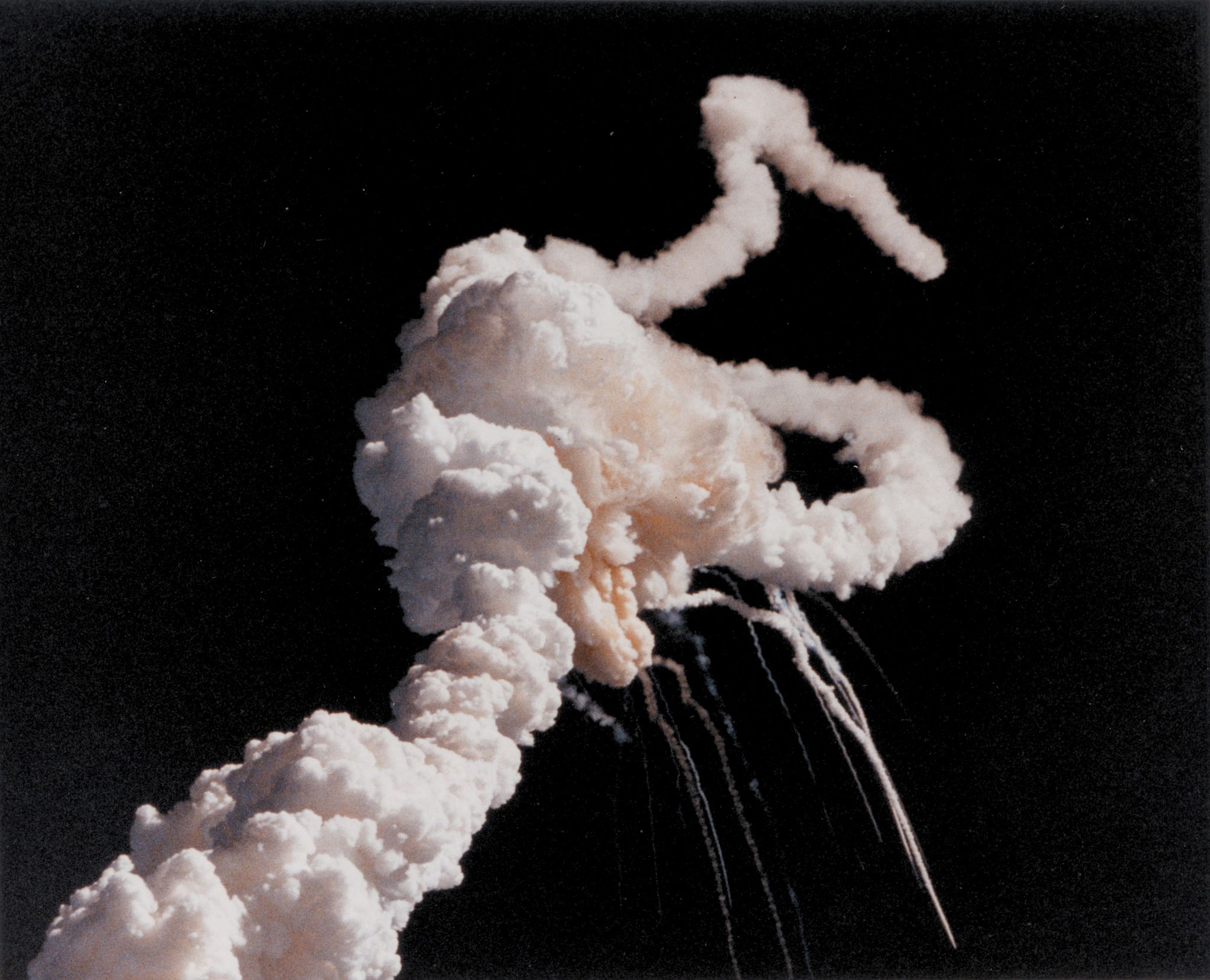
Friday Recommended Reads #8

Standard

You probably caught the news about the oarfish. Two washed up in Southern California. Why did these creatures make it up to the surface? One idea, that I haven’t heard or read anywhere else, is that it was probably the US Navy. They keep using massive sonar instruments that are deafening to whales, and it makes sense given the locations. It’s wholly credible. (This wasn’t my idea, but a student’s, though I wish it was mine.)

Darwin was a loving and doting father, if not up to current standards, then at least a far better one than his contemporaries. And when he was done writing drafts, his kids used his paper for their drawings.

Heard that you can’t start a sentence with a conjunction? There’s no rule against it. So don’t sweat it if you do.

This newly-famous guy named Macklemore wrote on his website about the last year, about the process through which he became famous. It’s refreshingly reflective and honest about the interplay of the strategy, thrill and weirdness involved in going from a restricted distribution to cosmopolitan in a very short period of time.

When you’re in a teaching campus, how do you allocate your limited research time? Do you put all the eggs in one basket?

Is your department’s seminar series no good? Here’s how Alex Bond thinks they can be less sucky.

David Foster Wallace on doing science.  Okay, not really, he wrote about writing, but if you substitute “doing scientific research” for “writing,” this piece works just as well. Remember, we’re in this to discover stuff, and being high-profile should be a side benefit rather than the purpose.

If you’re wanting the authoritative recap on the sexual harassment saga in the Science Online community, it made it to the New Yorker. The ensuing discussions led me to think about how I structure discussions and work to be inclusive on this site. Some of the comments on that post earlier this week were curious and particularly revealing about the subculture of science blogging, and only reinforce my will to make sure that this site is a conversation designed for everybody.

Damn, Hope Jahren sure can write. A little flavor of VonnegutBorgesZadieSmithSedaris.

As always, share any other links you wish to share in the comments. People really do click on these things, you know!

Thanks to Arikia Millikan and Stacy Philpott for pointing to things via social media.

The conflict-cooperation model of faculty-admin relations, Part 4: Consequences of our social interactions

Standard

This is the penultimate piece in a series on faculty-admin relations. Here are parts one, two, and three. You don’t need to get caught up to appreciate the set of tips inferred from prior observations:

  • Faculty are the ones who really run the show at universities. This is true as long as there is tenure, and especially as long as there is collective bargaining. Universities exist to let us do our research and teaching jobs, and any service on campus is designed to facilitate that core function. Any administrator that runs afoul of the faculty as a group will not be able to implement their vision with any kind of fidelity.
  • Administrators cannot be effective at serving students unless the faculty are on board.
  • In a university of adjuncts without tenure, the show is run by regional accreditors, because they can get administrators fired. This is why places run almost entirely by adjunct labor, such as “University” of Phoenix, have curricula that follow the prescriptions of regional accrediting agencies, without anything above or beyond what is required.
  • Faculty and administrators need one another. The more they can get along to meet shared goals, the better things are. When individuals pursue their own goals, that don’t contribute to the shared goal, conflict results. When there is cooperation toward shared goals, then all sides will be more able to fulfill their individual interests.
  • Good administrators and faculty share one common interest – serving students – but they also have many conflicting interests, and these are highly variable and shaped by the environment.
  • Professors typically want vastly different things from one another, so organization around a common interest is uncommon. This may result in administrators having their own interests met more often than the faculty.
  • Administrators can spend money on any initiatives they wish, but unless faculty choose to carry out the work in earnest, it will fail.
  • Conflict with your direct administrators over things that they are unable to change harms everybody. Individuals who can successfully minimize the costs of conflict are in a position to experience the greatest gain at the individual level, and these actions also serve to increase the group-level benefits of cooperation.
  • Administrators who don’t cooperate with their faculty will be ineffective, and faculty who don’t find common ground with administration don’t get what they need.
  • Universities have often evolved to take advantage of the faculty even though they collectively the machine that runs the show. Adjuncts have little power to individually control what happens in the university, and are highly subject to manipulation by administration and other faculty. If they wish to be a part of the system then they have little choice but to carry out the will of the administration.

What happens when you don’t know anything about the subject you’re teaching?

Standard
Biologie & Anatomie & Mensch, via Wikimedia commons

Biologie & Anatomie & Mensch, via Wikimedia commons

Like many grad students in Ecology and Evolutionary Biology, I my made a living through grad school as a TA.

One semester, there were open positions in the Human Anatomy cadaver lab. I was foolish enough to allow myself to be assigned to this course. What were my qualifications for teaching an upper-division human anatomy laboratory? I took comparative vertebrate anatomy in college four years earlier. We dissected cats. I barely got a C.

You can imagine what a cadaver lab might be like. The point of the lab was to memorize lots of parts, as well as the parts to which those parts were connected. More happened in lecture, I guess, but in lab nearly the entire grade for students was generated from practical quizzes and exams. These assessments consisted of a series of labeled pins in cadavers.

My job was to work with the students so that they knew all the parts for quizzes and exams. (You might think that memorizing the names of parts is dumb, when you could just look them up in a book. But if you’re getting trained for a career in the health sciences, knowing exactly the names of all these parts and what they are connected to is actually a fundamental part of the job, and not too different from knowing vocabulary as a part of a foreign language.)

The hard part about teaching this class is: once you look inside a human being, we’ve got a helluva lotta parts, all of which have names. I was studying the biogeography of ants. Some of the other grad student TAs spent a huge amount of time prepping, to learn the content that we were teaching each week. Either I didn’t have the time, or didn’t choose to make the time. I also discovered that the odors of the preservatives gave me headaches, even when everything was ventilated properly. Regardless of the excuse that I can invent a posteriori, the bottom line is that I knew far less course material than was expected of the students.

Boy howdy, did I blow it that semester! At the end, my evaluation scores were in the basement. Most of the students thought I sucked. The reason that they thought I sucked is because I sucked. What would you think if you asked your instructor a basic question, like “Is this the Palmaris Longus or the Flexor Carpi Ulnaris?” and your instructor says:

I don’t know? Maybe you should look it up? Let’s figure out what page it is in the book?

The whole point of the lab was for students to learn where all the parts were and what they were called. And I didn’t know how to find the parts and didn’t know the names. I lacked confidence, and my students were far more interested in the subject. It was clear to the students that I didn’t invest the time in doing what was necessary to teach well. They could tell, correctly, that I had higher priorities.

Even though students were in separate lab sections, a big chunk of the grade was based on a single comprehensive practical exam that was administered to all lab sections by the lecture instructor. Even though I taught them all semester – or didn’t teach them at all – their total performance was measured against all other students, including those who were lucky enough to be in other lab sections taught by anatomy groupies. Even I at the time realized that my students drew the short straw.

One of my sections did okay, and was just above the average lab section. The other section – the first of the two – had the best score among all of the lab sections! My students, with the poor excuse of an ignoramus instructor, kicked the butts of all other sections. These are the very same students that gave me the most pathetic evaluation scores of all time. They aced the frickin’ final exam.

What the hell happened?

I inadvertently was using a so-called “best practice” called inquiry-based instruction. That semester, I taught the students nothing, and that’s why they learned.

Now, I know even less human anatomy than I did back then. (I remember the Palmaris Longus, though, because mine is missing.) I bet my students would learn even more now than mine did then, and I also bet that I’d get pretty good evals, to boot. Why is that?

I’d teach the same way I taught back then, but this time around, I’d do it with confidence. If a student asked me to tell the difference between the location of muscle A and muscle B, I’d say:

I don’t know. You should look it up. Find it in the book and let me know when you’ve figured it out.

The only difference between the hypothetical now, and the actual then, is confidence. Of course, there’s no way in heck that I’ll ever be assigned to teach human anatomy again, because the instructors really should have far greater mastery than the students. In this particular lab, I don’t think mastery by the instructor really mattered, as the instructor only needed to tell the students what they needed to know, and the memorization required very little guidance. (For Bloom’s taxonomy people this was all straight-up basic “knowledge.”)

I do not recommend having an ignorant professor teach a course. If a class requires anything more than memorizing a bunch of stuff, then, obviously, the instructor needs to know a lot more than the students. Aside from a laboratory in anatomy, few if any other labs require (or should require) only straight-up memorization of knowledge. Creating the most effective paths for discovery requires an intimate knowledge of the material, especially when working with underprepared students.

For contrasting example, when I’ve taught about the diversity, morphology and evolutionary history of animals, I tell my students the same amount of detail that I told my anatomy students back then: nothing. I provide a framework for learning, and it’s their job to sort it out. If a students asks about the differences between an annelid and a nemadote, I refrain from busting into hours of lecture. But I don’t just lead them to specimens and a book. I need to provide additional lines of inquiry that put their question into context. It’s not just memorizing a muscle. In this case, it’s about learning bigger concepts about evolutionary history and how we study attempt to reconstruct the evolutionary trees of life. I ask them to make specific comparisons and I ask leading questions to make sure that they’re considering certain concepts as they conduct their inquiry. That takes expertise and content knowledge on my part.

To answer the non-rhetorical question that is the title of this post, then I guess the answer is: It will be a disaster.

But if you act with confidence and don’t misrepresent your mastery, then it might be possible to get by with not knowing so much and still have your students learn. Then again, if you’re teaching anything other than an anatomy lab that involves only strict memorization, I’d guess that both you and your students are probably up a creek if you don’t know your stuff.

The semester after was the TA for human anatomy, I taught Insect Biology lab. That was better for everybody.

Teaching Tuesday: How do ecologists teach and are there barriers to change?

Standard

Continuing on in my presentation of results from a survey of higher education in ecology, I am going to spend this post summarizing how teachers are teaching ecology to (mainly) undergraduates and whether they think there are barriers to changing the way they teach. If you are just coming upon this Teaching Tuesday now and want to know more, you can find a brief introduction, what ecologists find difficult to teach and effective teaching tools in past posts. (update: links should be fixed)

To follow up everyone’s favorite teaching tools, I want to dissect a little more what ecology teachers are actually doing in their courses. The majority of respondents were basing their answers on what they are doing in undergraduate courses (43%, introductory and 43% upper level).

First, I wanted to tease apart the time spent lecturing by teachers and the amount of course time students spent listening to lectures. There is a lot of evidence out there that simply listening to lectures is not an effective way to learn, but I wanted to assess how common it actually is for students to only listen to lectures. Because ecology courses can often have separate sections for labs/field work and these might be taught by different people (teaching assistants, for example), I thought it was useful to contrast the teachers’ role from the students’ perspective. Following are the answers to: What percentage of your in-class teaching time is spent lecturing? and For your students, what percentage of your course is spent listening to lectures?

lecturing listening

Indeed, students seem to generally spend less time in lectures than the teachers are lecturing, suggesting that students might be getting some of the non-lecturing time with other instructors/teaching assistants. But just to be sure, I also came at this question from another angle and asked how frequently teachers used extensive lecturing. Many do frequently use extensive lecturing and the majority think that lecturing is important or essential for teaching ecology.

lecturing2lecturing3

There is a lot of lecturing going on in ecology classes, likely because the teachers think it is important but there is also obviously more to the story. So what is happening when teachers aren’t lecturing?

We saw last week, few ecologists are using clickers in their courses but think-pair-share (basically getting students to talk to each other about an issue before a larger class discussion) was mentioned as an effective teaching tool. There are a number of people using the technique, but about half are basically not. However, I think that there might be a bit of skewing here because some might actually use similar techniques without realising there is a name for it. Although it is impossible to know specifically what kind of class discussions these include, the majority of ecology teaching does include class discussions.

TPS discussions

Further on the theme of students talking to one another, group work is common, and a similar pattern was seen in the answers for cooperative learning. Therefore, ecologists are getting their students talking and learning from one another.

groupwork

Letting students decide course content is not common but interestingly, it is not unheard of in ecology classes. Almost half of the people said students select topics at least some of the time and about a third occasionally use just-in-time teaching.

StudentTopicsJITT

I expect in line with many of our experiences, ecology instruction involves quite a bit of lecturing but this is spiced up with other activities. But say that you wanted to change the way a course was run or try a new technique, what are the biggest barriers for ecology teachers? Well, I’m sure that this won’t be a shock but it comes down to two basic things: time and money.

timeresources

But what about large class sizes and students who are resistant to change? Well, people do seem to find some issues there, but not nearly as strong as time and resources:

classsize students

What about the classic stereotype that ‘professors’ (in quotes because the survey includes  different positions involved with teaching) don’t care about teaching and just want to do research?

motivationdistraction

With the strong caveat that people who take time out of their day to answer a survey about teaching may have some strong opinions about teaching and be personally motivated to change/try new things, personal motivation is not a strong barrier to change. (Or, you could take the negative view and say that people won’t admit that it is.) Probably related to the time issue, distraction from research is seen as a stronger barrier to change than personal motivation. Time invested in one activity must come from somewhere, thus a somewhat classic tug-of-war between teaching and research can occur. However, if people had more access to the logistics of trying a new technique and knew better how to make that efficient, than perhaps changing teaching styles/techniques wouldn’t be such a time sink. As a commenter on last week’s post said, maybe we shouldn’t be reinventing the wheel for every course but instead can learn from one another.

knowledge training

But here is the real kicker: if teaching effort is not appreciated or rewarded, than it becomes harder to put those activities to the top of your list. effort

Of course, there is a bit of circularity here. If teaching is appreciated by your department/university, than they will likely also invest in ways to create time and resources, including training, for their teachers. But for those with limited time, resources and appreciation, it is not surprising that people continue to teach as they have in the past. I definitely got a taste of this with a course I was asked to teach. Everything happened fairly last minute with changes to the course leadership and teachers (including me). Given that I didn’t have a lot of time to prepare, I generally followed the previous lectures and activities given in the course. Now I am looking for ways to improve my section of the class but of course, it would take up much less of my time if I just retaught the way I (and those before me) have done before.

Despite some of these challenges to change, if this survey is any indication, ecology teachers are doing some innovative things with their classes.

Up next week (if I can manage to get some time to write surrounding the pollination conference I’m attending): Writing in ecology.

This attempt to create an inclusive professional blog

Standard

Running this blog has been a wonderful experience. I think it’s a productive and professional use of my time, and my intention is that those who spend time visiting this site will feel the same.

But.

In person, I typically am ashamed to even mention that I have a blog. This is equally true in professional and personal contexts. On average, having a blog is not a positive thing. I usually will only talk about this site after someone else brings it up.

I read a variety of blogs, so I have plenty of respect for some bloggers and their work. I hope that Small Pond Science continues to earn respect from others, throughout the scientific and academic communities. I recognize that respect is earned, especially in this specious and heterogeneous medium.

People who are not regular blog readers – which is most people – tend to think that a blog is a public diary, where people post about their meals and alternately brag and complain about their friends and family. Obviously that’s wrong, or at least an oversimplification.

To outsiders, it appears that there is a blogging scene among scientific and academic bloggers. At first glance, it may appear to be populated with a small cast of characters that have mutual respect and admiration for one another, spiced with an occasional dose of antipathy.

I don’t know how others feel, but even the existence of a “blogging scene” feels exclusionary to me. When I do visit blogs tied to the scene, I identify a variety of things that serve as barriers to new readers and people who don’t perceive that they are members of the community. The tone is highly personalized, and there are references to other blog buddies, narratives referring to in-jokes and incidents from earlier times, and there is the occasional use of pet names or acronyms.

Of course, many people who write and read blogs might point out that this highly personalized approach to a blog is not a bug but a feature. Especially for people in a position where they would be marginalized for speaking out, there are benefits to creating a closer-knit community that doesn’t make too much sense to outsiders. Of course, anybody can have a blog and they are free to write whatever they wish in that blog (unless they’re in the SciAm network). I’m totally cool with that. Write whatever you want in your blog, by all means. No sarcasm is intended.

The upshot is that when I read most blogs, I think to myself: this is a club to which I do not belong.

This last week, it was revealed that a central figure in the science blogging club is a lecherous creep. Now that the reeling is over, club members are evaluating the structure of their community more broadly to understand how such a malevolent oaf could gain so much power. As I’m not a member of the club, I can’t really contribute much of value to that discussion. I’ve never met any of the central figures. (I only know one person who is in any blog network, on account of a shared research expertise in a certain family of insects.)

One side effect of the events of the last week is that all kinds of blog readers and twitter followers are now getting a heavy dose of understanding how clubby this club is. This club is not exclusionary by intent, and I imagine that newcomers are welcomed quite quickly. However, it’s still a club, and the price of admission is an interest and investment of time in building relationships with people in the club.

There are some excellent blogs out there by people who don’t appear to be members of the club. I don’t know if Female Science Professor has ever buddied around with other bloggers. If she does then you wouldn’t realize it from being a semi-regular reader of her site. This is quite different than most other bloggers of academia, whose blogs make it pretty obvious that they are buddies with other bloggers and this buddy network features heavily in the content and context of posts.

There is a different kind of club for science bloggers, many who mostly write professional and not-overly-personal pieces on their blogs but engage in social media in a manner that seems exclusive and, well, clubby, to outsiders.

It is inevitable that the professional and the personal will intermingle when professionals spend time together as a part of their jobs. I’m not in a blogging club, but am I in other professional clubs? Sure. There are the people who work at the same rainforest field station, and there are people who work on the same taxon as myself. These personal relationships are a kind of glue that keep professional networks together, and friendship among colleagues is not inherently inappropriate. (A post by Chad Orzel, and including the associated comments which are thoughtful and productive, deals some of these issues.)

Many bloggers, though some of them even regard their blogs as a professional endeavor, conduct much of their blog-related friendships in the public arena. This public friendship happens sometimes through the content of posts, sometimes in comments on posts, and heavily on twitter. Many of these bloggers have thousands of followers who might have started following bloggers for professional reasons but very promptly were introduced into the interactions of their personal lives. Science blogs purportedly exist for science education and outreach, but they also come, whether you like it or not, with a heavy dose of the personal lives of bloggers and their friendships with one another.

The clubs of bloggers are very different from other professional clubs. What is the difference? The activity that brings the blogger club together is the medium through which they communicate. The personal aspects of their professional relationships are transparent and unavoidable to the public that is seeking information about science or academia.

Bloggers of science and academia conduct their business on their blogs, and also heavily socialize using their blogs and the social media directly tied to these blogs. If there is a line between the blogs of science and academia, and the social life of the bloggers, it’s so blurry that it is indistinguishable. I might have jumped into conversations with others in social media on occasion, but I hope that hasn’t resulted in a site that makes it looks like it is designed to be a social enterprise. Having my own blog has led to communicating with people with whom I might become friends. However, I’ll be darned if the those friendships chase away people who otherwise would read the site. I don’t want anybody to even suspect, for a moment, that by reading this site that they are looking at the internal workings of a club.

When I am doing my job as a tropical biologist or an ant biologist, my participation in professional clubs is not obvious in the primary activity of the club: scientific research, publication in journals, and the training of students. We socialize in person and through social media, but this kind of socialization doesn’t directly interfere with our missions of research and student training. In some ways it can indirectly help and indirectly hinder our goals, depending on individuals.

I’m not in a position to tell other people how to run their blogs. However, because the prevailing norm is different than what I wish for my blog, then I have to deal with the fact that this site is, by design, different than other blogs. I’m shooting for elements of Female Science Professor, Myrmecos, Dynamic Ecology and the New York Times. I want this site to be fundamentally different than a newspaper, but I would like to be journalistic in professionalism and accessibility. I want someone who comes here to not think that this site is just some blog, but to see content and ideas that serve the mission and are not designed for the discussion or entertainment of a social club.

While being in the blogger club would bring more attention to this site, it also would also put a fence around the site and keep some people out. I want everybody to feel welcome. I honestly don’t know how well I’ve accomplished this goal to date, and by sharing this mission overtly and publicly, I set the bar for a standard that I wish to maintain.

Friday Recommended Reads #7

Standard

What are deans thinking when they’re evaluating tenure cases? Apparently, at least one of them is sizing professors up like used cars.

That’s not how you pipet.

I’ve always thought that the actual content of the bulk of TED talks are distilled bunk. I’ve discovered that someone wrote a critique of TED talks of which I am a little jealous because it’s so well done, but grateful because I was never going to write it.

Have you seen the fake TED talks from the Onion?  It’s the best illustration of how a typical TED talk convinces people that boring and well-established ideas are novel and interesting. Maybe people should, you know, read something with substance once in a while.

By the way, the biggest rock is Uluru. You can walk around it in less than a couple hours.

Getty Research Institute has an amazing collection of historic, compelling and often gorgeous artistic images. This week, they released a fraction of them for open content. It’s a good start, considering they’re still living off the legacy of an exploitative oil baron.

Here are a couple posts addressing core issues of small ponds:

Don’t like the continued exploitation of contingent instructors in universities? It’s up to tenured faculty to fix the problem.

This has been a challenging week for people who blog about science. It started with the fallout of Scientific American censoring Dr. Danielle Lee, which I’ve already addressed. These events caused an unrelated set of incidents of sexual harassment to become known, with victims providing clear, nuanced and details accounts of their interactions with one central figure in the science blogging and science writing communities. It’s broken out into the mainstream media and a summary of it on one such site is here. What has happened is not a rarity but something that happens every day, everywhere. This moment is different is because a few people had the courage to share their story, and the unflinching support from all parts of the community is heartening.  Here are a few of the reflections on this week that I wanted to share with you:

I haven’t written my own piece about the pervasiveness of sexual harassment in science. I’m not going to, because I don’t think I could come close to matching the efforts above. I intentionally chose three guys’ thoughts, whose perspective on this matches my own, but whose ability to express these thoughts exceeds my own. I’m grateful that they took the time out to show how important this issue it is.

For a link, thanks to Paige Roberts.

As always, feel free to add your own recommended reads, or remarks on anything found in these links.

Why host a speaker?

Standard

I recently went over why seminar speakers might give a talk.  Now, the flipside:

What is to be gained by inviting and hosting a seminar speaker?

There are institutional advantages to running a seminar series: to promote an intellectual atmosphere in a department, build a diversity of viewpoints, train students and keep everybody current. However, when an individual person or laboratory decides to host a particular guest speaker, there are other primary motives at work.

Here is a non-exclusive list of goals of hosts, that could explain why certain speakers are picked for a seminar series.

Schmoozing for a postdoc.  I think this is the main reason that speakers are invited. Grad students want to be able to land a postdoc, and PIs want their students to land postdocs. Bringing in potential postdoc mentors to build relationships with graduate students is an old tradition.

Hang out with your intellectual hero.  There’s something special about academically famous people in your field. The chance to visit just have a coffee with, say, Bert Hölldobler or Dan Janzen would be mighty darn cool. When I was in grad school, one person I invited was Ivette Perfecto. My main motivation was because because her science is just so darn awesome, and the chance to hang out with her was tremendous.

Quality time with a friend. Wouldn’t it good to see an old pal you haven’t seen for a while, and catch up on what work they’ve been doing?

Being an alpha. Hosts could invite junior speakers in their same field which are sure to be flattering of their more esteemed hosts whom they are visiting.

Be a beta. Hosts could invite senior researchers in their field, upon whose feet they may grovel. How is this different from hanging out with your hero? Betas are looking for status and opportunity, while it’s also possible to invite someone for less careerist motives.

Develop the career of another scientist. It could be that you just want to give an a good experience to a junior scientist who does good work, who could stand to benefit from giving an invited seminar.

Work with a collaborator. Some work is a lot easier, or more effective, when you’re in the same room, rather than using various methods of remote communication. Why not bring your collaborator out on the department’s dime?

Build a culture of inclusiveness. It’s no accident that most visiting speakers that I invite to my university’s lecture series are early career women, often with an international background or from underrepresented groups. This helps promote the careers of these scientists who are at a structural disadvantage because of biases in the system. An even stronger motivation, from my standpoint, is that these speakers are inspirational role models for our students, most of whom are minority women. I can talk about a commitment to diversity until my white face turns blue, but the fact of who I am speaks more than my words. Regular exposure to the experiences of senior doctoral students, postdocs, and junior faculty who have backgrounds not so different from my own students are critical. This isn’t the only factor involved in extending an invitation, but it’s a big one for myself and others at my institution.

Trade favors.  Bringing a speaker out might be to make someone owe you a favor or a way to repay a favor. This could be to help out someone’s postdoc, or help out someone with a shaky tenure case who could use a bit of external validation. This might sound like a silly motive, but not without precedent. Once, when I was organizing a symposium, someone asked me for a speaking slot, and if I did this favor, this person said that I would be invited for the seminar series.

Show grad students a variety of career options. The flawed default mode in many universities is that moving onto an R1 faculty position is the natural and expected progression after grad school. However, the majority of Ph.D. recipients don’t go this route. Inviting people who work in industry, NGOs, and governmental agencies can help broaden perspectives.  Also, of course, you could invite a researchers based out of a teaching institution. This will definitely widen the job horizons of grad students.

Entertainment value. Some people are invited because they’re known for giving a really great talk, will fill the house, and will bring not only reflected praise on the hosts but also a good time.

Learning science. Some people actually invite seminar speakers because they want to learn about the science that’s being done by the guest.

And that’s it for the list. Feel free to add the ones that I’m forgetting in the comments. Or to tell a funny story, for that matter. We could use more funny stories in the comments, right?

Hittin’ the lecture circuit

Standard

Over the next couple weeks, my show is going on the road!

Tour dates:

  • 18 Oct 2013 – Boulder
  • 28 Oct 2013 – Miami

No tickets required. I am likely to entertain, and there’s a good chance of some enlightenment. There’ll be fun natural history, big questions, medium-sized answers, and a refutation of dogma.

It’s not frequent that a person from a teaching-focused university, like myself, ends up getting invited to give a talk at an R1 institution. It’s not a freak of nature or anything like that either. But if you look at the roster of speakers in most seminar series, it’s usually a roll call of other research universities. So, when you see the roster of the departments hosting me, it tends to look something like this:

Moab sticker

If you think that’s self-deprecating humor or some kind of dig at myself, please look in the mirror. Because Moab rocks. I love being from (the metaphorical) Moab. Clearly, Moab is the outlier, just like California State University Dominguez Hills is an outlier among Stanford, UMass, and the University of Vermont. That’s not a bad thing; I think it’s wonderful.

I just read something written by a professor who just left her job at an R1 university for a job at a Liberal Arts College, in order to solve a 2-body problem, and she is still settling into the new job:

I am learning that folks still define themselves as researchers here.

This shows that there is still plenty of work to be done, when a researcher shows up on campus and doesn’t even realize that her own colleagues are also researchers, and perceive of themselves that way!

One of these days, perhaps, it won’t be so surprising that tenure-track faculty at colleges and universities see themselves as researchers, and that the broader community will recognize the same. The more they invite me, and other research-oriented faculty from teaching institutions, to seminars at R1 universities, this fact should become self-evident to grad students before they leave grad school.

If universities aren’t inviting research-active faculty from teaching institutions as a part of their seminar series, then they are only perpetuating the misrepresentation of the status quo in higher education.

But for the moment, these invites are uncommon, and it provides an extraordinary opportunity to show folks what kind of research happens at my university. I’m excited for the trip because it’s going to blow some folks away how badass my stuff is, and how many of them won’t even see it coming.

I’ve got my work cut out for me, because whether I like it or not, I’m representing a whole class of researchers who do great work in teaching institutions. Even after I give a kickass talk, it’s inevitable that at least a few people will think that I’m punching above my weight. But if I go in with that kind of attitude, then that would only reinforce the false notion that I might have a chip on my shoulder about not coming from a research institution. Am I conscious of the issues face by researchers in teaching institutions and how we are perceived? Of course I am – I started a whole blog about it!

So, I’m just visiting to have fun, hang out with fellow biologists, share what I can, and learn what I can. And if you’re on the front range or on the toenail of the Florida panhandle, then maybe we can chat about your stuff, frontiers in the community ecology of rainforests, and, of course, ants.

More on seminar series tomorrow.

Teaching Tuesday: teaching tools ecologists find effective

Standard

As an antidote to last weeks challenges to teaching ecology, here I’ve collected all the responses to the question: What teaching tools do you find most effective in ecology courses? As before, text in italics is quoted from responses.

It was somewhat heartening to me that the most common effective teaching tool used by ecologists is the outdoors. Field trips were mentioned 55 times as the best way to teach ecology and they are also frequently used in courses.

field trips 2field trips

Now I know that all ecology isn’t field-based but getting outside seems to be a good way to inspire students and getting them thinking about the world around them in a different way. On this general theme, laboratory exercises and hands-on-activities were also frequently mentioned. There were also a couple mentions of using videos as an effective teaching tool and if you are thinking about incorporating videos into your classroom you should stop right now and head over to Dynamic Ecology. There you will find an amazing list complied by Meg Duffy of all sorts of ecology/evolution videos handily categorized by subject. Videos can be also be a way of “getting outside” in courses where this is tough to do by giving real world examples of ecological phenomena.

 A second theme to emerge was “active learning” techniques. Active learning basically refers to any technique that involves a more student-centered approach than straight lectures. In part, the involvement of labs and field exercises for ecology courses and the importance that most place on these activities already adds active learning to an ecology course. However, there was this little gem of a comment to remind us that our job as teachers is to create an integrated course with a purpose to the various activities: Making sure lecture and lab are well integrated. But it also seems that ecologists are finding it useful to break-up or replace lectures with active learning activities like clicker questions, think-pair-share, and the like.

Clickers—some love them, some do not and it seems that most ecologists do not use them. Meg Duffy also has a pair of posts on why she uses clickers in her courses (Part 1 and Part 2) with some links to pedagogy behind them (found in part 1). As you can see below, Meg is quite the maverick in the field (only 12% use clickers sometimes to always) but there is a growing acknowledgment that these kinds of teaching tools can be highly effective for teaching (e.g. this article in Science is behind a paywall but you can listen to the podcast for free). And here’s a glowing account of clickers in science classrooms. Another suggested TopHat, which is a platform where you can use cellphones, computers or tablets instead of buying a particular clicker system. But, of course, it is important to remember that it is all about the questions you ask using clickers and that to be effective these need to be thoughtful. Unfortunately, we are at the stage where most of us aren’t using clickers, so there is not a resource of questions that you can modify for your course.

clickers

I also want to share this anecdote of one person’s experiment with how to change up a lecture. It highlights some of the pluses of engaging students during lecture time—it can be more fun, tell you about where the student’s understanding is at and demonstrate to the students what they do and do not know. As the author suggests, there are probably many ways that this kind of engagement can be involved but the game show style seemed like a fun idea. I find that it’s easy for students to sit in lecture and think they understand a concept without knowing that they don’t really get it. This year I started having 3 students at a time come up to the board and I’d ask them a question (e.g. draw a graph of productivity and how it would be influenced by different levels of disturbance). They could get help from their “fans” behind them (1 student from the left, 1 center and 1 right were chosen so their audience behind them was their fan base) so there wasn’t so much pressure on the selected students up front. It was actually a great way for me to find out what they knew. For instance, the first time I did it I learned that nobody in the class knew how to draw standard error bars… If I had just drawn it, I think they’d all just nod and think “oh yeah, I knew that” but when they were pressured to stand up and do it themselves, even with help from the fans, nobody could do it. It showed me that I had a different expectation of what they knew than what they did know (I just assumed everyone in their Junior year of college would know how to draw standard errors). Later in the class I asked them a density dependent question and they all got it in under 10 seconds – I was so surprised! I thought that one would stump them. I think the same thing can be done with clickers, I just haven’t taken the time to figure out how to get clickers to work in my class (and frankly the game-show environment of the 3 contestants up front is sort of a fun way to break up the monotony of a lecture.

In direct contrast, there was the following comment: I have tried lots of alternative techniques but students like straight lecture the best. I think there is a real issue here; whatever the teaching tool or technique you use, you need to make it work for you. We are all different in our teaching styles and there is no one solution fits all. And not to pick on this one commenter, there are a number of potential reasons for this problem. It might be that the teacher likes to lecture best and therefore puts more effort into that activity, stacking the cards for lecturing. Or it might be that they never got training on how to make the alternative techniques they’ve tried effective. Whatever the reason, this comment also made me ponder whether we should care what students like best. Of course it is nice (and sometimes very important) to get back good student evaluations of your teaching and course. However, if we are in the business of teaching and care about it, than we should be more concerned with whether students learn than how much they liked how they were taught.

Discussions can be a useful way to get students thinking about the material and gaging how well it is understood. Think-pair-share is a basic technique where students first think about a question, then discuss with their partner/neighbour and then the results of these discussions are shared with the class. I suspect even the person who commented that they didn’t know what this was, has some idea of it in practice. But even general class discussions were frequently mentioned as useful to teaching ecology.

Flipped classes are an approach where students learn content at home (via video lectures, reading, etc) and do “homework” in the classroom. Class time is then used to interact with the instructor and fellow students, rather than passively listen to lectures. One person answered by saying that they wanted to do this more and it is what I imagine you’d see in Terry’s classes. I plan to do some more of this next spring for my Ecological Methods course. I have been slowly shifting from the lectures that were given in the past in this course to more active techniques, in part because lectures on things like quadrat size and shape tend to be dry for both the students and me.

Ecology is a science, and many suggested that the best way for students to learn is by doing. Everything from reading primary literature to designing experiments to writing proposals to conducting studies/experiments to analyzing data to presenting findings, basically teachable versions of what ‘real’ ecologists do was suggested as a useful way to teach ecology. I hope that every student walks away from their ecology courses at least knowing how scientists study ecology.

Finally, a number of people suggested particular tools or sites that they find useful.

TIEE, Teaching Issues and Experiments in Ecology, was brought up twice as an effective teaching tool and I can personally second the use. Last year, I revamped the diversity section of the course I am involved with teaching (Ecological Methods). Instead of using a made-up dataset that had been used in previous years, I tried the lab on diversity in tall grass prairie. Students really appreciated being able to relate the diversity estimates to real data and I think it was a useful way to approach the subject before they collected their own data.

Simulations of ecological processes are an alternative to running labs and field exercises. SimUText got this this endorsement “Love it!” and the associated EcoBeaker was also recommended. Judging from the answers to the question: “What tools would you like to be more available for use in teaching ecology?” cheap affective computer simulations are one of the top requests. Clearly there is a desire to use these tools, especially as resources for courses diminish and lab/field components seem to be under increasing pressure.

Although directed at high school students, one person suggested this site for good activities for non-majors. When I was a TA for a biology major required evolution course, we also used the activity for demonstrating natural selection. So in some contexts these might also work for entry-level majors courses.

And then there was this: chalk (seriously). There is definitely something to be said for writing things out for students to follow your process.

This is a class I would like to attend: I prepare 2-5 slides/lecture about news stories or papers I’ve read since the last lecture that are relevant to the course, to make the point with the students that what they’re learning has relevance to the rest of their lives, and that my goal is to make them educated voters, citizens, taxpayers. A high goal but one I certainly hope that we can achieve through our teaching.

Next week: How do ecologists teach and are there barriers to change?

Why give a seminar?

Standard

What is the purpose of an invited seminar?

Everybody wants to give a great seminar. But when the speaker gives the talk, what is the purpose or goal of the talk? What is the speaker trying to accomplish?

The purposes of dissertation defenses and job talks are obvious. However, whenever an invited speaker comes to give a seminar as a part of seminar series, the speaker could show up with many different kinds of priorities and purposes. We all have a variety of motivations that are context-dependent. Visiting speakers have overt and tacit messages that they have designed to be delivered in their slightly-less-than-an-hour timeslots.

Here is a classification of the non-exclusive goals that speakers might seek to accomplish in a seminar.

Build a reputation as an important scholar.  Seminars can be used to help the speakers grow the perception that they, and their work, are important. To some extent the invitation to give the seminar itself is a validation, but the delivery of the talk is required to cement that validation and help people spread work.

Being an alpha.  Some speakers know that they don’t need to build their reputation, but they can use the time allotted to them in a seminar to assert their dominant status. These talks might be used to stake out territory of interest to people working in the institution sponsoring the visit.

Be a beta. If the visiting speakers were invited by more prestigious research groups, then the speakers might choose to demonstrate behavioral submissiveness to the dominant hosts.

Bask in one’s legacy.  Some speakers don’t want to say anything particularly new, but want to use the time to provide an overview of the major accomplishments that have been made over a successful career.

Promote students and postdocs.  Seminar speakers are often invited to be the schmoozed, but they also can use seminars to promote the work of the members of their own labs. These kinds of talks heavily feature the roles of lab members in work presented in the talk.

Be entertaining and have fun.  Some talks are designed to entertain the audience rather than inform. Moreover, the speaker could be giving the talk just for the fun of it.

Show off smarts.  On some occasions, the speakers just want to show off how smart they are. This is likely to involve a number of obscure details that the audience wouldn’t want to bother understanding.

Not embarrass oneself.  The imposter syndrome is well described in academia and speakers might not recognize that they are up to the task or are worthy of an invited talk. Other speakers might feel great about their science but are not sure that they can give a great talk. So, just getting through the talk without screwing up might be a goal of its own.

Build collaborations.  When scholars visit one another’s institutions, the social context and resource access can facilitate collaborations more readily than what might occur at a professional conference. The seminar might be constructed to demonstrate opportunities where collaborations could be most fruitful.

Recruit students or postdocs.  Faculty should always be on the lookout for motivated and talented future lab members. If there are potential recruits in the audience, the talk could serve not only as inspiration but also communicate clear possibilities for exciting student projects.

Give a lesson or advocate for an approach to how science is done.  Oftentimes, seminars are most interesting not because of what was learned, but because the person presenting the work explained their rationale for choosing their experiments and provided arguments for the effectiveness of their approach to doing science. Speakers might choose to use their talk to give a lesson about more abstract ideas about the best ways to do science.

Argue for or against a pet theory, or shape the future of the field. Speakers might not be so heavily focused on their own findings, but instead use the seminar to advocate for or against a broader theory or direction for the field.

Pick an unnecessary argument.  Some people are inherently antagonistic. They might think so strongly that the advance of knowledge emerges from arguments among academics, that they pick arguments and intentionally say controversial things to get the ball rolling on arguments.

Be cool.  Some people need to show that what they are doing is cool. Obviously this purpose could overlap with other purposes, such as building a reputation or having fun. But sometimes, being cool is most important.

Inspire a new generation of scientists. Some speakers design their seminars specifically to be inspiration for the grad students in the audience. They might not be working hard to market their own ideas, or promote themselves, but to provide guidance for the junior scientists.

Actually give a science lesson.  This might sound crazy, but some people design their talks so that they are giving a lesson about their own scientific research so that people can understand more about the world.

And that’s it for the list.

So, what are my priorities in giving a talk? I’m all for everybody having fun. If someone in the audience sees potential for collaboration, then that would be really cool. I make sure that my students get appropriate credit when due, and I highlight the fact that my lab is an undergrad-run operation. I also want the grad students there to see what I’m doing and realize that a job at a teaching institution is compatible with mighty awesome research. Of course, I really do want people to learn a bunch about the topic of the seminar, and more generally I like to make the case that we need to change how we do science. (For example, in my next batch of upcoming seminars, I argue that orthodox ideas often are nonsensical and not well supported, and my whole talk is built around one of those ideas.)

And, I’d be dishonest if I ignored the fact that giving a kickass talk makes one look good in the professional arena, which has practical long-term career advantages. It’s all a part of the dumb sociological game in science. While we can pretend to transcend the game, we are on the game board whether we like it or not.

Later this week, I’ll be considering the various priorities that people have in mind when hosting a visiting speaker.

A response to censorship by Scientific American [updated]

Standard

This post is mostly inside baseball among blog people, but it’s an important topic that I don’t want to ignore. It’s an incident that I kind-of observed unfold from the sidelines, and now it’s emerging in the mainstream media, or whatever Buzzfeed is, and will continue to grow. I’ve always thought of this blog as a blog-for-people-who-don’t-read blogs, and there is a lot of sound and fury among blogs that amounts to little that I try to not address. But, as has been pointed out, this one matters.

A recent cascade of events exemplifies the recurring discrimination against scientists from underrepresented groups, and the disempowerment of these scientists by those in authority.

In short: Here’s what happened. Some obscure schmuck named Ofek at an obscure aggregator website called biology-online solicited the science blogger DN Lee for a free guest post. She said no. In response, she was called a “whore,” in a manner that was both sexist and racist. Lee responded, quite appropriately in my view, by making a blog post about this incident, with a professional response and additional context. You can view this response, archived elsewhere, on the site of a colleague of hers. Why can’t you view her response on her own blog? Because her blog is a part of the Scientific American blog network, and the editor of Scientific American made the decision to pull her post from the site.

Overtly sexist and racist actions are, obviously, problematic. Compounding these ills by removing the victim’s ability to respond to in a productive and socially responsible fashion is an even greater evil. And, it’s an even bigger problem when it comes directly from Mariette DiChristina, the Editor-in-Chief and Senior Vice President of Scientific American. It’s been understood that the SciAm blog network operates with editorial independence. That was true, or at least appeared to be so, until yesterday.

This incident is important to share, and reflect on, because it directly reflects the challenges faced by the students in my lab and university, and the progress that remains to be made in our community. I was worried I couldn’t be eloquent enough, but fortunately the job has been done superbly, by Josh Drew:

This means that on both a personal, and on a professional level, it is my business to make sure that women in science have their voices heard and respected. When Scientific American says that it is does not stand by one of its own, that when a black woman says that the way she is being treated is unfair, that when a woman in science is silenced by the very institutions which are there to support her, when these things happen my students are directly and negatively impacted.

What can you do? Give Scientific American and Mariette DiChristina a piece of your mind. Let Scientific American know how you feel on their facebook page. And let other people know you you feel. (If you’re a twitter person, the hashtag that people are using is #IStandwithDNLee.)

Outrageously racist and sexist stuff like this happens all of the time, and this one seems to have exploded because the victim had the courage to speak out and had a platform from which she could do so. Let’s build the size of that platform.

Update, afternoon of 14 Oct 2013:

After a couple days of substantial brouhaha, Scientific American decided to publish the post by Dr. Lee. At this point, however, that post had already been seen by more than half a million people, where it was republished on the wordpress page of “Dr. Isis.” Clearly, if Scientific American hadn’t censored Dr. Lee in the first place, then this post wouldn’t have attracted as much attention.

The decision to quash Dr. Lee’s speech on her blog was, in my view and a bunch of others, transparently racist and sexist. It put Scientific American on the side that has institutionally exploited and limited the inclusion of women scientists and scientists from underrepresented groups. I think this was a great take, in particular.

Now, all we’re hearing from Scientific American is an excuse that they thought the post might not have been legal. That is pretty much bullshit. Right now, they’re saying:

“We’re sorry, but…”

Now they need to say:

“We were wrong. We are sorry. We will make amends.”

Full stop.

But I wouldn’t hold your breath over it.

Friday Recommended Reads #6

Standard

My favorite new comic is BuzzHootRoar. It’s brand new, with two new comics that have come out this week. It has science that is accurate and interesting, and the art is super cool. I’d compare it to other comics, but I don’t want to make other comics look so inferior.

There is a group of National Geographic Society member/agitators advocating for a shift in how the Society does its business. Their site is called Society Matters, and if you’ve ever been curious about what it looks like at National Geographic under the hood (and what it means to be an NGS dissident) this is the place to visit. For starters, National Geographic TV Channel is operated quite independently of the rest of the Society, and the controlling owner is Rupert Murdoch. Considering the crap on the channel, compared to what’s in the magazine, that makes a lot of sense. (disclaimer: my research been funded by Nat Geo.)

A dangerous list. Meg Duffy compiled a great list of videos for teaching ecology concepts, but even if you aren’t a biologist you’ll find this a spectacular time sink, I mean, spectacular entertainment. And you might learn something, too.

It”s now clear that anybody who was going to have an Antarctic field season during this Austral summer is not going to have one. Here is a story from one of the many scientists who is adversely affected. (warning: contains offensive language and Comic Sans.) If John Boehner was a patriot, he’d call a vote right now to fund the US government, but he refuses to do so.

On a related note, Andrea Maguire wrote some tips for those writing an NSF Graduate Fellowship application, which could be useful if you presume that NSF gets funded again.

While still on the topic of the atrophy of scientific infrastructure, let’s look into a more historic example of how anti-science obstructionism put the stop to a major research endeavor in the US. Have you heard of the Superconducting SuperCollider? It was a partially constructed accelerator that would have dwarfed CERN, that was in production in Texas, funded by the federal government. Until it wasn’t. Here’s a story from last year about how the SSC was defunded after half of it was already built. When I was in college, I wasn’t even that interested in subatomic physics but I was excited for the SSC as it was under construction. Oh well.

Being a professor is awesome, isn’t it? Why don’t people stop complaining about how hard the academic life is, when it ain’t?

Being Canadian just got a little better. I’m not talking about Alice Munro, their new Nobel Laureate. Citizens traveling abroad can get free beer.

Morgan Ernest brought to my attention (via twitter) a “head-exploding” disaster of a paper by three men (a philosopher, a political scientist and an ecologist) who attempt to study the sociology of ecologists. It might seem vaguely reasonable and only slightly sexist by the abstract, but when you look inside and see the inferences and conclusions that are not supported by their own data, you have to wonder why they would go to the trouble to write a paper that spews 100-year old rhetoric that, in my view, seems misogynist. But please, judge for yourself. Really, if three dudes are going to be making such broad generalizations about women, you’d think they at least would have enlisted a female co-author?

Do you know the spectacular story of the American who is coaching the Egyptian soccer football team which is on the verge of qualifying for the World Cup? Grant Wahl’s latest piece in Sports Illustrated tells how Bob Bradley, who was recently a coach for the US National Team, is a hero, in the classic meaning of this overused label. Even if you don’t care much for football, then this is still a great story.

Everything I’ve read by or about Malcolm Gladwell has led me to think that he’s a pseudoacademic hack who who is brilliant at marketing overly simplistic ideas, but not good for much else. Finally, someone has suffered enough through his books to build the the rhetorical takedown that is well deserved and overdue. If I ever meet Christopher Chabris, I’d love to buy the man a drink. What does Gladwell himself have to say in response to his many academic critics? Oh, on the radio he admits that he writes books by cherry-picking concepts out of context to tell a false narrative, because that’s what the public wants and can’t handle serious thought or critical thinking. (That’s a paraphrase, but a pretty good one).

By the way, the Chabris piece was picked up by Slate and reprinted there, but I’d rather not give Slate the clicks because they often publish overwrought junk that serves no purpose but to generate righteous indignation, and as a result, revenue-generating traffic. Gladwell’s oversmug response to Chabris is on Slate, too, and I link to it only because he’s entitled to an attempted comeback from such an epic takedown. I do have to admit it is masterful how he slides in just enough slightly-condescending digs against Chabris, just enough to paint Chabris as an overheated academic, but not enough to make show any of his own flopsweat as the person under attack. Of course, he hasn’t done anything to address the heart of Chabris’s arguments.

Thanks to Dawn Sumner and Alex Wild who brought links to my attention.

Efficient teaching: class needs to end on time

Standard

clockClass needs to end when it is supposed to end.

If you did not plan adequately, it is not acceptable to unilaterally decide that class can be stretched beyond the scheduled time.

Your students might have another class to get to, or a study appointment, or a job. And, they probably want class to end and whatever you want to squeeze in during the last few minutes isn’t likely to have the desired educational outcome anyway. (Unless all you wish to do is blithely “cover material.”) Also, someone else might need to occupy the room, and if it’s a professor who is using digital stuff during the lesson, they need to get hooked up to make that happen and that could take a few minutes.

Here are some guidelines that I suggest, on handling the timing of class sessions:

  • Make sure that a clock is visible to you while you are teaching.
  • Tell your students at the beginning of the semester that you vow to always end class on time.
  • Ask your students to inform you when the end of the class period arrives. If this happens while you’re still in the middle of a lesson, stop at that moment and say “see you next time” immediately. No content is important enough to keep your students captive beyond the time allotted to a class session. (This still happens to me a few times per semester, and I’m thankful that students are comfortable enough to call me out on it.)
  • Start your class on time, even if people haven’t arrived or settled in. This promotes professionalism about the use of time in your classroom.
  • Assign your homework and reading, collect assignments and do other bookkeeping at the start of class, so that it doesn’t make the end stretch longer than planned.
  • Plan for your lessons to end a few minutes early. If they go to the end of the period, you’re okay. If you have a few minutes left as planned, you can do a quick “muddiest point” for students to complete on their way out. You might find muddiest points to be an important part of the course and it is useful to regularly leave time for them.
  • Write exams that can fit within your class period. Write them so that slower students can finish them within the prescribed time. (It varies by discipline, but a chemist colleague once said that if it took more than five minutes to take his own exam, then the exam is too long.)

If you can’t start a class on time because the room is being occupied by another class that has gone over schedule, quietly sneak up to the front and tell the instructor that your students will be entering the room in a minute. This will give them the time to make sure their students can leave the class unimpeded before you claim the room scheduled for your time slot. If you suspect that this instructor is a novice teacher, you might want to give them a few more minutes because they’re still learning how to run a class.

It’s easy to get peeved when students start rustling their bags and packing up before class is over. It annoys me, too. This bag-rustling is not its own problem but merely a symptom of poor engagement and time anxiety. The engagement problem is a whole ‘nother enchilada: you can’t be expected to keep everyone rapt at every moment. But you can take care of the time anxiety by being reliable and predictable. Students pack up when they feel like they are done and want to leave. If they know that they are staying until a precise time, and that they will always be free to leave at that precise time, then you’ll hear fewer zippers and rustles. You might even keep them more engaged.

Do you have any thoughts about managing the duration of a lesson, or have particular challenges with managing when to end class? How do you design exams to evaluate what you need to but make sure that nobody feels rushed? Any other tips you wish to share?

Teaching Tuesday: What do ecologists find difficult to teach?

Standard

by Amy Parachnowitsch

Today I begin in earnest a series stemming from results of a teaching survey I sent to higher education people teaching ecology (introduction here). In describing the results, I decided that the best place to start was in the middle. In later posts I will include more information on the analyzable data that came from the survey and, although it is definitely interesting, some of the most revealing information was found in the free-form answers. So to kick off the series, I summarize what people find most challenging to teach and in following weeks we’ll explore some of the tools and techniques people use to overcome these challenges.

The exact question that the following responses answered: What ecological concepts do you find are commonly misunderstood or difficult to teach? Here I am pulling together all of the verbal responses to the question (was a voluntary question answered by 138/220); anything in italics is quoted from individual response.

I’m sure it is no surprise that mathematical concepts ranked high on people’s minds as a difficult/misunderstood component of teaching ecology. Statistics and modeling (with many mentions Lotka-Volterra) figured prominently in the answers. Roughly 45 responses involved mathematical/statistical concepts suggesting the prevalence of the issue. As a particular component of statistics one person mention the philosophy of null hypotheses and the general concepts of variability, uncertainly and probability can be problematic. Probability is also a fundamentally misunderstood concept in terms of risk and risk assessment or genetic drift/evolution. And more basically, data interpretation is a stumbling block for many.

The following quotes nicely summarize the general feeling that many have about the resistance to math:

  • Anything involving mathematics, which many biology students consider an unfair imposition. Students who like science but not math seem to believe that by choosing a biology program they have entered into some unspoken pact whereby they will not have to look at equations again. With this Theoretical ecology comes up against a brick wall (and an enduring one – how many theoretical ecologists do you know that actually came through a biology stream?).
  • My students struggle with anything that involves even algebra. They come from high school thinking ecology is all about memorizing biomes and are not ready for the quantitative aspects of ecology.
  • anything involving math and modeling; students want to solve equations rather than understand them
  • And about pre-med students: they think that Ecology is a class where you think about your feelings about trees and flowers

But it isn’t only about the math itself. As three further responses suggest, we also have a hard time getting students to translate the statistical/mathematical concepts to anything ecological. One specifically referred to understanding statistical interactions in ecological terms, another talked about the difficulty of getting students to relate graphical interpretations to the underlying ecology and another mentioned the difficulty of relating models to ecology. These problems can than translate into students (in this case, senior undergraduates) that still struggle when discussing primary literature and relating it to common ecological concepts.

So we as teachers are up against the perception that ecology is easy and about facts that can be easily memorized. That means that students are not only challenged by the mathematical concepts presented to them but can be resistant to learning them as well. As an undergraduate I think I came into my first ecology classes with a similar perception, although honestly it is tough to reconstruct how I thought then. But I do distinctly I remember my first mid-term exam in Animal Ecology with Larry Dill at Simon Fraser University (BC, Canada). It was a transformative moment for me—all of a sudden I was asked to think and understand, rather than memorize. It was incredible and tough. I can’t remember how I did on that exam but I remember a stern talking to the class by Larry afterwards. Looking back now, I’m pretty sure this was a practised speech that he gave almost every time he taught. This course (followed by those taught by some other great people at SFU) was the beginning of me understanding what ecology was really about. For me, I never looked back, but our challenge as teachers is to get all our students to understand what ecology (and science in general) is, whether or not this turns into a life-long pursuit.

From a more topic centered approach, biodiversity, along with its alpha, beta and gamma types, was frequently mentioned. Competition and species/trophic interactions, population dynamics/growth, life tables, and the niche where also mentioned more than once. Nutrient cycling is a difficult subject, perhaps because it is drier than other aspects of ecology and requires memorization (as was mentioned by two commenters). So some students seem to want to only memorize facts rather than understand, but not when it comes to the nutrient cycle or taxonomy (another person’s comment). But at a basic level, students are misunderstanding basic concepts. For example, where organisms get their energy and the idea that ALL living things respire and produce CO2. So photosynthesis and respiration also showed up in the answers. Overcoming the concept that there is a balance in nature and therefore what ecosystems are and are not is also challenging. For myself, growing up in a hippy, back-to-the-land, part of Nova Scotia certainly coloured my perception of things like herbal medicine. Along the way, I had to face my own inconsistencies and now when I’m visiting old family friends, I have to decide when to get into those discussions about homeopathy or the like. But these kinds of attitudes are not unique and you don’t have to be surrounded by hippies to have them. Knowing whether these ideas are prevalent in your students can only increase your ability to reach them.

There was two topics that were consistently brought up that maybe difficult to understand/teach in and of themselves but can also be political issues: climate change (11) and evolution (19).

For those students who think that they can avoid evolution in ecology classes, the number of responses involving evolution suggests otherwise. Four responses were “natural selection” and fifteen involved evolution/genetic drift/adaptation/population genetics. Of course as an evolutionary ecologist, I’m excited to see that many are including evolutionary concepts in their ecology courses. However, it is a challenge that so many find this difficult both to understand (student’s perspective) and to teach. I am guessing that cultural context plays a role in the difficulty of teaching evolution as expressed in one response: evolution is difficult to teach without being seen as preachy or offensive. Interestingly, not all comments that suggest teaching evolution is challenging/misunderstood came from that large country with issues of teaching evolution in schools, highlighting that evolution can be a difficult subject in its own right. Further, the connections between ecology and evolution are often misunderstood such as the fact that species interactions evolve as well as the relationship and scale of ecological and evolutionary processes.

Teaching is an interaction in itself. Therefore the difficulties can come from either side of the equation. Many responses spoke of student-centered issues that impact learning.

  • I find the human-centric and animal-centric bias among our students to be a barrier to learning.
  • I feel that some simply have developed effective study skills and some have not.  As always, the latter seem to have trouble “knowing what they don’t know” – they feel as though they have mastered content when they really haven’t.
  • And on not doing homework: Many students do not read the assigned reading which also limits their learning. And from another: Difficult to teach: Discussion seminar when students haven’t read the literature.
  • Math is not the only thing student’s think they can avoid in Biology: scientific report writing (Students often take Biology as they do not want to write).

But others acknowledged their own role in the teaching equation:

  • the less well I personally know an ecological concept, the harder it is to teach.
  • I find diversity patterns especially hard to get across, partly because I have trouble myself linking them to biology.

Since every class is a unique combination of students and teacher this likely plays into why challenges vary from year to year.

As a counter to all the individual topics people have difficulty teaching: No individual concept is commonly misunderstood or difficult to teach in my opinion, but making connections across concepts is difficult for students and is challenging to teach. These two further comments speak to the complexity of teaching ecology: anything complex and all complex and therefore counter-intuitive issues, which, however, are quite common in ecology.

I want to note that not everyone had a particular difficulty and there were a few answers that said as much, as well as the many who chose not to answer. The wording of this self-assessment was amusing to me: misunderstood = evolution; difficult to teach = none. Sometimes it would be nice to have that kind of confidence but I certainly find some subjects more challenging to teach than others. And it seems that I am not alone.

So the moral of this story is that there is no magic bullet concept that once solved will make all ecology teaching smooth sailing. No surprise there. Although I wasn’t surprised by the diversity of answers to this question, seeing what they were has been very interesting. It seems many of us have a lot of challenges when teaching ecology, both from our students and ourselves. I hope these challenges don’t set a negative tone to the series and in future posts I will explore how ecology teachers overcome these hurdles.

Up next week: effective teaching tools in ecology.

Ps. After I have completed these posts, I will provide a link to the data for anyone interested in accessing it.

Biology departments need an accreditation body

Standard

My department would be so much better off if it was possible for us to be accredited. But no accreditation is possible for Biology Departments in the US.

Every credible university (as well as some slimy and disreputable ones) is regionally accredited. However, accreditation for individual units within universities is not universally available.

In some fields accreditation is the norm. My university has a variety of accredited programs. Our Chemistry Department gets its undergraduate program accredited by ACS. The Department of Computer Science gets accredited through ABET, and this organization accredits a variety of other technical disciplines. Our School of Business has been accredited by AACSB, but I just failed to find them on the list. And the programs in Education are nationally by NCATE as well as within the state by the CCTC. And there are more, such as nursing.

As for Biology? There’s bupkis. Zip. Zilch. No professional organization has stepped up to the plate to offer such a service.

You might wonder, how is it that I even have heard about accreditation in other departments on my campus? Because I’ve seen those folks get better treatment, year after year. Whenever we all need something, those departments get it and mine gets the leftovers, if there are any. When we ask why other departments get more resources, the answer is that those departments need certain things to keep their accreditation.

Because there is nobody to threaten the loss of accreditation in my department, we have experienced chronic deprivation during times of financial stress. The accredited programs are in far better shape than our department and other non-accredited departments. If there was such thing as accreditation for a Biology department, we’d fall short of the mark in a number of ways.

Any higher level administrator will tell you what a pain in the butt it is to maintain regional accreditation. They’ll also tell you that good things come out of having to prepare for reviews, despite the headaches. The accreditation body prescribes the allocation of resources to areas required for long-term maintenance of institutional resources.

Don’t get me wrong. I hate bureaucracy. The process of getting accredited is probably a pain the butt. But for at least some of us, the benefits of accreditation would greatly outweigh the trouble.

There’s one organization that is in a position to develop an accreditation body for undergraduate Biology programs: The American Institute of Biological Sciences – AIBS. They’re the publishers of Bioscience. AIBS is national organization with a broad reach, and has a history of dedication to undergraduate education and working with undergraduate programs.

AIBS needs to step up to the bat and invest the time and money to get this effort started as a service to our community.

Just imagine if your departmental homepage could bear the stamp of AIBS Accreditation. Wouldn’t that be nice? Moreover, imagine that you needed a new piece of equipment for teaching because the old one died, and that you are told by administration that there won’t be the budget to replace the equipment for two years. Now, imagine how quickly that piece of equipment would be replaced if you mentioned that it was expected for accreditation.

Imagine that you just had a few people retire and someone leave your department, and that your administration isn’t funding the searches for faculty members to replace these lines. However, by not maintaining an adequate tenure-line faculty:major ratio in the department, you would have problems in your next accreditation review. Moreover, you need faculty members with expertise in a certain combination of disciplines to be able to maintain accreditation. Also, accredited departments are not allowed to use too many adjuncts to fill up the course schedule.

What I just described is not a farfetched scenario. Our colleagues in business and computer science have a lower teaching load than the rest of us, because the requirements of their accrediting bodies. Also, our colleges in accredited units are always first in line for new faculty hires because these hires are required to maintain, or to earn back, accreditation. Meanwhile, my department has half the faculty that we had when I arrived seven years ago and more than twice the number of majors. That situation would never have been allowed if we had accreditation.

The long years it took to replace the rickety autoclave, outdated microscopes, and a slew of teaching supplies would never have been necessary if we needed them to keep accreditation. There are still many basic instructional materials that we lack, but our operating budget is so low that it’s hard to foresee the acquisition of these items in the near future. That wouldn’t be the case if we needed these materials for accreditation.

If my department was accredited, faculty would be less overworked, students would have better equipped laboratories, we would have a greater range of faculty expertise, and we would be able to offer courses in particular elective areas that we have not been given the funding to offer to our students. But, there’s no accreditation body to whom we may appeal.

By the way, I’m not the first guy to make this argument. At an AIBS Undergraduate Biology Summit in 2008, this topic came up. Two guys made a good argument for the need for accreditation of undergraduate biology departments. This is the pdf of their presentation. It doesn’t look like much has happened in the past five years since this presentation was made. There is some kind of accreditation offered by the American Society for Biochemistry and Molecular Biology, but based on the website it looks entirely rinky-dink to me.

How do you think your department could change for the better in response to the need for accreditation? What kinds of changes do you think you would not want to make, that might be part of Biology accreditation?

If you are in an accredited science department, do you see the process of attaining and maintaining accreditation to be worth it?

Friday Recommended Reads #5

Standard

Alan Townsend has a remarkably frank post about how departments and individuals handle tenure decisions, and how plenty of people are cowards. If you ever find yourself in a contentious tenure decision-making process, this post is important reading. Stay tuned for more strong experiences and opinions about retention and tenure decisions.

Lots of great things have yet to be digitized. We need to take great care to make sure that the efforts of those who occupied earlier times remain known. A truly wonderful story by Chris Buddle about his rediscovery of natural history information by some outstanding biologists that has been overlooked. It comes with beautiful images of ant-mimic salticid spiders.

It’s now official that NIH isn’t funding science education. Just forget about the anti-vaccine freaks and the public ambivalence towards the wanton use of antibiotics in factory farms that puts all of us at risk.

If the hopefully temporary shutdown of the US Government is boggling to you, here is the clearest, most straightforward explanation of how something this idiotic has come to pass: “America is being primaried.”  The consequences of this shutdown, and how it is handled by the current administration, transcend temporary politics and it is not hyperbole to claim that our democracy is at stake. Keep in mind that our constitution was a beta testing version for more contemporary parliamentary republics. It’s firmware so we can’t reinstall a new constitution.

Why do general education science textbooks suck? It would help if they weren’t designed for premeds who aren’t even taking GE science classes.

More plagiarism by a famous writer. This time it’s Dave Eggers. One of my favorite nonprofit organizations has to be 826 National, which has literacy and writing centers for kids in a variety of cities (Their time travel mart in LA is a great place for gift shopping, too.) It was founded in in part by Dave Eggers, author of the entertaining read Heartbreaking Work of Staggering Genius, and creative force behind McSweeney’s, for which I have respect on multiple axes. Kate Losse has made a forceful case that his latest book is heavily plagiarized from her own novel. (Some are viewing this as a gender issue, suggesting that he could get away with it more because he’s man coping from a woman. I just see it as a plagiarism issue, with a famous person copying a non-famous person.) These accusations of plagiarism aren’t new, though. A 2010 book of illustrations and quotes by Eggers is so highly derivative of work by Ketch Wehr, without appropriation or credit, and this is pretty much a textbook case of someone famous ripping off someone who isn’t famous and getting away with it. So, I don’t want Eggers to get away with it. But then again, if Doris Kearns Goodwin can get away with overt plagiarism, then I suppose Eggers will too.

Once a journal rejects you for some dumb reason, wouldn’t it be great to take those reviews, respond to them, and send them to a new journal to speed up the publication process? If you like that idea, submit to Biotropica. (As a disclaimer, I’m on the editorial board.)

Schadenfreudlicious. Finally one football coach whose sweetheart housing deal fell apart as quickly as his coaching ability. The loan for his fancy house was designed to be returned — with interest — if he left the job or got fired. He got the boot this week.

On TV as the new novel. I can only imagine there will be a lot of scholarship about Breaking Bad, as the show is a single 50-something-hour-long, beautifully created, Shakespearean tragedy. The Chronicle of Higher Ed had a piece about TV as the new novel last year, too. Let’s not forget, though, that the novel is still the novel.

On mentorship. We shouldn’t treat students as roles (like this). We should treat students as people. Advice ain’t mentorship.

What character in popular culture, in the depths of a cancer diagnosis, used extraordinary talents to become rich as a drug kingpin before an ignominious fall? Lance Armstrong, of course. That piece is by Dave Zirin, who writes about the politics of sports. Even if you’re not into sports or politics, he is routinely interesting and raises important issues that a lot of people would otherwise fail to consider.

Having a child? Even if you’re already vaccinated, go get your pertussis vaccine booster.

Nate Silver on how to become a statistician. He says that it’s more important to teach yourself by doing than going to school. That’s true, unless the faculty do it right, in which case the students are still teaching themselves by doing.

A well-researched piece of long form journalism about gender inequity in science came out in the New York Times. There is nothing new in it, but it is probably shocking to people who are unaware of how messed up things are, and that for all of the progress, much work remains. The problem about the inequity experienced by women in STEM isn’t the lack of awareness, but instead the lack of specific resources to fix the problem within a structured agenda. Systemic bias doesn’t get fixed by an awareness campaign.

Feel free to add additional recommended reads in the comments.

Folks who brought these reads to my attention via social media, in no particular order, include @SciOfMotherhood, @pankisseskafka, Anna Dornhaus, @sarahkendzior, @leafwarbler, @KateMfD and @natesandersUTK. These are all interesting people to follow, by the way.