When I was a senior in college, I was in a seminar dedicated to a new book, written by a US senator who had just been elected Vice President. The book was Earth in the Balance. It explained the science of carbon pollution, the greenhouse effect, and global climate change. To me, it was a revelation. I was aware of the greenhouse effect, but I didn’t appreciate the magnitude of the problem and the massive global effort it would require, until Gore explained it. Continue reading
Author: Terry McGlynn
Recommended reads #91
StandardThe post-election college paper grading rubric.
(I’ll save the other election stuff for the tail end.)
Counterproductive gripes about “these students today.” Continue reading
Negotiate authorship before collecting data
StandardAuthorship disputes are not uncommon. Even when there are no actual disputes over who did what on a project, there may be lots of authorship resentments. That’s because a lot of folks — by no mere coincidence, junior scientists more often — end up not getting as much credit as they think they deserve when a paper comes out. Continue reading
Diversity creates stability and resilience
StandardMany inspirational people in my life are already charging ahead to meet our shared challenges. If you’re looking for a pick-me-up, let me point you to some early wisdom that’s emerged immediately on the morning after the election: Josh Drew explained how he’s approaching teaching the day after the election. Meg Duffy explains how she says “Yes” to make a difference. It’s taken me an additional day to reach that kind of positivity.
This election changed what it means to be a scientist in the United States. Continue reading
Negative results, weird results, and other secrets
Standard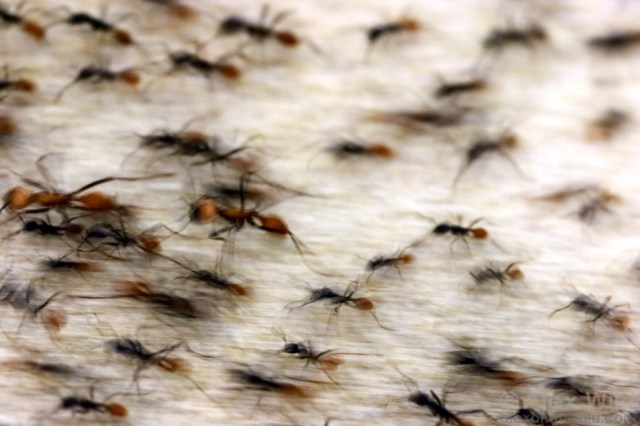
Science is a community endeavor. Much of our knowledge is unwritten, and subsists in the hive mind of our collective social unit. Some of the cooler and bolder — and perhaps more important — ideas are the ones that might not make it to print. My fellow ecologists don’t publish most of what we know, as Mike Kaspari recently reminded us with a quote from Dan Janzen.
We rarely share our piles of negative results, or the little curiosities for which we can’t find the time. Getting a peer-reviewed paper out the door is a non-trivial amount of work, and just mentioning it in a conversation is easier. But, hey, I have a blog where I can mention this stuff.
So let me tell you about two things that I find rather weird, but haven’t put more resources into figuring out. Continue reading

Recommended reads #90
StandardAn obituary for climate scientist Gordon Hamilton, who died in a field accident in Antarctica.
Here’s yet another editorial about how metrics of scientific success get in the way of good science. With stories about folks implementing common sense policies to fix things. Continue reading
Creating an academic environment hostile to sexual misconduct
StandardI’d like to tell you a story about speaking out. Continue reading

Recommended reads #89
StandardA couple truly spectacular reads have already made the rounds in social media in the last week, but in case you haven’t caught them, be sure to do so:
First, the Washington Post published a long-form piece about Derek Black, former media star of white nationalists who grew to repudiate his views. How did this happen? The free exchange of ideas and mutual respect found in higher education. If you’re looking for a defense of a liberal arts education (which can be found in potentially any university), then this might be as great as it gets.
Second, the Arizona Republic editorial staff received many death threats because they endorsed a particular presidential candidate. (Okay, a let’s all take moment to breathe, to absorb this fact.) The response from the publisher is powerful and important.
How you might change as a professor as you get older. Continue reading
Towards better titles for academic papers: a hermeneutic approach from a blogging perspective
StandardI think a lot of academic article titles are pretty bad. What do I mean by bad? The title doesn’t really tell you what the paper is actually is about. It could be buried in jargon, or overselling an idea, or focuses on details that most of the intended audience won’t care about.
Does the title of a paper affect how it gets read and cited? Probably. In what way? That’s not so simple, based on my short browse of some scientometric findings. Continue reading
A student-centered academic conference
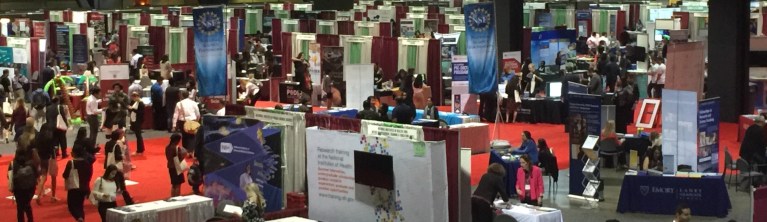
StandardThe national SACNAS conference came through LA again. SACNAS is an organization that fosters diversity in higher education and runs a huge national conference each year. The organization does other things, but the national conference is clearly a focal point.
SACNAS has been described as a “mentoring conference.” From what I’ve seen, that’s a good description. Continue reading
Bias in graduate admissions
StandardYesterday, I received an epic comment on a recent post of mine about minority recruitment. I want to share it:
This fits my experience so so well. I am first gen American, started at community college, transferred to a good public university and struggled but ultimately graduated with a 3.2 GPA and did OK on GREs. Had zero “social capital” (and had no idea what that was). I was lucky to have a TA (PhD student) who took me under her wing and had me volunteer in her lab a few hours a week and an excellent professor in my last quarter who informed me about internships and helped me secure one specifically targeting minority students (and it was paid!). Anyhow, after gaining a lot of experience though field jobs , I applied and was rejected from many PhD programs and ended up going to a small CSU, racking up student loans and working full time while getting my Master’s. I then applied to one of the better ecology programs with excellent letters of reference and was flatly denied. Again, luckily I had a greater supervisor at a govt agency who was very supportive and together we published a couple of manuscripts. I re-applied to that same ecology programs and was offered a multi-year fellowship (no TAing, no RAing). The only difference in my application was the publications. Now that I am in the program, I look around at a sea of white faces and most of them I have come to find out are straight out of undergrad, no pubs, very little experience, just great grades and test scores and a lot of social capital and opportunity (paid internships, semester at a field station, paid field methods courses, etc) . What a load of crap.
Recommended reads #88
StandardWithout tenure, professors become terrified sheep.
The terrorist inside my husband’s brain. This piece by Robin Williams’s widow, written for practicing neurologists, is an important read for all of us.
Why people wince at talk of “flipping classrooms.” This phrase has pretty much lost any specific meaning or utility, and that’s why I haven’t really used it. I’m a fan of active learning approaches but not a fan of flipping sensu stricto. Continue reading
Open source software doesn’t necessarily mean we’ll have better stats
Standard Let me tell you a little story about data analysis and peer review, that’s giving me a little pause. Continue reading
How should the shape of your grade distribution change the way you teach?
StandardI’ve received a number of comments about one of the recommended reads from last Friday. It was about the New York Times op-ed piece, about why people shouldn’t grade on a curve. And then, I asked, who does that anymore? The answer is: a lot of people. In addition to the comments on the post, I’ve gotten some emails and chatted with a few people (here while I’m at the International Congress of Entomology in Orlando, Florida).
One friend is in a department in which all faculty are rigorously required to conform their grades to a particular distribution, and they can’t submit their grades unless they follow this practice. Continue reading
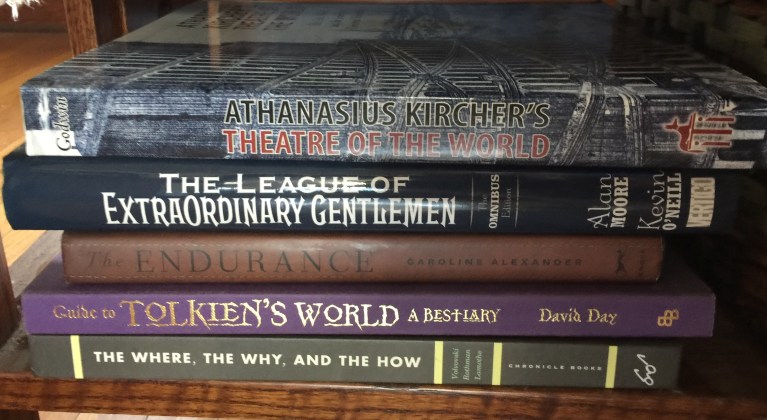
Recommended reads #87
StandardPlease nominate colleagues to be selected as ESA fellows
StandardThis one is for the ecologists.
There are a lot of people who have made outstanding contributions to the field of ecology — in education, research, outreach, and policy.
Do you think that any of these outstanding contributions came from ecologists in teaching-focused institutions? Continue reading
Networking from scratch
StandardI’ve been writing regularly for Vitae, the careers section of The Chronicle of Higher Education. This piece was published there a couple weeks ago. I’m reprinting it here:
Conferences are a wonderful time to see old friends and colleagues. That is, if you’re an old-timer.
If you’re not, the experience can be isolating and intimidating. And even if you do have friends at a meeting, the prospect of expanding your network can be daunting. Continue reading
An academic conference with $1000 registration
Standard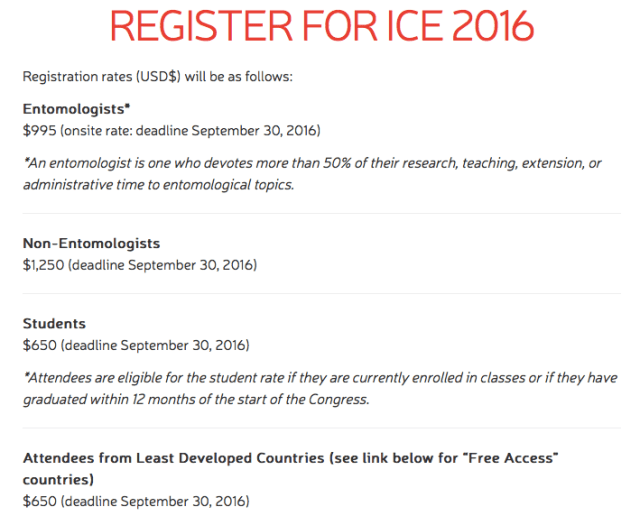
To teach better, boost student confidence
StandardStudents learn better when their professors are demanding and have high standards.
People learn even better when these professors are supportive, encouraging, and have confidence in their students. Continue reading

Recommended reads #86
StandardRecruiting underrepresented minority students
StandardThe last couple weeks have posed a challenge, as several people have contacted me (mostly out of the blue), asking me for ideas about specific steps they can take to improve the recruitment of minority students. This isn’t my field, but, I realize I’ve put myself in this position, because it’s a critical issue and I discuss it frequently. I’m just one of many who work in minority-serving institutions.
I realize that most of the suggestions I’ve given to people (but not advice) are generalized. If several folks are writing to me, I imagine there are many more of y’all out there who might be thinking the same thing but not writing. Hence this post. Just with my suggestions. Continue reading
Small Pond summer recap
StandardNow that the academic year is starting back up, what did you miss over the summer from Small Pond? Continue reading

What a fake turkey sandwich taught me about teaching
StandardIf you don’t ask hard questions about yourself, then you probably aren’t going to hear what you need to hear.
That’s what I learned* from the best fake turkey sandwich** in the world. Continue reading
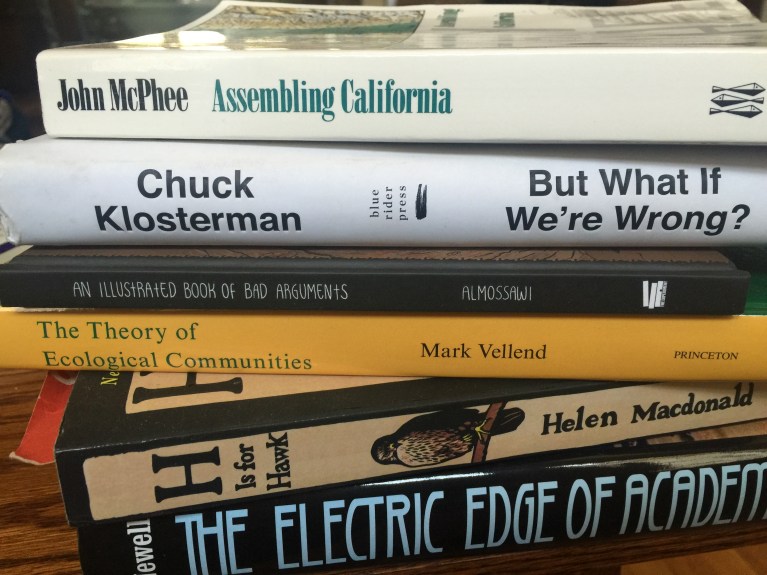
Recommended reads #85
StandardIn 10 years, Harvey Mudd (an exclusive STEM-focused college in the LA area, one of the Claremont Colleges) went from 15% women students to having a majority of women. Here’s how they did it.
“What I learned as a hired consultant to autodidact physicists” Or, what happens when a trained physicist takes crackpots (and their money) seriously. Continue reading
On absurd tenure requirements at small institutions
StandardAs this site continues to grow, the more I hear about issues that people face in teaching-focused institutions. There is one issue that I consistently hear about, but I have yet to mention: nonsensical tenure requirements for scholarship, especially in small liberal arts colleges. The most common one is: When an entire college or university uses the same publication expectations for all faculty. In. Every. Field. Continue reading
Let’s nominate folks for NSF’s Waterman award, including women
StandardEvery year, the National Science Foundation gives an award to the most bestest early-career scientist in the US. It’s up to the scientific community — that’s me and you — to make sure the pool really has the best. Which means it has to have a lot of women in it.
Months ago, we had a small spike in traffic here at Small Pond because we joined the chorus wondering how NSF can manage to go thirteen years without giving the Waterman Award to a woman. Continue reading
Accessibility isn’t the key to mentorship
StandardWhen I start a new batch of students in my lab, my spiel includes:
Two problems can prevent success. The first is poor communication, and the second is poor data management.
At the moment, I think this is true. As poor data management is a by-product of poor communication, it really just boils down to communication.
Earlier on in my career, I was too quick to attribute communication failures to my lack of approachability, or poor decision-making by my students. I don’t see it this way anymore. Continue reading
Recommended reads #84
StandardAre you familiar with the work of the Holotypic Occlupanid Research Group? I applaud their dedication and excellence in chronicling the diversity and natural history of this unappreciated yet widespread taxon. This is where the line between science and art is invisible.
“Women are woven deeply into the history of science, stretching back to ancient Egypt, over 4,000 years ago. But because their contributions often go unacknowledged, they fade into obscurity—and the threads of their influence today aren’t as apparent as they ought to be.” I’d like to call this one early: We’ll be looking back at Dr. Emily Temple-Wood as the person who rewrote the history of scientific discovery.
Racism in the research lab. This post, from two scientists from prestigious institutions, is important. Continue reading
We need to stop putting diversity in a box at conferences
StandardAt the moment, I’m having an absolutely great time at the Ecological Society of America meeting. I’m learning new science, meeting old friends and a variety of folks who read this site, and formulating plans for my sabbatical that recently started.
This wonderful time has been punctuated with moments of my own frustration and annoyance. Why? Because this is a typical academic conference. And the status quo is often maddening. Continue reading
Serious academics take the media seriously
StandardThe Guardian chose to publish a piece from a “serious academic” who made an argument that we shouldn’t share our work on social media.
So who is this “serious academic?” Well, we have no idea. They are an anonymous “young” PhD student. Does this mean they’re some kind of whistleblower, warning the world about the rampant public sharing of academic information?
Anyway, what does the phrase “I’m a serious academic” mean? Continue reading
 Small Pond Science