Last week, NSF announced they have stopped awarding DDIGs – the Doctoral Dissertation Improvement Grants in the divisions of Environmental Biology and Integrative Organismal Systems.
How bad is this decision? In the words of Jane Lubchenco:
Last week, NSF announced they have stopped awarding DDIGs – the Doctoral Dissertation Improvement Grants in the divisions of Environmental Biology and Integrative Organismal Systems.
How bad is this decision? In the words of Jane Lubchenco:
David Attenborough regrets spending so much time away from his family. (I should note that I’m writing this from a field station in Costa Rica, missing out on the duties and joys of parenting. It’s my shortest summer research trip down here ever, for this reason.)
Open science has an image and behavior problem. Continue reading
The turnaround time that journal publishers demand for correcting page proofs is crazy, right? I honestly have no idea what the hurry is. Continue reading
I read an interesting piece from a computer science professor at Bucknell, who documented his path to discovering universities “in the middle” — where both research and teaching are valued. Continue reading
It’s been two weeks already!? Here’s some reads for what remains of the long holiday weekend, for those of us in the US.
In mentorship, a sense of belonging may be most important
Getting past Bloom’s taxonomy in a way that focuses on the minds of the students
This online comic as struck a big chord with a a lot of women I know. It explains how many men don’t share the burden of parenting and running a household by simply thinking that doing stuff when asked is enough. The cognitive load of keeping track of domestic affairs is not a trivial matter. Continue reading
In scientific conferences, the talks are often the least constructive part of the meeting. That’s my experience and opinion, at least. This is ironic, because at least in theory, the talks are the raison d’être of a conference.
When people fly in from great distances to be together, should we really be spending most of the day in dark rooms listening to canned talks from our colleagues? Should we be spending our time on things that we could just as easily do in a webinar? Continue reading

(image by frankieleon)
This is reminder of the obvious, but perhaps one some of you could use: Be sure to save your files in a format, and on a medium, that you can read in the future.
Let me tell you a little story about an email that I got this week. Continue reading
Why academics need to focus on structuring their time
Superstar artist Ai Weiwei wrote a piece about how censorship works for the New York Times — gosh knows he’s had plenty of opportunity to gain expertise. It’s revelatory, and relevant for those of in the US more than ever.
On being broken, and the kindness of others. Continue reading
I think most reviews are good and fair. Regardless, when I get an unwelcome decision back from an editor, it’s annoying. Getting annoyed is natural. Here’s how I process bad reviews. Continue reading
A case of scientific dishonesty has hit close to home and got me thinking. This isn’t a post of the details of the case (you can read more here if you’re interested) or the players involved (I don’t know them more than to say hi in the hallway) or to comment this particular case since I don’t have any more information than what is publically available. So if you’re looking for insider gossip, the following is bound to disappoint. Instead this example has got me reflecting in general about scientific dishonesty and what I can do about it. Continue reading
As we train the next generation of STEM professionals, we use a filter that selects against marginalized folks, on account of their ethnicity, income, gender, and other aspects of identity. This, I hope you realize, is an ethical and pragmatic problem, and constrains a national imperative to maintain competitiveness in STEM.
When we are working for equity, this usually involves working to remediate perceived deficiencies relative to the template of a well-prepared student — filling in gaps that naturally co-occur with the well-established inequalities that are not going away anytime soon. These efforts at mitigation are bound to come up short, as long as they’re based on our current Deficit Model of STEM Recruitment. Continue reading

The Field Guide to Dumb Birds of North America
“To teach, we must believe in the potential of each person in the room.”
The founders of the field of cryptanalysis, William and Elizabeth Friedman, had a cipher on their tombstone. Which was just solved. Continue reading
I recently had an exchange with a colleague, who had just written a review at my request. They hadn’t written many reviews before, and asked me something like, “Was this a good review?” I said it was a great review, and explained what was great about it. Then they suggested, “You should write a post about how to write a good review.”
So, ta da. Continue reading
My academic societies support the March for Science. So do I.
I’m familiar with the arguments for and against the March, from major newspapers and social media. If you’re not familiar, don’t worry, I won’t rehash them for you.
I think it’s possible for some people to have an ethical position to oppose something, and for others to have an ethical position to support the same thing. Nobody’s got a monopoly on being right. Continue reading
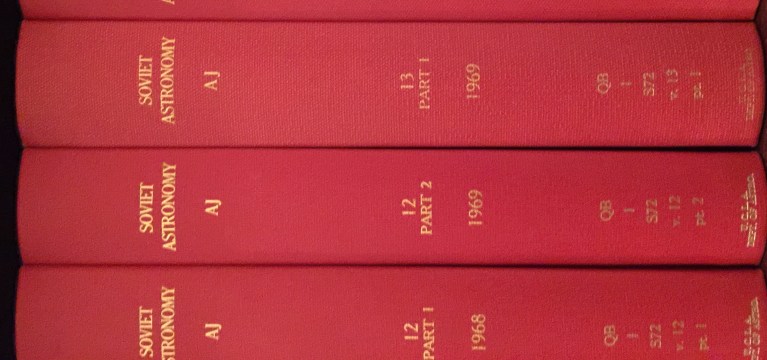
When you study arctic glaciers that are rapidly melting away, and your samples at the Ice Core Archive melt away because of a freezer malfunction at your university.
File this under, “No shit, sherlock”: A study finds that women do more departmental service than men, and that this harms career progression. Continue reading
I’ve been getting more requests for advice about setting up a blog — usually to elevate awareness about one or two particular issues. Now that I’m more than four years into this game, I’ll no longer call myself a neophyte. Regardless, I have no shortage of opinions, some of which might even be useful. Continue reading
Hello. I’m Ian, a shy introvert. And those two things are distinct. Through a lot of trial and error, I’ve worked out a way to network and build social capital that works for me even though connecting to people is not exactly natural to me, as I know it isn’t for many academics.
Being an introvert in a world that seems to favor the expressive and extroverted can seem daunting and unwelcoming. A lot of the usual advice is to just act against type*. In other words, be extroverted for as long as you can sustain it, especially at conferences or other events where connecting with people is the goal.
Part of favoring of extroverts is that they announce themselves and seem like the movers, shakers, and doers in the world. In the United States at least, taking (overt) action is favored over introspection or making the decision to do nothing even though taking that decision may well be the right one depending on the situation. Continue reading
As scientists, we live for those lightbulb moments. I imagine we’re more likely to have these moments if we know more natural history, which lets us piece together fundamental facts about our natural world in a new way. Continue reading
The times have changed, and our curriculum is not keeping up.
In the various majors offered by our Department of Biology, I’m convinced we’re not providing our students the most useful set of quantitative skills. After browsing the catalogs of a variety of other universities, I think we’re not alone. Continue reading
One hundred baby! Woo hoo!
Why is it when we talk about science outreach and science education/communication, it’s always focused on kids? The adults are also where it’s at.
This short piece about how and why scientists use social media fits just perfectly in with my perspectives and experiences. Continue reading
The liberal arts are important, people say. I agree. Some of us scientists will point out that science is a part of the liberal arts. Okay, sure. But what do people mean when they say “the liberal arts?” Continue reading
My department just did something really cool, and I’d like to tell you about it*.
On a Saturday, my department, along with our campus Center for Innovation in STEM Education, held a family research day. Continue reading

Rethinking my exams: “Why do we even do exams in college, anyway?”
This site with interactive animations for basic statistical concepts is just about the best thing ever. Continue reading
A couple months ago, a discovery was in the news: A “new human organ.” Oddly enough, I was already familiar with it, just a little bit.
In grad school, I taught a couple human anatomy lab sections. It was pretty much a disaster for me, Continue reading
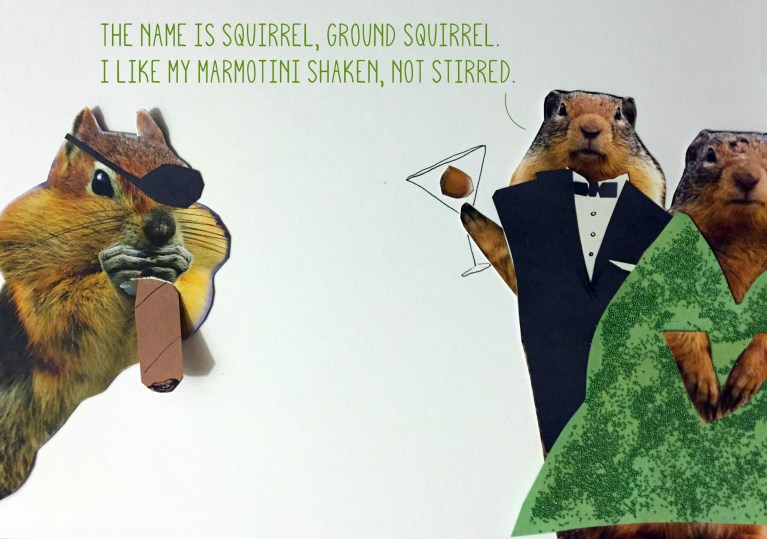
pun by by @phishdoc, illlustration by @verdanteleanor.
It’s been hard to wait a whole year, I know! Taxonomist Appreciation Day is coming up, on 19 March!
I imagine museums, science departments, and libraries will have costume shows, trivia, art competitions, and potluck taxonomic salad festivals. Meanwhile, the talented scientific artists of BuzzHootRoar are running their annual taxonomy pun contest!
Here are their instructions: Continue reading
Many research strategies, developed inside large research institutions, don’t work well in small teaching-centered institutions.
One of these strategies, I suggest, is the use of a biological model system. Continue reading
Five practical ways you can help a first generation student succeed. If you’ve ever thought positively about anything I’ve written or shared on this topic, I bet you’ll really appreciate this piece by Abigail Dan. I bow to its wisdom and excellence.
Obsessed with smartness, by James Lang. I love this almost as much as the preceding piece.
Advice for my conservative students
Why facts don’t change our minds, by the inestimable Elizabeth Kolbert. Continue reading
Is it possible that you’re spending too much time on research? If you wish, that’s a question that you can ask yourself. It’s not really my business*. Continue reading
I’ve read a lot of research proposals and manuscripts. Some manuscripts were rejected, and some proposals didn’t fare so favorably in review. What have I learned from the ones on the lower end of the distribution?
Here’s an idea. It can’t explain everything, but it’s something to avoid. Continue reading

Alan Townsend wrote an op-ed that I think you really need to read: Science might save my daughter. Don’t kill it. (And in his blog, which I absolutely love and have linked to on previous occasions, he explains why he wrote the piece.)
Science censorship is a global issue – a short letter to Nature written by three Aussie ecologists.
Unlearning descriptive statistics. I thought this was really interesting. Continue reading
 Small Pond Science