The conflict-cooperation model of faculty-admin relations, Part 3: How our universities run like social insect colonies

Standard

With the understanding that we are social animals and that principles of behavioral ecology for social groups can apply to us*, let’s look at six relevant concepts from ant societies.

1. Workers are in charge of ant colonies; faculty are in charge of universities. The stereotypical, and false, model of ant colonies is that they’re run by the queen. In fact, workers are the ones that are collectively running the show. The queen is the factory that produces eggs, but the workers actually benefit more from the reproduction of the queen than the queen herself (in terms of raw genetic relatedness). A queen is as much a slave of her own offspring than she is the leader of a band of her daughters. I’ll spare you the social insect lesson in detail, but the upshot is that most colony-level decisions are made collectively among the workers and the queen has little to no say in the matter. The queen is just along for the ride, and her life can be truly at risk if she doesn’t lay the right kind of eggs (by using the wrong sperm, or choosing to not use sperm at all). In universities, professors run the show, even when there is little true faculty governance. Even with a heavy-handed administration, we faculty control what happens. The best that admins can do is provide, or remove, incentives for particular activities. Regardless, faculty will do as they please. The good administrators recognize this fact and work within its bounds.

2. Limited resources affect how ant colonies compete with one another; limited resources predict how universities compete with one another. From the perspective of admins, universities are competing with one another for status and funding. Colonies under extreme resource limitation allocate their resources very differently than those that are not those limitations. Unpredictability of resources also affect allocation decisions. The way in which colonies compete with one another is structured by the ways in which resources are limiting.

3. Workers and queens have different interests in how the ant colony invests resources; admins and faculty have different interests in investing resources. It’s a longer story, but the upshot is that workers want different things than the queen. That’s a textbook conflict of interest, though slightly overgeneralized. (Find your local social insect biologist for a longer lesson.)

To make this messier, the workers themselves may not even be closely related to one another, because queens often mate with multiple males and colonies can have multiple queens. Many social insect colonies have behavioral bedlam at their core, with torn allegiances, nepotism, assassinations, and workers policing one another to make sure that they don’t cheat. The harmonious work-together-for-a-common-cause is a thin veneer that disappears once you start watching carefully.

In a university, faculty often have interest interests or agendas for resource allocation, so they can’t all agree. If the faculty can’t organize in a common agenda, then the administrative agenda is often the one that wins. When faculty with conflicting agendas can agree on shared priorities and can communicate these, they have a chance at winning in a conflict over resource allocation, if unified. When faculty are divided, then the ones who win are those whose priorities are consonant with the administration.

4. In ant colonies, the queen controls the productivity of the colony, but the workers have ability to shape that productivity; In universities, admins distribute funds but faculty members are the ones that make those funds go to work. Queens can control the ratio of male eggs and female eggs that she lays. The workers then can choose to help those eggs grow, or eat them. Likewise, administrators can spend all kinds of money on useless initiatives, but they will go to waste if they’re not useful to faculty.

5. While there is conflict in ant colonies and in universities, there is plenty of cooperation. By banding together in a colony, the fitness of any single individual is much greater than it would be if they were on their own. Colonies that don’t effectively work together have lower fitness, and then everybody would be worse off. Wise administrators will recognize that providing faculty with the resources that individuals need to be successful will contribute to higher levels of productivity at the level of the organization. Wise faculty members will recognize that flexibility in using the resources available from administrators, even if not efficiently allocated, is better than intransigence.

6. Developmental constraints have resulted in the exploitation of workers. Natural selection has favored the evolution of cooperation in ant colonies, however in “highly eusocial” groups that have worked cooperatively for a jazillion generations, there are likely to exist developmental canalizations and constraints that may result in workers that have no choice but to cooperate in a way that isn’t working in their best interests. If your mom creates you without ovaries, then well, you better help her reproduce, because otherwise you have no affect on your fitness whatsoever. (Note that this is not a fact that social insect researchers consider as often as they should.)

Likewise, universities have developed a system that exploits their workers that have little to no power to address inequitable distribution of resources. The conversion of teaching faculty into a caste of contingent employees without a voice in institutional governance has resulted in an excess of power in the administration that does not necessarily work in the best interest in the members of the community.

Next week: The consequences of our sociality.

*If you harbor some old-school critique of sociobiology, please take it elsewhere.
Two Tenure-Track positions in Biology at CSU Dominguez Hills

Standard

My department is hiring two biologists. What field of biology? You name it! The department has a broad variety of needs.

Some ad text is below, which provides the basics. Note that application review starts in late October.

The Department of Biology at California State University Dominguez Hills invites applications from individuals for two Tenure Track Assistant Professor positions, open to all disciplines of biology, starting August 2014. We are seeking two biologists who have passion for teaching biology and conducting research with undergraduates and Master’s students. A Ph.D. in biology or a related field is required. The applicants must possess scholarly and professional competence as demonstrated by a record of research publications and have demonstrated potential for effective teaching of undergraduate and graduate courses. The applicants must have demonstrated ability and/or interest in working in a multiethnic, multicultural environment. Teaching responsibilities may include general education, introductory biology, non-majors courses, and upper-division and graduate courses in the candidate’s specialty. The positions require the establishment of an active research program, as well as service to the university.  The Department of Biology offers four baccalaureate programs, an M.S. program, and two Minor programs. Recognizing the crucial role of research in science education, the Biology Department is committed to offering research opportunities to all interested and qualified students.

Review of applications, consisting of a CV, cover letter, teaching and research statements and a list of 3 references, will begin on October 23, 2013. To apply, submit materials through http://www.csudh.edu/employment/ and additionally send all materials as a single file to biologysearch@csudh.edu, instructing references to send letters to biologysearch@csudh.edu.

EO/Title IX/ADA Employer

Efficient teaching: Getting metacognitive

Standard

I’ve built up a little speech that I make on the first day of class, after we’re done going over the syllabus and before we start the first lesson. It sounds something like this:

This semester, my goal is to teach you absolutely nothing.

If I do my job as well as possible, then I will not teach one single fact or concept. Instead, I will set up the circumstances for you to discover information on your own. You only really learn something if you discover it on your own. So, our classes will be set up so that you sort through and find information provided to you, to answer questions, and to go through experiences that enable you to make your own inferences and figure out concepts on your own. And you’ll be reading a lot outside class.

We learn better when we are conscious about the fact that we are learning, and when we are aware of the methods that we are using to learn. In other words, we need to study metacognitively. Cognition is what happens in your brain when you sort through things and learn. Megacognition is being cognitive about cognition.

Different kinds of facts and concepts are best learned in different ways. Lectures are pretty much the worst method for most concepts. When we do activities in this class, and when you are working on assignments, or solving problems on your own or in groups, these are designed for you to have a cognitive experience.

As you are going through your cognitive experience, it is useful to be mindful of the fact that you are having a cognitive experience. In other words, when you are solving a problem in a group, you should keep in mind that the process of solving this problem, itself, is provided so that there is something specific for you to learn and understand. When you are aware that there is a set of concepts tied to cognitive activities, that practice of metacognition will help you guide your cognitive processes towards the central question at hand.

If you wander through a maze without paying attention to your route, you may eventually get out, but it will be inefficient and probably unpleasant. However, if you are aware of the fact that you are in a maze, and you focus on the methods that you are using to get out of the maze, then you will not only get out of the maze more quickly but the process of solving the puzzle might be more fun as well.

This course has a route. We will discuss this route and there are lots of concepts that interconnect. However, if I show you a map of the maze, then you will be deprived the opportunity of truly learning the maze by building the map yourself. Don’t blindly study the concepts in this course, but be metacognitive in your approach to learning about the concepts and how they relate to each other. When you are working on a question or a problem, be sure to recognize specifically how, that your approach to studying is tied to the larger questions at hand.

You might have some classes in which you’re expected to write down notes from powerpoint during every lecture session. That won’t be happening here – we’re using our time together to interact and learn from one another and engage substantially with both the material and as a group. Metacognitively, you should be aware that this approach is not because I don’t like to lecture, but because the science of learning is unambiguous that we learn better when interacting and working in groups. Learning solitarily is lot more difficult, and learning by digesting notes from a lecture is inefficient. This may be different from the bulk of your classes, but I ask that you put some trust in me and that when your work is evaluated throughout the semester, that this approach will not only be fair but also provide you with a better opportunity to learn.

The measuring stick of how well I teach is not about my performance as a theater exercise, but how well you learn. I’m not talking about how well you do on an exam in this course — though that matters — I’m talking about what you know about this topic ten years from now. [for statistics] Do you fundamentally understand how a statistical test works, and what a p-value represents? Can you identify an experiment with solid design and can you create an experiment that isn’t pseudoreplicated? If you can’t do that ten years from now, then I will have failed. But to accomplish that goal, I need to choose ideas carefully because there are only so many topics that we can cover with such depth that they stick with you for a long time. I refuse to barrage you with information that you will soon forget, and instead I’m choosing to teach a small number of concepts, chosen carefully, that will stick with you well after this course is over.

I’m sorry to lecturing to you for so long about this. Hopefully, if I do my job well, I won’t do this much speaking again throughout the whole semester.

Among other consequences of this little speech, I’ve found that it reduces the number of students who are uncomfortable working in groups or who feel dopey when class doesn’t have lecture but has problems to be solved. How to get students to engage, especially in a larger room with more students, is a challenge for classroom management. How the tone is set on the first day goes a long way.

Teaching Tuesdays

Standard

by Amy Parachnowitsch

This isn’t a real post but rather a heads up for the coming weeks.

As a part of a course on scholarly teaching I took last winter, I began to think more deeply about teaching styles and techniques. I was finding a stark contrast between what I was discovering about effective teaching and learning and the experiences I had as a student or a part of the teaching team. So for my project in the course, I decided to ask ecologists about how they were teaching and why. I created a survey (link still active here if you want to add your voice: teaching survey) and sent it to as many ecologists as I could reach through various list serves, facebook and twitter. I summarized a portion of the results (from Swedes) for a teaching conference at my university in the spring but haven’t had the chance to share the dataset in its entirety with the ecology community and especially those that so kindly took the time to answer the survey. This blog seems to be the perfect venue to share the results. And so I begin a series called Teaching Tuesdays. Over the coming weeks I will share the insights into ecology teaching and practice I’ve gleaned from the survey. Hopefully I will succeed in summarizing the data into some digestible chunks.

Before I start the series, I want to acknowledge all the people who took the time out of their busy schedules to fill in the questionnaire. I truly appreciate the generosity of the ecological community. Without you this would not be possible!

Next week: What do ecologists find difficult to teach?

Interviewing for a faculty position in Sweden

Standard
by Amy Parachnowitsch

Last week I interviewed for a faculty position in Sweden. Given that it is my second of such interviews and that the process has had me fairly distracted me, I thought I would write about how it works. This might be of interest to those applying for these kinds of jobs or as a comparison to other systems. I was certainly surprised by the process when I first applied because it was such a stark contrast to what I expected from North American hiring.

Applying: First, in my experience applying for a position in Sweden takes much longer to put together than a North American tenure track job. The application process is all on-line with various attachments, rules, and instructions. The general requirements are similar; you need to present your CV including teaching experience, publications (ten are attached), research plan and teaching philosophy. However, how these pieces fit into the various components can be different. The devil is in the details. For example, in my recent application there were no fewer than three places that I was to enter something about students I have supervised. It was challenging to know exactly how these should differ as well. Further, teaching was broken into experience/merits, supervision and a self-reflection on the role of a teacher (all separate sections). There was also a section where you were to describe your personality. This also came back in the interview process where all candidates were asked to describe themselves in one word. Quick, try to answer that one without dwelling on the positives and negatives of any given word too much (I answered optimistic). Another big difference in the application process is that letters of recommendation are not requested, only contact information (perhaps to avoid wasting people’s time?). Publications are of course in your CV and you attach 10 publications but you also need to describe your role in all publications you attach and your motivation for choosing those 10. After you send in your application, you wait, but we (the applicants) were given a timeline of when the decision about interviews would be conducted shortly (~one week) after the closing date. Thus you know precisely how long to wait (about three months). Unlike North American jobs where it is sometimes unclear what stage the search is in, all the applicants receive the information at the same time.

The interview/review committee: in an effort to control nepotism in Sweden because it is a pretty small country, departments do not actually decide who is going to be hired, even for permanent/tenured positions. The idea seems to be that they want the best person for the job and that an independent panel can assess that. It is also so that people can be judged fairly. At a certain point it seems difficult to do this and tough when some candidates are known in the department (with so few universities, it is not uncommon for people to have done their PhDs or post docs in a department they are applying to). So although I haven’t seen the interview process from the other side, my impression is that although fit seems to be considered, no one making the decision has a vested interest in who is hired. Depending on the university the committee can be from across sciences or a more narrow group (within biology, for example). Externals are brought in to review all the candidates first and determine the five (at least in both of my experiences) who are invited to interview. For my non-tenured position there was one external reviewer, two for the tenure-track position. The external reviewers do not have a final vote for the candidates but inform the decision. There are also student representatives on the board and others representing the union, for example. So far, one interview brought in the external reviewer for the day while the other did not.

The interview: The interview is short, over the course of a single day, with all five people interviewing on the same day. The interviews are back–to-back (with coffee breaks (fika) and lunch, of course! This is Sweden after all). You have a short presentation of your work. Seriously short—in which you should discuss your research program, short and long term goals and demonstrate your teaching abilities (“The candidates are requested to prepare a 20-minute presentation of their research program and plans for the future, emphasizing both short- and long-term goals. This is an opportunity for the candidates to demonstrate their teaching skills”). Yeah. My experience has been 15 mins for the non-tenured position, 20 for the tenured (but maybe a difference of the universities rather than the position type). In the interview for my current position, the talk was only for the committee and was immediately followed by a ~30 min interview. The one I just did had a 20 min talk followed by 5 min of questions; it was open to the public but in practice was mainly attended by the committee. The interview for the tenured position was in the afternoon for 45 mins. Fairness is taken very seriously here so they keep to the time. It seems that the same basic questions are asked to all candidates with some variation. Mostly these questions are not about your science but about everything ranging from teaching, conflict resolution, how do you see yourself in the department, etc.  Following all talks and interviews, the committee sits down and ranks the five candidates.

The day: unlike North America, you don’t end up meeting with people in the department in an official way. Both my visits included a tour of the department and meeting with the department head but the people who you meet will not influence the decision or even have an opportunity to do so. It also means that you often meet the other candidates. This last interview was even strange because I collaborate with two of my fellow interviewees. Like I said, Sweden is a small country. So all the candidates had a joint lunch together with a few people from the department.

The wait: Waiting for an answer is also short. Generally the committee decides on the day and they will let you know within the week (<24hrs for one and <48 for the other). Unlike in North America, the process is transparent. So you receive the comments by the external reviewers (this is for all the candidates that apply) and all candidates are informed of who is invited for the interview and then they also receive the final ranking of the interviewees. So you immediately know not only whether you got the position but also where you rank compared to other candidates. All the other candidates also know this about you. So that can be a little disconcerting. However, despite being transparent, you really have little idea about why you are ranked as you are. The external reviews reflect two opinions but don’t tell you how the committee considered them. As for the final assessment, there was no real indication of why they made the final choice. So similar to my impressions for NA position, you are left to wonder why you weren’t given the job and whether or not you should have done something differently.

I was the top choice in my current position (few people refuse offers here, maybe because there are so few) and I was down at the bottom for the latest (they ranked the top three). Tough to know why and now it is time to lick my wounds, reflect on what I have learned, and get back to work. I’m grateful for two more years of salary to do just that.

Friday Recommended Reads #4

Standard

Predicting successful scientists early in their careersThere was a paper in Bioscience by Bill Laurance et al. with a somewhat obvious finding that students who publish a lot early will publish more and be more successful, in traditional measures. The final author of the paper, Corey Bradshaw, wrote about this paper in his blog, acknowledging that this kind of thing just feeds the frenzy for frequent publication over thoughtful and reflective publication. The argument for fewer and better papers is often made by Lee Dyer among others. (This is Dyer’s “Public and Perish” talk as a pdf). But before you get all excited about the Laurance et al. paper, you might just want to read Emilio Bruna’s high-quality assessment of this paper, which really makes you wonder how it got through the peer review process by the editors of Bioscience. Maybe we could convince the authors of the paper to respond to Bruna’s remarks in the comments on his site.

Don’t Be That Dude. Tenure, She Wrote does it again with a handy list of things that men should be sure to do, and not do, in the academic workplace to promote gender equity. Early indicators are that this post has given birth to yet another textspeak acronym, #DBTD.

Trouble delegating research tasks? Chris Buddle has your back. Keep yourself from burnout, get more done, and be a better mentor.

Just as troubling as the death of the Duquesne adjunct Mary Margaret Vojtko were her living conditions, as described the article to which I linked last week. The activism for a living wage for contingent faculty has grown in the past week, especially in the face of asshattery, excuse-making and rhetorically absurd justifications by the people in charge at Duquesne University. Lots of great things have been written about it, and by far my favorite has been this one by Rebecca Schuman. She explains why people at large aren’t up in arms about the tiny fraction of university budgets that go to pay for the efforts of the majority of instructors. I am remarkably surprised how mum tenure-track faculty are on the matter. I hope it’s not because we’re just a bunch of lazy selfish bastards, as was argued by one petulant commentator on my post on the topic earlier this week.

Staging the World Cup in Qatar is projected to cost the lives of thousands of migrant workers, caused by the lack of regulation and human rights abuses of the non-citizen underclass. What makes this more troubling is the abject lack of concern in the pro forma response by the people in power who are capable of preventing these labor-related deaths.

How about having journals put in offers to publish your paper? Here also is a curious newish phenomenon in scientific publishing. Some folks have set up a for-profit business that solicits peer reviews for you, and then journals can see the paper and reviews and put in an offer. They’re just doing ecology/evolution at the moment, and some mighty decent journals have signed on, and others will accept the reviews from this group. They’re called Peerage of Science. As for the for-profit thing, well, most scientific papers make it to press with for-profit publishers. Anyway, I’m tempted to try it out. If so, I’ll let you know how it goes. The notion that a set of reviews travels with a paper from journal to journal is a lot better than the idea of editors having to scrape the barrel again and again to get more and more reviews for the same manuscript. As for any scientists who don’t like the fact that this is a for profit company, I’m sure these objectors must charge for-profit publishers for reviews and editorial services, and wouldn’t ever let a for-profit journal publish their work without getting a cut from the publisher.

Jim Henson died early and suddenly, but he wrote goodbye letters well in advance. They are light-hearted and touching. That’s brought to you by Letters of Note, one of my favorite nodes on the internet.

You’ve seen those camera trap images of an eagle taking out a deer, right? Just in case you haven’t. You can go find that picture of a Rhinella marina toad that swallowed a bat on your own.

The conflict-cooperation model of faculty-admin relations, Part 2: We are social animals

Standard

I’ve noticed that faculty members are prone to discuss administrators almost as frequently as discussing their own students.

You might think that this is odd, because most faculty rarely interact with their administrators. However, our ability to do our jobs and our quality of life is controlled more by administrators than by students.

Administrators can give you time and they can take it away. The same goes for space, money, service, and – for the first six years – our jobs.

Faculty members are often in surreptitious or overt conflict with their administration. Many of these conflicts can develop from the fact that some professors are irrationally upset with, and overly judgmental of, administrators. While there are often rational grounds for being mad at your administrators, these conflicts are often amplified because some faculty misunderstand the fundamental nature of the faculty-administration relationship.

I’ve used my familiarity with the social biology of animals to consider the relationship between faculty and administrators. I’m sure a sociologist would hate me for this because of the oversimplification and duplication of existing theory, but if you’re not a sociologist, then please read on.

In every social group, relationships are forged through both conflict and cooperation. Groups of distinct individuals persist because the benefits of the group outweigh the costs of being in the group. Cooperation emerges, in theory, because the greater benefits of cooperation outweigh the cost incurred through cooperation.

Faculty members can’t really do their main jobs (research and teaching) without the cooperation of the university. Administrators can’t really do their jobs (make the university run and fulfill the overt and tacit missions of the institution) without having the faculty carry out the grunt work of that job.

Let’s be clear: Faculty are the necessary grunts of the university. We are the ones that do the essential job of the campus (except for some schools, where the coaches and athletes are central). Without us, the university has no way to exist.

Next week: How our universities are like ant colonies.

On being a tenure-track parasite of adjunct faculty [updated]

Standard

My job, as a tenured associate professor of biology, wouldn’t be possible without a sizable crew of adjunct instructors in my department.

Here is some context about the role of adjuncts in my particular department: At the moment, the ratio of undergraduate majors to tenure-line faculty is about 100:1. This isn’t unprecedented, but is on the higher end of laboratory science departments in public universities. Because we have so few tenure-line faculty, and so many lectures and labs to teach, we hire a slew of adjuncts every semester.

It’s not like the adjuncts are there to make life easier for tenure-line faculty. They’re here to keep the department from falling apart and to teach classes that otherwise we would be unable to teach. One thing that keeps us tenure-line faculty busy is advising. All of our majors required to be advised every semester in half-hour appointments, one-on-one with tenure-line faculty, in order to be able to register for the subsequent semester. In addition to our base teaching assignment of four lecture courses per semester and the standard research and service expectations, we’re worked mighty heavily.

Lest I complain, I am thankful on a daily basis that I am paid a living wage, if below market rate, and I am in a union that has mostly held on to benefits like our parents fathers used to expect from their employers. That’s more than our many adjuncts can say. If it were not for a stroke of tremendous fortune in a very difficult time, I would not be able to be in this position.

While I do have some additional responsibilities that are not expected of our adjuncts, this disparity between job expectations is tiny compared to the massive disparity between our relative pay, benefits and job security. While I would hope to think that the things I offer on top of my teaching (research opportunities and individualized mentorship for a small number of students, external grants to bring money and reputation to the institution, and a meaty role in institutional governance) bring value, I cannot reasonably rationalize that those services justify the massive gap between the my compensation and that of my adjunct colleagues.

I also am conscious that many tenure-line faculty in my university do little to nothing more than some of the adjuncts, skipping out on faculty governance, making themselves unavailable to students outside class, and not providing research opportunities. These faculty are more like adjuncts with a full professor’s paycheck and pension. What’s worse is that I could choose to devolve into such a role with no consequences for my pay, benefits or security of employment.

I have particularly benefited from the contributions of adjunct labor. In my current university, I actually have never taught the full base teaching load, as I’ve always had some fraction of my time reassigned to additional research, administration, outreach or professional development activities. (And, to be clear, I spend more time on the jobs to which I am reassigned than is expected of me while teaching.) The only way that I have been able to carve out time to keep my research lab ticking, write grants and run some programs is because others have stepped in to get the work done. These people are as qualified as I am to teach these courses, have plenty of teaching experience, and are getting paid less than I would if I were to teach those courses.

Hiring an adjunct instructor as a one-off to cover a course that needs to be covered isn’t necessarily exploitation. But if this temporary labor pool is not truly temporary, and if these are not one-off arrangements but instead a machine that requires the dedicated effort of many contingent workers on a long term basis, this is overtly exploitative of the contingent labor pool.

It is wrong that my department has several people who teach lots of courses for us, year after year, and aren’t able to receive an appointment as a professional ‘lecturer’ that acknowledges their professionalism and compensates them as one would expect from an employer after providing years of service. It’s not criminal, but in some countries, it might be.

When I graduated from a mighty-fine private liberal arts college twenty years ago, the catalog had the name of a tenure-track professor next to every course. I had taken two courses with adjuncts the whole time I was there (one of which was taught by a senior and established person in the field who did for it fun and for the students). Now, students on this campus take many courses with adjunct instructors, the campus catalog no longer has the professor’s names tied to courses, and there is a large and growing pool of adjuncts clamoring for equitable treatment. This isn’t a sign of the decline of this institution, but instead an indicator of the adjunctification of higher education.

Like the house elves in the Harry Potter series, an army of highly-qualified and hard-toiling adjuncts make the magic happen in a university, without recognition or reward. Faculty members on the tenure-line are not ignorant of this massive injustice that empowers their existence, but mostly feel powerless to rectify the systemic situation. Universities have created a caste system, and how is it that individual members of one caste can create an equitable labor arrangement? Short of a quixotic revolution, what is there to do?

We can agitate for change. We can decry the situation. We can write blog posts, articles and books about the exploitation of adjuncts as working-class academics. That’s part of moving towards change, I guess.

However, I feel that this isn’t enough considering that I am a member of the caste that benefits from the labor of the adjunct caste. I’m not saying that I don’t deserve the compensation that I receive, but it is abundantly clear that long-term adjuncts don’t deserve the lack of compensation that they receive. I just don’t see any particular course of action that I can do within the context of my own job. I can, and do, treat adjuncts as full colleagues, and I can join the others in our union to advocate for adjunct rights.

I do not have the power to make right any systemic wrongs, and neither does my Chair, nor my Dean. I suppose the power is within the Provost’s office to make these changes but the budget isn’t there. The entire university system has been calibrated to cut costs on the backs of adjuncts.

If tenure-line faculty members are failing to press hard for the reasonable and fair employment of the adjunct labor pool, then it’s probably not because they aren’t aware or because they don’t care. It’s the same reason that they don’t take specific action in their lives to reduce their own carbon emissions, and it’s the same reason they don’t buy all of their clothes that are certified sweatshop-free, and the same reason why they don’t buy books from independent booksellers. The problem is so big and so systemic, that it’s overwhelming.

Individuals have trouble remembering that individual actions, at the right place and the right time, make change happen. The university is not making things easier for tenure-line faculty either, who need to take up a greater share of the non-teaching work as tenure-line positions fizzle away. I want to rage for adjunct rights, and it makes me upset, and I want to do something. So I wrote a blog post, but I can’t imagine that this will change anything.

So, what else should tenure-line faculty do?

Update 27 Sep 2013: The non-rhetorical answer to the rhetorical question above was provided by Jenny in the comments, who shared this story about specific and concrete efforts at Portland State University written by Jennifer Ruth. That is, apparently, what we should do.

Please don’t hold out-of-class review sessions

Standard

Some professors are so dedicated to the success of their students that they are generous enough to hold review sessions before an exam, outside regular class hours.

This is a tremendously poor idea, for one big reason and one smaller reason.

The big reason is that it is inherently unfair to the students. Not every student is equally available to make it to an additional session outside class hours. Holding a session that not all students are available to attend confers an advantage to the students who are more available for the times designated for a review session. (This rationale is similar to the one fort why we shouldn’t offer extra credit.)

Students are aware that these review sessions are a moment of the big reveal about what is going to be on the exam, where professors give hints about what is important to study and what is less important. Even if this isn’t true, this is the widespread perception. I know that when I was a student, not attending one of these sessions was a huge disadvantage.

Therefore, students will go to all extremes to attend a outside-class review session. I know students who have skipped out on their work obligations to make such a session, and I also a student that once missed an important and difficult-to-schedule medical appointment for this kind of session.

A standard lecture course at my university has about 45 contact hours. If that’s not enough time to cover the curriculum and prepare students for exams, then the solution isn’t to add another hour of optional class. Instead, the curriculum, or how it’s taught, should be fixed so that everything that students need for exams can happen within the time scheduled for class.

Students who might feel that outside-class review sessions are unfair are likely to not complain. Such a complaint would arouse the ire of fellow students, would be particularly upset if the gift of a review session were revoked because of a spoilsport.

I ask: why is such a review session needed? It is because the students haven’t learned as much as they needed to prior to the exam? If that is the case, it is the result of deficiencies on the part of the instructor or of the students. If it’s the deficiency of the students, then those who didn’t invest as much as others don’t need an extra boost, just like they shouldn’t receive extra credit. If the failure of students to be adequately prepared for the exam is the fault of the instructor, then adding extra optional class time isn’t a professional way to fix pedagogical shortcomings.

The smaller reason to not hold out-of-class review sessions is that this practice increases the emphasis on high-stakes testing and further drives students to obsess about what is on the exam rather than learning the material comprehensively.

Let’s face it: students who attend these sessions and ask questions are, predominantly, focused on discovering what questions will be on the exam. They may very well be seeking knowledge and understanding about the course material, but their focus is to do well on the exam rather than to learn. Moreover, I believe that’s the focus of faculty who offer such sessions as well, to help students do well on the exam by providing even more preparation. That’s an admirable goal, but all students deserve equal and fairly distributed access to such opportunities.

So, what’s the harm with offering a review session that gets students to study more than they would otherwise? Here’s the harm: it gets them studying for an exam. If students are cramming for an exam, they’re not learning in the long term. Instead of spending time focusing our teaching on getting students to jump through the hoops of exams, we could design our classes for substantial and long-term engagement with the material. The more we freak students about exams and focus on them, the less they will engage in genuine, self-driven, inquiry.

Friday Recommended Reads #3

Standard

The New York Times published a feature on various leaders in government, science and education and their ideas for improving science education in the USA. When I read this, all I thought was BLAH BLAH BLAH. And then I got terrified because all of the important decision makers were clueless about what really is happening in public K-12 classrooms across the country. These folks aren’t wrong about good science education, but they’re fooling themselves that if they could implement their ideas, that this would result in change. They all made me sigh with disappointment because of the inability to see the forest. The only great and important ideas came from the kids. That was uplifting. But, they’re not the ones making the decisions. Yet.

A crowdsourced list of teaching faculty pet peeves. Mine was #2, but they’re all spot-on. (To strive for excellence as a teacher, please don’t get peevish about these peeves.)

A not-too-long article, The Death of an Adjunct, is important reading. The invention of the adjunct caste in higher education is unconscionable.

John Green made a video that explains how, and somewhat why, healthcare costs in the United States are so much higher than elsewhere. More importantly, he clearly demonstrated that any discussion about as issue as complex as this one requires reflection, knowledge, curiosity and an ability to see beyond overly simplistic concepts.

On a related note, Brian McGill wrote something this week that probably has changed some opinions about publishing ethics and open access. This detailed and carefully reasoned piece over in Dynamic Ecology is a breath of fresh air in its view from 30,000 feet. I wouldn’t want to argue about open access publishing at all with anybody, but if I had to, then I’d make sure that all participants in the argument were very familiar with this piece.

If you appreciate the history and geography of our species and the environments that we create, then I recommend checking out Atlas Obscura.

Here’s a quick piece of advice for humanities faculty, and I guess anybody whose discipline is focused on scholarship in books rather than journals. Write your second book fast. Just do it, or you might never. A parallel prescription for new science faculty is to be sure to start and publish on a new line of research after completing the dissertation. Don’t get stuck in a rut. Be sure to develop (and show) the ability to do and complete research on more than one thing, which will help serve you for a long time in your career.

Just in case you’re curious, the non-science I’m reading this week: Finished Ian McEwan’s latest, and deep into the collected Bone for the first time.

Feel free to add in the comments any other great reads you came upon this week that you’d like to share.

The conflict-cooperation model of faculty-admin relations: Part 1: Know Your Bosses

Standard

Being a professor is a relatively unique job. We have near-total authority over how we do our jobs, but there are a lot of interests working to shape what we do and how we do it. How we interact with the administration at our university can affect whether we can be successful in what we want to do.

Here’s a way to think about how we approach our jobs, as researchers and teachers within universities.

If you have a salary, you have a boss.

We should consider what structures our relationships with our bosses. Because professors enjoy academic freedom, and those with tenure are free to speak their minds on nearly everything, this relationship is different than most boss-employee relationships.

To do our jobs well, we need to understand the nature of our relationship with our bosses. We need to know how this relationship affects how we interact with our students, and the research community outside our campus.

When the faculty vision of the boss-professor relationship is incongruent with the vision of administrators, things can fall apart.

Here I consider the differing roles of professors and their bosses in the university, and how these distinct roles can work together to maximize the benefit for all parties: administrators, faculty, students, and the scholarly community. By understanding how the faculty-admin relationship is structured, we can all relate to one another in a fashion that fits not only our own interests, but also allow us to provide more and better opportunities for students.

Administrators can empower, or minimize, your ability to get stuff done. By understanding the areas of cooperation and the areas of conflict with administration, we can work to maximize the benefits for all parties. Administrators won’t make decisions in the interests of faculty unless it meets their own interests as well. So, you need to understand not only your own interests, but also the interests of your bosses.

Crossing ‘the pond’ for science*

Standard

This is a second guest post by Amy Parachnowitsch.

Amy learning that glass art is a kind of big deal in Sweden at the Kosta Boda Art Hotel

Amy learning that glass art is a kind of big deal in Sweden at the Kosta Boda Art Hotel

Originally from the Canadian east coast, I first crossed the continent to do my undergraduate on in the west (British Columbia), moved to the middle for my masters (Ontario) and then made the big leap south to the USA (upstate New York) for my PhD (read: 5 hrs drive between where I did my masters and PhD but sometimes worlds apart). Now I am an Assistant Professor/Research Fellow in Uppsala, Sweden. My science career path has not been particularly straight or narrow geographically or otherwise, but one theme that has emerged is the opportunities that have come from changing places and outlooks.

Because it is relevant to my recent experience and my perspective on moving around, I’ll describe what I’m doing in Sweden. My position is always difficult to translate either into English (forskarassistent = research assistant, directly translated but those are actually forskningsassistent) or North American positions because there are no real equivalents. I’m either a Research Fellow or Assistant Professor (there are even internal listings where I am one or the other). As I grow more comfortable in my position, I tend towards saying I’m a non-tenured Assistant Professor because that most accurately describes what I do. The position came with a small start-up fund, guaranteed 4 years of salary, a small teaching responsibility (5-10% of my time, officially), and salary for one PhD student. There is no formal option to continue my job after the 4 years and I’ll need to find either research funds to support my salary (basically like applying to NSF or NSERC and budgeting your salary) or another job. For me, the long-term prospects of staying here are unknown. But so far being a professor in a different country has been interesting, challenging and a fabulous learning experience.

So breaking Terry’s tradition of no lists, here’s my take on the some of the benefits and challenges of taking this path:

Benefits:

  • New ideas/ways of doing things –First and foremost, working somewhere else gives you a different perspective. I’m exposed to all kinds of differences both big and small on a daily basis. I constantly see my own assumptions and expectations exposed when they’re not met. I may have come here thinking that European PhD positions are advisor-driven, and although that can be true, I also now see the tremendous variation in PhD training. Although I had heard about the lack of social security in the US my entire life, I was shocked to learn that there really is no maternal/paternal leave in the US (its basically up to the employers). In my experience, Ivy league students are pretty similar in their abilities to the other university students I’ve taught, they just tend to have more security and confidence (sometimes to their own detriment). I could fill this post with things that I have learned and gained from being immersed in different countries and systems but it is good to remember that the benefits don’t have to be one-way. You also have something to offer others from your own contrasting experience.
  • Meeting fellow scientists—One thing that has been really fun for me is that I have had the opportunity to meet with a number of people that I had only read before. Although there are always some researchers that cross the pond to go to conferences in Europe or North America, it is by far more common that people attend conferences within these regions. And even when scientists do travel to the same conferences, when they are big ones like ESA/Evolution, I get to see people’s talks and might have a chance to chat, but I find some of the most valuable networking happens when you causally go for a meal or to the pub. It seems like these causal interactions tend to happen more with people you know or they know which can mean staying within your continent. It is of course possible to cross these boundaries and some people are very skilled at this, but living in Sweden has made it more natural to get to know more European scientists. The flip side is that it has been more difficult to connect with my old network because it is now more difficult for me to travel to conferences in the USA/Canada.
  • Exploring a new ecosystem—Whenever I travel, I’m often trailing behind, looking at flowers. Curiosity is really why I love my job; so seeing new ecosystems is a delight and offers a kind of understanding that you can’t get from reading papers alone. I had amazing experiences as a graduate student visiting Florida, Hawaii and especially the Rocky Mountain Biological Station, where so much of the literature I had been reading was based. Moving to Sweden has allowed me to explore a whole new place. When I first got here it I had to turn off the internal “introduced/invasive” tag that went with so many plants. This summer I’ve been playing around with a bunch of different species here in the aims of developing a local system. But living here has really given me an understanding of the place that I wouldn’t get if I just came here to visit/do research. For example, although I intellectually knew that the days were long in summer and dark in winter, living here has given me a whole different understanding. Who knew I could complain about too much light (seriously, it is tough to sleep)? And as the days get noticeably shorter I know what I’m in for (noon-day sun like dusk). But this also gives me a deeper understanding of the differences for the organisms I study.
  • Learn a new language—Although I am still hopelessly inadequate in Swedish, when I think back to a few years ago I realise that I actually understand quite a bit. When I first came here, nothing made sense. These days I can get around, talk to someone at a store, and understand quite a bit of what people are saying around me. Now if I could only carve out some time to study each day I think I could actually get somewhere.

Challenges:

  • Isolation—Perhaps one of the harder things is the feeling of isolation that can come from being an ex-pat. This can apply to daily life as much as your job. Although much of science is conducted in English, lots of informal and formal university events tend towards the native language. Here in Sweden, people tend to be ridiculously competent in English but you do miss out on some of the banter. As soon as the non-Swedes leave a room, the conversation slips quickly back to Swedish. Although my grasp of Swedish is improving, I miss jokes and think it would be really hard to make friends speaking only Swedish. It can also be tough for faculty meetings, etc when things are discussed in Swedish. There I tend to hear a lot of words you don’t commonly encounter and although I can often follow the general theme, some of the details are lost.
  • An increase in the imposter syndrome—actually it is difficult to know whether I feel this any more than I would in similar position in North America. Perhaps best not to admit until I get that permanent job, but I can find myself thinking that I have no idea what I am doing. And worse still, it can be because I really don’t know what I am doing (not focusing on the science here because that part is pretty portable). The things I learned watching my mentors or from PhD experiences are often out of sync with what it happening around me. For example, teaching hasn’t been at all how I expected myself to be doing based on years of TAing. I am now involved in team-taught courses and students are only taking a single course at any given time. This means less control over the course as a whole (because I only do a part) and intensive teaching when it happens (e.g. 3hr lecture time slots). So although I can apply lots of my teaching skills to this new situation, it has been another learning curve to figure out how to be the most effective, etc. Another big difference for me is that PhD students are generally hired on specific projects here. So although I was offered salary for my PhD student as a part of my position, I fund the project and had to write an advertisement for the position. In truth, many PhDs do follow their own research here and my own student will not strictly follow the advertised position. However, I interviewed candidates for my PhD position in a completely different way than I myself had done. All these differences can definitely fuel the imposter syndrome but it also gets me talking to my peers much more than I might if I thought I had a clue about how things are done here.
  • Slow start-up – Getting a lab running is not an easy or fast task for anyone and I haven’t even had to think about hiring in the way I would if I was starting a lab somewhere in NA. But starting a research group in another country has its own set of challenges: That craft store you used to buy strange things for your fieldwork? Not here. Chemical you could easily order from Sigma/Fisher? The European branch doesn’t carry it. University finances? You’ll need to figure out the reimbursement system and fill out all the forms in Swedish. Major granting agencies? Where do you start when you haven’t even heard of them? In my experience, people are incredibly helpful and willing to share information, but it does mean that I sometimes feel like I’m a step behind. After two years I am still learning but my footing is a little steadier. I’m sure that many of these issues would apply to moving to any university, anywhere but it probably wouldn’t involve talking to the industrial supplier in broken Swedish.
  • Time zone differences—A huge pain when you want to contact family and  friends, time zone differences can effect how you work as well. It means that I’m often out of sync with my NA collaborators, so there is definitely a time lag between emails, etc. And although skype and google hangouts are great resources to virtually meet, the time difference often mean tight scheduling. And on a personal note, when I travel for research in the USA, it is really tough to skype with my daughter but really important to do so. Somewhat easier but also challenging is talking with my graduate student when she’s in the field and I’m in Sweden. In some ways this might be good because she has more freedom to figure things out on her own but sometimes it would be convenient to not have the six hour time difference. Another drawback is that twitter conversations can be more difficult to participate in with the NA crowd; the plus is that I’m seeing a lot more from fellow Europeans.
  • Not being able to read between the lines—Here’s a funny story to end with. In my first few months I travelled every couple of weeks to the department for a few days while we negotiated the move, etc. One of these trips there was a small conference for Uppsala plant folks just outside of town. There was a program with events for the two days but nowhere, and I mean nowhere, was there anything about staying overnight at the conference center. So I hop in the car with the head of my department and some new colleagues with only my laptop, etc. As the day progresses it slowly dawns on me that everyone is planning to stay the night. Here I am, no change of clothes, no toiletries, nothing. The conference center is far enough outside of town that there is no real way to get back without a car. One of my colleagues with a young child headed home that night but wasn’t coming back the following day. So I remember thinking, do I take this opportunity to go or do I stay? I had committed to being there for two days and it seemed silly to miss out for a change of clothes (how I longed for that overnight bag sitting in my room in Uppsala). So I stayed, was grateful for a single room where I didn’t have to feel stupid in front of anyone. Now I know that it would have been fine and I could have shared a good laugh. But then I didn’t know any of the people I was with. It wasn’t perfect but I’m really glad I just stepped back into my same clothes after showering that morning. In the end staying meant I started a collaboration that I likely wouldn’t have otherwise. But it just goes to show that not being a part of the culture around you means that you can miss out on things that seem so obvious to everyone else.

Despite the long list of challenges, I remain pretty positive about my experience here. Mostly the challenges have been opportunities to learn and grow. I’m excited about the collaborations I am developing here and the research we’re doing on both sides of the pond. Of course there are days that I’m tired and wonder if it wouldn’t all be easier if I could find that ideal tenure track job in Canada or the USA. I don’t know where we’ll end up in the long-term but I do know if we return to NA, I will bring with me a broadened perspective on how to be a professor.

*Full disclosure: I came to Sweden for family reasons first (Swedish husband with a job here) and searched for a job from here.

Remembering what it’s like to be a college student

Standard

When working with others, it is good to respect differing perspectives and values, even if we don’t understand them. Professionals maintain this respect even when the behavior of others is overly selfish or inadequately respectful.

When I have read about how some of my colleagues at other universities regard their undergraduate students, I’m reminded of the saying, perhaps originally from W.J. King of UCLA:

A person who is nice to you but rude to the waiter, or to others, is not a nice person.

Likewise, a person who is nice to you, but not nice to undergraduates, is not a nice person.

It’s never an easy task to get inside someone else’s head. There is no universal change that happens as a 20-year-old evolves into a professor. But change definitely happens. I think back about my priorities when I was in college, and it’s hard to imagine the processes that resulted in the me-of-now evolving from the me-of-then.

The me-of-then is a not a model for my own students. Nonetheless, if I can imagine what I was like back then, it helps me keep a more open perspective when my students seem irrational to me. While I recognize that people can differ in their values and priorities, seeing the fact that my own perspective changed radically over time makes me sensitive to differences of opinion with other people.

Here are two literature-based examples. Before senior year of (private, male, Catholic) high school, we were assigned three fat books to read. One of these books was John Fowles’s The MagusI didn’t get into it, and gave up, and just didn’t do well on the exam on the first day of school. But then my friends told me what a cool book it was, so when I had the chance, before starting college, I read it. It blew me away, in a couple different dimensions. The protagonist (Nicholas Urfe) gets his mind messed with by a bizarre, kind-of-conspiracy, and so does the reader along for the ride. I felt sorry for Nicholas and felt like I related with him in some way.

Last year, I re-read the same book, more than 20 years later. It still was an amazing book, but wow, was I myopic the first time I read it! Nicholas is self-centered, small-minded and overestimates his own understanding of the world. While he didn’t necessarily create his problems, he was a partner in their making. On this re-read, l still felt sorry for the guy, not because of what he experienced but because of who he was. I was sorry for Nicholas because he was a pretentious womanizing oaf and didn’t know how to not be one.

Back then, I was oblivious. I don’t think the me-of-then would have appreciated hearing about being so fundamentally wrong about Nicholas’s character. (Maybe the me-of-the-future will think that the me-of-now is wrong.)

Here’s the second example: I was also required to read Ayn Rand’s Atlas Shrugged. This book has over a thousand pages of transparent characters and inane plot, designed as a vehicle for Ayn Rand’s infantile “philosophy.” (Why is it that a high school requires this book is whole other issue. As I learned at my high school reunion, my class did end up producing a gaggle of Paul Ryanesque economic predators.)

This is how messed up the me-of-then was: I didn’t think that Atlas Shrugged book was a massive piece of shit. Moreover, I read the whole thing! Any reasonable person would give up within a few hundred pages, because the book drones on about the same selfishness-is-good pablum over and over and over and that’s pretty much it. I haven’t re-read that book since then, but I remember how monotonous it was. With hindsight I see that a variety of young men of that age have a flirtation with Ayn Rand, so at least I wasn’t alone.

I don’t judge my students for any foolishness they might harbor with respect to Ayn Rand, though the topic is unlikely to emerge in the classes that I’m teaching. However, if one of my students manages to say something unwise in any other aspect, I can remember a time when I was fool, and be open to the prospect that I might be one at this moment.

If I liked Atlas Shrugged, and didn’t realize Nicholas Urfe was a pretentious prat, then I was a straight-up misanthropic fool. Or maybe I was just immature. Or maybe the two are the same.

Regardless, as a professional in the classroom, I need to give everyone the same respect that the me-of-then felt that he deserved. It is foolish to publicly complain about dealing with the occasionally foolish actions of our students, when being unwise on occasion is par for the course for anybody. If someone is going to learn a lesson from a poor decision, that lesson won’t be received any better when spiced with negativity and judgment. If a student does something slightly foolish, such as emailing their teaching assistant a simple question that could be answered by reading syllabus, that student still deserves respectful treatment of the instructors of the course.

It’s our job as college instructors to work with college students. They are adults. We need to expect them to act like adults and treat them as adults.

Keep in mind, though, that plenty of well-seasoned adults have ridiculous expectations, bizarre biases and are outrageously self-centered. If an undergraduate acts this way, it’s not because they’re an undergraduate, but because they are human beings.

If our students act toward us in a way that isn’t professional, then we need to respond with tolerance and establish an environment that minimizes the negative aspects of these interactions. It is nonproductive to assign blame to people who make poor choices.

In short, we need to treat the undergraduates in our courses with the same professionalism and respect that we show to our colleagues.

In case you’re wondering, this post is a rebuttal to something that I read last week.

Friday Recommended Reads #2

Standard

Quotes of the week from Joan Strassmann:

In my current biggest class there are 52 students… No one should email the professor or the teaching assistants more than three times in a semester. If you have already done that, there is a problem. Have some consideration. We have a lot to do.

I might suck it up and just deal with it if it only impacted me, but I get cranky when my wonderful teaching assistants agonize over their overflowing in boxes. They need every second of their time to learn how to teach, how to mentor, and how to do research.

If you haven’t seen it yet, an XKCD from last week was breathlessly gorgeous and poignant.

A non-link I’m providing are the academic job wikis. I don’t know if these are common knowledge. Because search committees are so slow to let candidates to know the outcome of searches (sometimes for reasonable reasons), applicants have taken the matter into their own hands by creating wikis in which people can list the status of searches on a big master template. This is actually a good place to find out about open jobs, and not so much for accurate information about the status of searches.

In the politics of publishing, Mick Watson just resigned from an academic editorial slot in PLoS One, because the journal took a few months to handle an appeal to a rejection one of his manuscripts.

More on the politics of publishing, Çağan H. Şekercioğlu published a little piece in Current Biology about the academic cost of the Rejection-Resubmission cycle. It reads like a blog post but it’s found in the pages of a for-profit Elsevier journal. It’s interesting how often posts about papers, like this one about another post about the Şekercioğlu piece, seem to garner more attention than the papers themselves.

Even more on the evolving publishing landscape: Some of the new, huge, journals are not discipline-specific, and the discipline-specific ones with good readership are now becoming far more selective than they used to be. So, papers on a specialized topic, designed for a specialized audience, might have trouble connecting to that specialized audience. This could be a problem, and this blog post at the Computational Evolution Group asks some good questions.

There’s an overt piece about “belief” versus “knowledge” in the context of science education over in the Sci-Ed blog (my favorite site about informal science education). Even more interesting and useful is the classy and substantial response by Holly Dunsworth who was interviewed for the Sci-Ed piece in which her words were used selectively in a way that misrepresented her.

There was a great comment from Steve on this week’s post on undergraduate mentorship in R1 vs. SLACs. He pointed out that SLACs may create more doctoral students because their students are a lot less likely to be aware about what the day-to-day life of a grad student is like. (This is also another important reason for undergrads to become friends with grad students.)

The last item is more than three years old, so might have seen it already. If you are particular about type, then you might not be a big fan of Comic Sans? You might want to see what Comic Sans has to say for himself. Beware, he has a potty mouth.

Sincere answers to stupid questions

Standard

This post is based on a classic Mad Magazine feature, Snappy Answers to Stupid Questions.

Some people use search engines as an oracle.

The software behind this site doesn’t provide any information about who visits, but it provides a selection of the terms that were entered into search engines that directed people here. I thought I’d deal with some of the questions designed for oracles, that have popped up in recent months.

Some of these questions feature desperation or angst. Some are just stupid. Others have poignance. I don’t know if the people who wrote these questions ever found their answers, so I thought I’d do them the favor of answering these questions, avoiding an excess of sarcasm. Feel free to have a crack in the comments.

students when do you call proffessors sir

          When you are a student at a military academy.

i’m outstanding student but not successful

          That word, I do not think it means what you think it means.

which are you dr or sir

          Dr.

why isn’t the scientific method is not linear

          I’m sorry, I got befuddled by the double negative.

is academic dishonesty going to ruin me

          Unfortunately, no.

is it good to turn in myself after academic dishonesty

          It is good, but probably unwise.

is theory just for theoreticians

          No, theory is for everybody. Work against anti-intellectualism whenever you can.

an instructor has accused you of plagiarizing and has given you an “f” in the course. you believe you have not committed plagiarism. what action can…

          First, make sure you didn’t commit plagiarism. It doesn’t matter what you believe, what matters is fact. Many students plagiarize without knowing that they have done so. However, if you in fact did not plagiarize, then you should consult with your professor, the chair, and the dean’s office before filing a grade grievance. Keep in mind that it typically is incumbent on the student to demonstrate that the professor acted capriciously or is otherwise in error. So, you need to demonstrate that the work you turned in could not have been plagiarized at all, without sound and calm reasoning, and providing very clear rebuttals to any evidence that implies that you did plagiarize.

exam grading versus time

          Exam grading wins and time loses.

 science has done more harm than good to the social a small essay

          Try this.

is it ok to propose a course in teaching philosophy

          Yes, if you’re in a Philosophy department

what is teaching excellence

          Making a difference in the lives of your students

is it difficult to get a job after academic dishonesty

          No, as long as you don’t mention it and nor do your references or your transcript

consequences of assault for people

          They get hurt.

what are the legal consequences of a teacher assualting a student

          Assault charges, if the student is wise.

how to search whether im tenure or not

           I don’t think this information is necessarily public.   

what does dr david foster wallace mean by this is water

          We need to live consciously aware of our existence and fight solipsism. Also, did you write the next question?

why cheating is efficiency?

          Because it gets the job done more quickly

grade 10 term 2 practical task 2 leafy twig memorandum

          I have no idea. Did you write the previous question?

what does it take to get tenure at a research university if you are a scientist? (be as specific as possible)

          Grant money and publications in journals that have lots of papers that get cited within two years after publication

how do teacher get re evaluated after getting the tenure

          They don’t, at least not for real.

should you pay undergrads that work in your lab?

          Yes, if you have the money.

benefit and harm of elevator

          It will take you to your destination but it prevents you from getting a slight amount of aerobic activity.

is it a good idea to use the elevator in school?

          No, please keep it available for a disabled person who might need it and don’t waste electricity when you can use your own muscles.

what if teacher isn’t given tenure

          The teacher is unemployed.

 what to invent in a tropical rainforest that haven’t been invented that needs to be

          Laser-eyed flying squirrels. And a kickass carbon sequestration mechanism that promotes biodiversity.

 how important is a science or nature paper for getting a tenure track position

          Not at all. Unless you want an “alternative” tenure-track position at a research institution, in which case it is very helpful but not essential.

should or shouldn’t teachers read research articles from scholarly journals

          Everybody should. See the answer to the seventh question in this list.

quiz and exchange papers to check

          I wouldn’t recommend it if it is used for a grade. If it’s not, it’s okay. If any student doesn’t want to exchange you might as well allow them to check their own.

didn’t get the research grant

          I’m sorry to hear that. Good luck next time.

abilities of underrepresented students

          They are just the same as overrepresented students, though they might have an underprepared background and you should keep this in mind when working with them.

ponds that can be usd for science field work

          Private landowners are best because you don’t have to deal with permitting, though in the long term you can’t be sure the site will remain undeveloped. Otherwise, look at maps, ask around and contact local agencies. You can do almost whatever you want on BLM land without a permit.

how to figure out if i would like teaching

          Try doing it and see how you feel about it. Do you enjoy the challenge?

how to convince husband to prioritize family over career

          This seriously broke my heart. Maybe communication, love, firmness in your needs and flexibility in the implementation. Emphasize that we all only live life once and there is no such person who, on their death bed, regretted not working enough.

should scientists have work life balance

          Of course we should.

Is innovation stifled by overwork? The case of Iceland

Standard

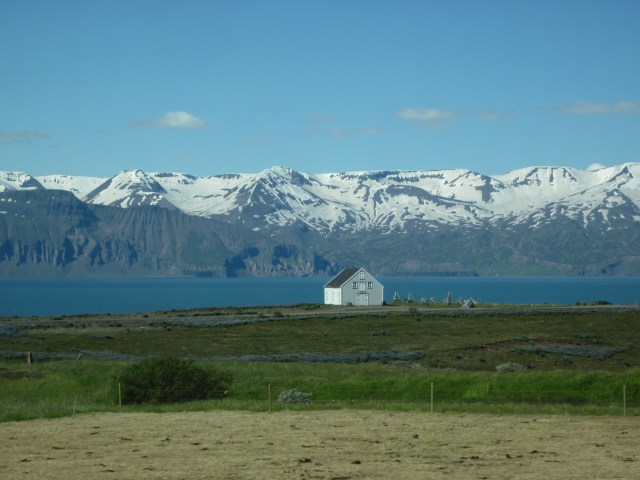
A few years ago, I spent some vacation time in Iceland. I saw plenty of the country, and probably visited most of its museums.

near Husavik (photo by A. Chapman)

near Husavik (photo by A. Chapman)

I learned a lot about the the place, the people, and their history. I took many things home. The biggest thing I brought back was one prevailing idea — or question. It’s continued to fuel some thought:

What facilitates and what inhibits innovation?

I’m sure a historian of Iceland will cringe at this encapsulated history of the island, but here it goes anyway: The Vikings came by about a thousand years ago, and set up a number of settlements. Eventually an ice age hit, and the Viking ships stopped showing up. It got really cold, and every accessible tree was cut down as people made a subsistence living off of sheep, cattle, and fishing. Life in Iceland, before the 20th century, was hardscrabble and meager. To persist in an environment with such low productivity, people had to work very hard to simply not die. As an event of vicariant biogeograpy, the language, culture and genes of the Vikings persisted in Iceland more so than other homelands of the Vikings.

Iceland was a developing nation until the influence of World War II brought some prosperity to the island. However, there were imperialistic and trade connections with the European continent for many hundreds of years. However, most trade was the shipping of processed fish and finished wool products away from Iceland. These natural resources were harvested using traditional methods that were less efficient than the techniques practiced on the continent. They just didn’t have any other way of doing things.

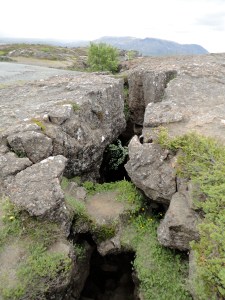
The mid-atlantic ridge in Iceland (photo by T. McGlynn)

The mid-atlantic ridge (photo by T. McGlynn)

To make the long story short, people in Iceland had retained cultural practices and technologies that were no longer used in other parts. Some of these things were very inefficient compared to other ways of doing things, but the more efficient technologies hadn’t made it to Iceland.

So, this meant that people worked really, really hard, all of the time. There was little time for leisure, it seems. For example, what is the classic children’s toy from yesteryear in Iceland? Leftover sheep bones.

Here are a three examples I particularly recall about how Iceland retained inefficient practices.

  • Icelanders did not use the a spinning wheel for hundreds of years after spinning wheels had been widely adopted in Europe. Instead, Icelanders used small hand-spools which took far more time to produce a smaller quantity of thread. This is no small deal because more than one fifth of all people, including children, were working with wool, mostly for domestic use, full-time, for seven months per year.
  • Icelanders didn’t make leather. Instead, they made shoes and other material out of hide, without processing it into leather, which made these materials far less durable. When people had to take long journeys, they would have to make several pairs of hide shoes for the journey, because they would wear out so quickly en route.
  • Iceland now gets nearly all of its energy from geothermal power. Hot water is underground all over the place, and this is circulated for heating homes and public buildings. They didn’t pick up this habit until the 1940s, facilitated by the influence of foreign military powers. Meanwhile, for a thousand years, Icelanders were freezing their bottoms off, and lived in the same buildings as their livestock (sometimes in a loft directly above), in part just to stay warm.

Why didn’t Iceland have spinning wheels, or leather, or use hot spring water for heat? Because nobody had the idea, or the opportunity to implement such an idea. (Of course, people with better direct knowledge can correct me on these things. I don’t speak Icelandic, after all, and though I don’t think I was hoodwinked as a tourist this is how I understood things as was I was making my way around.)

I have two competing hypotheses that could explain the relative lack of innovation in Iceland.

  1. People were just working so damn hard, all of the time, that there was no opportunity to make the investment into developing a better way of doing things. You can’t fuss around with building a machine to process wool when you’ve got to make thread! You can’t waste hide trying to make better shoes when you need to make shoes! Maybe.
  2. Iceland had a very small population, so small and recent that the entire history of the population of the island is known. (Worried about dating a relative? There’s an app for that.) With so few people, back in the day Iceland never had an extraordinary innovator that happened to be born there. Iceland has a rich history of civic leaders, it founded the world’s first parliament, has a great history of literature and music, and nowadays has remarkable public art. But when things were really cold and dark, and isolated from the rest of the world, by the fluke of history a special person that makes major innovations just didn’t happen to be born in Iceland. Maybe.

I continue to wonder whether the answer is the first or the second, or if my premise is mistaken.

Why is this on Small Pond Science? We all keep ourselves busy with teaching, research and service. If we didn’t have things to do, then that wouldn’t be fun. However, do we keep ourselves so busy tending to minutia, that we aren’t allowing ourselves the time to innovate?

When we’re writing up our syllabi, are we so busy just getting through it that we don’t focus enough to visualize innovative — and more efficient — ways to do things? Are we so busy getting things done that we don’t use our (relative) freedom from the publish-or-perish universe to do completely new science that others aren’t willing to take a chance on? If I’m not taking the time to evaluate my current practices, then I can’t improve. Which means I need to not live too quickly. I’m clearly not that rare Ben Franklin-esque character that changes the world with a series of spectacular thoughts and deeds. But I can make sure I’m not working with my head in a rut, so that I can be open to new ideas.

Advising undergraduates on applications for grad school

Standard

Now’s the time of year when prospective grad students need to get serious about applying to graduate programs.

Students are probably relying on their professors to guide them through the process. While professors are generally well informed, we have to be careful to not overestimate how well we can steer our students.

Please remember a few facts:

  • The grad school application process varies dramatically, even among subdisciplines.
  • Procedures vary greatly among different universities, and many are idiosyncratic.
  • Personal experiences with the grad school application process >5 years ago are outdated.

Undergraduates typically have misconceptions that are particularly difficult to dispel. After all, telling our students a set of facts doesn’t necessarily make them understand how important these facts are.

Undergrads are often very surprised to discover that the process is haphazard, and how their personality and professionalism affect the outcome. Even if you tell them about it in detail before they start.

What is the fix for this? Undergraduates should be getting direct advice from current graduate students who are just a little further down the same road. Ideally these students are alums from your lab or your institution, but if you need to stretch further to find grad students to advise your undergrads, it’s worth your while.

In addition to talking with grad students, it’s not hard to find quality contemporary advice to share with your students, like this post by Christine Boake. Be careful to provide information germane to a particular field, because sometimes it’s not obvious that what appears to be written as generalized advice may work really well only within certain disciplines. If you are in ecology, for example, here’s another great post about the grad school application procedure from Dynamic Ecology. If you know of others that you want to share, please post them in the comments. (You can do it anonymously.) I wouldn’t even know where to start for physics, chemistry, computer science, cell/molecular biology, and so on.

While you’re at it, please don’t give generalized advice to students wondering whether to do a Master’s or Ph.D.

A little literature on how pseudonymity may alter reach or impact

Standard

Recently, I wondered in a post whether the vagueness of the identity of an author affects the dissemination and acceptance of the author’s ideas.

It doesn’t matter to me whether someone chooses to write under a pseudonym. Nevertheless, is true that some audiences receive messages with greater skepticism — or more credulity — if the creators don’t reveal their identity. This fact was rapidly confirmed, by responses from those with pseudonymous blogging experience. There were comments and posts, reporting that some people are fed up with people in power (tenured white men) claiming that pseudonymous blogs are lame.

Meanwhile, the specific idea that I was addressing in the post was mostly overlooked. While some people rebutted an argument I never made (about the choice to use a pseudonym), only a couple comments addressed my question with substance, and I’m still interested in the topic. What are the consequences of pseudonymity for the impact of a message, and what factors shape that relationship? I found that the answer isn’t readily available, but here is some of what I’ve found.

For starters, here are some examples that I didn’t bring up in my post, because I was mostly focused on Banksy. I was surprised that nobody in the comments pointed out that the first t-test was published by an initially pseudonymous author, “Student.” Clearly, that was a success.

In the realm of politics, I’ve always been curious how the authors of the Federalist Papers thought about how their (then) anonymity affected the influence of their writing, and apparently it’s debatable about whether they actually had an influence on how ratification happened. And, I wonder how sales of Primary Colors would have been different (higher or lower?) if Joe Klein’s identity was never concealed, instead of being revealed six months after publication.

Clearly, whether or not a message connects to a serious cause of a disenfranchised group matters. I would have thought that there would be more scholarship on this, but then again I probably have lost my touch at searching the literature outside the sciences. I found an interesting article (“How I Look”: Fanny Fern and the Strategy of Pseudonymity) about Fanny Fern, whose use of a pseudonym was tied to gender-based discrimination. (Note that the guy who wrote this article is a white dude.) It remains unclear whether her popularity would have been different if she had used her own name, and grounds for speculation.

What about what happens on online communities? They do function better when members are pseudonymous. This wasn’t a surprise to me, but might be to those who have claimed say that pseudonyms are used to bully others. Here are two articles on the topic:

Anonymously productive and socially engaged while learning at work: Quickie summary: Having a pseudonym results in more collaboration, and more chattiness.

Impact of Anonymity (Unlinkability, Pseudonymity, Unobservability) on Information Sharing Quickie summary: Having a pseudonym results in more and better sharing of information online. Does this mean that they have a bigger effect offline? Unclear, and grounds for speculation.

Let’s take a look at when speaking out on an issue really matters: whistleblowing. One commenter on my earlier post explained how protecting oneself from reprisals was important in her line of work. I wanted to find out whether whistleblowing was more likely to lead to action, based on whether or not the whistleblower was anonymous. I couldn’t find that much on this, based on a moderately cursory search, but the one thing I did find clearly indicated that when one’s identity is hidden then a whistleblowing alert is far less likely to result in any action than when the whistleblowers put themselves on the line by including their identity.

Clearly, whistleblowers have great reasons for protecting themselves by hiding their identities. However, this concealment of their identity unfortunately also limits the effectiveness of their own whistleblowing actions. This is the kind of phenomenon I had in mind while writing my original post. I don’t want to generalize from it, but I wanted to share it with readers because this is the kind of information I was interested in when I posted about it earlier.

What faculty really need: Time

Standard

What faculty need doesn’t always translate into what administrators think faculty need.

Administrators overseeing faculty, who do their jobs well, find ways to help faculty do their job better. With respect to research, I imagine that administrators want to increase the quantity and quality of student research, increase the number and quality of publications, and increase the funds coming into campus. At many places, of course, the latter reigns supreme.

What should faculty get to make these things happen? What we need, more than anything else, is time.

Sure, organize a grantsmanship workshop for us. Okay, pay for me to go to a conference. It is useful to have an allowance for supplies. I get to hire a student work with me? That’s very nice. I get a little stipend if I submit a grant? That’s okay, I guess.

All of those things are for naught unless I have the time to make things happen.

The basal necessity for all faculty to get research done is having the time to do it. Without that foundation, don’t even bother doing anything else.

Though some consultants make their living telling people how to write grants, a workshop won’t make you write a great grant. That skill is acquired by writing grants, serving on panels, and collaborating with people who are great grant getters. Those things take a lot more time and focus than a workshop. A workshop is a start, maybe, but unless it’s backed up with time, it won’t result in a great grant.

Working with students takes plenty of time. Writing grants, collecting data, and writing manuscripts takes plenty of time. If you were to ask most of us what we need, we’d probably put time at the top of the list. That’s probably true for everybody in academia, regardless of field or how much money we have. Either we have lots of money and need the time to do the work we planned, or we need the time to write the manuscripts and grants that are necessary to bring in money. Either way, time is always at a shortage.

I understand why administrators might be reluctant to give reassigned time to faculty to do research and mentor students. It seems against the mission of the institution to pull the out the batters from the top of the lineup so that they can leave the classroom to work with fewer students. Also, there’s a pull to be egalitarian in the distribution of resources even though some faculty will waste the time given, and others will be productive. So, time can’t be given out willy nilly. But if you really want faculty to deliver, find the ones who will do solid research and give them the opportunity to do so. (Tip: the ones who will deliver in the future are the ones who have already shown the ability to deliver.) Some people will never deliver, no matter what they get. Some already deliver, and will deliver better with more time.

Time is money. And faculty time, compared to other things, isn’t cheap (though it’s cheaper than it should be considering how poorly paid adjuncts are). If you have quality faculty doing excellent research and teaching, then giving them the opportunity to allocate some of that teaching time to research/mentorship is what will deliver.

More female LEGO scientists, please!

Standard

This week, there was some to-do about a new female scientist LEGO figure. I wasn’t quite satisfied, and I wasn’t alone:

http://twitter.com/hormiga/status/374934248190259200

Chatting with my 10-year old son Bruce, he remarked:

It is weird that people think it’s a big deal that there’s a female scientist. I mean, so many scientists are women, you know?

So, we set out to do something about it. It was a project after his after-school program that spilled over into dinnertime. We pulled out a variety of our his LEGO sets, and identified all of our his pieces that would have the makings of a crew of female field biologists.

He had a male painter with a bucket, a wildlife dude with a snake and a frog, a guy who looks like he was ice fishing, and a some big scorpions from a mummy-themed set. And we found a bunch of guys who had occupations that involved field-work like clothes, and we scrounged around for faces and hair that looked female. (We managed to not use the hair of Legolas). Considering the number of character’s he’s accrued, it was quite surprising how few were female. Nevertheless, I think we put together a mighty formidable bunch of professional scientists:

The Female Field Biologist series, by Terry and Bruce McGlynn

The Female Field Biologist series, by Terry and Bruce McGlynn

LEGO Arachnologist

LEGO Arachnologist

LEGO Chiropterist

LEGO Chiropterist

LEGO Herpetologist

LEGO Herpetologist

LEGO Ichthyologist

LEGO Ichthyologist

LEGO Ornithologist

LEGO Ornithologist

Do you really want to see LEGO scientists that look like real scientists at work? Representing both the gender and ethnic diversity that exists among us? Let’s keep asking LEGO for these, and maybe they’ll see the market.

It shouldn’t have been necessary to pull the head off of a hapless victim of zombie mummy to make a female ichthyologist, and use the hair from a stereotypical librarian.

So, teaching is for people who have imposter syndrome?

Standard

Isn’t it a bummer when your research is founded on an invalid premise? This can’t be a good moment for a researcher whose work was featured in Science online. This article would be just silly, if it didn’t take itself so seriously while also being offensive.

As represented in this Science “careers” article, the project was designed to understand what might cause scientists to change their professional ambitions from a tenure-track position at a major research university to, well, something other than a tenure-track position at a major university.

Apparently, that change in career ambition is some kind of flaw in performance, as the study reported these students as “downshifters.”

Apparently, a tenure-track position at a research university is “faster” than other jobs that doctoral students take. According to the study — or at least interpreted by the author of the Science article — a teaching position or policy job is is slower than a running a research lab. Maybe that’s what some tenure-track faculty at R1 institutions might think, but that doesn’t make it true.

Is it just me, or is the notion that deciding against a tenure-track position at research institution is a “downshift” is a load of crap? If you’re designing a study with this as a presumption, then isn’t that going to result in confirmation bias?

If we decide to choose an equally ambitious path in a different direction than the PI of the study, then why is it that we are labeled as having downshifted our expectations of ourselves?

In grad school, at some point, I decided that I didn’t want a job at a research institution. The job that I ended up taking, at a primarily teaching institution, is not any easier and not any slower than running an R1 lab. It’s not easier, it’s just different. There’s a good argument to be made that, after I chose against an R1 job, that I’m running harder and faster than a PI at an R1 institution.

According to this study, I’d be a downshifter. That judgment of me gives me some indigestion.

Moving into a tenure-track position at a research institution is often considered the default route for doctoral students, even if the bulk do not end up in such a position. If a doctoral student decides in the middle of grad school that she wants to pursue a different path, how is this shifting down one’s expectations? How is it that downgrading one’s expectations?

Here’s how the study identified what a “downshifter” is and what she found, as I read the article in Science careers:

The authors interviewed a whole bunch of doctoral students at one university. Only about 25% 33% had a goal of working in a tenure-track position at a major research university. (I found this rather surprising, and a form of good news, actually. Do their advisors know this?!) Of the entire pool, less than ten percent initially had an ambition to become a professor in a tenure-track position, but then changed their minds.  These were the “downshifters.” (There were gender disparities, with fewer women wanting the R1 jobs and more women who chose to against the more-exalted path.)

So, here’s what I see in these data: 75% 66% of grad students don’t want to become R1 professors. During grad school, 10% change their mind and don’t want to become R1 professors. These “downshifters” are more likely to be suffering from imposter syndrome, as it was measured in the study, and the gender disparity results in more women changing their minds about their career goals.

Note: Before going to press with this piece, I corresponded with the PI of the study. She didn’t want to write a response to be included in the original post, but she did clarify some numbers. She wrote:

As far as the numbers go – currently 22.5% of the women in my sample and 27% of men aspire to tenure-track professorships with an emphasis on research. 40% of the students have either changed or seriously considered changing career goals while in graduate school, but only 23% have actually changed. 11% of women and 6% of men were classified as “downshifters” because they shifted from professor with an emphasis on research to one of the 11 other categories. That means that *more* than that 22.5 and 27% originally aspired to the TT – about 1/3.

The take-home message is, then, that if imposter syndrome is causing a leak in the so-called pipeline, where the small fraction of Ph.D. students who want a so-called “fast” job decreases even more when they have imposter syndrome, which disproportionately affects women.

Maybe if we stopped portraying the tenure-track positions at research institutions as the idealized goal of grad school, then perhaps we wouldn’t be so worried about driving people away from academia and research? These gender disparities are real, and very concerning, and by continuing to up the stakes about how special and important R1 faculty jobs are, we’re not helping the problem.

This was not a brief rant, but it was summed up by a colleague of mine in just a few, less testy, words:

https://twitter.com/skmorgane/status/375688229250682880

In all fairness to the PI of the study, she told me that she had no editorial power over what was published in Science careers. I’m sure the author didn’t do the PI any favors in how he represented her work, and that’s why I offered her the opportunity to clarify and rebut before going to press. She declined to offer a specific rebuttal, but did indicate that both the Science piece and this post itself were not fairly representative of her work or her views.

She did send me a link that represents her views and reassured me that the use of the term downshifter “is not meant normatively in any way and instead to capture the issue as it has been addressed in previous literature.”

Is using the term downshifter acceptable as long as it’s used only because other people have in the literature? Doesn’t the apparently broad use of this term in the literature suggest that this entire line of investigation has some messed-up assumptions built into the hypotheses being tested? If all of the research on women leaking out of the pipeline originates with these kinds of value judgements, are the conclusions trustworthy?

Making the most of a daily commute (guest post)

Standard

Amy Parachnowitsch is an ex-pat Canadian scientist, who studies the evolutionary ecology of plant-animal interactions and floral traits. She is halfway through a 4-year assistant professor position at Uppsala University, Sweden.

Maybe it is the recent discussion about field sites both far and wide (both highlighted here) that has got me thinking about distances and research/work. Or maybe it just because I’ve been sitting on a bus trying to make the most of my newly acquired commute. Whatever the reason, I have been thinking about how travel, whether daily or to your field sites, can affect how you arrange your work.

A little context: this summer I moved from the town where I work to one an hour away. There were a lot of personal reasons that went into the decision but one of the main factors was my work flexibility compared to my husband’s. Unlike him, I can use the commute to work and have shorter days in the office. A good theory but now I’m actually testing it during the one hour (each way) I spend on a bus. Right now my days are about two hours shorter in the office than they were when we lived a ~15min bike ride away.

So far, I am seeing some pluses to the arrangement. When I’m in my office, my time tends to get fragmented during the day by various interruptions. An hour on the bus is long enough to pull something out and get somewhere with it. One of the big benefits is that I am not completely connected; I do have a smart phone but I keep my computer off-line. So far this has functioned to give me some solid writing chunks during the day. There is lots of advice out there about writing daily and it has always seemed like a good idea to me. But this commute is the first time I’ve been consistent with a daily writing routine—we’ll see if it results in more submitted manuscripts as I hope. Another long-term advantage is that it will also be much easier on the family when I go away for conferences or research (we have a 4-year old). Even short trips were difficult for my husband to manage both child-care (e.g. dropping and picking up from daycare) and a long commute. Although I did a number of work-related trips from Uppsala, there have been opportunities that I haven’t taken because it was too much to ask of my very supportive husband. All in all, it will probably take a while for us to fully realize the advantages of the move but I am hoping that it will make me more effective and freer to participate in the things that interest me.

The disadvantages are of course the commute itself. I’d rather bike or walk to work than ride the bus. It will also mean that staying late or popping by my office or lab is more difficult. On the small scale—a long daily commute can have some of the advantages/disadvantages of long distance fieldwork: when I’ve left for the day, I can’t go back. The change won’t be so dramatic for me because I was already limited in doing ‘off-hour’ work by my child (and commuting husband). And unlike data collecting, I can always bring a lot of my work home with me. But I’m not sure how my shortened campus time will function once the semester is in full swing. I’ll get a better feeling as the fall progresses if there are any hidden costs to regularly leaving early. Commuting also changes the timing of the kind of work I can do during the day because now there are many things that I won’t be able to do in the commuting hours such as meetings, lab work, extensive literature searches, adding web content to lectures, etc. I think it will take more time to know if this is a plus or minus for me.

Unlike your field sites (or lack thereof), choosing where you live seems more a personal choice and might be limited by many factors (e.g. city university vs. college town). But as I have experienced from moves in the past, where you live can also effect how you work. Gone are the days when I could do that one last thing before rushing off to pick my daughter up from daycare. I don’t know if this will make me more disciplined with my time in the afternoon or more likely to give up a task earlier so I don’t have to stop in the middle of it.

Overall, I think I will be very motivated to keep my commute productive because the alternative is really long workdays. With a young child, I think it is especially important that we have some time together each day. If I spend 8 or so hours in my office, I’ll rarely see her.

I’ve known lots of different styles of professors: those that are always in their office, those that leave early to pick up kids, or come in late because they work better at night. One of my colleagues even commutes on a weekly basis from Norway. Ultimately, academia is a job where your accomplishments often matter more than the time you do it and we’re generally given a lot of freedom to arrange how we work.

I’m curious about other people’s decisions. How do you schedule your day and what do you find to be most effective way to do your work? Does where you live effect how you work? Do you use your commute to work/think about work or is it a time-out in the day? Above all, any advice from long-distance commuters would be greatly appreciated!

How a research institution can mentor undergrads better than an undergraduate institution

Standard

More doctoral students emerge from small liberal arts colleges than from the undergraduate populace of research institutions.

This is a point of pride held by liberal arts colleges, that market themselves as the best place to go if you want to become a scientist receiving a Ph.D. from a big-name research institution. Demographically, they’re correct.

Are small teaching schools better equipped to train undergraduate researchers better than big research institutions? I don’t think so.

In practice, liberal arts schools are far better at producing high quality researchers, but it’s not because of any inherent property of liberal arts schools. Some could argue that the curriculum itself might matter – that’s a discussion for another time – I’ll spend the rest of this post thinking about the single reason that people identify about what makes liberal arts schools a special place for budding researchers.

Here is the standard reasoning: Teaching schools provide students with the opportunity to have close professional interactions with their professors. Students in labs in small teaching institutions benefit from direct mentorship from the PI, which will more likely result in a higher quality research experience, better insights into how to do research, and greater opportunities to own their own research projects, enabling them to present at major venues and eventual publication as undergraduates.

How true is the preceding paragraph? It’s a straight-up fact that students at small teaching campuses are more likely to do more original research of their own working with their PI. And, if an undergraduate arbitrarily selects a research lab to join, then they’d probably end up getting a better experience at a teaching institution.

But, though this trend is real, research institutions have tremendous potential for training undergraduates. Without providing any additional resources, any research institution can be a top-notch training ground for undergraduates. After all, there is nothing inherent about teaching institutions that makes them better at training researchers.

There is nothing magical about having the PI as your direct mentor that will make you a better researcher and help you get into a better grad school. Looking closely at what supposedly makes a teaching institution better for training undergraduate researchers – close involvement with the PI – I see a massive handicap.

All of the literature on research mentorship says that the relationship is most successful when the mentor is just a little above the mentee in research experience. Even though the PI is a better academic expert and has mentored more, the Ph.D. student and the postdoc are in a position to be more effective as mentors.

The best mentoring arrangement is a multi-level team, in which the early undergrad works with a senior undergraduate, who then works with a Ph.D. student, who works with a postdoc as well as the PI. The PI knows everyone personally, and spends some time with the undergrads, but the graduate students are the better formal mentors. (A colleague of mine at a research institution recently tried to kick one of her own undergrad researchers out of the lab, because she didn’t recognize her. That’s not good.)

I suppose a young PI can connect more easily with students, but as we get older, then the nature of the relationship evolves. Add on a few years, and the gap between the PI and the student grows. Even if the PI is affable, and might truly understand the perspectives and thoughts of the students, it would be silly to ignore the fact that our students can’t relate to us and that we can’t relate to our students, even if we were once in their position. No matter how much time I spend with my students, now matter how similar our backgrounds are, the fact of who I am limits my ability to serve as a model. I can do all the right things in the mentoring process, but if a grad student did all of the right things, it would be even better. (And for my students from underrepresented groups, having a mentor from the same group is particularly powerful.)

I really like most of my students. I enjoy their company, and over time some have become good friends of mine. But, let’s face it, there’s a big gap. I’m older, have a kid and am married, and we don’t have that many overlapping interests. While I try hard to be transparent, I recognize that I seem like an enigma in a bunch of ways. (For example, earlier this summer one of my students was totally surprised that I use torrents to watch a couple TV shows. He just thought this was outside my realm for some reason.) I didn’t go to grad school in the middle ages, but things have changed since I’ve been there, and this is true for anybody who is at least halfway to tenure. If I try to discuss grad school with my students, I’m not nearly as credible or powerful as the same information coming from a current graduate student.

My position of authority makes me a less influential mentor.

I don’t want to overgeneralize from my experience, but I doubt that I’m alone.

You might be thinking, “Do your students really have to relate to their mentor to have an excellent research experience, and move their career to the next level?” Not necessarily. But I think it really helps. Especially for students who aren’t able to visualize themselves as capable of excelling in graduate school, a proximate model is an essential part of the mentoring process. Having seen my undergrads interact with doctoral students on a regular basis, it’s clear to me that without this kind of opportunity, that my students would missing out, big time.

Having a student know that the path has been blazed in front of them by other students, like them, matters. If students see other students throw themselves into research with great passion, they are more likely to allow themselves to get that excited. Of course, the same was true for me. But now, I’m an old bald dude with kids, and I get really excited about research, but in a different way. I can’t serve as a model for my students, even if I tried.

While grad students might not have the same authority and skill set as the PI, they can offer things that the PI can’t. This is exactly why a multi-level mentoring scheme is the way to go. The PI can choose to become involved when it is wise, and step back and focus on other things when the grad student has things under control.

Research institutions have grad students, but this doesn’t mean that they deliver great research experiences for undergraduates. While the personnel are available for a multi-level mentoring system, in many labs the system is nonfunctional because undergrads are often treated as serfs. I know many R1 labs that that are exceptional for undergraduates who work with graduate student mentors. However, I’m aware of far more labs that do not focus on making sure that undergraduates have their own research experience and are able to focus on building their own academic identity. In general, undergraduates in research institutions that receive their own project (as a piece of their mentor’s work) are the exception rather than the norm.

As for the mass production of Ph.D. students from small liberal arts colleges, I would bet that the outcome is a done deal even before the students enroll in college. The social and economic class that produces doctoral students is the same caste that is able to send students to fancy private liberal arts schools. Yes, there are scholarships and financial aid. But even if you look at small liberal arts colleges that heavily emphasize economic and ethnic diversity, they simply can’t match the diversity of the nation’s populace because, simply, most people can’t afford it. As long as the average cost of a liberal arts college is more than average cost of research universities, of course a higher proportion of doctoral students will emerge from liberal arts colleges.

How do I get my own students a multi-level mentored experience? Well, I don’t have that happen inside my lab on a day-to-day basis. I may have Master’s students around, but I usually have undergrads that are more seasoned than my grad students. That experience helps, but the way I really bring in graduate student and postdoc mentors is by having my students conduct their research in a hub of collaborative activity during the summer at a field station: La Selva Biological Station, in Costa Rica. There, my students build strong relationships with scientists from all over with different levels of experience, and these bonds typically stay tight after they leave the field station. Sometimes their projects become collaborations with grad students and postdocs at other institutions. I like that a lot, for a bunch of reasons.

If multi-level mentoring is important for the success of undergraduates, then what does this mean for you?

If you’re in a research institution: Postdocs and grad students should become genuine mentors and give undergraduates the time and resources to have their own students, and supervise them properly.  Faculty at research institutions should support their lab members, not just in the process of research but also in the process of mentorship. Don’t exploit undergraduates as trained monkeys. If you want someone to be an unthinking data-generating machine, then hire a technician. If you take an undergraduate to do “research,” then do actual research with them. Your own research agenda is easily split up into several smaller questions. Hand one of those questions to your undergraduate researcher, and learn how to mentor them. Give them the same support that you expect to receive from your own research advisor. Yeah, it’s not easy, but it will pay off for both of you in the long run.

If you’re at a teaching institution: Seek routes for multi-level mentoring in the lab. At a minimum, the undergraduates with more than two years of experience in the lab should be given the chance to actively supervise new students. Ideally, you can develop relationships with colleagues in other institutions with graduate students and postdocs. Find a way for your undergrads to become friends with doctoral students. I don’t know how to make this happen, and it varies with institutional context and geography, but from where I sit, it’s an ingredient that really promotes success. (For starters, you can bring students to smaller national meetings where they can build relationships with the students of your colleagues.)

I don’t have a big specific solution to the problem, but recognizing the fact that we as faculty are inherently flawed mentors is a start, and recognizing that the lack of graduate students at teaching institutions isn’t a strength, but a weakness, of the mentorship process.

Taking a chance on the premed

Standard

This is a repost, from a while ago, and particularly apt at the beginning of the semester as we may be recruiting new students into our labs.

What criteria do you have for bringing in premeds to do research in your lab?

There are so many reasons to keep away from premeds. For starters, premeds are more prone to:

  1. want research “experience” but don’t want to do actual research
  2. drop lab duties at the drop of a hat whenever an A- might happen
  3. walk away as soon as they think their stellar recommendation letter is a lock

Of course it’s unfair to apply these stereotypes to actual human beings. Even if they are premeds.

It’s difficult to filter unmotivated students, because I have known so many premeds that have been quick to feign interest. But you can’t do research for long if you don’t love it. The bottom line is that if I’m going to invest into a student, I want them to stick around. When you take on a premed, you’re taking a bigger chance that the investment won’t pay off in terms of data productivity. There are enough non-premeds in my midst that I can wholly avoid premeds, when properly identified. But I still accept them on occasion.

I can think of only one good reason to take on a premed. But it’s a really good reason. You can convert them. It’s tempting. After all, most premeds don’t go to med school, and their premed experience is a big mistake. You can rescue these students early on. You can show that a becoming a scientist is a real option. It gives you the opportunity to make a genuine difference in someone’s life.

Early on, I got burned plenty of times. But I had some successes, and now I have a better spidey sense when a premed is looking for a route off the path that they (or their families) have created. My main motivation is karmic. In retrospect, I still have no idea why I was a premed environmental biology major. The professor who took the chance on me is still an excellent mentor to me, and I like to think that it’s my duty to pass the favor along to her academic grandkids.

Friday Recommended Reads #1

Standard

Some sites make a habit of using Friday to share links to good reads. I thought I’d try it out. In my typically verbose form, I’ll use plenty of words to put the links in context.

Feel free to use the comments to discuss any of these things, of course.

A newish site by a team of pseudonymous early-career scientists is Tenure, She Wrote. This is very good stuff. Learn what it’s like to launch your career in academia at various stages, including the outrageous crap you have to deal with if you’re a woman. This week was a two part series with infuriating story about an anonymous lecherous student and a sexually harassing dean. In an odd way, the story is a triumph, because the author is such a badass in handling a messed up situation the best possible way.

There was an argument on a variety of sites regarding fundamentalism regarding open access journals. You can find that if you want.

Meanwhile, I pronounce that the winner of the Onion or Not Onion? Award actually goes to the Onion for this editorial.

Earlier in the summer, social insect researcher Phil Starks was asked to write a review of his summer reading material for his university’s glossy alumni magazine. You won’t regret clicking through to read his review of Penguin on Vacation.

There were dueling posts among field ecologists this week: Meg Duffy argued that local field sites are a great way to go and Emilio Bruna wrote in defense of far-flung field sites. We all realize that whatever floats your boat is fine, but there are some good points on both sides, and the comments are interesting as well.

This November, in sunny San Diego, there is going to be a weekend institute designed to prepare people how to Begin a Research Program in the Natural Sciences at a Predominantly Undergraduate Institution. I don’t know what they’ll be doing, but it sounds really cool if you’re in that boat, and I bet the folks with CUR running it are both experienced and savvy.

Lots of academics feel strongly about supporting public education. If you happen to live in an under-supported public school district, then there are a set of challenges and tradeoffs in deciding where to send your kid to school. There was a barn-burning judgmental manifesto by Allison Benedikt about why she sends her kids to public school. Aside from her supposed non-humblebrags and proclivity to be nasty, this is an informative read if you’ve ever wondered why folks like me send their kids to our local public school even though some others in the same economic caste would be terrified at the concept. In a subsequent discussion emerged a great piece by Pat Cahalan that explains exactly what is happening in my own kid’s school, and the forces that shape what makes our school mighty great (one of which is the author himself). He explains what it is about having a certain percentage of middle-class families can matter, in the context of a useful and specific example. There’s so much dogmatic verbiage out there about the public education crisis, but Cahalan cuts straight to a central and under-addressed aspect, with nuance.

You might be an academic careerist if… (I ask you to forgive me for linking to a listicle).

Three science sites that have cool recommended reads on a weekly basis. In no particular order, first is Expicor by Chris Buddle, which comes out on Mondays on Arthropod Ecology. This is some general interest science and academia, with a good dose of spiders. Second is Malcolm Campbell’s Morsels for the Mind, which is surprisingly great considering how long it is every week, and has many broad categories . (Malcolm’s shtick on twitter is to link to lots of particularly cool science stories and he’s definitely worth a follow.) The crew at Dynamic Ecology has Friday Links on, um, Friday. This is mostly for ecologists, often with concepts pulled from other fields like economics, and it’s predictably interesting stuff regardless of your discipline.

Have a great weekend!

Extra credit is unfair to students

Standard

The old joke goes like this:

Q: Why did the undergraduate cross the road?

A: Extra credit!

I’ve known scores of students who would work their butts off for five extra points when they wouldn’t work nearly as hard for a normal 100-point assignment. It’s disheartening to witness such irrational behavior. However, this isn’t why I don’t offer extra credit.

I don’t offer extra credit because it’s inherently unfair.

I treat my students professionally. I respect their time and I expect the same courtesy from my students. When professors decide on an extra credit assignment in the middle of the course, this looks to me like poor planning. Even if the possibility or certainty of extra credit is placed in the syllabus at the start of the semester, that doesn’t make it fair to everybody in the course.

Just because all students are given equal opportunities, doesn’t mean that they are being treated fairly.

When students sign up for our classes, they are expected to attend class at the scheduled times, and complete the studying and assignments outside of class, though not at any particular time because they have other courses, jobs, and private lives. The syllabus says what is in the class and why the class exists. If a professor adds additional stuff to the course, at some point through the semester, then this provides a disadvantage to the student who has more commitments outside of regular class hours.

Maybe there are some ways that extra credit is used that is fair to everyone. I can’t think of any. If there is a regular part of the course that is used for points above 100%, that’s not extra credit, that’s just spreadsheet voodoo. Extra credit, as I consider it, is when students are given a chance to earn extra points by doing some stuff that is outside the typical curriculum of a course, or is scheduled outside class hours, or is connected to performance on an assignment in the middle of the semester.

Let me address different reasons that people might use extra credit, and why I view these reasons as unjustified:

1. Extra credit is a carrot to get students to do favors for their institutions. The most common one that I’ve seen that students get extra credit for attending seminars by visiting speakers. This drummed-up audience prevents anybody from being embarrassed by paltry attendance. This practice is manipulative, and doesn’t show adequate respect for time of students. Moreover, because not everyone may have equal availability to earn such extra credit, this gives some students an opportunity to earn more points than other students. (Assigning written assignments to students who cannot attend an extracurricular event to earn extra credit is punitive.) If students need to attend seminars for their courses, then this needs to be built into the course and scheduled during class hours, or placed in the course description. It’s not right to reward the students who have enough spare time to attend events while others might be working or have other commitments.

2. Extra credit is an opportunity for students to earn additional points if their exam scores were particularly low. I have seen some professors give students extra work, including an opportunity to revise exams, in order to improve their scores on exams. If a professor doesn’t like the mean score on an exam, the proper course of action is to give everybody a boost. If most students in the class performed below expectations, then offering extra credit to everybody is relatively punitive to the students who did perform higher than their peers. Some students did better than other students on an exam for a reason. To respect all of your students, honor those reasons and look to the future when students tank an exam. (For edu-folks: exams are summative assessments. Keep it that way.) The only way students should have a chance to revise an assignment or exam for additional credit is if it was structured that way in the first place and the students were aware of this policy at the outset. Anything else is unfair to those who did their best at the start.

3. Extra credit is assigned to motivate students. If students aren’t working hard enough, and extra credit is the incentive, then I humbly suggest that there is a suite of pedagogical approaches that will increase student effort and engagement that don’t involve the inherent unfairness in extra credit. Extra credit encourages students to obsess over their scores rather than focus on the content of the course. If you have students jump through hoops to get a higher grade than they think they would otherwise be getting, then how does this help them learn?

4. Extra credit keeps students happier. I’m doubt this is true. Does extra credit help professors out by boosting their evaluations? I’m not aware of any evidence along these lines and my anecdotal observations suggest that some students are aware that extra credit is manipulative. Even if extra credit would pacify some otherwise unhappy students, priority should be placed on fairness.

5. Extra credit is assigned because the professor overestimated or underestimated the difficulty of the curriculum. If students are underperforming because the course was harder than the professor intended, then the scale should be shifted. If students are overperforming and extra credit is required to give students enough material for learning, then other curricular changes within the bounds of the course should be implemented.

6. Extra credit is assigned to engage students with the community. If student involvement in the community through some extracurricular activity (such as a beach cleanup, or volunteer tutoring at a local elementary school) is desired by the professor, then it should be built into the required curriculum. It’s acceptable to integrate service learning in all kinds of courses. If you don’t want to require it, but want to provide the option, then you could make this activity one of a variety of things that are worth equal required points, or you could offer the possibility without giving student an academic reward for extracurricular activities.

Don’t get me wrong – I’m all in favor of an instructor calling an audible during the semester to change up all kinds of things. I often have a large amount of points to ‘homework and in class assignments.’ I often don’t know exactly what those are going to be when I start the semester. However, I’m not going to give extra points on top of those assignments. It’s simply unfair and doesn’t respect my students’ time.

When students come see me about extra credit during the semester, I explain that I don’t give extra credit because it’s unfair to students who have their time budgeted to other activities and to those who were able to perform well consistently throughout the semester. Nobody’s argued with any substance, other than, “Are you sure?” Yes, I am sure.

One strategic reason to be clear about not offering extra credit is that some students accustomed to the practice might not try hard to learn the course material in the first part of the course, hoping that extra credit might bail them out in the end. By not having extra credit, and making sure this is well known, then you might get a higher investment throughout the whole semester.

The professor-student relationship is structured by the power that the professor has over the student. By coming up with (seemingly) capricious ways to increase student scores throughout the semester, this looks like an abuse of that power to make things easier for the professor and (seemingly) harder on the students who don’t need the extra credit.

If you are providing a carrot to some students, then those who aren’t able to eat or fully digest the carrot will then see extra credit as a stick.  When I start my classes each semester, I tell my students: “The world isn’t fair. But in this classroom, I place a high value on endeavoring to be as fair as possible.” If I offered extra credit, then I’d be undermining that notion.

Many of my students work long hours outside of school, in addition to a full course load, and they also have families to care for. I’m not going to ask anything more of them other than what was in the course catalog and what I made very clear in the course syllabus. Even if I taught a bunch of students on a residential campus, who did not have major family obligations including a paying job, I still feel that extra credit would be an unprofessional manipulation that wouldn’t fairly treat those who did their best throughout the course.

“Time management” is just a way to sell how-to books

Standard

Time management books are like diet books. They’re both full of detailed and sophisticated ways to do something so simple, they can be explained in a short blog post.

Using time effectively is important, and being healthy is important. Everybody knows how to do them. Many just people fail in the execution.

How to behave healthfully? Don’t eat too much, don’t drink sugar, and move around a lot. Burn more calories than you take in. How calories get processed and burnt is extraordinarily complex, and there are many things about metabolism that we’ve yet to understand but the laws of thermodynamics are pretty clear about how to lose weight. The execution is the very hard part. There are all kinds of biological reasons that make carrying out the simple tasks difficult.

How do healthy people make this happen? They have routines in which they eat well and exercise. It is a habit, just a part of everyday living.

The same applies to time management. How do people get stuff done? They actually do the stuff that they need to do, when they need to. They don’t waste time.

It’s that simple. You don’t need to buy a tomato timer or find out who moved your cheese or whatever. Those methods exist for the purpose of making money by those who wrote books. You just gotta to what you gotta do. You have to be in the habit of making the right decision to not procrastinate, and to focus on what needs to be done at a given moment.

Just like a fad diet, if you sporadically manage your time effectively, it doesn’t become routine as a result of extended and concentrated effort. Then, a time management plan is doomed to failure.

Being healthy, and managing time effectively, are part of a lifestyle. Either you do it routinely, or you don’t. If you don’t, then you just compel yourself to do it for a long period of time until it become part of your regular existence, or you never will.

There’s a lot of talk that academics really need to manage their time in minute detail to be productive. In particular, I’ve heard lots of folks claim that you have to be able to work on big tasks (manuscripts, grants) within small chunks of time (like 15-30 min between meetings, classes and appointments). And this is particularly important for parents whose time is more divided.

I say hooey to all that. If I don’t have a couple hours, at minimum, there’s no use for me sitting down to work on a grant or a manuscript, or some other momentous project.

Does my inability to do big stuff in small periods of time keep me from getting stuff done? No, not at all. I just need to identify those blocks of time and use them, and make them if they don’t exist. The blocks might be in the evening after my kid goes to bed, or early in the morning if my spouse takes my kid to school and I get to work early, but that’s when it happens. I have also made sure to defend large chunks in the middle of the day for research, and I’m fortunate to that have that opportunity.

For this strategy to work — like any time management plan — you’ve got to actually sit down and do the stuff that you gotta do. It’s as simple as that. Don’t browse the internet, don’t check up on something that doesn’t need to be checked upon, and don’t jump into social media by default. Just get your stuff done. Some people do it, and some people don’t. Those who don’t get straight to work when they need to need to find the way to get into the habit. Simple as that.

Once you have those habits, then the rest of time management should easily fall into place. I would guess.

As for myself, I have not yet developed those good habits, even though I recognize the importance of doing so. If I was better, I wouldn’t have written this blog post. Now, I’m heading to the gym. And tonight, I’m hoping to send our New Year’s Cards.

Efficient teaching: grading schemes

Standard

What is a grading scheme for our classes that promotes the best learning with minimal agony for all?

Everybody who has been teaching for a while has come upon a set of practices that works. I still don’t have a pat format, and I continue to tweak grading schemes as I gain experience, and as the content and level of the courses I teach vary. Though I don’t always do the same thing, I design my grading scheme to avoid particularly annoying or time-consuming parts of teaching, and I also make sure to include elements that are designed to improve learning. Here are key concepts that I take into account when building my grading scheme for a course:

  • Students that are overly stressed about the grades on their assignments are less likely to genuinely engage with the course material and will not learn deeply.
  • Students who are concerned that grading might be unfair will not be as interested in engaging with the course material.
  • Some of the students in the class might have valid reasons for needing to miss a class session. If students have worries about missing class or an assignment, regardless of the cause of these concerns, it takes a boatload of time of the instructor to deal with these concerns.
  • No instructor can be in a position to accurately and fairly judge the legitimacy of any excuse that a student might choose to provide.
  • Students learn most effectively when assessments (tests, quizzes, returned assignments) are frequent.
  • Students need to be able to calculate their grade in a class, and how many points remain in the semester, at any point during the semester. This requires a transparent grading scheme.

What does my grading scheme look like to deal with these principles? Here are some elements that I almost always include in my courses:

  • I do not take attendance, so that students don’t get overly worried if they have to miss a class.
  • I structure the course so that a person who chronically misses class will take a massive hit to their grade, by not having completed a number of in-class activities tied to a grade. A person who aces all of the exams, and assignment, but doesn’t do in-class assignments and quizzes, will earn a C. So, these in-class activities should constitute 20-30% of the grade.
  • I include some kind of frequent assessment (quizzes, homework, in-class assignments), to let students know how they’re doing. These may be graded or ungraded. Ideally every class has a very short exercise for students to size up if they’re up on the latest material.
  • I accept late assignments, but the moment they are late they lose 50% of their value, and it then declines by an additional 10% each week. This encourages completion on time, but still provides value to students doing the assignment later; if I did not accept late assignments then these high stakes would lead to extreme stress for some students and this would get in the way of learning. If I accepted late assignments with a minimal penalty, then too many students wouldn’t be doing their work on time and would get behind in the class.
  • I drop one or two of the quizzes/assignments; this can include ones not completed because a student is absent. This way, I don’t ever have to be in a position to judge whether one absence is more legitimate than another absence.
  • I make sure that non-exam assignments make up at least 40% of the total grade, to make sure that the exams are not high stakes.
  • I don’t make the final exam worth more than 35% of the total grade.
  • I place the first midterm exam relatively early; even with quizzes, the first exam tends to be a jolt into reality to let the students that they need to buckle down. The sooner this happens, the better.
  • I don’t post grades on the course management system; this keeps some students from getting any information about their grades outside the classroom, which lets them only access course content, rather than performance, when they’re not in class.
  • I require students to formally identify one or two partners in the course, which they may contact for a variety of questions. Students should not be asking me what they missed in a class; it’s their responsibility to find that out.
  • I use straight scale, such that > 90% = A; >80% = B, and so on. I only occasionally use pluses and minuses, at my discretion, and only to boost a student’s grade. I tell my students that I’d be over the moon everybody got an A, but also that that has yet to happen. This overtly encourages cooperation and group work in the course.
  • Grades are assigned using final scores blind with respect to the identity of the student. I sort grades from highest to lowest and evaluate the distribution. Typically, the distribution is multimodal and the grades fall out easily, and the ones on the boundaries get pluses or minuses to boost them up. I make sure that the grade a student receives is at least the minimum that they would earn under the straight scale; typically results are no different than the straight scale.
  • I never assign a single grade to a group assignment; I can’t see how this could not be unfair.

Once I abandoned the midterm altogether. In that class, very two weeks, we would have a short exam that took the first half of a class period. There were six or seven of these throughout the semester, and I’d drop the lowest one. The stress of midterms is gone, and students don’t stress about cramming material from long ago. There are two reasons I haven’t done this again. The first is that the one time I did it, some members of my department freaked out because it broke the mold in the department, and students in my section were happier than in other sections. (That was at a different university; now I am sure that everyone would be totally fine with it.) The second is that I haven’t had the time management skills to pull this off in future semesters. I tend to grade in big batches, and having a batch of exams every two weeks is a bit too much. I recognize that it’s better pedagogically, but I’m not sure the improvement is balanced out by the time I have to put into it.

Last semester, I offered my graduate biostatistics students the option of of a cumulative oral exam instead of a written take-home exam. Nobody took me up on that offer.

I don’t do extra credit. There’s a whole separate post about that for some point in the future. I also don’t hold out-of-class review sessions or host in-office-hour reviews with gaggles of students. And that’s also a whole ‘nother post. Students in my classes never be surprised about any exam question. That’s a third post.

What is always in your grading scheme? Do you do something overly different than me, and how do you think it affects the way that students study and learn in the long term?

What it’s like to start a job as a Visiting Assistant Professor (guest post)

Standard
Carrie Woods in the field

Carrie Woods in the field

This is a guest post by Carrie Woods of Colgate University, a Canadian scientist who studies the ecophysiology and community ecology of tropical rainforest canopies. If you have any questions or remarks for Carrie, please be sure to leave them in the comments.

I just entered my new office as a Visiting Assistant Professor (VAP) in the Biology Department at Colgate University, a liberal arts college in upstate New York. My office is one of the nicest I have seen and has an incredible view of hills covered in lush temperate forest – perfect for pondering life, science, or wherever the mind cares to wander. Facing this pondering window, I received and accepted an invitation from Terry to post about my experience thus far in interviewing and becoming a faculty member at a liberal arts institution.

My interview was full of friendly faces offering help, advice, and typical interview questions for a teaching position in a liberal arts college. First and foremost, everyone wanted to know what course I was proposing to teach. Is it novel in the department? Will it broaden the scope of understanding of the students? Do I have the expertise to effectively teach the course? If you have done your research, you will know the answer to all of these questions and will instill confidence in every interviewer that yes, in fact, you have perused the course offerings and believe that the course you are proposing to teach is novel, interesting, great for broadening students’ perspectives, and couldn’t be taught without you. I know this may seem obvious but I was expecting an interview that looked at my entire academic career – not just my teaching experience. I even had prepared answers to questions pertaining to my research. But I guess because a VAP position is used to bring in a professor for a year to teach, and only teach, the lack of focus on my research makes sense.

I was surprised though how little emphasis was placed on my research interests or how many publications I had or in what journals. Having only had experience in Research I universities, this came as a shock. I knew that the primary focus of a professor in a liberal arts college is the education of undergraduate students but I didn’t realize how little importance was placed on your research when deciding if you were right for a teaching position. Not one single person asked me about my research. They did, however, peruse my CV for mentoring and teaching experiences (which I placed ahead of my research experience, as per the suggestion of every liberal arts college faculty I knew). I could be misunderstanding the entire process though. It could be that my research experiences were sufficient and, therefore, not in need of discussion. My seminar was clear and focused on undergraduates but I did not dumb down my research or complicated multivariate analyses. I took those challenges head on to show that I could effectively teach complicated concepts. So maybe, my research was important to show that I was a well-rounded scientist.

I decided to take a teaching position after completing my Ph.D. for several reasons. First, many of my colleagues that had new assistant professor positions, regardless of what type of institution, seemed to be drowning in course development. I had never developed or taught an entire course before so I heeded their calls of distress and decided to find a position where I could develop and teach a course before applying for a post-doc or tenure-track position. A VAP position is exactly that. Second, science is a discipline wrought with waiting. There is little immediate gratification in scientific research – except of course for those moments during data analysis when your hypothesis is accepted or when finally figuring out the story of your paper or when a paper is accepted for publication. But other than those brief moments, science is pretty thankless and requires resilience to pursue an idea from birth to publication. In between these brief gratifying moments in graduate school, I found teaching to be extremely rewarding. Watching someone learn a concept that you taught is a very gratifying experience. These rewarding teaching moments carried me through those times when motivation for my research was waning. I found a love and passion for teaching during graduate school and wanted to pursue those passions a little deeper (hence the VAP position).

Since arriving around 9 am this morning, four different people have come by to welcome me and offer any help they can. I feel grateful for their friendly faces and help in navigating the new avenues of a faculty position at a liberal arts college as I am just starting to get my toes wet. I am super excited about finally teaching my own course. So excited in fact that I have already outlined my lectures, ordered my textbook for the bookstore, written my syllabus, and have some ideas for exam questions and the first day of classes isn’t for two weeks. I would have started sooner if it wasn’t for my busy summer of field research in Costa Rica, two conferences, my dissertation defense, and graduation. Now that those tasks are complete, I can finally focus on what I have been excited to do since I first discovered a passion for teaching in graduate school. It’s a very cool moment.

As for the future, this next year will likely dictate where I end up ultimately in academia: liberal arts or research I. I honestly haven’t fully decided where I want to go yet. However, looking out my window at forest-covered hills and being in a department with such an amazing group of friendly and supportive people, thus far, liberal arts is winning the race.

What do our “Overly Honest Syllabi” remarks say about how we approach our craft?

Standard

Sometimes, an idea gets explosively popular for a day or two. Earlier this week, that happened with the twitter hashtag for Overly Honest Syllabi, for university instructors who made remarks on ideas that might cut too deep to share with students in writing. But somehow it’s okay to broadcast it globally on twitter.

If you’re a twitter person, it was #overlyhonestsyllabi. Non-twitter people: Ugh, I know.

I tried my hand at a few:

@hormiga: Extra credit, schmextra credit

@hormiga: Don’t apologize after you skip class. It’s not a personal offense. Your choices merely reflect your priorities.

@hormiga: You’re over 18, you’re an adult. I’m treating you like one and expect you to act like one, whether you like it or not.

These are all concepts that I find often find myself explaining to students throughout the semester, and if students actually read the syllabi closely, then including these in an overly honest syllabus might save me a number of redundant conversations.

I guess I broke the rules of twitter, because those are things that I do put in the syllabus, or tell my students on the first day of class. They all know that I don’t take attendance, I don’t assign extra credit opportunities, and I don’t take it personally if they choose to skip class because they need to approach their role in the classroom professionally. My students also know that they’re my top priority tied to my job, that I will respond as promptly as reasonably possible to correspondence, and that I vow that they will not be surprised by anything at all on the exams. And a whole bunch of other stuff.

However, there were all kinds of approaches to this hashtag genre, that were different from my own.

If you want to read about a bunch of ugly ones by professors who don’t seem to have much respect for their students, then here is a blog post by someone else about that. (The comments on the post, in my view, are particularly interesting, so check those out.) The author of the post had an experience teaching first-generation students from underrepresented groups, with many non-scholastic obligations who were “at risk.” (Maybe she was adjuncting at my university, for all I know.) Anyway, this experience with students who are underprepared and are accustomed to little support was a huge amount of work and a huge inspiration. I know where the author is coming from and I’ve been fortunate enough to have that kind of job every semester.

So, I’m also sensitive when faculty do things that show overt disrespect for their students. And there was plenty of that in this distributed conversation on twitter, because, well, most university instructors don’t seem to enjoy teaching. That’s not news, though. Some professors are jerks. Our students often act unprofessionally when they interact with us. Dealing with inappropriate behavior by some students is part of our job. Working with underprepared students is definitely our job. Venting on twitter only alienates the students, who are listening to this conversation.

There were a couple other currents in this Overly Honest Syllabi conversation that were really interesting. One was that faculty want to inform students about the feudal state of universities and the fact that the bulk of instruction comes from poorly paid part-time labor:

@phillyprof03: B4 you complain that your adjunct prof didn’t spend enough time mtg w/ you, know that many of them teach at 4-5 places.

@drugmonkeyblog: I am an adjunct and yes, I teach this same class over at the CC. You could pay a quarter of what the U is charging.

@GracieG: I am an adjunct faculty member who has been hired to teach this class for less than your student loan refund check.

@_JoyCastro: Be aware that there’s only a 30% chance I’m a tenure-line professor. More likely, I’m overworked & underpaid.

While ironic humor is typically overvalued on twitter, there are also some spectacular ones that show the great hearts of faculty, especially Dr. Dez:

@docdez: This class is a SOOC (Small, Optimal, Offline Course). Thank your lucky stars, and use it to your advantage.

@docdez: While all emails will be answered, you’ll get more pedagogical bang for your tuition buck if you talk to me in person.

@docdez: Let’s not both simply aim to survive this semester. Let’s shoot for thriving.

@drisis: The non-traditional student working and trying to take your class may think college is not viable for them

@Salmon_language: My comments will be intentionally illegible because it’s the only way I can get any of you to come to office hours.

@drdanoconnor: “I’d never let on, but these two hours with you guys are actually my favorite part of the job”

And, once again, there are a ton of jerky ones out there. Some professors seemingly don’t understand that when there is a power differential, and differences in experience and maturity, all people still deserve equal respect.

Students seeing this might, justifiably, look at this conversation and realize that their professors are inclined to mock them once they step away from the classroom. And, there can be truth to that, and I’ve once worked in an environment like that.

For students reading this, let me reassure you that this is far from universal, and the bulk of your faculty have good intentions and are working with the goal of your success. Some are better at it than others, and many of them have a hard time understanding where you’re coming from. You probably have a good idea which of your professors respect you, because respect is shown with deeds.

The internet, like everything else, can be a lens. A lens is only as good as where you focus.

What is the big lesson in “Overly Honest Syllabi” for students? I think it was summed up best by a colleague of mine:

@Jspagna1: While a professional, your instructor is human and can’t help but take some things personally.