
I’ve learned a lot from listening to scientists on twitter, including grad students and undergrads. One thing I’ve picked up is that we need to actively fight against the reimbursement culture of academia. Continue reading
Author: Terry McGlynn
Efficient teaching: frequent assessments
StandardIf your teaching is at least modestly informed by the scholarship of teaching and learning (and, I dare suggest, it should be), then you are probably aware that frequent assessments are a good thing. Students learn better when they have more opportunities to find out if they’re learning what is being taught.
But — as Meg Duffy pointed out last week — some teaching practices are effective but may not be sustainable because they might just require so much work from professors. This resonated with a lot of people. A lot of us apparently feel a genuine tradeoff between our capacity to teach effectively and the amount of time that we are expected to invest into teaching each of our courses. Continue reading
Recommended reads #126
StandardThree guidelines and two workarounds for tackling makeup exam policies
A better way to make tenure decisions
A major feature in The Chronicle about What It’s Like to Be a Woman in the Academy. The second piece — “we’re not even close” is so on point. Continue reading
Please focus more on inclusion so that diversity recruitment efforts can work
StandardI realize that recruiting students from underrepresented groups in STEM is not the most popular broader impact when scientists are actually implementing federally funded research projects. That said, I see a lot of folks putting so much time and effort to recruit minority students. And folks working to provide opportunities to minority students. Continue reading
What’s going to be on the exam?
StandardDo you love it when students waste office hours with questions that don’t help them learn? Do you want to cultivate anxious emails from students sent at 3 in the morning? Do you want your students to wager their grades by guessing what you think is the most important material?
Then don’t tell your students what is going to be on the exam.
What if the PI recommendation letter is missing or is bad?
StandardBefore condemning a job application to the recycle bin for want of a great letter from the dissertation advisor, please take a moment to consider: perhaps it’s the advisor who is the problem? Continue reading
Competition for the “best” REU applicants is outrageous
StandardOn a Friday in mid-March, a student in my department was notified that they were just accepted into an NSF-funded REU program. (For more about REUs, here’s an earlier post.) It’s program with a fair amount of prestige, but definitely not in the highest tier among the folks who keep track of status. Which is everybody, of course.
They were told they needed to accept or decline by Monday. Continue reading
What to read to improve your teaching?
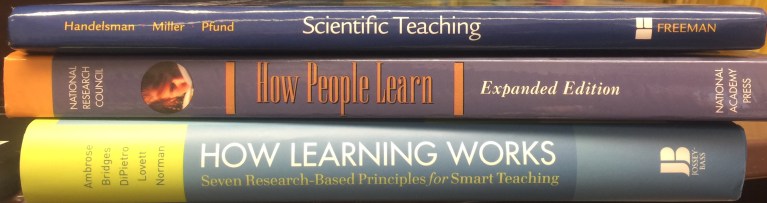
StandardPeople often ask me what they might to read to get started with teaching science at the college level — or they ask for concrete suggestions about how to do active learning efficiently.
So, here are some book suggestions. Continue reading

What is the least worst LMS?
StandardI admit it, I don’t like using the LMS. (The LMS is “learning management system” — the software that universities use for the online component of courses.) My campus is a Blackboard campus. I’m not a fan. Maybe that’s because I haven’t used it a lot. Continue reading

Recommended reads #125
StandardThis case study of search committees demonstrates how downright sexist conduct is pervasive in academic job searches.
When it comes to time management in academia, here is some highly condensed wisdom.
It’s well established that student evaluations of teaching performance are gender biased. Based on that fact, then, here’s an intriguing question: Are they illegal? Continue reading
We need more honest talk about prestige and social capital
StandardSome people will go to extraordinary lengths to avoid dropping the H-bomb. (This’ll be a short and less-than-grand post because, well, I’m busy)
Let me recreate a conversation I’ve heard (or been involved in) dozens of times over the years.
“So, where did you go to college?”
“Boston.” Continue reading
When the book reps visit
StandardA couple weeks ago, the students in our department bought lunch for the faculty. It was a nice catered takeout box. I had the Mediterranean Veggie. It reminded me of the time that the students bought us all bagels and coffee, for the departmental office.
But, these meals had a miserable aftertaste. Our students didn’t buy these meals for us out of gratitude. Every student was required to chip in a full day’s wages just for these sandwiches. These meals were brought to us by book reps, who are schmoozing us so that we will choose their textbook. Continue reading
Things I wish other people blogged about
StandardI make a point to post at least once a week. Sometimes the blog posts are full essays, sometimes they’re just a less ordered collection of thoughts, such as this one.
One of the reasons I helped start Rapid Ecology is that I wanted to see a much broader range of voices in this medium. I think it’s great to get a casual perspective from people other than you, and I think in his field, we need more voices. So, I’m thrilled that it’s taken off so well.
I write about a range of issues here, but there are also a lot of things that I choose to not write about here, because it’s not a fit for the site or because it’s not a fit for my own experience. But there are so many things that I’d love to see other people share. For example: Continue reading
Sizing up competing peer review models
StandardIs peer review broken? No, it’s not. The “stuff is broken” is overused so much that it now just sounds like hyperbole.
Can we improve peer review? Yes. The review process takes longer than some people like. And yes, editors can have a hard time finding reviewers. And there are conflicts of interest and bias baked into the process. So, yes, we can make peer review better.
As a scientific community, we don’t even agree on a single model of peer review. Some journals are doing it differently than others. I’ll briefly describe some peer review models, and then I’ll give you my take. Continue reading
Recommended reads #124
StandardWhy I stopped writing on my student’s papers.
Four very practical solutions to make conferences less difficult for scientists who are bringing babies and small children, brought to you by Rebecca Calisi and a Working Group of Mothers in Science. Are you part of an organizing committee? Please heed.
The case for inclusive teaching
The blog The Novice Professor has a lot of great stuff, it’s definitely one to watch. And the author routinely shares great stuff about learning and teaching on twitter. Continue reading
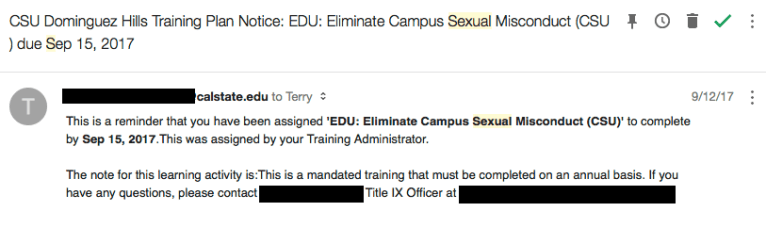
Non-mandatory sexual harassment training?
StandardI’d like to think I’m not a clueless ignoramus when it comes to navigating university bureaucracy, but sometimes evidence gets in the way. Let me attempt to recreate some dialogue from our Academic Senate meeting from last month, as an illustration. Continue reading
Check out Rapid Ecology!
StandardThree months and change ago, I wrote a post about how academic blogs have very few voices, and we need public blogs where everybody can have a voice.
And then I got to work. With a crack team of volunteers, most of whom are early career scientists, I’m glad to point you to Rapid Ecology. Continue reading

The hypocrisy footprint
StandardImage: A sunset over probably Iowa, viewed from a carbon-emitting airplane
Last week, an offhand remark in a radio story really transformed my thinking about how we are all hypocrites. Continue reading
Powerful truths about sexual harassment
StandardToday, the House Committee on Science had a hearing about sexual harassment. The whole thing is worth your time, but holy moly there were two moments in particular, 6 minutes of your time, that I feel compelled to share:
First, Dr. Kate Clancy delivered testimony on what sexual harassment is, and how deep and pervasive the problem is, and how our academic culture allows it to persist. The entire testimony is filled with mic-drops and moments of searing truth, I can’t even pick a few pull-quotes because the whole thing is golden:
When you are asked to review a paper that you’ve already reviewed for another journal
StandardThis situation can be a bit of a conundrum if you haven’t dealt with it.
Let’s say you review a manuscript for the Journal of Scientific Stuff. Ultimately, that paper ends up getting rejected by JSS. Some time goes past, and you are asked to review what appears to be the same manuscript, by the editor of Proceedings of Scientific Stuff.
What to do? Continue reading

Recommended reads #123
StandardEfficient teaching: Crowdsourcing class notes
StandardI’m writing this entire blog post to share one cool tip: Continue reading
How often are you cited correctly?
StandardSometimes, I get cited incorrectly. I have some feelings about this. Continue reading

Recommended reads #122
StandardThis is wonderful: NSF is now requiring awardee institutions to report findings of sexual harassment by personnel on NSF grants, and to report when individuals are placed on leave related to an investigation. And they are prepared to take serious measures in response. Here’s the NSF statement, and related stories published by Nature and The New Republic. (How bout rounding up a few PIs and your Title IX coordinator, and schedule a meeting with the person in charge of post-award at your university, to make specific plans for implementing this, including the reporting mechanisms and training that NSF expects.)
Intellectual property law 101 for academics Continue reading
When the trash gets passed
StandardThe term “passing the trash” is commonly used to describe when sexually abusive K-12 teachers and priests get quietly shifted to new schools and parishes, where they assault more people.
We also use this term in higher ed, when professors who commit sexual misconduct are allowed to slink out of their universities with the approving silence of their administration, only to harm more students in their new jobs. Continue reading
Science has an atheism problem
StandardAn alternative title for this post might be: Atheism has a jerk problem. Continue reading

Recommended reads #121
StandardThings that are useful to know when you’re teaching with active learning
What I’ve learned from my 4 year old (By the way, I’m psyched that Viet Thanh Nguyen is now a contributing opinion writer for the NYT, I’ll be keeping an eye out for his future pieces)
If you love teaching, a research university might be perfect for you
Standard“I like teaching, and I didn’t want the same stress-packed life as the professors in my PhD program, so a faculty position at a teaching-focused university is a good fit for me.”
I’ve heard something like this more times than I can possibly count from grad students, postdocs, and professors. It’s something that I used to say myself. But now I think this statement is built on two big fallacies. Continue reading
What a good recruitment weekend looks like
StandardWhat should departments do when running a grad student recruitment weekend — and what should they avoid? Continue reading

Recommended reads #120
StandardStart the first day of class by telling your students an engaging story.
The Biology Department of San Francisco State wrote a detailed academic paper about a successful department-wide professional development plan to improve their teaching.
Scientific knowledge is drowning in a flood of research. Continue reading
 Small Pond Science