I hope you all are safe, well, and that your loved ones are cared for. I’m not positioned to give you a brilliant or witty post, but did want to share some reads.
Oh, and definitely not least: Stephen Heard’s new book is now out! “Charles Darwin’s Barnacle and David Bowie’s Spider: How Scientific Names Celebrate Adventurers, Heroes, and Even a Few Scoundrels” (amazon|indiebound) My copy has still yet to arrive! This definitely looks fun.
Yesterday, I was reading how some K-12 districts were switching to a pass/fail model for this semester. Two beats later, I thought — hey — this is something that looks important to college students too.
This morning, I saw that higher ed twitter has been talking about it, and many universities have already taken action. And it’s part of the discussion in the slack channel for my department (which after some years, is no longer moribund). So, this is a thing (and it’s not my idea), and if your institution isn’t on it, perhaps this would be a moment for some leadership and bring it up with the policy makers?
Here is a rather substantial list of sites with online laboratory modules for a great variety of STEM disciplines. If I was teaching a lab this semester, and was compelled to teach online on very short notice, I’d probably be spending hours combing through what’s available. It looks really useful for this moment that we are in. It was assembled by folks on a POD Network listserv*.
It looks like folks who have more than a tangential relationship to the Pruitt affair are now being quite mum, as Dr. Pruitt has done gone lawyered up and sent out a bevvy of nasty letters bearing what I imagine is letterhead from a very scary law firm. I only know about this from this news story that came out in Science yesterday. The kicker in that article, a quote from the EIC of Ecology Letters, pretty much sums up the slowly unfolding situation: “I don’t think it looks promising that a simple, nonfraud, compelling explanation will surface.”
Some of us have already stopped holding classes in person. It looks like a lot more of us will be making the shift online very soon, as the COVID-19 outbreak will continue to expand in the United States.
We have a couple months left in the semester. I don’t think anybody knows whether campuses that go to online teaching will switch back to campus before the semester is over? It looks like we need to be prepared to stay online through the end of the spring.
How can an incident like this happen? Of course, let’s be clear, it’s racism. The actions of this professor are symptomatic of deep problems in higher education and our country.
From a pedagogical perspective, how is it that a highly experienced professor could make such a poor decision?
I think one of the sillier rituals in academia is composing cover letters to accompany our manuscripts when we submit them to a journal.
We stopped submitting manuscripts by post about 20 years ago. You’d put three copies of your manuscript into a manila folder, and cover these manuscripts with a letter, as a form of explanation. “Hi, I’m sending you these manuscripts because you’re the editor and I’m submitting it to your journal.” And while you’re at it, it doesn’t hurt to write few lines why you think the paper is exciting and relevant for the audience of the journal.
But now that we’re not doing manuscript reviews by post, why are we still doing cover letters?
It often takes a large number of applications for highly qualified applicants to land a tenure track position. Let’s say that many universities signed on to a common application system for faculty applications. What would that look like, and how would it change the job market and the outcomes of searches?
I taught biostatistics for several years. You know what was one of bigger challenges of teaching that class? Finding articles to use in class that had straightforward application of the statistical principles that we were learning in class.
Last week, I had a conversation with someone who was mildly cheesed off about how some universities make tenure-track job offers that expire within a couple weeks. If you don’t really understand how and why this goes down, please let me explain.
But if you don’t want the explanation, I’ll spare you the cognitive load: If you don’t want to be in a position where you might have to accept or decline a job offer in a window of a couple weeks, just save everybody the trouble and don’t apply for tenure-track positions at universities that are not highly ranked.
A few weeks ago, I was hit by an unexpected gut punch. It was an email from a trusted colleague, obliterating trust to smithereens. It has taken me a while to recover my breath. I’ve been in the process of rethinking who and how I trust. What should it take for a person to be granted trust, and what does it take to maintain or lose that trust?
Shortly after news of the Pruitt affair broke last week, it didn’t take long for a lot of us to ask ourselves: Can we trust all of our peers to be ethical? When our professional success, and the success of our students, rides on successful collaborations, what is the pathway to building successful collaborations? As this worry has been occupying far too much of my mind for weeks now, and current events have triggered discipline-wide introspection into the same question, I don’t feel so alone.
If you’re not one of those folks who pays close attention to social media and the lil’ blogosphere of ecology and evolution, it’s possible you haven’t heard about this, yet. But I imagine you will, soon enough. Before this ends up in the pages of Nature and Science and the New York Times, I have some thoughts I’d like to share (though not in any particular order), but first, I’ll give you the lowdown.
My head spins when I see science opportunities designed to increase the diversity of applicants to graduate STEM programs, they are designed to exclude students who just graduated. I think this filters out a lot of the target population.
Low-income students receive less support as undergraduates, so it’s harder for them to make the transition into grad school while they’re enrolled as undergraduates. Then, once these students graduate, they get even less support!
It’s been a whole month since the last one of these? How about I prune this down to the gems, how about that?
You want to write for the public, but about what? This is a short and very sweet guide to being an academic in public. It does a great job of explaining how you need to talk outside what you have been trained to think what your lane is.
Welcome back to a new semester! I don’t know about you, but I am often generally unpleased with how office hours go. Either there’s the crickets/deluge dynamic, or the students who really think would most benefit from coming in don’t. I don’t have any magical cures, but I have heard a variety of suggestions about switching up office hours to make them more accessible. Maybe some of these are new to you, eh?
-Don’t hold office hours in your office. Hold them in a more public location, such as a campus coffeeshop, or a non-quiet part of the library, or (when the weather improves), outside. Why do this? Because professors’ offices are intimidating and they’re our territory. Also, because some students have had bad experience interacting privately with professors, meeting in public is kinder to them.
This is central concept for science outreach. Some interactions today have led me to wonder whether we are all on the same page, so let me ask you:
Early in the days of this site, I started eavesdropping on conversations among experienced science communicators. I kept hearing over and over that we needed to kill “the deficit model” with fire. And then I did a bit of reading, and it was easy to see what they were seeing. For professional science communicators, it’s frustrating to see scientists who dabble in outreach using the deficit model, because they’re just getting it wrong and fouling the environment.
I’m not an academic expert in science communication. So when it comes to learning more about the deficit model more formally, I’ll point you to the academic literature. And wikipedia.
I see the irony that I’m here to spread word about the ineffectiveness of the deficit model by simply informing you about it with evidence. According to the deficit model, this isn’t expected to work for people who are simply browsing this blog periodically. So, what am I supposed to do?
Science communication experts tell us that we need to use narrative, and put the stories first that engage people with feelings. This is what the evidence tells us.
So if I’m really trying to convince you to drop the deficit model when you talk about science with non-scientists, I really should be doing this by telling a story. And I do have a great story for you! About how when I used the deficit model, it failed miserably! It’s a hilarious story! (Here’s the link to the post with the story about ants and snakes, which you presumably haven’t seen if you are new to small pond within the past five years).
I genuinely think that our understanding of the ineffectiveness of the deficit model is important for the future of our species, because collective action on climate change requires more of us to become passionate about switching to a clean energy economy. And we’re not going to get there by teaching climate science.
When you’re talking about climate change, feel free to mention the evidence, but more importantly, tell stories about how climate change has affected you and people you love, and find out how climate change is affecting the people you’re talking with, and tell that story. If you’re discussing the evidence, there are so many compelling stories about how people have uncovered evidence of climate change and how we are causing it, such as the folks behind the Keeling Curve. And the people being impacted by droughts and floods and fires and wars over access to water and hydrocarbons. For people to believe that rapid action on climate change is necessary, change must come from the heart, which means we’ve got to speak from the heart.
We contain multitudes. Our courses should reflect this.
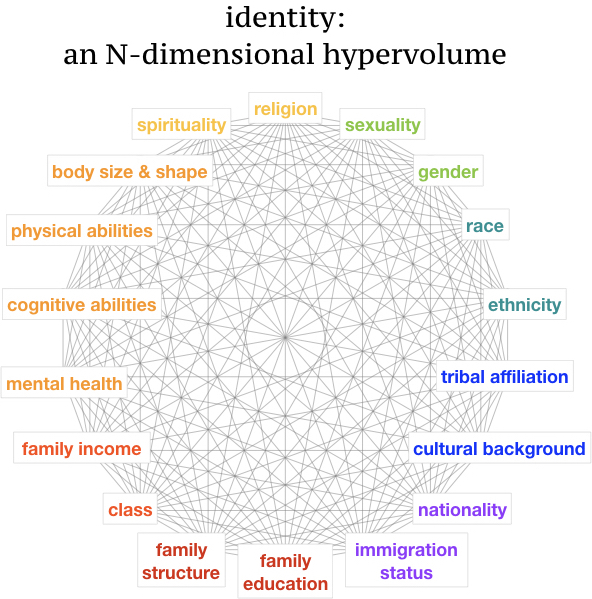
We contain multitudes. Like an ecological niche, a person’s identity is composed of infinite dimensions that make up a person or group’s collective identity space (Figure 1). However, in science – a discipline that has historically valued objective and unbiased contributors – students and researchers often find it difficult to freely express their identities. Being open and valued because of our identities enhances social justice, makes us more productive, and leads to innovation. Yet, because science is embedded in a biased society, our scientific community is often unwelcoming to people from many backgrounds. Women, people of color, the LGBTQIA+ community, and likely many other groups (that we lack data for) are marginalized or underrepresented relative to their global populations.
Figure 1:A person’s identity, like an ecological niche, is comprised of infinite dimensions, some of which are included in this depiction of “identity space”
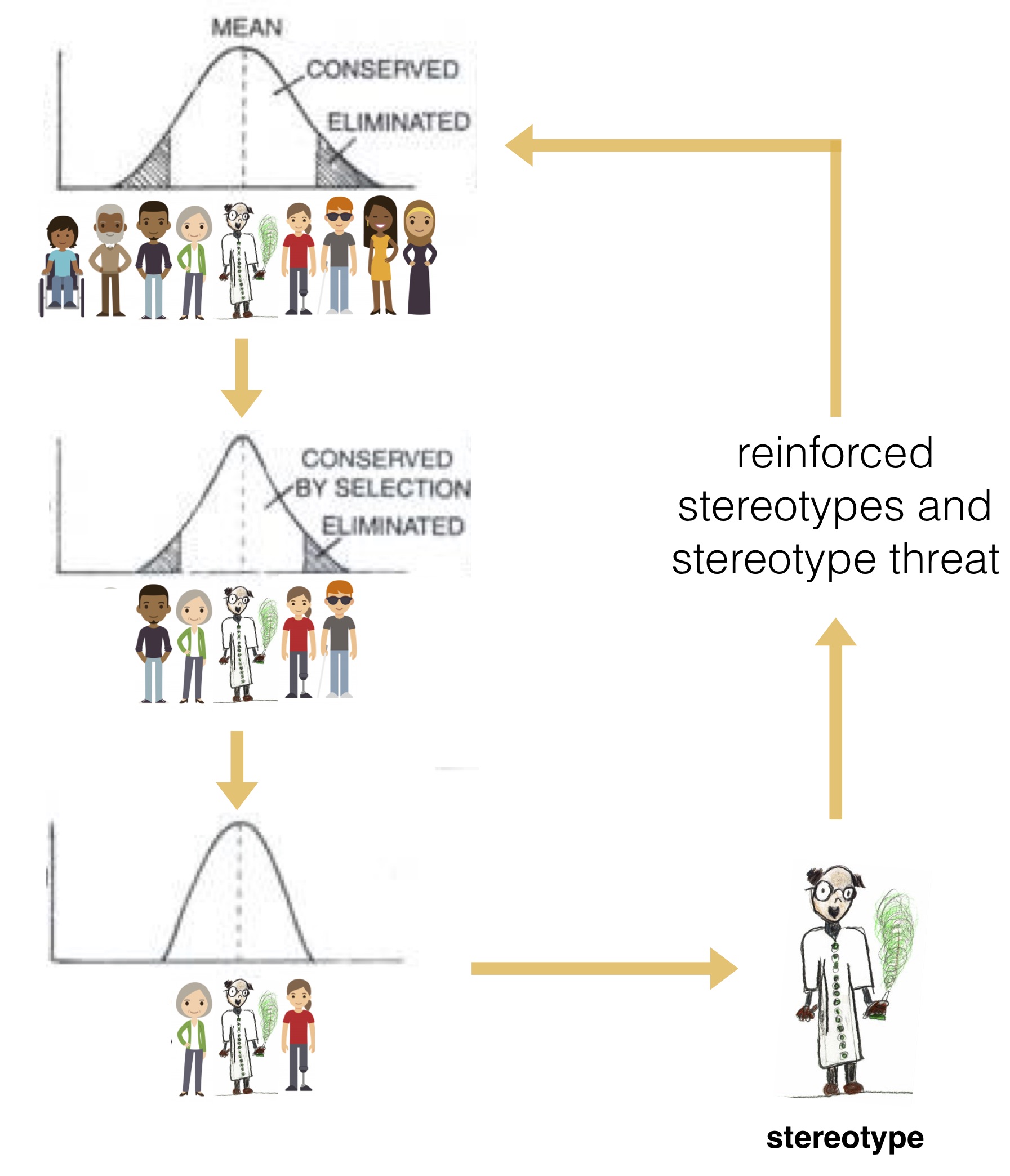
Who is doing science goes on to influence the research questions that are pursued and how results are framed. This affects whether marginalized and underrepresented students find science relevant to themselves, which also influences recruitment and retention. For example, biology has been weaponized against marginalized groups throughout history and, in many cases, still is today. Students that see these harmful biases may be alienated from pursuing a career in biology or doing research that is inclusive to their identity. This perpetuates the stereotype of who scientists are and what kind of work they can do, thus contributing to a cycle of exclusion (Figure 2).
Figure 2: Explicit and implicit biases act as a selective force against students from underrepresented groups (akin to stabilizing selection). The low diversity of scientist role models has created the scientist stereotype which further fuels the selective force against students from underrepresented/marginalized backgrounds through mechanisms such as stereotype threat. Made with figures modified from Western Michigan University, Fermi Lab, and Your Article Library.
It’s typically exciting to find out that your hypothesis is wrong – and I was wrong! Here’s my back-of-the-metaphorical-envelope analysis of the poll that y’all completed a few weeks ago.
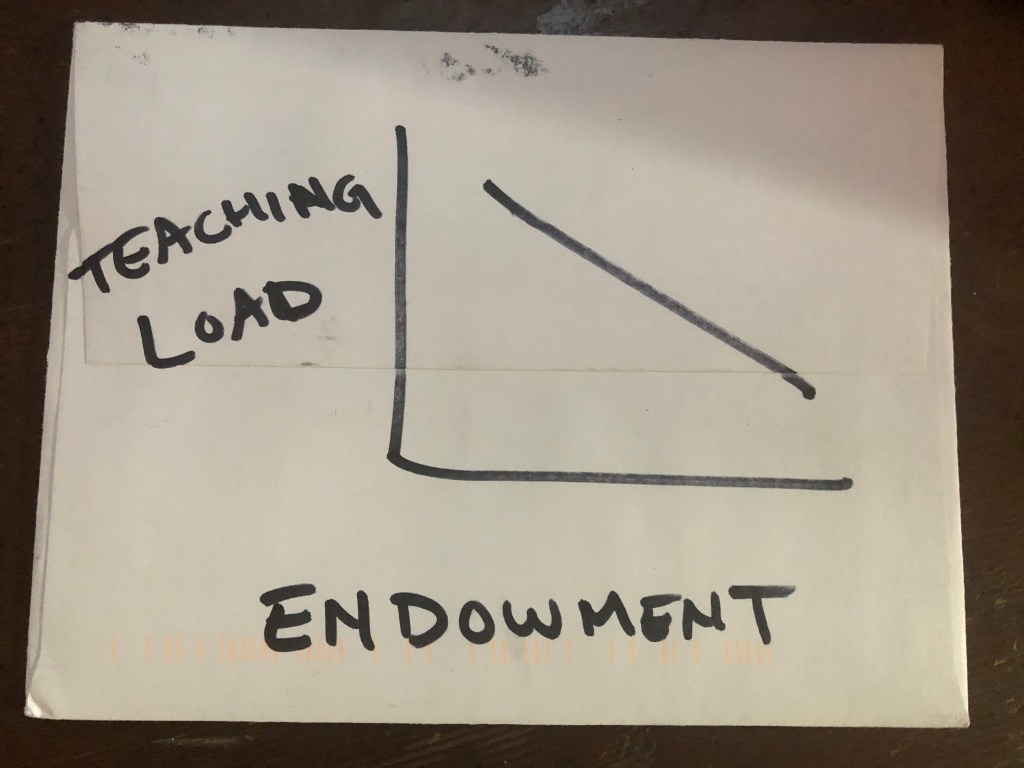
I predicted that teaching loads were negatively associated with endowment size. I expected that the more money an institution had, the less that the faculty taught. I also thought that this effect would be most robust at small liberal arts colleges (SLACs). But, nope, that’s not the case.
Of course, institutions with more money have lower teaching loads. I have a specific hypothesis: Endowment size predicts teaching loads, like this:
But is this true? If it’s true, how true is it? How much variance is there? Does enrollment matter, such that it’s endowment-per-student? I’d like an answer to these questions, in the realm of non-PhD-granting institutions. If you have a minute, and you’re faculty at one of these places, could you humor me by filling out this quiz? If you have another minute, maybe pass it to colleagues at other institutions? The reward will be a post with the findings. It’s embedded below, but if you want a direct link, here you go.
On the other hand, even though our allegedly expect or require us to report all incidents of academic misconduct, faculty generally aren’t doing this. What’s up with that?
I know a lot of people who prevent copies of their exams from leaving their classrooms. I think this is a bad idea.
I understand the motivation. I’ve taught several courses on a repeated basis, every semester or every year, for many years. Writing good exam questions is difficult, and it’s nice to be able to re-use questions.
But even though I understand the motivation, I also see a few major problems.
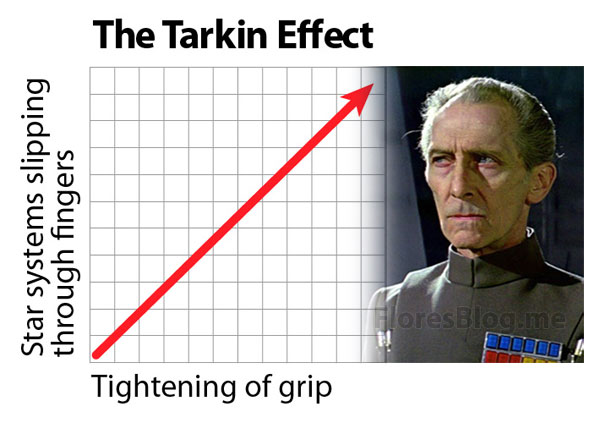
1. It doesn’t work. Even if you try to lock down your classroom as much as possible, copies of your exams are going to be getting out there. Trust me on this. It takes just a moment or two to take photos of an exam. Even in the days before everybody had a miniature camera or two in their pockets, exams got circulated. And the more adversarial you get about locking down copies of your exam, the more you emphasize their value to students, and the more these exams will circulate (which is the Tarkin Effect).
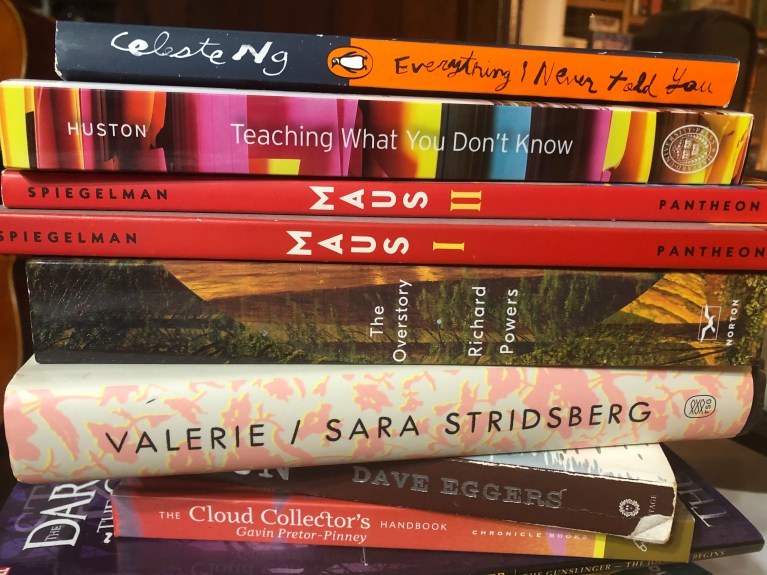
If you haven’t figured this out, these photos have no correspondence to the content of the posts (usually), they’re just bookshelves, often mine.Continue reading →
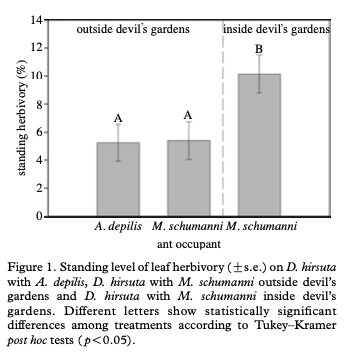
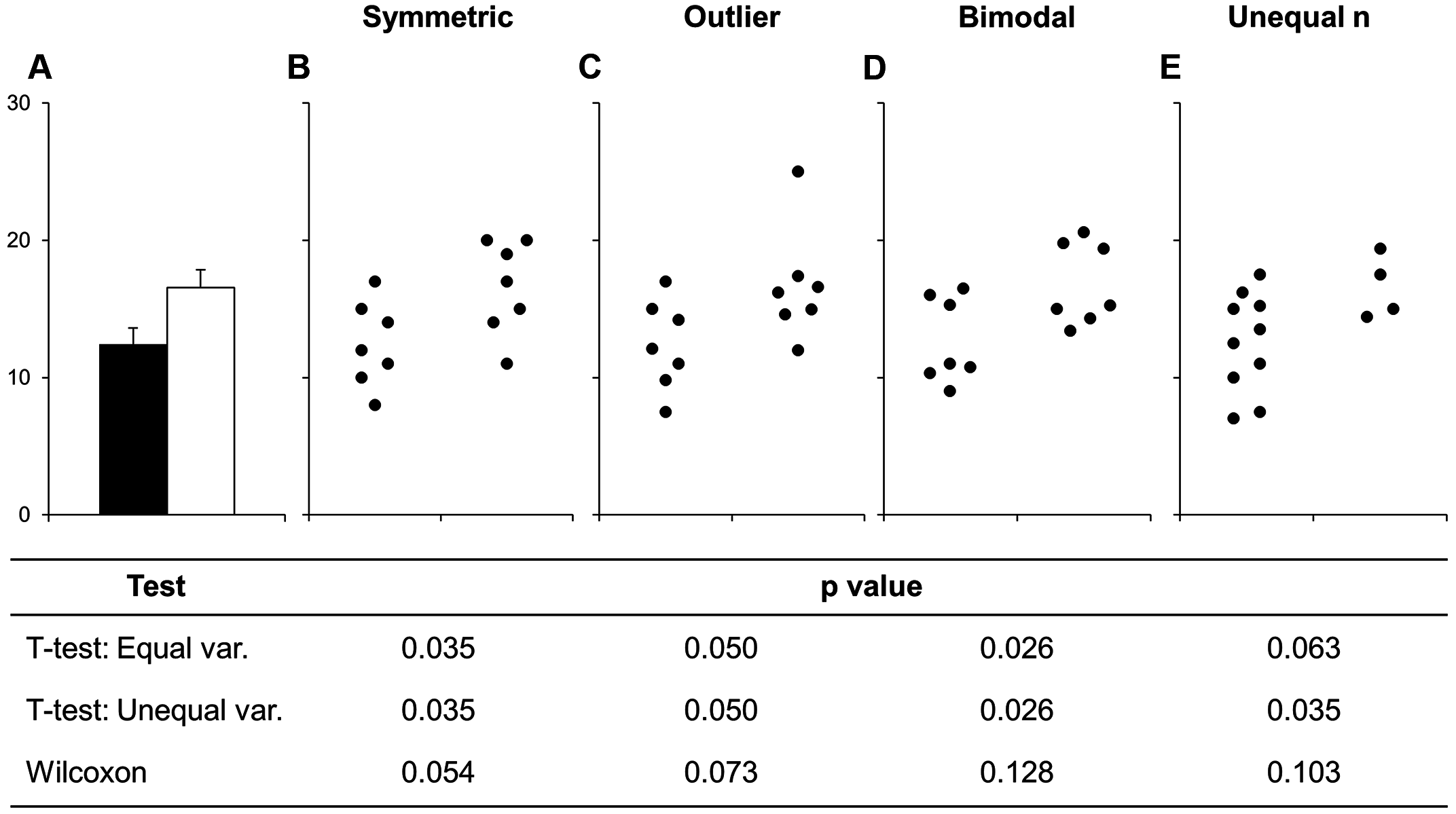
Bar graphs tell us the mean, and some kind of measure of variance (standard deviation? standard error? confidence interval?). And that’s it. Continue reading →
The very short explanation is that I’ve decided it doesn’t matter that much, and I can use the revenue to support student researchers, and perhaps pay people who want to write for this site. If it bugs you, then please consider using an adblocker. Continue reading →





 Small Pond Science