
If you keep your door open, do your students know that this means that you’re available for a conversation? Continue reading
Author: Terry McGlynn
Preparing for the challenge of 2018
StandardAt this writing, I’m halfway through a break to rest and recharge. It’s been quite pleasant. Continue reading
Small Pond Science’s Greatest Hits of 2017
StandardHappy Christmas! I hope you’re having a pleasant break.
This is the 90th post of 2017. It’s been a horrible year for scientists and academics based out of the US, and for democracy in general. But Small Pond Science continues to grow. Here’s a look at the Top 5 posts of 2017. And also 5 more posts that we’re proud of, that didn’t make it into the Top 5. Continue reading

Recommended reads #119
StandardHere is a Digital Studies 101 lab, to guide students in a direct exploration of the Dark Web.
This three-part story about data storage is amazing and important. I had no idea how much of the data being stored today is still on magnetic tape, nor an idea of the consequences.
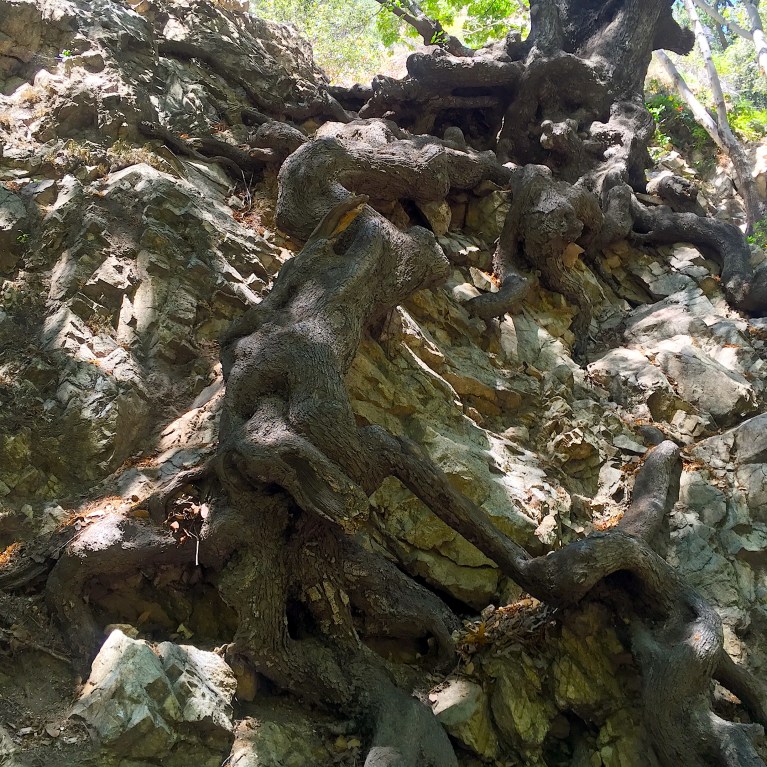
Academia selects against community ties
StandardAcademics tend to harbor a conceit that our job is really different from other jobs.
This might not be as true as folks like to believe, though we have flexibility and freedom to do almost whatever we want. Another thing that makes us really different from most people is that we move around a lot. Most of us are close to or well past 30 before we move to the city where we’ll set down some serious roots. And, there’s a decent chance that we’ll move again.
I think one consequence of academics being so mobile is selection against involvement in the local community. Continue reading
Sending campus exchanges the other way
StandardThere’s a bunch of funding from federal agencies to send faculty at teaching institutions to leave their own labs, to work temporarily in other research labs. Continue reading
Recommended reads #118
Standard
Is grading an effective teaching practice?
StandardGrading is a necessary evil. Continue reading
On the need for public academic blogs
StandardAnybody can set up a blog and write a post, yet the reach of these posts varies dramatically.
Let’s say you have an interesting or important idea for fellow ecologists. For example, you want to report on a great symposium, or just read a really cool paper with a big idea and want to discuss those further. Or you want to review a book, or share safety tips for fieldwork, or write more broadly about a new paper of your own. Or perhaps a response to an absolutely horrid op-ed piece that you read in the Washington Post last week. You’re not going to write these in a peer-reviewed journal, but what would you do?
At the moment your options are:
- Post an email to ecolog-l
- Write on social media
- Write a post on your personal site
- Be friends with someone who runs a blog
- Do nothing
I think there’s a missing option, and I’d like to fix this. Continue reading

Recommended reads #117
StandardWhen reviewers know the identity of authors, it turns out that famous names, prestigious universities, and top companies are far more likely to have their papers accepted. This effect was measured in an experiment, and it’s astounding. This is the new paper I will point folks to when they say that single blind or “open” review is more fair. It just isn’t.
A profile of the few people remaining in the US who depend on iron lungs to stay alive, a window into the history of manufacturing, medicine, and our failed social safety net.
By Scientists For Science — The Scientific Society Publisher Alliance. Scientific societies are designed to represent the interests of our own communities, and this new organization is designed to promote society journals. Continue reading
The long game against an anti-science, anti-education government
StandardLike you, I’m exhausted from the political assault on science and education in the United States. But please, stay with me for this little bit, at least when you can find the energy. Continue reading
What are the top 100 must-read papers in ecology?
StandardWith the internet currently atwitter about a new paper in the upstart journal Nature Ecology and Evolution, I have a couple specific thoughts that I’d like to share that go beyond whatever character limit twitter is using nowadays. Continue reading
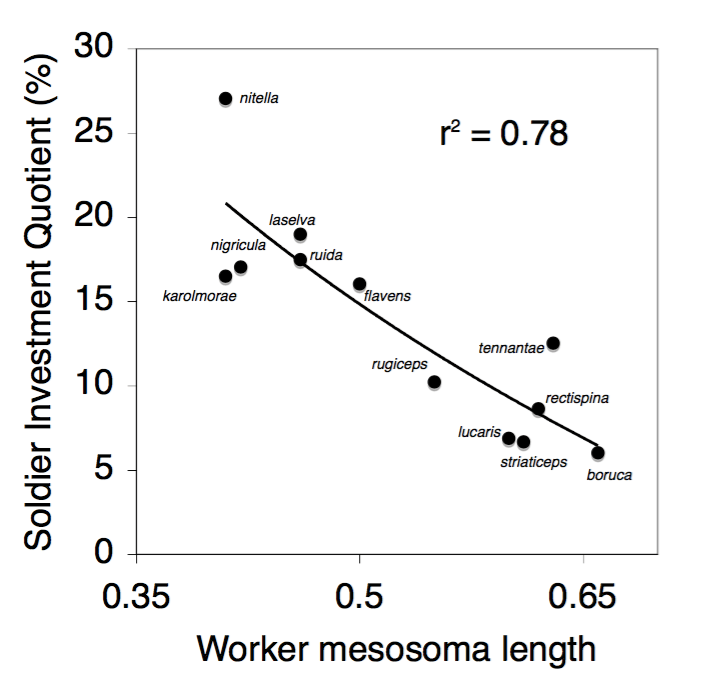
Starting experiments with a “nut fig”
StandardThe term “backwards design” is often applied to curriculum design. If you want your students to learn a particular thing, you start with identifying what that outcome should look like at the end of the semester. Then you design your class backwards from that outcome, to make sure your students have a way to get there.
I think we should be talking more about backwards design when when it comes to statistics and the design of experimental and observational research.
Journalists call the key passage of each story a “nut graf.” Shouldn’t we have a “nut fig” for each experiment, and know what the axes and statistical tests will be before we run an experiment? Continue reading
Recommended reads #116
StandardUnderstanding student resistance to active learning
9 myths holding you back from stellar slides. Not as clickbaity as it sounds.
Deserting students after graduation
StandardThe moment after students graduate, many resources and opportunities become unavailable. This is a problem. Continue reading
The BA/BS distinction is BS
StandardIf you have a science degree, does it matter if your diploma says BA or BS? Nope. Continue reading

Recommended reads #115
StandardAcademic blogging as “inreach”
StandardPeople have been saying “blogging is dead” consistently for the past decade. Yet, fellow readers, here we are, on this blog. Individual blogs retire, yet academic blogs are thriving as much as ever. Blogs have evolved. Continue reading
Time limits and test anxiety
StandardWhen the clock is going TICK TICK TICK, it can be hard to think clearly, because you’re anxious about the clock.
Math anxiety is well understood, and no small part of this comes from the pressure of timed tests. Ultimately, some people take tests faster than other people. I would hope that you want your tests to measure how much students have learned, not their ability to take tests under pressure. If this is the case, then everybody taking the test needs to feel that they have adequate time. Continue reading
Recommended reads #114
Standard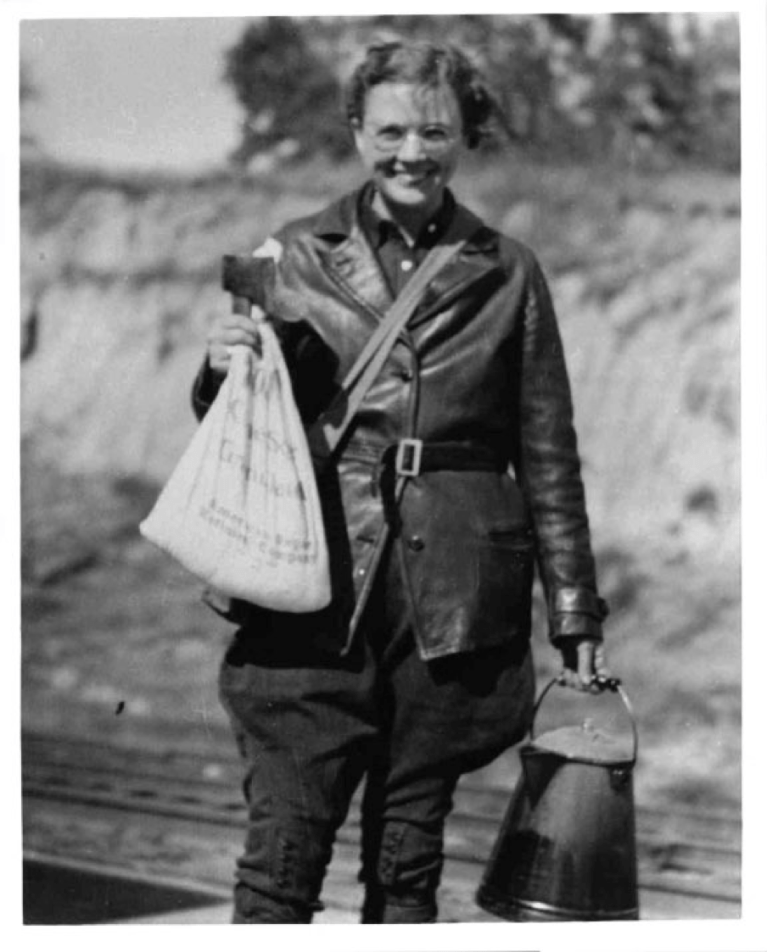
Mary Talbot, pioneering ecologist and myrmecologist
StandardAda Lovelace Day lands on Tuesday, 10 October. Here’s a post to honor Mary Talbot. She was a pioneer whose contributions were undervalued in her time, and that condition has persisted to our own time. Here’s a small attempt to rectify that situation. Continue reading
Are REU programs as amazing as their reputations?
StandardI know a lot of scientists who got their start from an REU (Research Experiences for Undergraduates) program. One summer as an REU has the potential to be transformational.
Advancing science in the US (and elsewhere) requires us to fund undergraduate research, and ensure that undergraduate researchers have thoughtful and attentive mentorship. We already spend a lot of money on training students – and I’d like to make sure that these efforts have the biggest bang for the buck. We are focused on broadening representation, but we haven’t seen the changes we need. Can we make REU programs* more effective? Continue reading

Recommended reads #113
StandardThis is the best explainer ever about social class in universities. Please read and share, especially with the graduate admissions committee.
Service as leadership
StandardLast week, I was at a workshop and a fellow participant made an observation that really caught our attention. They explained:
In universities, faculty usually have three types of duties: “scholarship,” “teaching,” and “service.” In their national lab, the job doesn’t include service. Instead, all of the stuff that we would call service, they call “leadership.”
Service is a bad thing. Leadership is a good thing. But what is the difference between university service and university leadership? Maybe if we called it “leadership” instead of “service,” it might be perceived as something more valuable and worthwhile.
At moment, at least for me, a cranial lightbulb turned on. Continue reading
What does “undergraduate research” mean to you?
StandardI’ve seen people talk past one another when discussing undergraduate research. This is usually because each person in the conversation has a radically different notion about what constitutes undergraduate research. Continue reading
Recommended reads #112
StandardCan you pick the bees out of this lineup? No really, can you?
The NSF-DEB blog has a post about the new guidelines for graduate fellowships, which have a deadline next month.
President Trump’s War on Science. This is an important comprehensive editorial from the Editorial Board of the New York Times. Continue reading
Recommendations for making science inclusive, and how to talk about it with others
StandardYou’re reading Small Pond Science right now — but a lot of our colleagues don’t read anything resembling a blog. So, for them, I’ve just published a short peer-reviewed paper about how this site addresses a common theme: how to promote equity and inclusion, especially for students in minority-serving institutions.
Think of it as a blog post, but with a lot of useful references in peer-reviewed journals and with the bright and shiny veneer of legitimacy from journal that’s been in print for more than a century. And hopefully fewer typos. Continue reading
Deadlines for undergraduates in research
StandardStudents might not be aware of the time horizons of applications for opportunities. Oftentimes, these things need more advance planning than expected.
Here I suggest timelines for undergraduates doing research and applying to grad school, particularly within the United States. Please make sure that students working with you are aware of these deadlines.
Applying to graduate school
You should be deep into grad school applications at the start of the Fall, one year before you plan to start grad school. Continue reading
Not waiting for the dinosaurs to retire
StandardI hear this a lot: “Bad behavior in academia comes from the guys who have been around for a long time. Times have changed, and they’re stuck in the old ways. We can’t change these guys, but they’re on their way out — and once they retire, things will get better.”
In some narrow cases — an isolated department here or there — this might be true. But as a general principle, I think it’s deeply mistaken. Continue reading
 Small Pond Science