“Lessons from a postdoc gone wrong” makes sense in other domains as well.
A year of being a science mama
How can I help to promote diversity without relinquishing any of my power? * chef kiss * Continue reading

“Lessons from a postdoc gone wrong” makes sense in other domains as well.
A year of being a science mama
How can I help to promote diversity without relinquishing any of my power? * chef kiss * Continue reading
Are you preparing for the new semester? Are you sitting in the position of academic freedom guaranteed by tenure?
Here’s what you might consider to be a radical suggestion, though it’s fully reasonable: Ditch exams this semester.
That’s right. Just don’t have exams. Assign grades using other methods. Continue reading
Student evaluations are here to stay. And that’s the way it should be. I think universities owe it to students to provide a structured opportunity to provide feedback on classroom experiences. It’s not a matter of “customer service,” but instead, of respecting students and hearing what they have to say. But the way evaluations are typically structured, they facilitate inappropriate application and interpretation, and they don’t ask what we should be asking. Continue reading
Collectively, as a scientific community, we have so many blind spots. I remember running into one of these blind spots about 15 years ago. Continue reading
That was a restful two weeks. Now, back to business.
Why do scientists reinvent wheels? (I think in ecology, a lot of concepts have a periodicity of about 30 years. And usually when an idea resurfaces, it’s not done with adequate awareness of the older literature.)
A few reality checks for internal candidates Continue reading
I can’t say that 2018 has been a good year, but it has been a good one for Small Pond Science. Here’s a list of the most-viewed posts written in 2018:
9. When you are asked to review a paper that you’ve already reviewed for another journal
8. On the breadth of faculty job applications
7. Actions required of men to advance gender equity in academia
6. What if the PI recommendation letter is missing or is bad?
4. Science has an atheism problem
3. Reimbursing students is not okay
2, Updating pedagogy for the mobile phone era
1. Let’s stop saying “native English speaker” in reviews
In a couple days, I’ll start winding down for the holidays. I hope you have a restful break.
If you search up the phrase “power of small teams,” you’ll find lots of conventional wisdom.
I just would like to say, to all of that conventional wisdom: Yeah. Right on. Yup. And there apparently is a substantial body of academic research on the matter, too. Continue reading

Last week, I got a request for some advice, and thought I’d share a version of my answer with y’all here. Continue reading
I recently read through some of early posts on here. I’ve been at this for over five years now, and I’ve evolved over that time. (As I hope all people evolve!) I’ve learned quite a bit, and I do things differently in a variety of ways.
One of the things I’ve noticed is that I have steadily shifted a lot of the terminology that I’ve been using for topics in the practice of science, and teaching, and higher education. Continue reading
The pipeline metaphor has a lot of problems. In STEM careers, people come from a wide range of backgrounds, receive undergraduate and graduate degrees, and are bound for a wide variety of destinations. A path into a STEM career shouldn’t have to be linear, so a pipeline doesn’t make much sense.
However, I get why people like to use the pipeline metaphor. Continue reading
Cat Hicks reflects on years of volunteering to edit grad school application statements. Huge lessons to be learned from her.
NSF has removed PI caps on proposal submissions in BIO.
Alan Townsend describes why he left a top research university to help lead a small liberal arts college. Continue reading
When I was a postdoc and looking for faculty jobs, I harbored a common misconception about faculty jobs. Even though my mentor definitely schooled me well in advance, it took multiple years on the job for me to get a clue.
I was at a conference this week, and chatted with a lot of folks about career stuff. The misconception that I used to have kept coming up repeatedly from others, so I’d just like to douse it here in the open with a wet blanket. Continue reading
Yesterday, I gave a talk at the at the Entomology conference, and I’d like to share with you what I had to say. Continue reading
Academia is a cult (I don’t agree with everything in here but there’s a lot of what people call food for thought)
This weekend, I had an Experience. For the second half of Saturday, I went down to San Diego to crash the Society for Neuroscience conference. I visited with and learned from the #MeTooSTEM folks, and I got to meet so many wonderful people in person who I’ve only known from twitterbloglandia. I’d heard about SfN before, of course, but never had the occasion to go because, well, the stuff at this meeting is way out of my wheelhouse.
Anyhoo, let me tell you about SfN. As soon as I walked into the poster hall, I was like ZOMG. HOLY MOLY. WHAT THE WHAT. Continue reading
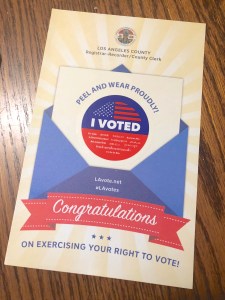 I’ve heard about some folks who are planning to give extra credit to their students for providing evidence that they voted.
Please don’t do this. Continue reading
I’ve found that I’ve learned a lot from twitter. It’s given a window into the lived experiences of others. And hopefully it’s gone the other way a little bit as well.
I see so many useful and/or interesting things on there, and so few of you are on there yourselves. Instead of saving them for recommended reads, here’s a new tack I’m trying out. Over the past few days, I’ve been bookmarking a few highlights to share with you here. And here they are. Continue reading
I’ve talked to a lot of talented undergraduates who have been in search of summer research opportunities, but end up not having any options available.
Doctoral programs expect undergraduate applicants to have meaningful research experience. This might not be on the application checklist, but it’s essentially a requirement. That means if we’re trying to be equitable about access to graduate education, that means we have make sure that access to undergraduate research experiences is equitable. Continue reading
I have traveled here from the present to warn you about global warming!
A good guideline for writing reviews.
Surprise, surprise – a study looking at tenure and promotion criteria didn’t find that there’s much value placed in community engagement. Continue reading
At a conference earlier this year, one of my science heroes was on a discussion panel, and was asked what steps matter most when fixing the gender equity problem in STEM. She answered: “The single most important thing we can do is get men to change their behavior.” Continue reading

You might remember how I’ve said How People Learn is a supreme book that is foundational for evidence-based teaching practices, though it’s almost 20 years old and getting a dated?? Great news! The National Academies have now released How People Learn II. And you can download it for free!
This year’s crop of MacArthur Fellows just came out. As always, some amazing people and work are being supported. I was psyched to see developmental psychologist Kristina Olson (whose work was so spectacular, this year she managed to break the long drought of women recipients for NSF’s Waterman Award).
Why UC Merced is not the “dumb” university. I love this. I looooove this. Continue reading
Science recently published a letter to the editor that that amplified the harm done to targets of sexual harassment. This letter needs to be retracted by the editor, though so far he has not apologized to the victims or issued a retraction. Continue reading
For a good long while now, I’ve been working in catchup mode, like Indiana Jones running from the big stone. I had made a lot of commitments, and following through on them kept me so busy that I didn’t have enough hours in the day to focus on building new things. Continue reading

I had some unanticipated teaching challenges last spring, when I was teaching a couple sections of an intro-level organismal biology lab. I was befuddled, because on the lab reports, students were getting some straightforward questions wrong. Remarkably wrong in an unexpected manner, nearly all with the same wrong answer. Continue reading
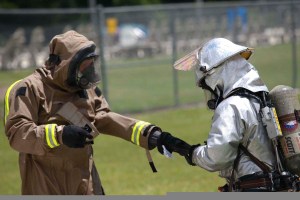 It seems almost inevitable. Good people end up in toxic environments. Once there, they must suffer the consequences, or execute an escape plan, or eventually become the tormentor themselves.
When we choose an academic home, for grad school, a postdoc, or a faculty position, how can we sniff out the places that will undermine us rather than elevate us? Continue reading
 Small Pond Science