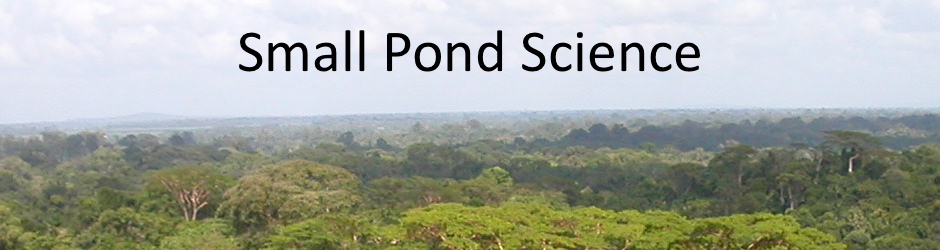
I’ve been working on Penstemon digitalis for a long time now. I first met the plant as a starting PhD student looking for a new system to make my own. I wanted something local (to Ithaca, NY), a plant that was dependent on pollinators with pre-dispersal seed predators (those are insects that lay eggs in the fruit and the young larvae eat the seeds). I wanted to study conflicting selection on floral traits by mutualists and antagonists, not what my dissertation ended up being about but that is a story for another day. In my search for a species to work with, I also wanted something with larger seeds than Lobelia siphilitica that I had just spent my masters cursing over and to be taller than Collinsia parviflora that I broke my back over during my undergrad. Continue reading
Uncategorized
Building a better faculty orientation
StandardI don’t remember my New Faculty Orientation that well. Why is that? Continue reading
Let’s talk about mental health in academia
StandardA few days ago Canada was abuzz with messages about mental health for Bell Let’s Talk day. The social media campaign resulted in Bell donating 6.5 million dollars to mental health initiatives in Canada, which is great. But I’m not sure that one day a year when everyone feels comfortable talking about mental health publicly actually helps reduce the stigma around mental health, one of the stated goals of the Let’s Talk campaign. Any other day of the year, it’s still pretty difficult to bring up mental health issues, so this post is partly an effort to continue the conversation. Continue reading
Taking action at this critical moment
StandardI’m going to have to suspend business-as-usual. Please stick with me, while I connect some dots to explain how critical this time is for the United States, and, as a corollary, for the world. If you’re reading the news, but not yet marching in the streets, I think this is for you.
Right now, everything counts on Americans who may choose to stand up for our democracy. We’ve been cramming for this exam for months. Now we’ve got our number 2 pencil out, and we’re heading into the exam room. Are we going to pass through this test?
There is a lot going on, but I’d like to point out the central issue at hand. Continue reading

Recommended reads #96
StandardI feel a bit guilty that I came upon some cool reads, in the precise moment that my country stopped being a proper democracy. This list is more decline-of-democracy-related than usual. But still even if you’ve had enough of this, there’s enough in here about other things I hope it’s worth your time. In part, because there’s a link in here about how to keep on keepin’ on while still doing your best to resist the the new authoritarian government that has taken over the US.
But I do have things to share, some of which aren’t even about our brave new world.
Just in case you didn’t know, academia.edu is a for-profit venture that exists primarily to gather our information and sell it. Ungood. I’ve stayed away from it for this reason – this article explains how they ended up with a .edu even though they’re not a .edu.
America’s great working class colleges. This is such a great piece of journalism (admittedly I think this in part because it says things I try to say here often and get it better than I could). Here’s the interactive feature that accompanies the article, which I really suggest you play around with – if anything to get an idea about how the institutions that you are personally familiar with compare to others in ways that you might not have seen visualized before. It was an education for me, surely.
This is a good visualization of gerrymandering. Which (I don’t argue here) is specifically how we got into this hideous mess. Continue reading
In teaching, less is more
StandardQuestion: When you’re teaching, how much should you cover?
I propose a couple answers:
Answer A: You shouldn’t cover much, because the more you cover, the less they learn.
Answer B: Trick question! You’re not supposed to “cover” anything! If you teach a topic by just making sure it gets covered in a lecture, then you’re not really teaching it. Continue reading
Good popular books about ecology?
StandardA friend asked the other day about recommendations for good popular books about ecology. Initially, I kind of drew a blank. Which surprised me. Continue reading
Recommended reads #95
StandardIn the United States, a woman died a few months ago of a bacterial infection. This microbe was resistant to all antibiotics available in the US that we were capable of throwing at it.
A paper came out this week, looking at predictors of publication rates among 280 graduate students accepted and enrolled into a biomedical grad program. And — shocker, I know — grades and standardized test scores didn’t matter. The best predictor was the content of the letters of recommendation. You want to know which undergraduates have the greatest research potential? Listen to their undergraduate mentors. Here’s a drugmonkey post about this paper. Continue reading
Knowing something really well doesn’t mean you can teach it well
StandardOver the holidays, I taught my niece how to throw a frisbee with a forehand. It took five minutes, and she totally picked it up. It was awesome. And then we just played catch for a good long while. There may not be a more pleasant thing than throwing a frisbee on warm afternoon in the park with good company*. Continue reading
Lessons from serving on NSF panels
StandardLast year, I served on a couple NSF panels*, and I’d like to share some thoughts. Instead of a coherent narrative, I’ll just give a bulleted set of observations and ideas. Continue reading
Recommended reads #94
StandardAnd their eyes glazed over – how much is tech-related distraction harming learning?
There are many ways to be a publicly engaged scientist
StandardI want to talk about the Who and the How of public engagement.
We should be bringing science to the table with people who aren’t in the market for science. A lot of outreach is preaching to the converted, and that is a valuable form of service. But we also have the ability — and perhaps an obligation — to make science a part of everyday life for a society that just doesn’t think about science on a regular basis. Continue reading

Recommended reads #93
StandardAn argument for the funding of basic research makes it into the Wall Street Journal.
One way to teach critical thinking is to take a historical issue (in history, science, whatever) and look at the debates surrounding the issue by the people of the time, and then asking, “Who was right?” (I found this via Tavish Bell’s twitter account, where I see consistently interesting stuff about higher ed.)
Summer research internships for professors
StandardA lot of federal agencies want to enhance the research environment at primarily undergraduate institutions and minority-serving institutions. Not all efforts hit the mark.
Consider the summer faculty research internships that a variety of agencies run. Continue reading
How many rejections should scientists aim for?
StandardEarlier this year an article on aiming for 100 rejections a year in literature was being passed around. The main idea is that by aiming for rejections, rather than accepted things we’re more likely to take risks and apply broadly.
Since reading that article, I’ve been pondering how many rejections I should aim for. What is a good number for a scientist? Continue reading
NSF Graduate Fellowships and the path towards equity
StandardWhen I visited the SACNAS conference some weeks ago, I spent most of my time in the exhibit hall, chatting with students at their posters and scoping out the institutional recruitment tables. A few organizations had primo real estate, with a large amount of square footage right by the entrance. They had a small army of representatives, always busy with students. The ones that I recall include USC, Harvard, and NSF.
There’s no doubt that NSF is serious about its institutional mission to develop the most talented scientific workforce in this country, which means we need scientists from all backgrounds. If you think that NSF isn’t committed to the recruitment of underrepresented minorities (URMs), you probably don’t have a lot of experience with NSF. They not only care, but they also put a lot of thought into how to do it right. Continue reading

Recommended reads #92
StandardCaring isn’t coddling: “While I’m not without gallows humor and can enjoy an ‘it’s in the syllabus’ joke as much as the next person, I also feel deeply that the best teaching arises in faculty-student relationships that are mutually respectful and that mutually honor the worth each side is bringing to the table.”
A shark that was (maybe) choking on a massive chunk of moose was (maybe) saved by a couple guys. Continue reading
Write anyway*
StandardThis month, I started a writing/productivity challenge for myself. I wanted to start tackling many of the projects that have floundered in my year of unemployment and intensive job searching. One of my goals was to start posting here every week again. Then the USA election happened.
As a Canadian living in Sweden, it was surprising how much this election affected me. Continue reading
Teaching in a time of professor watchlists
StandardTeaching basic science is difficult when some folks deny the validity of science. Facts are facts, but there are powerful interests working to convince us that facts aren’t factual. Meanwhile, our incoming government is collaborating with a group that operates a watch list to track the activities of liberal professors. Earlier this year, a leading advisor to the new administration proposed reviving the House Un-American Activities Committee. I imagine that some faculty would be high up on the list of targets.
So, what should we change about what happens in our classrooms? Continue reading
On the shrinkage of polar ice caps
StandardWhen I was a senior in college, I was in a seminar dedicated to a new book, written by a US senator who had just been elected Vice President. The book was Earth in the Balance. It explained the science of carbon pollution, the greenhouse effect, and global climate change. To me, it was a revelation. I was aware of the greenhouse effect, but I didn’t appreciate the magnitude of the problem and the massive global effort it would require, until Gore explained it. Continue reading
Recommended reads #91
StandardThe post-election college paper grading rubric.
(I’ll save the other election stuff for the tail end.)
Counterproductive gripes about “these students today.” Continue reading
Negotiate authorship before collecting data
StandardAuthorship disputes are not uncommon. Even when there are no actual disputes over who did what on a project, there may be lots of authorship resentments. That’s because a lot of folks — by no mere coincidence, junior scientists more often — end up not getting as much credit as they think they deserve when a paper comes out. Continue reading
Diversity creates stability and resilience
StandardMany inspirational people in my life are already charging ahead to meet our shared challenges. If you’re looking for a pick-me-up, let me point you to some early wisdom that’s emerged immediately on the morning after the election: Josh Drew explained how he’s approaching teaching the day after the election. Meg Duffy explains how she says “Yes” to make a difference. It’s taken me an additional day to reach that kind of positivity.
This election changed what it means to be a scientist in the United States. Continue reading
Confessions of an unemployed academic
StandardI have had versions of this post topic rattling around in my brain for many months. There are various reasons for me not writing it but ironically probably the biggest one is that I am unemployed.
My story goes like this: I had a position as an assistant professor in Sweden that came with a 4 year contract with no extension possibilities unless I was to bring in my own salary from grant money. Long story short, I applied for grants and other jobs over the 4 years and didn’t get funded or a permanent position. So in January this year the money ran out and I was officially without a paid position. It has been a complicated year since then with a mix of good and bad. Looking back some things have gone as I thought while others were unexpected. Here’s somewhat random list of some of my confessions. Continue reading
Negative results, weird results, and other secrets
Standard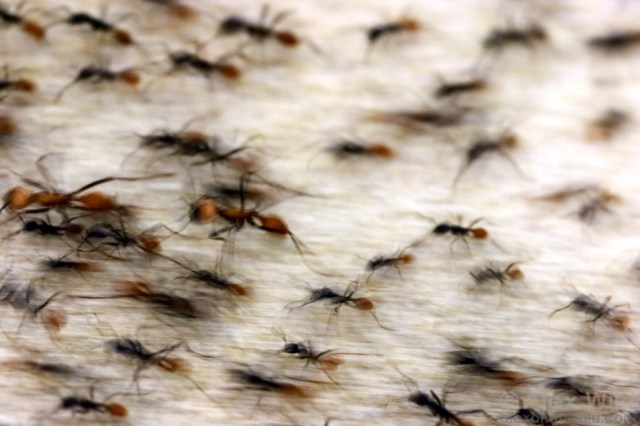
Science is a community endeavor. Much of our knowledge is unwritten, and subsists in the hive mind of our collective social unit. Some of the cooler and bolder — and perhaps more important — ideas are the ones that might not make it to print. My fellow ecologists don’t publish most of what we know, as Mike Kaspari recently reminded us with a quote from Dan Janzen.
We rarely share our piles of negative results, or the little curiosities for which we can’t find the time. Getting a peer-reviewed paper out the door is a non-trivial amount of work, and just mentioning it in a conversation is easier. But, hey, I have a blog where I can mention this stuff.
So let me tell you about two things that I find rather weird, but haven’t put more resources into figuring out. Continue reading

Recommended reads #90
StandardAn obituary for climate scientist Gordon Hamilton, who died in a field accident in Antarctica.
Here’s yet another editorial about how metrics of scientific success get in the way of good science. With stories about folks implementing common sense policies to fix things. Continue reading
Is social media ruining everything?
StandardI have been involved with a few conversations in the last month that basically went along the lines of social media is ruining X. It got me thinking is that really true? Continue reading
Creating an academic environment hostile to sexual misconduct
StandardI’d like to tell you a story about speaking out. Continue reading
In defence of taxon-specific conferences
StandardI have been going to entomology meetings (including those of the Entomological Societies of Canada (ESC), British Columbia (ESBC), and Ontario (ESO)) yearly since I started studying spiders in 2010 (we don’t have an arachnological society in Canada, so for these societies spiders are welcomed as honorary insects) and I went to my first International Society of Arachnology (ISA) meeting in Colorado this past summer. Continue reading

Recommended reads #89
StandardA couple truly spectacular reads have already made the rounds in social media in the last week, but in case you haven’t caught them, be sure to do so:
First, the Washington Post published a long-form piece about Derek Black, former media star of white nationalists who grew to repudiate his views. How did this happen? The free exchange of ideas and mutual respect found in higher education. If you’re looking for a defense of a liberal arts education (which can be found in potentially any university), then this might be as great as it gets.
Second, the Arizona Republic editorial staff received many death threats because they endorsed a particular presidential candidate. (Okay, a let’s all take moment to breathe, to absorb this fact.) The response from the publisher is powerful and important.
How you might change as a professor as you get older. Continue reading
 Small Pond Science